Bluerides – Blue Rides - Reserva cruceros de buceo en todo el mundoOCEAN ADVENTURES
Cruceros fluvialesRíosNaturaleza y faunaNuestra promesa
Cruceros fluvialesRíosNaturaleza y faunaNuestra promesaIniciar sesión

Destinos fluviales

  • Destinos fluviales
  • Amazonas
  • Danubio
  • Rin
  • Mekong
  • Nilo

Barcos y salidas

  • Buscador de cruceros fluviales
  • Ofertas

Naturaleza y fauna

  • Naturaleza y fauna

Asistencia al viajero

  • Nuestra promesa
  • Contacto

Contacto

Contáctanos

Escríbenos cuando quieras: te ayudamos a elegir el viaje o a resolver cualquier duda.

Correo electrónicoEscríbenos: solemos responder en pocas horas.
contact@bluerides.com
WhatsAppEscríbenos por WhatsApp, lun–vie 10:00–16:00 (CET).
Iniciar chat de WhatsApp
TeléfonoLlámanos, estaremos encantados de ayudarte.
Llamada gratuita, lun–vie 10:00–20:00 (CET).
Europa+49 800 1144 990EE. UU.+1 888 557 7735Reino Unido+44 800 707 4152Australia+61 2 8599 6113Canadá+1 888 557 7735
Which river journey is yours?Answer 8 quick questions and find the river cruise that fits you.
8 questions, 1 minute·Plus Gift
Métodos de pago segurosSus pagos están completamente protegidos con cifrado AES-256.
Desarrollado porStripeWiseAMEXPayGoogle PaySEPABank
Aviso legal·Términos y condiciones·Política de privacidad·Sobre nosotros·Contacto·Exención de Responsabilidad·Programa de afiliados·Cruise·
Visítanos aquí

© 2026 Blue Rides. Todos los derechos reservados.·

Bluerides – Blue Rides - Reserva cruceros de buceo en todo el mundoOCEAN ADVENTURES
Cruceros fluvialesRíosNaturaleza y faunaNuestra promesa
Cruceros fluvialesRíosNaturaleza y faunaNuestra promesaIniciar sesión
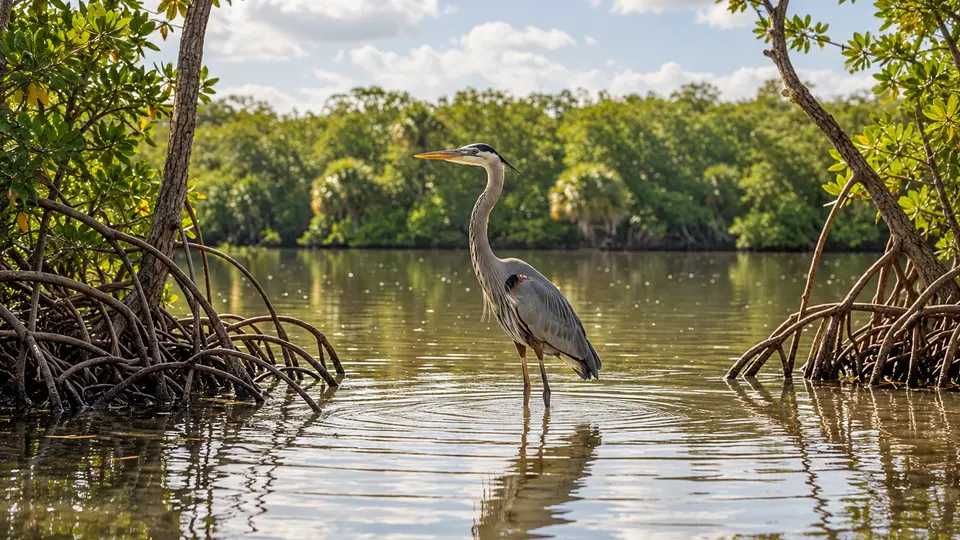
Great blue heron en un humedal — Columbia, fauna de cruceros fluviales
Inicio›Cruceros fluviales›Vida silvestre del río›Great Blue Heron

Great Blue HeronArdea herodiasDónde y cuándo verlos

Especie anteriorGadwallEspecie siguienteGreater Coucal

Great Blue Heron de un vistazo

A Great Blue Heron can make a river margin appear motionless until a sudden strike reveals the purpose of its patience. Long legs, a strong pointed bill and blue-grey plumage distinguish this large wader, while slow wingbeats and a folded neck mark its flight. Cornell describes feeding in freshwater, salt water and even fields, making it more versatile than a simple fish-eating stereotype suggests. The registered river sites offer places to examine shallow edges and visible roosting trees, not a promise that every bend holds a bird. A stationary heron may be difficult to notice against reeds or timber; deliberate scanning often finds it before any movement does.

Comportamiento y reproducción

Tamaño
Not verified
Peso
Not verified
Esperanza de vida
Not verified
Estado
Not verified

Great Blue Herons hunt by standing still or taking slow deliberate steps, then striking rapidly when prey comes within reach. A solitary feeding bird and a crowded nesting colony are both normal parts of the species’ life. Males establish nest sites and bring much of the material, while females weave the platform and cup. Trees are common nest supports, but other structures and ground sites can be used. Feeding birds may remain focused on one patch for a long time, rewarding patient observation. Do not mistake tolerance of a distant observer for permission to approach: a flushed heron loses a feeding opportunity, and disturbance near a colony can affect many nests at once.

Mejores lugares para ver vida silvestre

Paisaje fluvial de Columbia — hábitat en cruceros fluviales

Columbia

Most records cover Umatilla refuge backwaters along the Columbia near Boardman–Irrigon. Seasonal waterfowl may be best in winter rather than the sailing season. Bighorn sheep require a separate Hells Canyon excursion on the Snake River.
Explorar cruceros fluviales

Los destinos describen el hábitat de la especie, no paradas garantizadas del crucero. Algunos animales requieren una excursión opcional tierra adentro o se encuentran en reservas restringidas.

Datos curiosos sobre el Great Blue Heron

  • The neck is folded in normal flight.
  • Long legs trail behind flying birds.
  • Hunting can involve long motionless waits.
  • Fish are only part of the diet.
  • Small mammals are also eaten.
  • The species feeds in fields as well as wetlands.
  • Colonies can contain many nests.
  • Males bring much of the nesting material.
  • Females weave the nest platform and cup.

Mejor época para ver el Great Blue Heron

No numerical local viewing calendar is verified for the registered Columbia association. A heron at a feeding margin and a heron commuting to a nesting colony are different viewing opportunities. General range maps and conspicuous nests do not show when birds are predictably visible from a particular river overlook.

Great Blue Heron: matriz de temporadas por destino

Highlighted months reflect the stated local evidence, not guaranteed encounters. Neutral months mean no verified monthly viewing window, not absence. Observation records and recommended viewing windows are distinct.

Columbia

No se ha confirmado ningún calendario de vida silvestre específico para el río. Consulta con tu operador el tramo del río, las condiciones locales y el acceso a las excursiones.

enefebmarabrmayjunjulagoseptoctnovdic
Explorar cruceros fluviales

Dónde vive el Great Blue Heron

Freshwater marshes, riverbanks, ponds, estuaries and coastal shallows all provide hunting habitat. Grassland and agricultural fields can also supply prey, including small mammals and frogs. Nesting colonies are often near feeding areas, on islands or in isolated wooded wetlands, but a heron can commute between different parts of the landscape. At the Columbia and Upper Mississippi registered reaches, examine shallow edges, sheltered backwaters and visible trees from legal overlooks. Do not enter an island or wooded colony to improve a nest view. A tall tree with bulky platforms can be investigated safely through a scope from a public viewpoint without treating the surrounding habitat as an open-access photography site.

Qué come el Great Blue Heron

Fish are familiar prey, but Great Blue Herons also eat amphibians, reptiles, small mammals, insects and other birds. Cornell describes both grasping smaller prey and using the bill to impale larger fish, followed by handling before swallowing. A bird feeding in a field is therefore not out of place or necessarily searching for water. Watch the sequence from stalking to capture and handling rather than judging the diet from location alone. Sharp-spined prey may require manipulation that is hard to interpret at distance. Record what is actually visible, and never supply fish or other bait to bring a heron closer; an undisturbed feeding sequence is both safer and more informative.

La especie de un vistazo

Nombre común
Great Blue Heron
Scientific name
Ardea herodias
Grupo de animales
Birds
Tamaño
Not verified in the accessible source text.
Peso
Not verified in the accessible source text.
Esperanza de vida
Wild lifespan not verified in the accessible source text.
Estado
Current global conservation assessment not verified.
Identificación
The combination of large size, blue-grey body, long legs and a heavy pointed bill is the starting point. Flying birds usually retract the neck, producing a different silhouette from cranes with extended necks. The legs trail well behind the body, and wingbeats are slow and deep. Young birds can be less crisply patterned than adults, so precise head markings should not be expected on every individual. Light can make grey plumage appear surprisingly pale or dark. Use structure, flight posture and feeding behaviour together, while considering other herons present locally. A distant tall wader should remain uncertain if bill, neck posture and body proportions cannot be seen.

Great Blue Heron: preguntas frecuentes

¿Dónde puedo ver el Great Blue Heron?
Columbia. Scan the shallow bank slowly, checking shapes beside fallen wood and reed clumps. Once a heron is found, choose a stable position and allow time for a natural strike rather than advancing to make it move. A scope reveals bill handling and subtle steps without crowding the bird. In flight, follow the slow wingbeats and trailing legs long enough to see whether the neck is folded. At river overlooks, check open fields as well as water, but respect private land and colony closures. If the bird straightens, watches you continuously or walks away from its feeding patch, increase distance. Never use a boat’s approach to force a dramatic takeoff.
¿Cuál es el mejor momento para ver el Great Blue Heron?
No numerical local viewing calendar is verified for the registered Columbia association. A heron at a feeding margin and a heron commuting to a nesting colony are different viewing opportunities. General range maps and conspicuous nests do not show when birds are predictably visible from a particular river overlook.
¿Qué tamaño alcanza el Great Blue Heron?
Not verified in the accessible source text.. Peso adulto: Not verified in the accessible source text.. El tamaño varía según la edad, el sexo y la población.
¿Cómo debo comportarme cerca de el Great Blue Heron?
Scan the shallow bank slowly, checking shapes beside fallen wood and reed clumps. Once a heron is found, choose a stable position and allow time for a natural strike rather than advancing to make it move. A scope reveals bill handling and subtle steps without crowding the bird. In flight, follow the slow wingbeats and trailing legs long enough to see whether the neck is folded. At river overlooks, check open fields as well as water, but respect private land and colony closures. If the bird straightens, watches you continuously or walks away from its feeding patch, increase distance. Never use a boat’s approach to force a dramatic takeoff.
¿Qué come el Great Blue Heron?
Fish are familiar prey, but Great Blue Herons also eat amphibians, reptiles, small mammals, insects and other birds. Cornell describes both grasping smaller prey and using the bill to impale larger fish, followed by handling before swallowing. A bird feeding in a field is therefore not out of place or necessarily searching for water. Watch the sequence from stalking to capture and handling rather than judging the diet from location alone. Sharp-spined prey may require manipulation that is hard to interpret at distance. Record what is actually visible, and never supply fish or other bait to bring a heron closer; an undisturbed feeding sequence is both safer and more informative.
¿Están garantizados los avistamientos de fauna en un crucero fluvial?
No. Los animales se mueven libremente y las rutas, el clima, las restricciones de acceso y las condiciones locales influyen en cada salida. Confirma el itinerario real y el programa de excursiones antes de reservar.

Compara la fauna en los mismos destinos

Explora otros birds registrados en estos destinos. Entornos similares no significan que los animales compartan los mismos hábitos o temporada de avistamiento.

Comparación de especies por grupo animal y destino
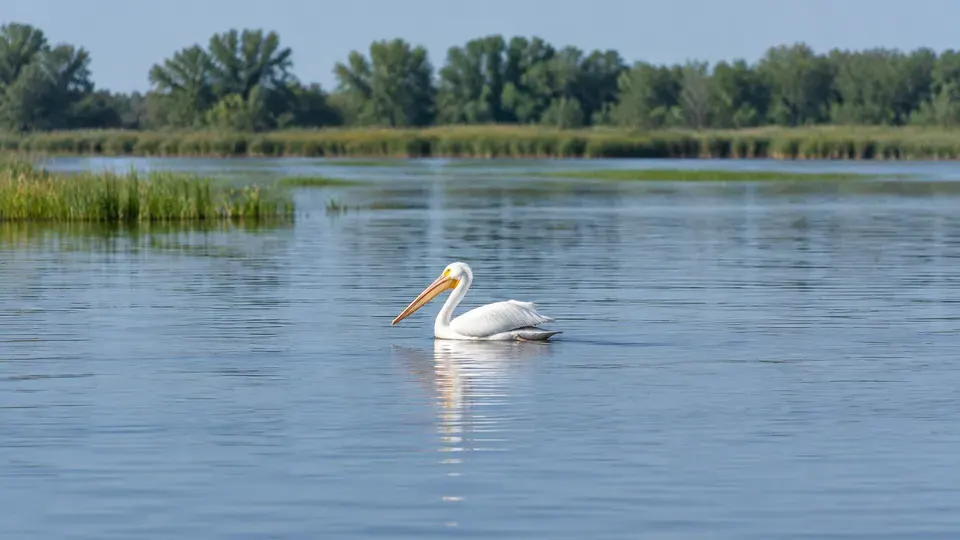
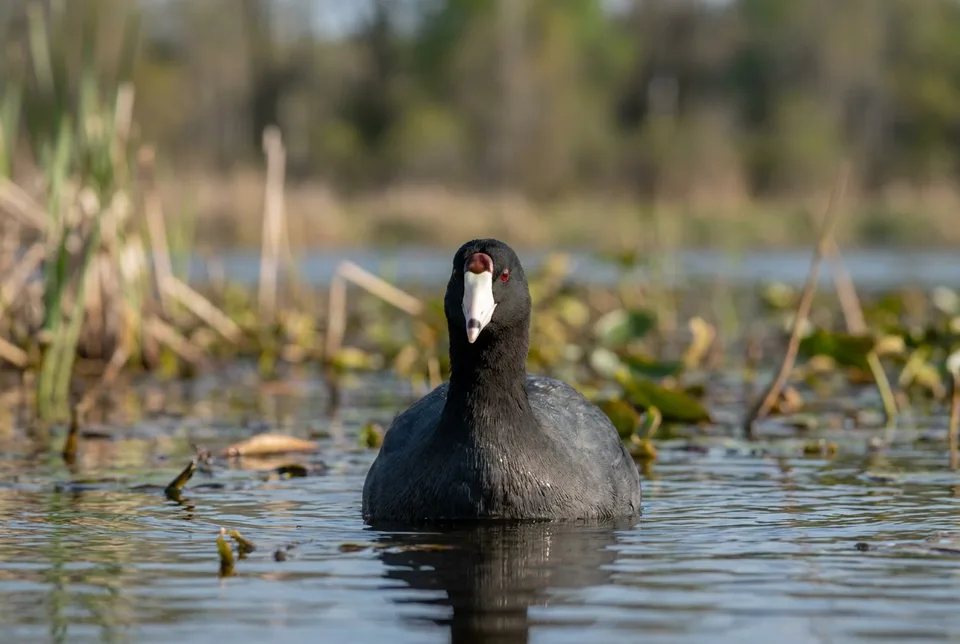
Great blue heron en un humedal — Columbia, fauna de cruceros fluvialesGreat Blue HeronAmerican Coot en un humedal — Columbia, fauna de cruceros fluvialesAmerican CootAmerican white pelican en un humedal — Columbia, Mississippi, fauna de cruceros fluvialesAmerican White Pelican
Grupo de animalesBirdsGrupo de animalesBirdsGrupo de animalesBirds
DestinosColumbiaDestinosColumbiaDestinosColumbia, Mississippi
Scientific name
Ardea herodias

Ardea herodias

Scientific name
Scientific name
Tamaño
Not verified
Tamaño
Tamaño
Peso
Not verified
Peso
Peso
Esperanza de vida
Not verified
Esperanza de vida
Esperanza de vida
Estado
Not verified
Estado
Estado
Identificación
The combination of large size, blue-grey body, long legs and a heavy pointed bill is the starting point.

The combination of large size, blue-grey body, long legs and a heavy pointed bill is the starting point. Flying birds usually retract the neck, producing a different silhouette from cranes with extended necks. The legs trail well behind the body, and wingbeats are slow and deep. Young birds can be less crisply patterned than adults, so precise head markings should not be expected on every individual. Light can make grey plumage appear surprisingly pale or dark. Use structure, flight posture and feeding behaviour together, while considering other herons present locally. A distant tall wader should remain uncertain if bill, neck posture and body proportions cannot be seen.

Identificación
Identificación
Hábitat
Freshwater marshes, riverbanks, ponds, estuaries and coastal shallows all provide hunting habitat.

Freshwater marshes, riverbanks, ponds, estuaries and coastal shallows all provide hunting habitat. Grassland and agricultural fields can also supply prey, including small mammals and frogs. Nesting colonies are often near feeding areas, on islands or in isolated wooded wetlands, but a heron can commute between different parts of the landscape. At the Columbia and Upper Mississippi registered reaches, examine shallow edges, sheltered backwaters and visible trees from legal overlooks. Do not enter an island or wooded colony to improve a nest view. A tall tree with bulky platforms can be investigated safely through a scope from a public viewpoint without treating the surrounding habitat as an open-access photography site.

Hábitat
Hábitat
Dieta
Fish are familiar prey, but Great Blue Herons also eat amphibians, reptiles, small mammals, insects and other birds.

Fish are familiar prey, but Great Blue Herons also eat amphibians, reptiles, small mammals, insects and other birds. Cornell describes both grasping smaller prey and using the bill to impale larger fish, followed by handling before swallowing. A bird feeding in a field is therefore not out of place or necessarily searching for water. Watch the sequence from stalking to capture and handling rather than judging the diet from location alone. Sharp-spined prey may require manipulation that is hard to interpret at distance. Record what is actually visible, and never supply fish or other bait to bring a heron closer; an undisturbed feeding sequence is both safer and more informative.

Dieta
Dieta
Mejor temporada
No numerical local viewing calendar is verified for the registered Columbia association.

No numerical local viewing calendar is verified for the registered Columbia association. A heron at a feeding margin and a heron commuting to a nesting colony are different viewing opportunities. General range maps and conspicuous nests do not show when birds are predictably visible from a particular river overlook.

Mejor temporada
Mejor temporada
Matriz de temporadas por destino
ColumbiaNo verified monthly viewing evidence

No verified monthly viewing evidence

Matriz de temporadas por destinoMatriz de temporadas por destino
Especie anteriorGadwallEspecie siguienteGreater Coucal
Toda la fauna fluvial
On this page
  • 01Acerca de
  • 02Comportamiento y reproducción
  • 03Mejores lugares para ver vida silvestre
  • 04Datos curiosos
  • 05Mejor temporada
  • 06Matriz de temporadas por destino
  • 07Hábitat
  • 08Dieta
  • 09La especie de un vistazo
  • 10Preguntas y respuestas
  • 11Comparar

Find your river cruise

Planifica tu viaje

Encuentra tu próximo viaje fluvial

Compara destinos, programas de excursiones y fechas según los animales y hábitats que te encantaría conocer.

  • Excursiones diarias en tierra
  • Avistamiento responsable de fauna
  • Barcos fluviales boutique
Explorar cruceros fluviales