Bluerides – Blue Rides - Book Liveaboards worldwideOCEAN ADVENTURES
River CruisesRiversNature & WildlifeOur Promise
River CruisesRiversNature & WildlifeOur PromiseSign In

River destinations

  • River destinations
  • Amazon
  • Danube
  • Rhine
  • Mekong
  • Nile

Ships & departures

  • River Cruise Search
  • Deals

Nature & Wildlife

  • Nature & Wildlife

Travel support

  • Our Promise
  • Contact

Contact

Get in Touch

Get in touch anytime, we're happy to help you find the right trip or sort out any question.

EmailWrite us, we usually reply within a few hours.
contact@bluerides.com
WhatsAppChat with us on WhatsApp, Mon–Fri 10:00–16:00 (CET).
Start WhatsApp Chat
PhoneCall us, we're happy to help.
Free call, Mon–Fri 10 AM – 8 PM (CET).
Europe+49 800 1144 990USA+1 888 557 7735UK+44 800 707 4152Australia+61 2 8599 6113Canada+1 888 557 7735
Which river journey is yours?Answer 8 quick questions and find the river cruise that fits you.
8 questions, 1 minute·Plus Gift
Secure Payment MethodsYour payments are fully secured with AES-256 encryption.
Powered byStripeWiseAMEXPayGoogle PaySEPABank
Imprint·Terms & Conditions·Privacy Policy·About·Contact·Liability Waiver·Affiliate Program·Cruise·
Visit us here

© 2026 Blue Rides. All rights reserved.·

Bluerides – Blue Rides - Book Liveaboards worldwideOCEAN ADVENTURES
River CruisesRiversNature & WildlifeOur Promise
River CruisesRiversNature & WildlifeOur PromiseSign In
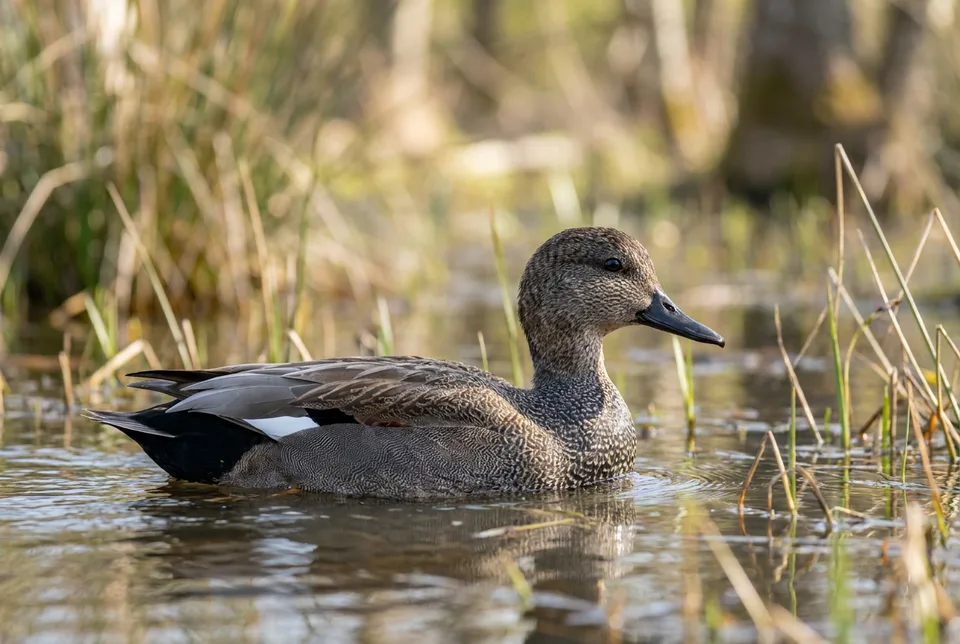
Gadwall in wetland habitat — Rhine, River Cruises wildlife
Home›River Cruises›River Wildlife›Gadwall

GadwallMareca streperaWhere and when to see them

Previous speciesFerruginous DuckNext speciesGarganey

Gadwall at a glance

The Gadwall rewards a slower scan. Unlike bright-headed drakes nearby, the male wears fine grey and brown patterning with a conspicuous black rear, while the female resembles a subdued brown dabbling duck. Cornell calls attention to the white wing patch and the species’ habit of taking food brought up by other waterbirds. A seemingly plain duck can therefore provide an unusually interesting feeding observation. Its river associations concern vegetated wetlands rather than uninterrupted deep channels. Look for repeated activity around plants and mixed groups instead of searching only for a vivid head colour. The understated plumage is a reason to examine the flock carefully, not evidence that the bird is immature or unidentifiable.
Behaviour & reproduction

Size
Not verified
Weight
Not verified
Lifespan
Not verified
Status
Not verified

Gadwall dabble for submerged food and sometimes steal vegetation from American Coots or other ducks as those birds surface. This makes the interactions within a mixed flock worth watching as closely as individual feeding movements. Pairs form during fall migration in Cornell’s account, and breeding birds select concealed ground nest sites in upland vegetation near water. The female inspects the site and forms a hollow lined with plant material and down. Islands may offer safer nesting opportunities where available. Neither food stealing nor pairing should be staged by baiting birds or approaching a nest. Observe enough uninterrupted time to distinguish a brief pursuit over food from a general movement of the flock.

Top wildlife locations

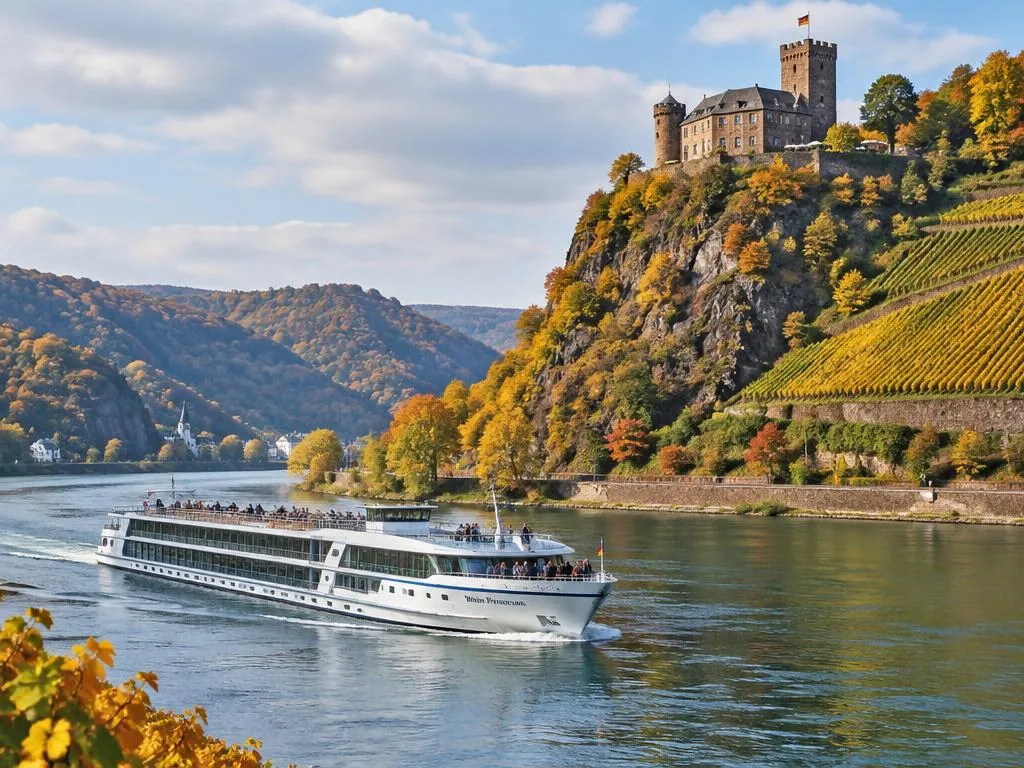
Rhine river landscape — River Cruises wildlife habitat

Rhine

Records refer to named Upper/Middle/Lower Rhine birding sites and optional riverside, vineyard or floodplain excursions. Several ducks are winter visitors; no animal is guaranteed on every Basel–Amsterdam sailing.
Explore river cruises

Destinations describe the species' habitat, not guaranteed cruise stops. Some animals require an optional inland excursion or are found in restricted reserves.

Fun facts about the Gadwall

  • Males have a conspicuous black rear.
  • The wing includes a white patch.
  • The diet is mainly aquatic vegetation.
  • Animal foods are more important during breeding.
  • Gadwall sometimes steal food from coots.
  • Winter diets contain a smaller proportion of animal food than breeding-season diets.
  • Females build concealed ground nests.
  • Down lines the nest.
  • Vegetated uplands matter alongside feeding wetlands.

Best time to see the Gadwall

No numerical local viewing calendar is verified for the registered Rhine association. Cornell describes use of vegetated waters during migration and winter, but this does not establish monthly viewing dates for Grafenwerth–Königswinter.

Gadwall: season matrix by destination

Highlighted months reflect the stated local evidence, not guaranteed encounters. Neutral months mean no verified monthly viewing window, not absence. Observation records and recommended viewing windows are distinct.

Rhine

No river-specific wildlife calendar is confirmed. Check the actual river reach, local conditions and excursion access with your operator.

JanFebMarAprMayJunJulAugSepOctNovDec
Explore river cruises

Where the Gadwall lives

Prairie potholes are central breeding habitat, though Cornell also records northern deltas, boreal wetlands and some tundra settings. Well-vegetated water must be accompanied by suitable adjacent cover for nests and young. During migration and winter, Gadwall use marshes, reservoirs, beaver ponds, farm ponds and streams. A river backwater with abundant aquatic vegetation can therefore be more useful than an apparently grander expanse of open water. Check the exact registered reach and authorised viewpoints before visiting. The presence of other waterfowl confirms a functioning wetland but does not establish a Gadwall season; local guidance naming Mallards or shovelers cannot silently be extended to this less conspicuous species.

What the Gadwall eats

Submerged vegetation supplies most Gadwall food, including leaves, stems, roots and seeds of a range of aquatic plants. Cornell also lists snails, midges, water beetles and other invertebrates, with animal material more important during breeding than in winter. Birds may reach for their own food or obtain it from a resurfacing diver. Such behaviour is not evidence that all feeding depends on theft; direct grazing remains central. Watch the relationship between the birds and visible vegetation while accepting that most plant fragments cannot be identified at distance. A mixed flock can reveal several feeding strategies at once, especially when coots and diving ducks bring food into view.

Species at a glance

Common name
Gadwall
Scientific name
Mareca strepera
Animal group
Birds
Size
Not verified in the accessible source text.
Weight
Not verified in the accessible source text.
Lifespan
Wild lifespan not verified in the accessible source text.
Status
Current global conservation assessment not verified.
Identification
Adult males show intricate grey-brown patterning, a black rear and white wing patch rather than a bright coloured head. Females resemble female Mallards but have a thinner, darker bill in Cornell’s overview. The white wing patch is an important supporting character, though it may be hidden on a resting bird. Assess body pattern, bill and wing together rather than naming a duck from general brown colour. Fine male patterning can look uniformly grey at distance and disappear in poor light. Wait for a side view and a change of posture; if the bill and wing cannot be resolved, a cautious unidentified dabbling duck is better than a confident but unsupported female Gadwall.

Gadwall: frequently asked questions

Where can I see the Gadwall?
Rhine. Inspect small vegetated pools and the edges of larger backwaters with a scope. The male’s black rear can catch the eye before the fine body pattern becomes apparent; a wing stretch may reveal the white patch. Brown females require longer views, especially in mixed Mallard groups. Stay through several feeding bouts to see whether birds dabble independently or follow resurfacing neighbours. At the registered river sites, a dedicated wetland viewpoint is preferable to a rapid scan of the navigation channel. Avoid walking down to the water for a clearer view: resting birds may become alert before they move, and a settled flock gives much better opportunities to compare plumage.
When is the best time to see the Gadwall?
No numerical local viewing calendar is verified for the registered Rhine association. Cornell describes use of vegetated waters during migration and winter, but this does not establish monthly viewing dates for Grafenwerth–Königswinter.
How big does the Gadwall get?
Not verified in the accessible source text.. Adult weight: Not verified in the accessible source text.. Size varies with age, sex and population.
How should I behave around the Gadwall?
Inspect small vegetated pools and the edges of larger backwaters with a scope. The male’s black rear can catch the eye before the fine body pattern becomes apparent; a wing stretch may reveal the white patch. Brown females require longer views, especially in mixed Mallard groups. Stay through several feeding bouts to see whether birds dabble independently or follow resurfacing neighbours. At the registered river sites, a dedicated wetland viewpoint is preferable to a rapid scan of the navigation channel. Avoid walking down to the water for a clearer view: resting birds may become alert before they move, and a settled flock gives much better opportunities to compare plumage.
What does the Gadwall eat?
Submerged vegetation supplies most Gadwall food, including leaves, stems, roots and seeds of a range of aquatic plants. Cornell also lists snails, midges, water beetles and other invertebrates, with animal material more important during breeding than in winter. Birds may reach for their own food or obtain it from a resurfacing diver. Such behaviour is not evidence that all feeding depends on theft; direct grazing remains central. Watch the relationship between the birds and visible vegetation while accepting that most plant fragments cannot be identified at distance. A mixed flock can reveal several feeding strategies at once, especially when coots and diving ducks bring food into view.
Are wildlife sightings guaranteed on a river cruise?
No. Animals move freely and routes, weather, access restrictions and local conditions influence every outing. Confirm the actual itinerary and shore program before booking.

Compare wildlife in the same destinations

Explore other birds recorded in these destinations. Similar surroundings do not mean the animals share the same habits or viewing season.

Species comparison by animal group and destination
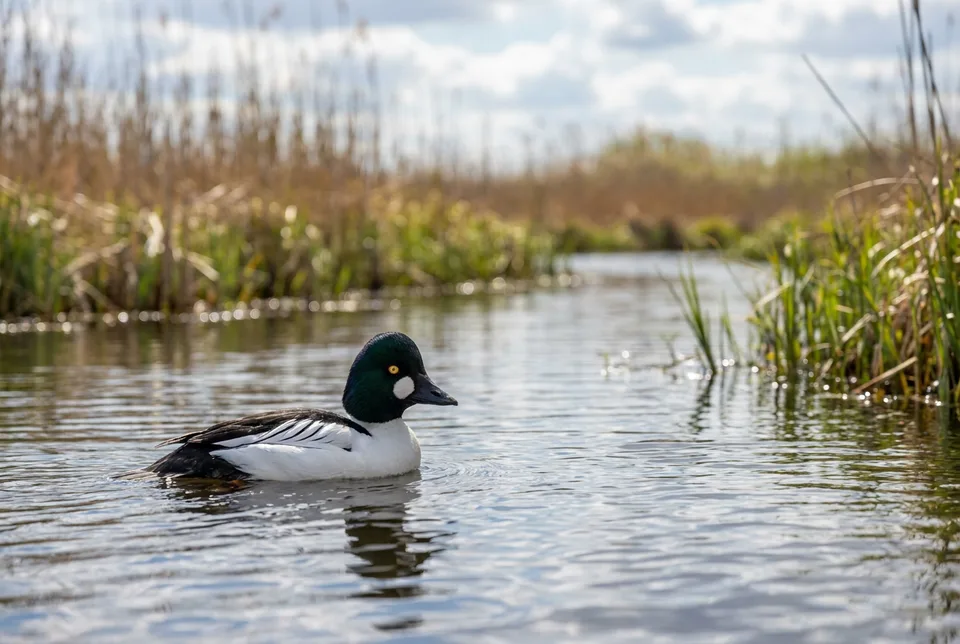
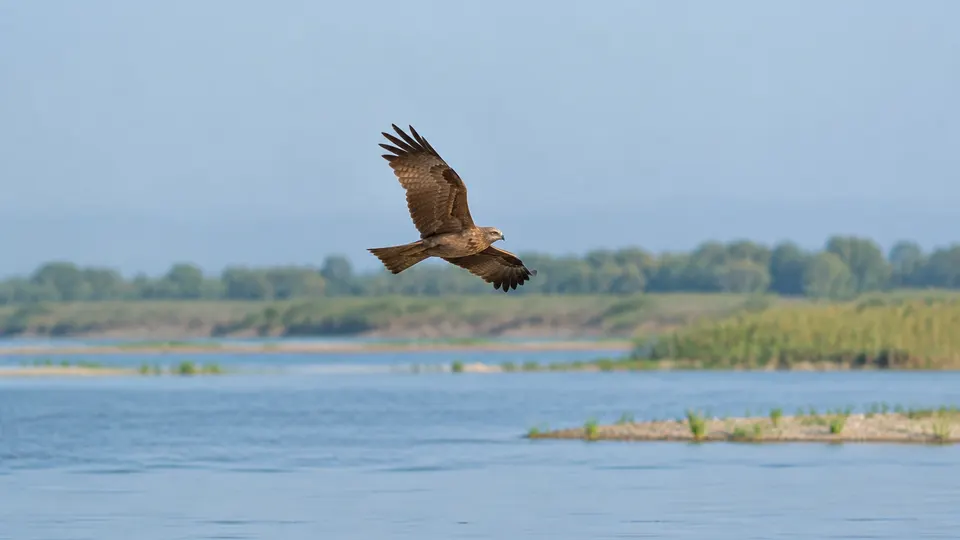
Gadwall in wetland habitat — Rhine, River Cruises wildlifeGadwallBlack kite in wetland habitat — Danube, Rhine, River Cruises wildlifeBlack KiteCommon Goldeneye in wetland habitat — Rhine, River Cruises wildlifeCommon Goldeneye
Animal groupBirdsAnimal groupBirdsAnimal groupBirds
DestinationsRhineDestinationsDanube, RhineDestinationsRhine
Scientific name
Mareca strepera
Scientific name
Scientific name
Previous speciesFerruginous DuckNext speciesGarganey
All river wildlife
On this page
  • 01About
  • 02Behaviour & reproduction
  • 03Top wildlife locations
  • 04Fun facts
  • 05Best season
  • 06Season matrix by destination
  • 07Habitat
  • 08Diet
  • 09Species at a glance
  • 10Questions & answers
  • 11Compare

Find your river cruise

Plan your trip

Find your next river journey

Compare destinations, shore programs and dates with the animals and habitats you would love to see.

  • Daily shore excursions
  • Responsible wildlife watching
  • Boutique river ships
Explore river cruises