Bluerides – Blue Rides - Book Liveaboards worldwideOCEAN ADVENTURES
River CruisesRiversNature & WildlifeOur Promise
River CruisesRiversNature & WildlifeOur PromiseSign In

River destinations

  • River destinations
  • Amazon
  • Danube
  • Rhine
  • Mekong
  • Nile

Ships & departures

  • River Cruise Search
  • Deals

Nature & Wildlife

  • Nature & Wildlife

Travel support

  • Our Promise
  • Contact

Contact

Get in Touch

Get in touch anytime, we're happy to help you find the right trip or sort out any question.

EmailWrite us, we usually reply within a few hours.
contact@bluerides.com
WhatsAppChat with us on WhatsApp, Mon–Fri 10:00–16:00 (CET).
Start WhatsApp Chat
PhoneCall us, we're happy to help.
Free call, Mon–Fri 10 AM – 8 PM (CET).
Europe+49 800 1144 990USA+1 888 557 7735UK+44 800 707 4152Australia+61 2 8599 6113Canada+1 888 557 7735
Which river journey is yours?Answer 8 quick questions and find the river cruise that fits you.
8 questions, 1 minute·Plus Gift
Secure Payment MethodsYour payments are fully secured with AES-256 encryption.
Powered byStripeWiseAMEXPayGoogle PaySEPABank
Imprint·Terms & Conditions·Privacy Policy·About·Contact·Liability Waiver·Affiliate Program·Cruise·
Visit us here

© 2026 Blue Rides. All rights reserved.·

Bluerides – Blue Rides - Book Liveaboards worldwideOCEAN ADVENTURES
River CruisesRiversNature & WildlifeOur Promise
River CruisesRiversNature & WildlifeOur PromiseSign In
Common Goldeneye in wetland habitat — Rhine, River Cruises wildlife
Home›River Cruises›River Wildlife›Common Goldeneye

Common GoldeneyeBucephala clangulaWhere and when to see them

Previous speciesCommon ChaffinchNext speciesCommon Greenshank

Common Goldeneye at a glance

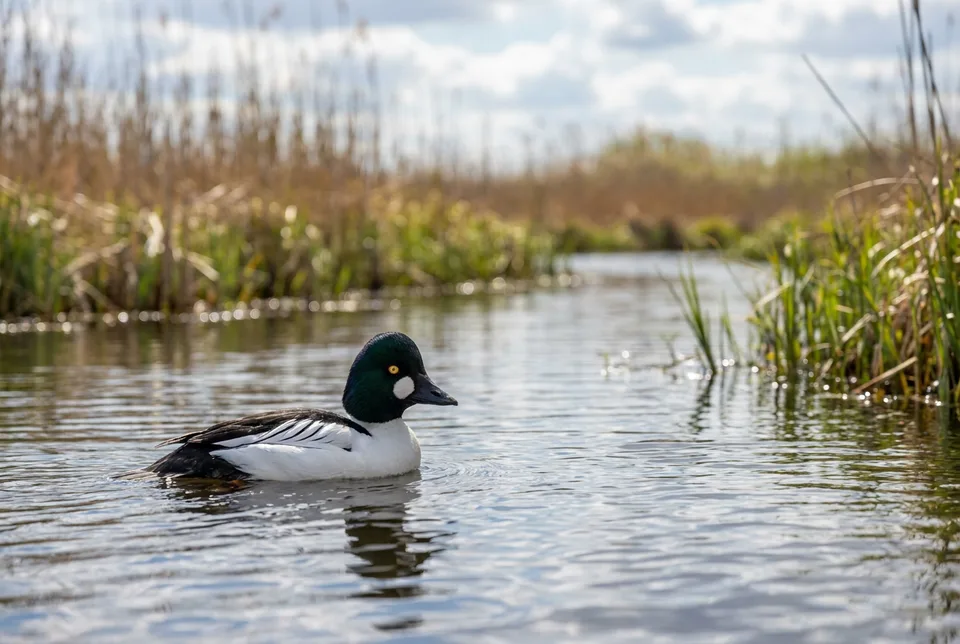
The Common Goldeneye is a medium-sized diving duck, registered here as Bucephala clangula. An adult male has a striking black-and-white body pattern, a dark head with a greenish sheen and a circular white patch in front of the yellow eye. Females are smaller and greyer, with a chocolate-brown head. Both sexes can show a large white area in the inner wing during flight. Goldeneyes obtain much of their food underwater rather than simply picking items from the surface. Their use of open water makes a telescope valuable when birds remain far from shore. The registered Rhine location is Strasbourg’s Rohrschollen island, specifically the Vieux Rhin and Grand Canal setting. LPO Alsace names goldeneyes in its winter waterbird section there, providing direct local seasonal context without establishing an exact monthly calendar or a guaranteed cruise-deck encounter.
Behaviour & reproduction

Size
42–50 cm (16.5–19.7 in) body length
Weight
650–1,200 g (22.9–42.3 oz), according to RSPB
Lifespan
Not independently verified in the retrieved evidence
Status
See sourced assessment

A feeding goldeneye repeatedly disappears beneath the surface and reappears some distance away. Following one bird patiently is more informative than switching between every duck in a scattered flock. Diving creates natural gaps in visibility, so a temporarily empty patch of water does not mean the birds have departed. Individuals may rest between feeding bouts, preen on the surface or move with other diving ducks. Courtship includes conspicuous head movements, though display behaviour should not be treated as proof of local nesting. Goldeneyes are cavity-nesting ducks, and the RSPB notes their use of specially designed tree-mounted nest boxes in Scotland. That example explains a species behaviour, not a nesting claim for Rohrschollen. From the Rhine shore, watch the sequence of diving, resurfacing and resting while maintaining enough distance that the birds do not swim away or take flight in response.

Top wildlife locations

Rhine river landscape — River Cruises wildlife habitat

Rhine

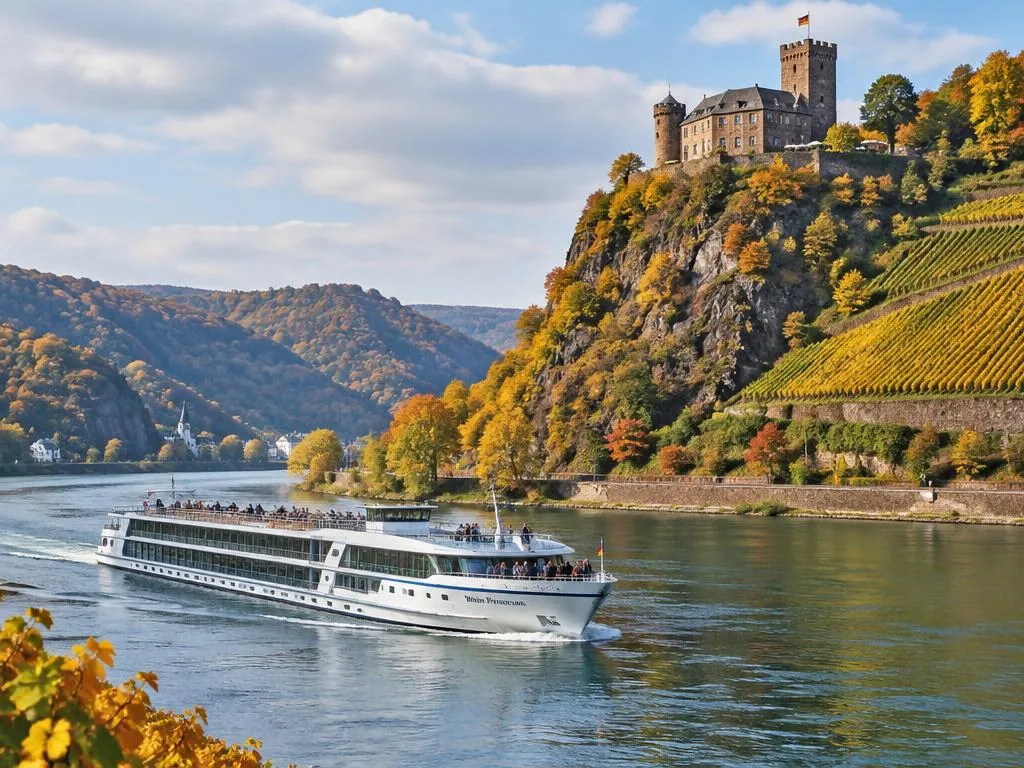
Upper Rhine: Strasbourg, Rohrschollen island / Vieux Rhin and Grand Canal; shore observation excursion.
Explore river cruises

Destinations describe the species' habitat, not guaranteed cruise stops. Some animals require an optional inland excursion or are found in restricted reserves.

Fun facts about the Common Goldeneye

  • Goldeneye is a diving duck.
  • Adult males have a circular white facial patch.
  • Females have chocolate-brown heads.
  • Both sexes show substantial white in the inner wing.
  • RSPB gives a body length of 42–50 cm (17–20 in).
  • RSPB gives a wingspan of 65–80 cm (26–31 in).
  • Its diet includes mussels and insect larvae.
  • Goldeneyes can nest in tree cavities and suitable nest boxes.
  • LPO Alsace explicitly lists the species at Rohrschollen in winter.

Best time to see the Common Goldeneye

Winter is directly supported for Common Goldeneye at Rohrschollen: LPO Alsace places garrots à œil d’or in its section headed En hiver and names the Grand Canal d’Alsace and Vieux Rhin as viewing waters. That is useful local species-specific seasonal evidence. It does not, however, define which numbered months the author intended, so the monthly array remains empty rather than translating winter automatically into December through February or a longer migration window. The opportunity also depends on water conditions, disturbance and whether ducks are close enough for a shore view. British winter influx information and Scottish nesting history should not be used to expand the Strasbourg calendar. For a visit, prioritise current local waterbird reports and accessible viewpoints during the locally described winter period. A telescope and time for repeated scans are more useful than assuming every visible diving duck is a goldeneye.

Common Goldeneye: season matrix by destination

Highlighted months reflect the stated local evidence, not guaranteed encounters. Neutral months mean no verified monthly viewing window, not absence. Observation records and recommended viewing windows are distinct.

Rhine

Direct local species evidence says winter, but does not define numbered months.

JanFebMarAprMayJunJulAugSepOctNovDec
Explore river cruises

Where the Common Goldeneye lives

Goldeneyes use aquatic habitats that allow underwater feeding, including lakes, rivers and coastal waters. Breeding habitat and winter feeding habitat need not be identical: a duck that nests in a tree cavity can spend the nonbreeding period on much more open water. At Rohrschollen, the relevant local account identifies both the Grand Canal d’Alsace and the Vieux Rhin as places for watching winter waterbirds, explicitly including goldeneyes. This is more precise than a general statement that the species occurs somewhere along the Rhine. Shore access and sightlines determine whether the birds can actually be viewed safely. Use established viewpoints and do not approach waterside cover or infrastructure simply to shorten the viewing distance. The registered association remains the Strasbourg island and adjacent named waters; it should not be expanded to the entire Upper Rhine, other islands or unrelated winter duck concentrations without separate evidence.

What the Common Goldeneye eats

The RSPB lists mussels, insect larvae, small fish and plants among Common Goldeneye foods. The species is therefore an underwater forager with a varied diet rather than an exclusively fish-eating duck. Repeated dives allow it to search below the surface for prey and other food unavailable to birds feeding only in the uppermost water layer. The exact mixture depends on the waterbody and the resources available there. A duck surfacing with an item may provide a useful glimpse, but most feeding cannot be identified from shore. Do not infer a specific Rhine diet simply from the general species food list. Watching dive location, duration and the spacing of birds can still reveal how they use a feeding area. Avoid feeding waterbirds or throwing material into the water to draw them closer. A quiet telescope view preserves natural behaviour and avoids creating an artificial concentration beside visitors.

Species at a glance

Common name
Common Goldeneye
Scientific name
Bucephala clangula
Animal group
Birds
Size
42–50 cm (16.5–19.7 in) body length
Weight
650–1,200 g (22.9–42.3 oz), according to RSPB
Lifespan
Not independently verified in the retrieved evidence
Status
RSPB UK Birds of Conservation Concern: Red. This does not establish the global or French category.
Identification
An adult male goldeneye is strongly patterned: black and white overall, with a dark greenish head, yellow eye and a round white patch between the eye and bill. The female has a chocolate-brown head and a grey, mottled body, and is smaller than the male. A large white inner-wing area is useful in flight for both sexes. Compare the entire head shape and facial pattern rather than relying on a yellow eye, which is not unique to this species. Tufted Duck and other diving ducks can occur in the same waterbird assemblage and may look similarly dark and white at a distance. Light can conceal the green sheen or make it appear black, so iridescence is supporting rather than essential evidence. Follow a candidate through several surfacings and, if possible, a wing stretch before deciding. Do not assign female or immature birds solely by association with an obvious male.

Common Goldeneye: frequently asked questions

Where can I see the Common Goldeneye?
Rhine. Watch from authorised shore positions around Rohrschollen, concentrating on the named Vieux Rhin and Grand Canal waters. Begin with a broad binocular scan for scattered diving ducks, then use a telescope to check head patterns and follow individuals between dives. A male’s white facial patch may be visible at greater distance than the eye itself. Females require a more deliberate look at head colour, body pattern and shape. Keep a stable position rather than repeatedly moving closer whenever birds resurface. If a group becomes alert, swims persistently away or prepares to fly, reduce pressure and increase the distance. Wind and glare can make one bank or viewing direction much more difficult than another, so use permitted alternative sightlines where available. The evidence supports a shore birdwatching excursion at this exact Strasbourg location, not a promise of close birds alongside a passing cruise vessel.
When is the best time to see the Common Goldeneye?
Winter is directly supported for Common Goldeneye at Rohrschollen: LPO Alsace places garrots à œil d’or in its section headed En hiver and names the Grand Canal d’Alsace and Vieux Rhin as viewing waters. That is useful local species-specific seasonal evidence. It does not, however, define which numbered months the author intended, so the monthly array remains empty rather than translating winter automatically into December through February or a longer migration window. The opportunity also depends on water conditions, disturbance and whether ducks are close enough for a shore view. British winter influx information and Scottish nesting history should not be used to expand the Strasbourg calendar. For a visit, prioritise current local waterbird reports and accessible viewpoints during the locally described winter period. A telescope and time for repeated scans are more useful than assuming every visible diving duck is a goldeneye.
How big does the Common Goldeneye get?
42–50 cm (16.5–19.7 in) body length. Adult weight: 650–1,200 g (22.9–42.3 oz), according to RSPB. Size varies with age, sex and population.
How should I behave around the Common Goldeneye?
Watch from authorised shore positions around Rohrschollen, concentrating on the named Vieux Rhin and Grand Canal waters. Begin with a broad binocular scan for scattered diving ducks, then use a telescope to check head patterns and follow individuals between dives. A male’s white facial patch may be visible at greater distance than the eye itself. Females require a more deliberate look at head colour, body pattern and shape. Keep a stable position rather than repeatedly moving closer whenever birds resurface. If a group becomes alert, swims persistently away or prepares to fly, reduce pressure and increase the distance. Wind and glare can make one bank or viewing direction much more difficult than another, so use permitted alternative sightlines where available. The evidence supports a shore birdwatching excursion at this exact Strasbourg location, not a promise of close birds alongside a passing cruise vessel.
What does the Common Goldeneye eat?
The RSPB lists mussels, insect larvae, small fish and plants among Common Goldeneye foods. The species is therefore an underwater forager with a varied diet rather than an exclusively fish-eating duck. Repeated dives allow it to search below the surface for prey and other food unavailable to birds feeding only in the uppermost water layer. The exact mixture depends on the waterbody and the resources available there. A duck surfacing with an item may provide a useful glimpse, but most feeding cannot be identified from shore. Do not infer a specific Rhine diet simply from the general species food list. Watching dive location, duration and the spacing of birds can still reveal how they use a feeding area. Avoid feeding waterbirds or throwing material into the water to draw them closer. A quiet telescope view preserves natural behaviour and avoids creating an artificial concentration beside visitors.
Are wildlife sightings guaranteed on a river cruise?
No. Animals move freely and routes, weather, access restrictions and local conditions influence every outing. Confirm the actual itinerary and shore program before booking.

Compare wildlife in the same destinations

Explore other birds recorded in these destinations. Similar surroundings do not mean the animals share the same habits or viewing season.

Species comparison by animal group and destination
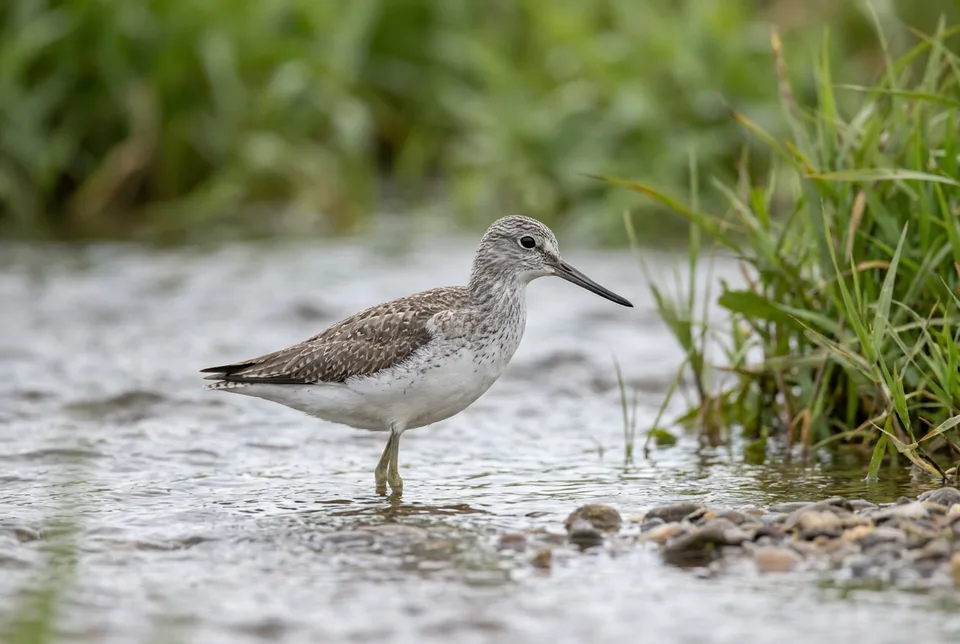
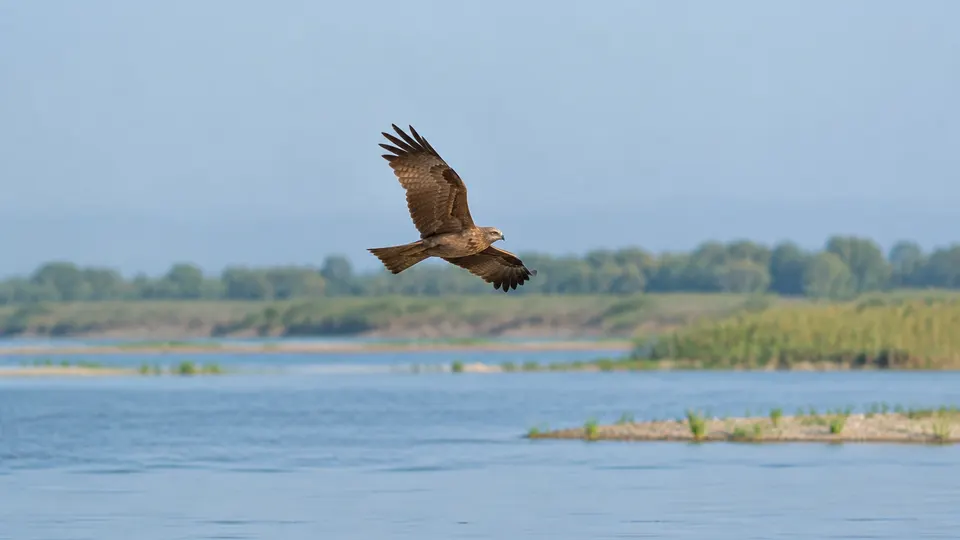
Common Goldeneye in wetland habitat — Rhine, River Cruises wildlifeCommon GoldeneyeBlack kite in wetland habitat — Danube, Rhine, River Cruises wildlifeBlack KiteCommon Greenshank in wetland habitat — Rhine, River Cruises wildlifeCommon Greenshank
Animal groupBirdsAnimal groupBirdsAnimal groupBirds
DestinationsRhineDestinationsDanube, RhineDestinationsRhine
Scientific name
Bucephala clangula
Scientific name
Scientific name
Previous speciesCommon ChaffinchNext speciesCommon Greenshank
All river wildlife
On this page
  • 01About
  • 02Behaviour & reproduction
  • 03Top wildlife locations
  • 04Fun facts
  • 05Best season
  • 06Season matrix by destination
  • 07Habitat
  • 08Diet
  • 09Species at a glance
  • 10Questions & answers
  • 11Compare

Find your river cruise

Plan your trip

Find your next river journey

Compare destinations, shore programs and dates with the animals and habitats you would love to see.

  • Daily shore excursions
  • Responsible wildlife watching
  • Boutique river ships
Explore river cruises