Bluerides – Blue Rides - Book Liveaboards worldwideOCEAN ADVENTURES
River CruisesRiversNature & WildlifeOur Promise
River CruisesRiversNature & WildlifeOur PromiseSign In

River destinations

  • River destinations
  • Amazon
  • Danube
  • Rhine
  • Mekong
  • Nile

Ships & departures

  • River Cruise Search
  • Deals

Nature & Wildlife

  • Nature & Wildlife

Travel support

  • Our Promise
  • Contact

Contact

Get in Touch

Get in touch anytime, we're happy to help you find the right trip or sort out any question.

EmailWrite us, we usually reply within a few hours.
contact@bluerides.com
WhatsAppChat with us on WhatsApp, Mon–Fri 10:00–16:00 (CET).
Start WhatsApp Chat
PhoneCall us, we're happy to help.
Free call, Mon–Fri 10 AM – 8 PM (CET).
Europe+49 800 1144 990USA+1 888 557 7735UK+44 800 707 4152Australia+61 2 8599 6113Canada+1 888 557 7735
Which river journey is yours?Answer 8 quick questions and find the river cruise that fits you.
8 questions, 1 minute·Plus Gift
Secure Payment MethodsYour payments are fully secured with AES-256 encryption.
Powered byStripeWiseAMEXPayGoogle PaySEPABank
Imprint·Terms & Conditions·Privacy Policy·About·Contact·Liability Waiver·Affiliate Program·Cruise·Blog·
Visit us here

© 2026 Blue Rides. All rights reserved.

Bluerides – Blue Rides - Book Liveaboards worldwideOCEAN ADVENTURES
River CruisesRiversNature & WildlifeOur Promise
River CruisesRiversNature & WildlifeOur PromiseSign In
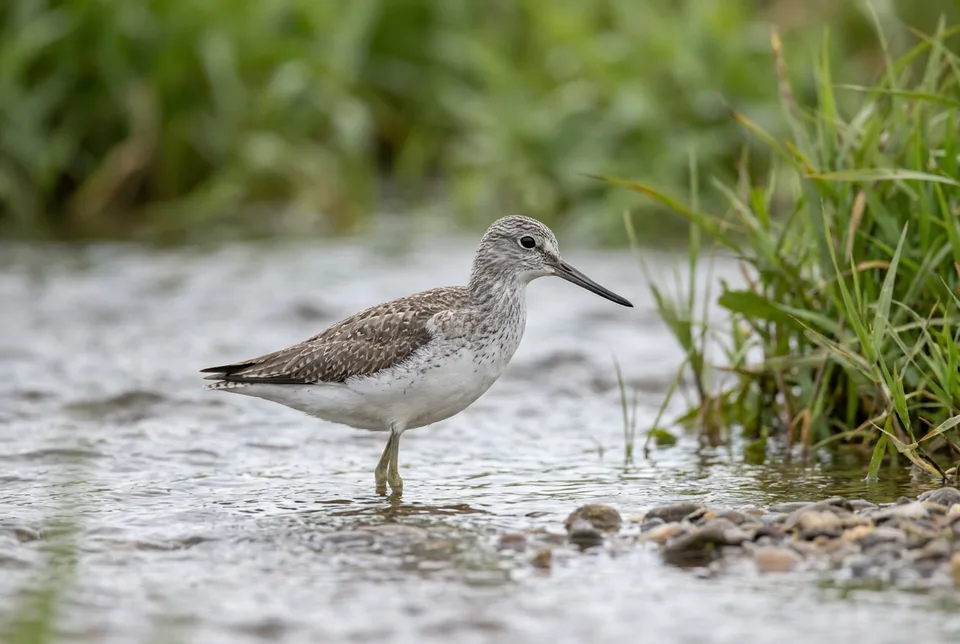
Common Greenshank in wetland habitat — Rhine, River Cruises wildlifeAI-modified
Home›River Cruises›River Wildlife›Common Greenshank

Common GreenshankTringa nebulariaWhere and when to see them

Previous speciesCommon GoldeneyeNext speciesCommon House Martin

Common Greenshank at a glance

The Common Greenshank is a slim, medium-sized wader with long greenish legs and a slightly upturned bill. Its registry identity is Tringa nebularia. Grey upperparts and white underparts can give it a pale appearance at distance, especially outside breeding plumage. The species often occurs alone or in small groups and may call regularly, making sound useful when a bird is difficult to locate against a riverbank. The registered Rhine association is narrowly defined: Grafenwerth–Königswinter at the lower end of the Middle Rhine, south of Bonn and Cologne. Birdingplaces explicitly names Common Greenshank among migrating waders possible on the gravel banks there. This is not a Cologne city record, and it does not establish a permanent local population. A patient shore scan of exposed banks is the appropriate viewing method, with water level affecting the amount of usable habitat.
Behaviour & reproduction

Size
Not independently verified in the retrieved evidence
Weight
Not independently verified in the retrieved evidence
Lifespan
Not independently verified in the retrieved evidence
Status
See sourced assessment

Greenshanks can feed with a deliberate walk, pause to pick prey or move more energetically through shallow water. Their long legs allow them to work water slightly deeper than many smaller waders, while the long bill reaches prey at or below the surface. The RSPB describes birds as occurring alone and in small groups and notes that they call regularly. A calling bird may be passing overhead rather than standing on the bank, so search the sky as well as the waterline. Migrants can stop briefly and depart without forming a large visible flock. At Grafenwerth–Königswinter, watch from the existing bank path and let a feeding bird maintain its chosen distance. Repeatedly approaching exposed gravel can force it to abandon a small feeding patch. A single restless or flying bird should not be interpreted as evidence that the site is unsuitable.

Top wildlife locations

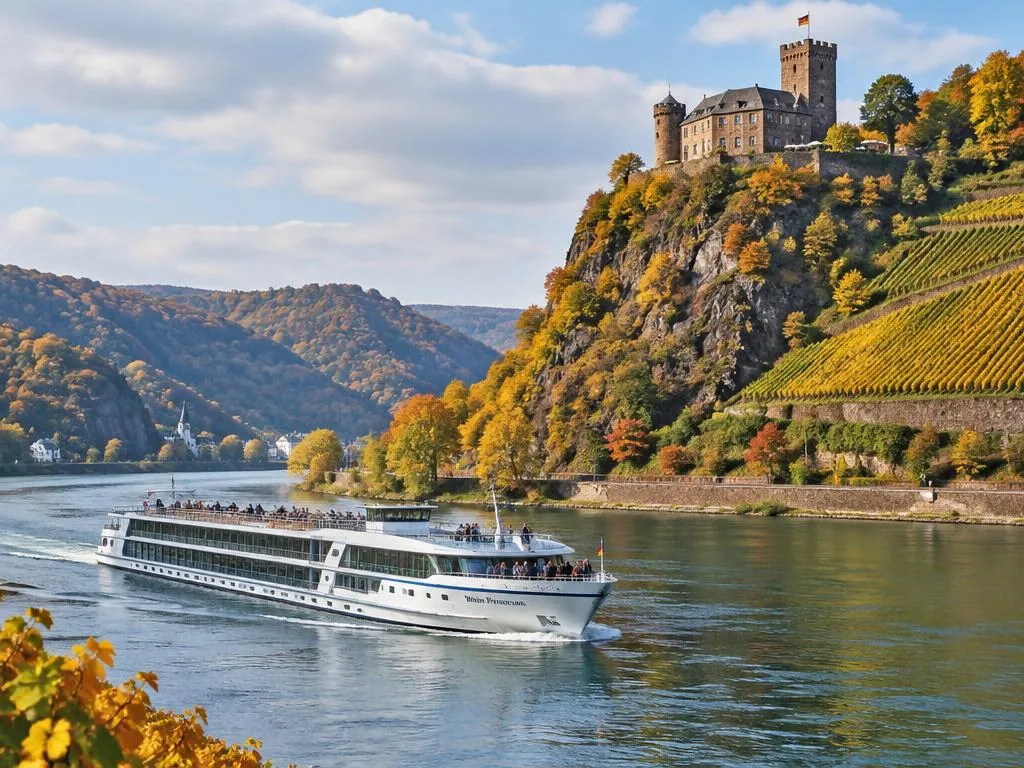
Rhine river landscape — River Cruises wildlife habitatAI-modified

Rhine

Lower end of Middle Rhine: Grafenwerth–Königswinter, south of Bonn/Cologne, not Cologne city.
Explore river cruises

Destinations describe the species' habitat, not guaranteed cruise stops. Some animals require an optional inland excursion or are found in restricted reserves.

Fun facts about the Common Greenshank

  • The registry identity is Tringa nebularia.
  • The bill is slightly upturned.
  • Its legs are greenish rather than bright red.
  • Grey upperparts contrast with white underparts.
  • Greenshanks may occur singly.
  • Small groups also occur.
  • Calling can reveal birds before they are seen.
  • The local Rhine source associates it with migrating waders on gravel banks.
  • The registered reach is south of Bonn and Cologne, not Cologne city.

Best time to see the Common Greenshank

The direct local account describes Common Greenshank as a migrating wader possible on gravel banks at Grafenwerth–Königswinter. It also gives spring migration and autumn migration among the site’s best visiting periods. These statements support a passage-oriented viewing context, but they do not supply exact species-specific numbered months. The monthly array remains empty. The same site is good for winter ducks, yet that broader winter recommendation should not be transferred automatically to greenshank. Likewise, a site-wide all-year birdwatching label describes the location, not twelve-month greenshank presence. For a shore visit, check recent local wader reports and whether gravel banks are exposed. Migration stopovers may be brief, and water level can change the available feeding edge quickly. The useful seasonal message is to look for passage birds under suitable local conditions, not to promise a recurring flock or a fixed annual arrival date.

Common Greenshank: season matrix by destination

Highlighted months reflect the stated local evidence, not guaranteed encounters. Neutral months mean no verified monthly viewing window, not absence. Observation records and recommended viewing windows are distinct.

Rhine

Local source identifies migrating greenshanks on gravel banks; exact species-specific monthly dates are not supplied.

JanFebMarAprMayJunJulAugSepOctNovDec
Explore river cruises

Where the Common Greenshank lives

Common Greenshanks use a range of wet habitats during migration and the nonbreeding period, including shallow freshwater margins, tidal wetlands and exposed muddy or gravelly edges. The essential viewing feature is often accessible shallow water beside a place to stand and feed, rather than the river’s broad navigable centre. At the registered Middle Rhine locality, the original site description specifically identifies gravel banks as places where migrating greenshanks are possible. Water level is therefore important: a bank visible on one visit may be submerged on another. Use public riverside access between Grafenwerth and Königswinter without stepping onto occupied feeding surfaces. This geographical scope must remain distinct from Cologne city and other Rhine reaches. A general migration map or a record elsewhere in the Rhine valley does not establish the same opportunity at every port, quay, island or side channel on a cruise itinerary.

What the Common Greenshank eats

Greenshanks take aquatic invertebrates and can also catch small fish or other small aquatic animals. Their feeding method is flexible: they may pick visible items, probe shallow substrates or pursue prey through the water. The slightly upturned bill is an identification feature, but it also belongs to a bird adapted to gathering varied wetland food. From shore, the prey itself will often be too small to identify. Describe a bird as picking, probing or chasing rather than assigning a particular insect, crustacean or fish without a clear view. On the Rhine gravel banks, the exact food mixture has not been verified by the retrieved locality account. Avoid casting food, turning stones or walking through the feeding edge to obtain a closer photograph. Watching undisturbed movements along the waterline gives useful information about how the bird is exploiting the shallow habitat actually available during the visit.

Species at a glance

Common name
Common Greenshank
Scientific name
Tringa nebularia
Animal group
Birds
Size
Not independently verified in the retrieved evidence
Weight
Not independently verified in the retrieved evidence
Lifespan
Not independently verified in the retrieved evidence
Status
RSPB UK Birds of Conservation Concern: Amber. Global and German categories were not independently verified.
Identification
Look for the combination of long greenish legs, a relatively long and slightly upturned bill, grey upperparts and white below. Leg colour alone is unreliable in shadow, glare or mud, so use shape and plumage together. Greenshank is a slim wader rather than a compact, short-legged sandpiper. Common Redshank usually shows much more obviously red-orange legs and a different bill pattern, while other Tringa waders require careful comparison of size, proportions and markings. An unfamiliar call can be helpful, but should be checked against a reliable recording rather than matched from memory alone. Watch the bird standing side-on and moving through shallow water; both positions reveal features that can be hidden in a crouched resting bird. A distant photograph may exaggerate the apparent bill curve, so several views are preferable. Keep uncertain birds unidentified rather than treating the local species list as a checklist of guaranteed candidates.

Common Greenshank: frequently asked questions

Where can I see the Common Greenshank?
Rhine. Use the riverside path in the exact Grafenwerth–Königswinter reach and scan exposed gravel and adjacent shallow water. A telescope is particularly valuable because a small grey-and-white bird may remain well away from the bank. First locate all waders, then compare leg length, bill shape and overall proportions. Listen for calls from birds that are moving along the river or passing overhead. Stay on the established route rather than stepping toward an occupied gravel patch, and avoid positioning several observers around a lone bird. High water can reduce both feeding habitat and safe access; do not attempt to reach an exposed island or bank merely because it looks close. The original source describes the site as a bank-walking destination with possible migrating waders. It does not guarantee greenshank on demand, provide a dedicated hide or establish an observation within Cologne city.
When is the best time to see the Common Greenshank?
The direct local account describes Common Greenshank as a migrating wader possible on gravel banks at Grafenwerth–Königswinter. It also gives spring migration and autumn migration among the site’s best visiting periods. These statements support a passage-oriented viewing context, but they do not supply exact species-specific numbered months. The monthly array remains empty. The same site is good for winter ducks, yet that broader winter recommendation should not be transferred automatically to greenshank. Likewise, a site-wide all-year birdwatching label describes the location, not twelve-month greenshank presence. For a shore visit, check recent local wader reports and whether gravel banks are exposed. Migration stopovers may be brief, and water level can change the available feeding edge quickly. The useful seasonal message is to look for passage birds under suitable local conditions, not to promise a recurring flock or a fixed annual arrival date.
How big does the Common Greenshank get?
Not independently verified in the retrieved evidence. Adult weight: Not independently verified in the retrieved evidence. Size varies with age, sex and population.
How should I behave around the Common Greenshank?
Use the riverside path in the exact Grafenwerth–Königswinter reach and scan exposed gravel and adjacent shallow water. A telescope is particularly valuable because a small grey-and-white bird may remain well away from the bank. First locate all waders, then compare leg length, bill shape and overall proportions. Listen for calls from birds that are moving along the river or passing overhead. Stay on the established route rather than stepping toward an occupied gravel patch, and avoid positioning several observers around a lone bird. High water can reduce both feeding habitat and safe access; do not attempt to reach an exposed island or bank merely because it looks close. The original source describes the site as a bank-walking destination with possible migrating waders. It does not guarantee greenshank on demand, provide a dedicated hide or establish an observation within Cologne city.
What does the Common Greenshank eat?
Greenshanks take aquatic invertebrates and can also catch small fish or other small aquatic animals. Their feeding method is flexible: they may pick visible items, probe shallow substrates or pursue prey through the water. The slightly upturned bill is an identification feature, but it also belongs to a bird adapted to gathering varied wetland food. From shore, the prey itself will often be too small to identify. Describe a bird as picking, probing or chasing rather than assigning a particular insect, crustacean or fish without a clear view. On the Rhine gravel banks, the exact food mixture has not been verified by the retrieved locality account. Avoid casting food, turning stones or walking through the feeding edge to obtain a closer photograph. Watching undisturbed movements along the waterline gives useful information about how the bird is exploiting the shallow habitat actually available during the visit.
Are wildlife sightings guaranteed on a river cruise?
No. Animals move freely and routes, weather, access restrictions and local conditions influence every outing. Confirm the actual itinerary and shore program before booking.

Compare wildlife in the same destinations

Explore other birds recorded in these destinations. Similar surroundings do not mean the animals share the same habits or viewing season.

Species comparison by animal group and destination
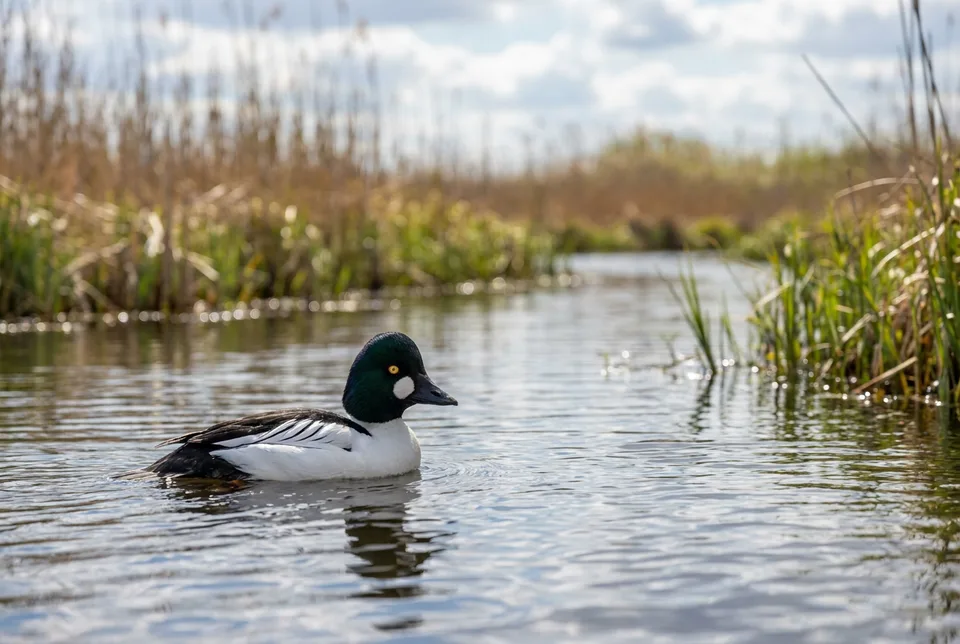
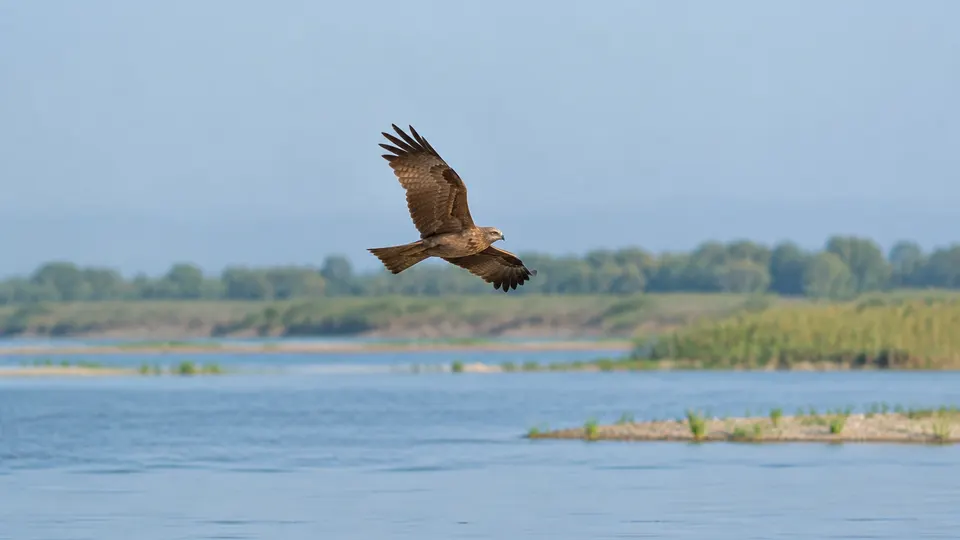
Common Greenshank in wetland habitat — Rhine, River Cruises wildlifeAI-modifiedCommon GreenshankBlack kite in wetland habitat — Danube, Rhine, River Cruises wildlifeAI-modifiedBlack KiteCommon Goldeneye in wetland habitat — Rhine, River Cruises wildlifeAI-modifiedCommon Goldeneye
Animal groupBirdsAnimal groupBirdsAnimal groupBirds
DestinationsRhineDestinationsDanube, RhineDestinationsRhine
Scientific name
Tringa nebularia
Scientific name
Scientific name
Previous speciesCommon GoldeneyeNext speciesCommon House Martin
All river wildlife
On this page
  • 01About
  • 02Behaviour & reproduction
  • 03Top wildlife locations
  • 04Fun facts
  • 05Best season
  • 06Season matrix by destination
  • 07Habitat
  • 08Diet
  • 09Species at a glance
  • 10Questions & answers
  • 11Compare

Find your river cruise

AI-modified
Plan your trip

Find your next river journey

Compare destinations, shore programs and dates with the animals and habitats you would love to see.

  • Daily shore excursions
  • Responsible wildlife watching
  • Boutique river ships
Explore river cruises