Bluerides – Blue Rides - Book Liveaboards worldwideOCEAN ADVENTURES
River CruisesRiversNature & WildlifeOur Promise
River CruisesRiversNature & WildlifeOur PromiseSign In

River destinations

  • River destinations
  • Amazon
  • Danube
  • Rhine
  • Mekong
  • Nile

Ships & departures

  • River Cruise Search
  • Deals

Nature & Wildlife

  • Nature & Wildlife

Travel support

  • Our Promise
  • Contact

Contact

Get in Touch

Get in touch anytime, we're happy to help you find the right trip or sort out any question.

EmailWrite us, we usually reply within a few hours.
contact@bluerides.com
WhatsAppChat with us on WhatsApp, Mon–Fri 10:00–16:00 (CET).
Start WhatsApp Chat
PhoneCall us, we're happy to help.
Free call, Mon–Fri 10 AM – 8 PM (CET).
Europe+49 800 1144 990USA+1 888 557 7735UK+44 800 707 4152Australia+61 2 8599 6113Canada+1 888 557 7735
Which river journey is yours?Answer 8 quick questions and find the river cruise that fits you.
8 questions, 1 minute·Plus Gift
Secure Payment MethodsYour payments are fully secured with AES-256 encryption.
Powered byStripeWiseAMEXPayGoogle PaySEPABank
Imprint·Terms & Conditions·Privacy Policy·About·Contact·Liability Waiver·Affiliate Program·Cruise·Blog·
Visit us here

© 2026 Blue Rides. All rights reserved.

Bluerides – Blue Rides - Book Liveaboards worldwideOCEAN ADVENTURES
River CruisesRiversNature & WildlifeOur Promise
River CruisesRiversNature & WildlifeOur PromiseSign In
Common House Martin in wetland habitat — Saone, River Cruises wildlifeAI-modified
Home›River Cruises›River Wildlife›Common House Martin

Common House MartinDelichon urbicumWhere and when to see them

Previous speciesCommon GreenshankNext speciesCommon Kestrel

Common House Martin at a glance

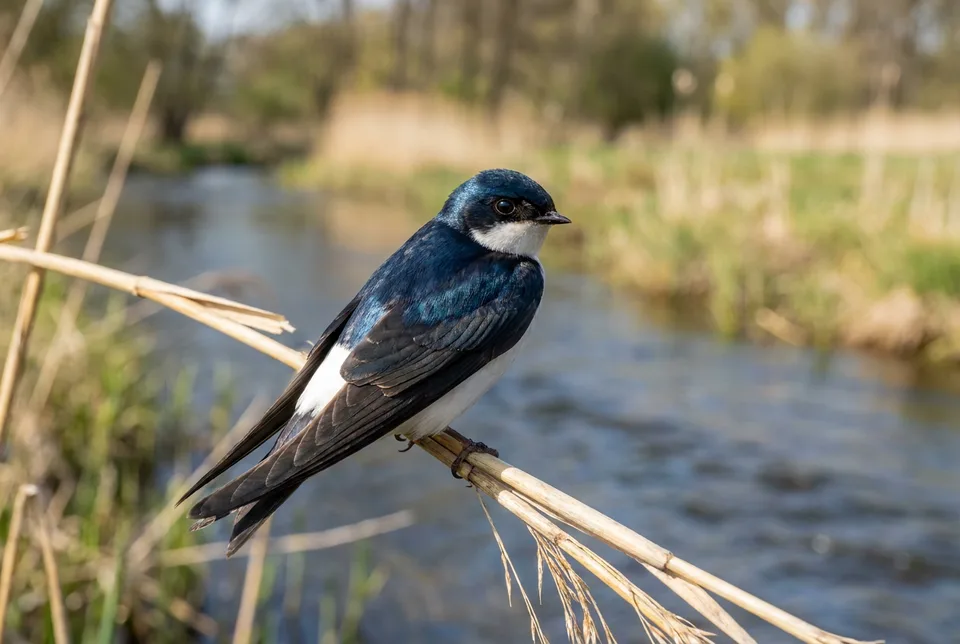
The Common House Martin is a small aerial insectivore, registered as Delichon urbicum. Glossy blue-black upperparts, white underparts and a sharply contrasting white rump make it distinctive when seen well. Its short forked tail lacks the long streamers associated with an adult Barn Swallow. House Martins belong to the swallow family, unlike the superficially similar Common Swift. They catch insects in flight and commonly attach mud nests beneath building eaves. Wetlands can provide productive feeding airspace, but the species is not confined to riverbanks. The registered Saône association is Mâcon municipality, where the original atlas lists Hirondelle de fenêtre with the correct scientific name. That supports occurrence within the commune, not a particular nesting colony, bridge or cruise quay. A shore walk that includes town buildings and open sky is more appropriate than relying on a view from the ship.
Behaviour & reproduction

Size
Not independently verified in the retrieved evidence
Weight
Not independently verified in the retrieved evidence
Lifespan
Not independently verified in the retrieved evidence
Status
See sourced assessment

House Martins spend much of their visible time flying as they collect insect prey. Birds can circle over buildings, work above open ground or gather over water where flying insects are concentrated. Their flight includes repeated turns and changes of height rather than the sustained ground-level searching of a seed-eating bird. Nest visits may be brief, with an adult disappearing under an eave before returning to the air. Mud collection is another distinctive behaviour, but a bird at a puddle should be given space rather than approached for a close photograph. House Martins are migratory, spending the nonbreeding period in Africa according to the RSPB account. That broad movement does not define arrival or departure dates for Mâcon. During a town visit, observe flight routes and any visible nest access from a respectful public position without blocking entrances or encouraging repeated alarm responses.

Top wildlife locations

Saone river landscape — River Cruises wildlife habitatAI-modified

Saone

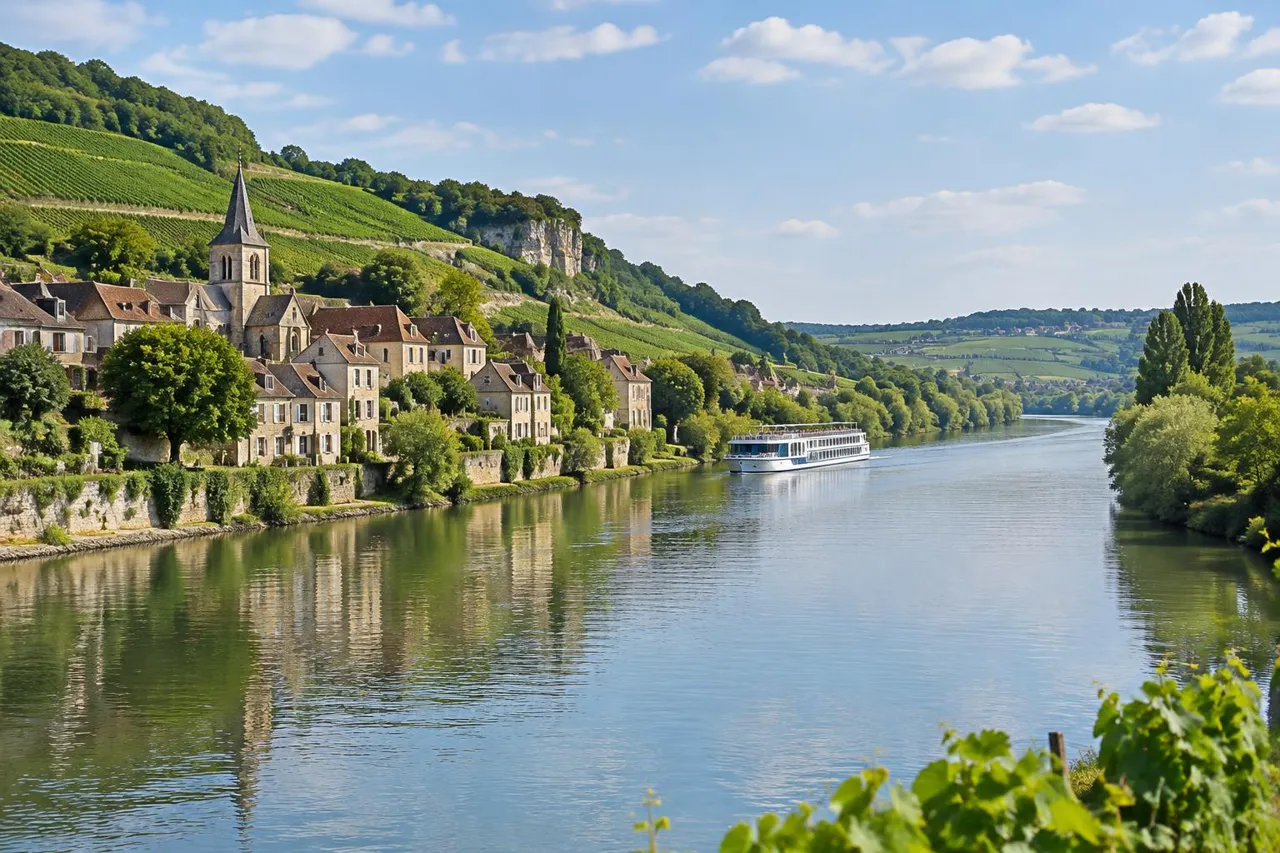
Mâcon municipal stop on the Saône. Atlas evidence is commune-wide, not a specific riverbank sighting.
Explore river cruises

Destinations describe the species' habitat, not guaranteed cruise stops. Some animals require an optional inland excursion or are found in restricted reserves.

Fun facts about the Common House Martin

  • The registry uses Delichon urbicum.
  • The French atlas name is Hirondelle de fenêtre.
  • The white rump is a key identification feature.
  • Its underside is white.
  • The short forked tail lacks long streamers.
  • White feathers cover the legs and toes.
  • It catches insects in flight.
  • Mud nests are commonly attached beneath eaves.
  • The Mâcon evidence is municipality-wide rather than a named riverbank colony.

Best time to see the Common House Martin

The Mâcon atlas directly confirms House Martin occurrence and shows a latest observation year, but the retrieved summary does not establish a complete local monthly viewing season. The monthly array is consequently empty. RSPB describes House Martins as summer migrants that winter in Africa; this is useful species biology but not direct proof of particular months at the Saône stop. A broad spring or summer travel recommendation should therefore not be converted into an exact numbered calendar. Visibility also changes with weather and the distribution of flying insects: birds may feed high overhead, low above water or elsewhere within the commune. For a planned visit, consult recent Mâcon observations and look for active flight routes without assuming an occupied colony at the quay. The presence of old mud nests alone is not proof that birds are currently present, breeding successfully or available to observe during the cruise call.

Common House Martin: season matrix by destination

Highlighted months reflect the stated local evidence, not guaranteed encounters. Neutral months mean no verified monthly viewing window, not absence. Observation records and recommended viewing windows are distinct.

Saone

Municipal occurrence verified; general migration biology does not establish exact local viewing months.

JanFebMarAprMayJunJulAugSepOctNovDec
Explore river cruises

Where the Common House Martin lives

Buildings supply many House Martin nesting sites, while the surrounding airspace supplies food. Towns and villages can therefore support the species where suitable eaves, mud and flying insects remain available. Wetlands and lakes may be feeding hotspots, but a river’s presence alone does not establish a colony on nearby buildings. At Mâcon, the atlas evidence is commune-wide and does not identify a particular Saône bridge, quay or nesting façade. Search public streets and open spaces for flying birds without treating private buildings as visitor access points. Retaining nests and access to suitable mud can matter to local breeding opportunities, whereas renovation or exclusion can remove traditional sites. Do not approach a nest beneath an eave simply because it is visible from the street. The relevant river experience is an urban shore stop with potential overhead observations, not a verified main-channel wildlife encounter.

What the Common House Martin eats

House Martins catch small flying insects, taking their food in the air rather than collecting seeds or grazing vegetation. Their use of wetland airspace is linked to insect availability, not an aquatic diet in the manner of a diving duck. Feeding height and location can change as insects become concentrated above water, streets, trees or open ground. A circling group may therefore shift rapidly during the same visit. Watch how the birds turn and pursue prey, but do not infer the exact insect species from flight behaviour alone. The white rump remains an identification aid even when the food itself is invisible. Never release insects, throw food or use bait to hold a group over a photographic position. Protecting natural feeding conditions means leaving waterside vegetation and insect-producing habitats undisturbed. At a nest site, avoid prolonged observation that interferes with adults delivering their normal food to dependent young.

Species at a glance

Common name
Common House Martin
Scientific name
Delichon urbicum
Animal group
Birds
Size
Not independently verified in the retrieved evidence
Weight
Not independently verified in the retrieved evidence
Lifespan
Not independently verified in the retrieved evidence
Status
RSPB UK Birds of Conservation Concern: Red. Global and French categories were not independently verified.
Identification
The clearest field mark is the white rump contrasting with the dark upperparts. Combine it with clean white underparts, glossy blue-black above, a compact body and a short forked tail without long streamers. Close views can show white feathering on the legs and toes, a detail unlikely to be visible during a distant cruise-deck view. Barn Swallows differ in tail shape and other plumage details, while Sand Martins are browner above and show a breast band. Common Swifts have much longer, narrower curved wings and are predominantly dark rather than white below. Do not identify a bird solely because it is flying around houses: swallows and swifts can share the same airspace. Follow several banking turns to see the upper surface and rump. Poor light may conceal colour, but the contrasting rump and compact proportions remain useful when a brief side-on silhouette does not.

Common House Martin: frequently asked questions

Where can I see the Common House Martin?
Saone. At Mâcon, scan the sky above public streets, open spaces and the riverfront, then follow individual birds long enough to check the rump and tail. Binoculars with a wide field of view are useful for fast-moving groups. A brief view against a dark building can reveal white markings that disappear against a bright sky. Where birds visit eaves, stand far enough away that adults continue their normal approach without hesitation. Do not stand immediately below a nest entrance, use a pole-mounted camera or seek access through private property. Avoid photographing nests for prolonged periods when feeding adults appear reluctant to enter. The atlas supports municipal occurrence, not a mapped riverside colony. Record the actual location and whether birds were feeding, passing overhead or visiting nests; these observations have different meanings and should not be collapsed into an unsupported claim of nesting beside the Saône.
When is the best time to see the Common House Martin?
The Mâcon atlas directly confirms House Martin occurrence and shows a latest observation year, but the retrieved summary does not establish a complete local monthly viewing season. The monthly array is consequently empty. RSPB describes House Martins as summer migrants that winter in Africa; this is useful species biology but not direct proof of particular months at the Saône stop. A broad spring or summer travel recommendation should therefore not be converted into an exact numbered calendar. Visibility also changes with weather and the distribution of flying insects: birds may feed high overhead, low above water or elsewhere within the commune. For a planned visit, consult recent Mâcon observations and look for active flight routes without assuming an occupied colony at the quay. The presence of old mud nests alone is not proof that birds are currently present, breeding successfully or available to observe during the cruise call.
How big does the Common House Martin get?
Not independently verified in the retrieved evidence. Adult weight: Not independently verified in the retrieved evidence. Size varies with age, sex and population.
How should I behave around the Common House Martin?
At Mâcon, scan the sky above public streets, open spaces and the riverfront, then follow individual birds long enough to check the rump and tail. Binoculars with a wide field of view are useful for fast-moving groups. A brief view against a dark building can reveal white markings that disappear against a bright sky. Where birds visit eaves, stand far enough away that adults continue their normal approach without hesitation. Do not stand immediately below a nest entrance, use a pole-mounted camera or seek access through private property. Avoid photographing nests for prolonged periods when feeding adults appear reluctant to enter. The atlas supports municipal occurrence, not a mapped riverside colony. Record the actual location and whether birds were feeding, passing overhead or visiting nests; these observations have different meanings and should not be collapsed into an unsupported claim of nesting beside the Saône.
What does the Common House Martin eat?
House Martins catch small flying insects, taking their food in the air rather than collecting seeds or grazing vegetation. Their use of wetland airspace is linked to insect availability, not an aquatic diet in the manner of a diving duck. Feeding height and location can change as insects become concentrated above water, streets, trees or open ground. A circling group may therefore shift rapidly during the same visit. Watch how the birds turn and pursue prey, but do not infer the exact insect species from flight behaviour alone. The white rump remains an identification aid even when the food itself is invisible. Never release insects, throw food or use bait to hold a group over a photographic position. Protecting natural feeding conditions means leaving waterside vegetation and insect-producing habitats undisturbed. At a nest site, avoid prolonged observation that interferes with adults delivering their normal food to dependent young.
Are wildlife sightings guaranteed on a river cruise?
No. Animals move freely and routes, weather, access restrictions and local conditions influence every outing. Confirm the actual itinerary and shore program before booking.

Compare wildlife in the same destinations

Explore other birds recorded in these destinations. Similar surroundings do not mean the animals share the same habits or viewing season.

Species comparison by animal group and destination
Common House Martin in wetland habitat — Saone, River Cruises wildlifeAI-modifiedCommon House MartinAlpine Swift in wetland habitat — Saone, River Cruises wildlifeAI-modifiedAlpine SwiftBlack Redstart in wetland habitat — Saone, Douro, River Cruises wildlifeAI-modifiedBlack Redstart
Animal groupBirdsAnimal groupBirdsAnimal groupBirds
DestinationsSaoneDestinationsSaoneDestinationsSaone, Douro
Scientific name
Delichon urbicum
Scientific name
Scientific name
Previous speciesCommon GreenshankNext speciesCommon Kestrel
All river wildlife
On this page
  • 01About
  • 02Behaviour & reproduction
  • 03Top wildlife locations
  • 04Fun facts
  • 05Best season
  • 06Season matrix by destination
  • 07Habitat
  • 08Diet
  • 09Species at a glance
  • 10Questions & answers
  • 11Compare

Find your river cruise

AI-modified
Plan your trip

Find your next river journey

Compare destinations, shore programs and dates with the animals and habitats you would love to see.

  • Daily shore excursions
  • Responsible wildlife watching
  • Boutique river ships
Explore river cruises