Bluerides – Blue Rides - Book Liveaboards worldwideOCEAN ADVENTURES
River CruisesRiversNature & WildlifeOur Promise
River CruisesRiversNature & WildlifeOur PromiseSign In

River destinations

  • River destinations
  • Amazon
  • Danube
  • Rhine
  • Mekong
  • Nile

Ships & departures

  • River Cruise Search
  • Deals

Nature & Wildlife

  • Nature & Wildlife

Travel support

  • Our Promise
  • Contact

Contact

Get in Touch

Get in touch anytime, we're happy to help you find the right trip or sort out any question.

EmailWrite us, we usually reply within a few hours.
contact@bluerides.com
WhatsAppChat with us on WhatsApp, Mon–Fri 10:00–16:00 (CET).
Start WhatsApp Chat
PhoneCall us, we're happy to help.
Free call, Mon–Fri 10 AM – 8 PM (CET).
Europe+49 800 1144 990USA+1 888 557 7735UK+44 800 707 4152Australia+61 2 8599 6113Canada+1 888 557 7735
Which river journey is yours?Answer 8 quick questions and find the river cruise that fits you.
8 questions, 1 minute·Plus Gift
Secure Payment MethodsYour payments are fully secured with AES-256 encryption.
Powered byStripeWiseAMEXPayGoogle PaySEPABank
Imprint·Terms & Conditions·Privacy Policy·About·Contact·Liability Waiver·Affiliate Program·Cruise·Blog·
Visit us here

© 2026 Blue Rides. All rights reserved.

Bluerides – Blue Rides - Book Liveaboards worldwideOCEAN ADVENTURES
River CruisesRiversNature & WildlifeOur Promise
River CruisesRiversNature & WildlifeOur PromiseSign In
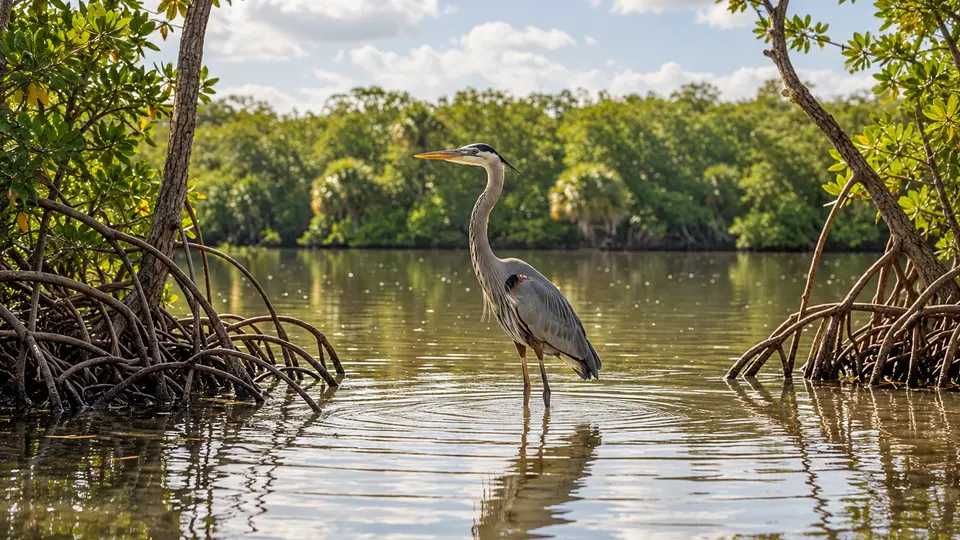
Great blue heron in wetland habitat — Columbia, River Cruises wildlifeAI-modified
Home›River Cruises›River Wildlife›Great Blue Heron

Great Blue HeronArdea herodiasWhere and when to see them

Previous speciesGreat Black-Backed GullNext speciesGreat Cormorant

Great Blue Heron at a glance

A Great Blue Heron can make a river margin appear motionless until a sudden strike reveals the purpose of its patience. Long legs, a strong pointed bill and blue-grey plumage distinguish this large wader, while slow wingbeats and a folded neck mark its flight. Cornell describes feeding in freshwater, salt water and even fields, making it more versatile than a simple fish-eating stereotype suggests. The registered river sites offer places to examine shallow edges and visible roosting trees, not a promise that every bend holds a bird. A stationary heron may be difficult to notice against reeds or timber; deliberate scanning often finds it before any movement does.

Behaviour & reproduction

Size
Not verified
Weight
Not verified
Lifespan
Not verified
Status
Not verified

Great Blue Herons hunt by standing still or taking slow deliberate steps, then striking rapidly when prey comes within reach. A solitary feeding bird and a crowded nesting colony are both normal parts of the species’ life. Males establish nest sites and bring much of the material, while females weave the platform and cup. Trees are common nest supports, but other structures and ground sites can be used. Feeding birds may remain focused on one patch for a long time, rewarding patient observation. Do not mistake tolerance of a distant observer for permission to approach: a flushed heron loses a feeding opportunity, and disturbance near a colony can affect many nests at once.

Top wildlife locations

Columbia river landscape — River Cruises wildlife habitatAI-modified

Columbia

Most records cover Umatilla refuge backwaters along the Columbia near Boardman–Irrigon. Seasonal waterfowl may be best in winter rather than the sailing season. Bighorn sheep require a separate Hells Canyon excursion on the Snake River.
Explore river cruises

Destinations describe the species' habitat, not guaranteed cruise stops. Some animals require an optional inland excursion or are found in restricted reserves.

Fun facts about the Great Blue Heron

  • The neck is folded in normal flight.
  • Long legs trail behind flying birds.
  • Hunting can involve long motionless waits.
  • Fish are only part of the diet.
  • Small mammals are also eaten.
  • The species feeds in fields as well as wetlands.
  • Colonies can contain many nests.
  • Males bring much of the nesting material.
  • Females weave the nest platform and cup.

Best time to see the Great Blue Heron

No numerical local viewing calendar is verified for the registered Columbia association. A heron at a feeding margin and a heron commuting to a nesting colony are different viewing opportunities. General range maps and conspicuous nests do not show when birds are predictably visible from a particular river overlook.

Great Blue Heron: season matrix by destination

Highlighted months reflect the stated local evidence, not guaranteed encounters. Neutral months mean no verified monthly viewing window, not absence. Observation records and recommended viewing windows are distinct.

Columbia

No river-specific wildlife calendar is confirmed. Check the actual river reach, local conditions and excursion access with your operator.

JanFebMarAprMayJunJulAugSepOctNovDec
Explore river cruises

Where the Great Blue Heron lives

Freshwater marshes, riverbanks, ponds, estuaries and coastal shallows all provide hunting habitat. Grassland and agricultural fields can also supply prey, including small mammals and frogs. Nesting colonies are often near feeding areas, on islands or in isolated wooded wetlands, but a heron can commute between different parts of the landscape. At the Columbia and Upper Mississippi registered reaches, examine shallow edges, sheltered backwaters and visible trees from legal overlooks. Do not enter an island or wooded colony to improve a nest view. A tall tree with bulky platforms can be investigated safely through a scope from a public viewpoint without treating the surrounding habitat as an open-access photography site.

What the Great Blue Heron eats

Fish are familiar prey, but Great Blue Herons also eat amphibians, reptiles, small mammals, insects and other birds. Cornell describes both grasping smaller prey and using the bill to impale larger fish, followed by handling before swallowing. A bird feeding in a field is therefore not out of place or necessarily searching for water. Watch the sequence from stalking to capture and handling rather than judging the diet from location alone. Sharp-spined prey may require manipulation that is hard to interpret at distance. Record what is actually visible, and never supply fish or other bait to bring a heron closer; an undisturbed feeding sequence is both safer and more informative.

Species at a glance

Common name
Great Blue Heron
Scientific name
Ardea herodias
Animal group
Birds
Size
Not verified in the accessible source text.
Weight
Not verified in the accessible source text.
Lifespan
Wild lifespan not verified in the accessible source text.
Status
Current global conservation assessment not verified.
Identification
The combination of large size, blue-grey body, long legs and a heavy pointed bill is the starting point. Flying birds usually retract the neck, producing a different silhouette from cranes with extended necks. The legs trail well behind the body, and wingbeats are slow and deep. Young birds can be less crisply patterned than adults, so precise head markings should not be expected on every individual. Light can make grey plumage appear surprisingly pale or dark. Use structure, flight posture and feeding behaviour together, while considering other herons present locally. A distant tall wader should remain uncertain if bill, neck posture and body proportions cannot be seen.

Great Blue Heron: frequently asked questions

Where can I see the Great Blue Heron?
Columbia. Scan the shallow bank slowly, checking shapes beside fallen wood and reed clumps. Once a heron is found, choose a stable position and allow time for a natural strike rather than advancing to make it move. A scope reveals bill handling and subtle steps without crowding the bird. In flight, follow the slow wingbeats and trailing legs long enough to see whether the neck is folded. At river overlooks, check open fields as well as water, but respect private land and colony closures. If the bird straightens, watches you continuously or walks away from its feeding patch, increase distance. Never use a boat’s approach to force a dramatic takeoff.
When is the best time to see the Great Blue Heron?
No numerical local viewing calendar is verified for the registered Columbia association. A heron at a feeding margin and a heron commuting to a nesting colony are different viewing opportunities. General range maps and conspicuous nests do not show when birds are predictably visible from a particular river overlook.
How big does the Great Blue Heron get?
Not verified in the accessible source text.. Adult weight: Not verified in the accessible source text.. Size varies with age, sex and population.
How should I behave around the Great Blue Heron?
Scan the shallow bank slowly, checking shapes beside fallen wood and reed clumps. Once a heron is found, choose a stable position and allow time for a natural strike rather than advancing to make it move. A scope reveals bill handling and subtle steps without crowding the bird. In flight, follow the slow wingbeats and trailing legs long enough to see whether the neck is folded. At river overlooks, check open fields as well as water, but respect private land and colony closures. If the bird straightens, watches you continuously or walks away from its feeding patch, increase distance. Never use a boat’s approach to force a dramatic takeoff.
What does the Great Blue Heron eat?
Fish are familiar prey, but Great Blue Herons also eat amphibians, reptiles, small mammals, insects and other birds. Cornell describes both grasping smaller prey and using the bill to impale larger fish, followed by handling before swallowing. A bird feeding in a field is therefore not out of place or necessarily searching for water. Watch the sequence from stalking to capture and handling rather than judging the diet from location alone. Sharp-spined prey may require manipulation that is hard to interpret at distance. Record what is actually visible, and never supply fish or other bait to bring a heron closer; an undisturbed feeding sequence is both safer and more informative.
Are wildlife sightings guaranteed on a river cruise?
No. Animals move freely and routes, weather, access restrictions and local conditions influence every outing. Confirm the actual itinerary and shore program before booking.

Compare wildlife in the same destinations

Explore other birds recorded in these destinations. Similar surroundings do not mean the animals share the same habits or viewing season.

Species comparison by animal group and destination
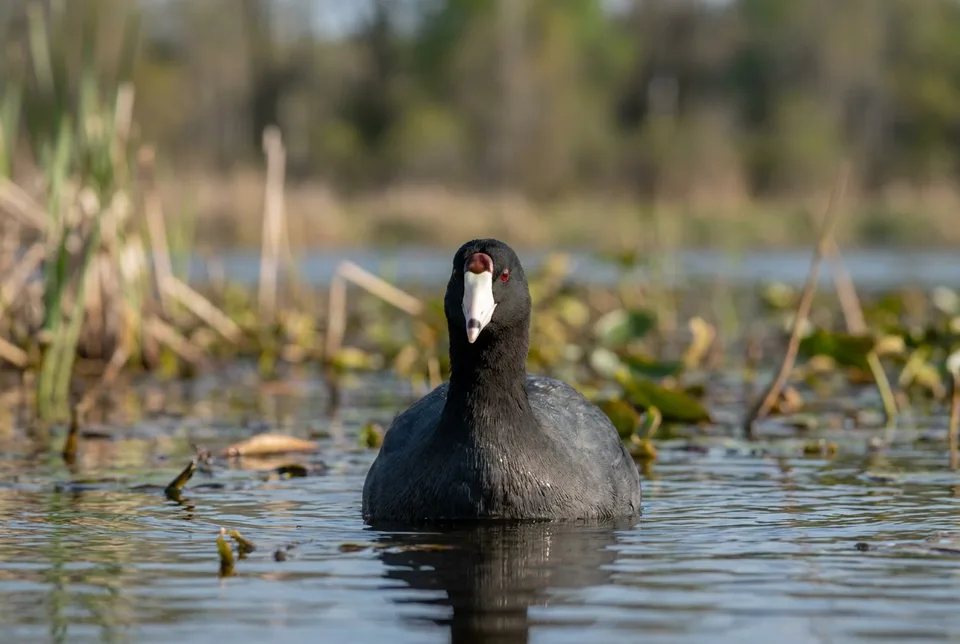
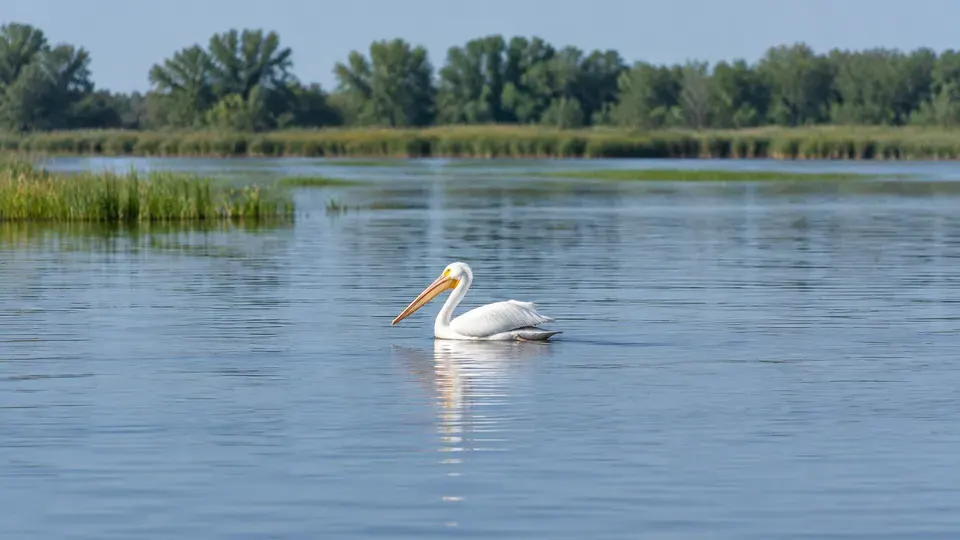
Great blue heron in wetland habitat — Columbia, River Cruises wildlifeAI-modifiedGreat Blue HeronAmerican Coot in wetland habitat — Columbia, River Cruises wildlifeAI-modifiedAmerican CootAmerican white pelican in wetland habitat — Columbia, Mississippi, River Cruises wildlifeAI-modifiedAmerican White Pelican
Animal groupBirdsAnimal groupBirdsAnimal groupBirds
DestinationsColumbiaDestinationsColumbiaDestinationsColumbia, Mississippi
Scientific name
Ardea herodias
Scientific name
Scientific name
Previous speciesGreat Black-Backed GullNext speciesGreat Cormorant
All river wildlife
On this page
  • 01About
  • 02Behaviour & reproduction
  • 03Top wildlife locations
  • 04Fun facts
  • 05Best season
  • 06Season matrix by destination
  • 07Habitat
  • 08Diet
  • 09Species at a glance
  • 10Questions & answers
  • 11Compare

Find your river cruise

AI-modified
Plan your trip

Find your next river journey

Compare destinations, shore programs and dates with the animals and habitats you would love to see.

  • Daily shore excursions
  • Responsible wildlife watching
  • Boutique river ships
Explore river cruises