Bluerides – Blue Rides - Book Liveaboards worldwideOCEAN ADVENTURES
River CruisesRiversNature & WildlifeOur Promise
River CruisesRiversNature & WildlifeOur PromiseSign In

River destinations

  • River destinations
  • Amazon
  • Danube
  • Rhine
  • Mekong
  • Nile

Ships & departures

  • River Cruise Search
  • Deals

Nature & Wildlife

  • Nature & Wildlife

Travel support

  • Our Promise
  • Contact

Contact

Get in Touch

Get in touch anytime, we're happy to help you find the right trip or sort out any question.

EmailWrite us, we usually reply within a few hours.
contact@bluerides.com
WhatsAppChat with us on WhatsApp, Mon–Fri 10:00–16:00 (CET).
Start WhatsApp Chat
PhoneCall us, we're happy to help.
Free call, Mon–Fri 10 AM – 8 PM (CET).
Europe+49 800 1144 990USA+1 888 557 7735UK+44 800 707 4152Australia+61 2 8599 6113Canada+1 888 557 7735
Which river journey is yours?Answer 8 quick questions and find the river cruise that fits you.
8 questions, 1 minute·Plus Gift
Secure Payment MethodsYour payments are fully secured with AES-256 encryption.
Powered byStripeWiseAMEXPayGoogle PaySEPABank
Imprint·Terms & Conditions·Privacy Policy·About·Contact·Liability Waiver·Affiliate Program·Cruise·Blog·
Visit us here

© 2026 Blue Rides. All rights reserved.

Bluerides – Blue Rides - Book Liveaboards worldwideOCEAN ADVENTURES
River CruisesRiversNature & WildlifeOur Promise
River CruisesRiversNature & WildlifeOur PromiseSign In
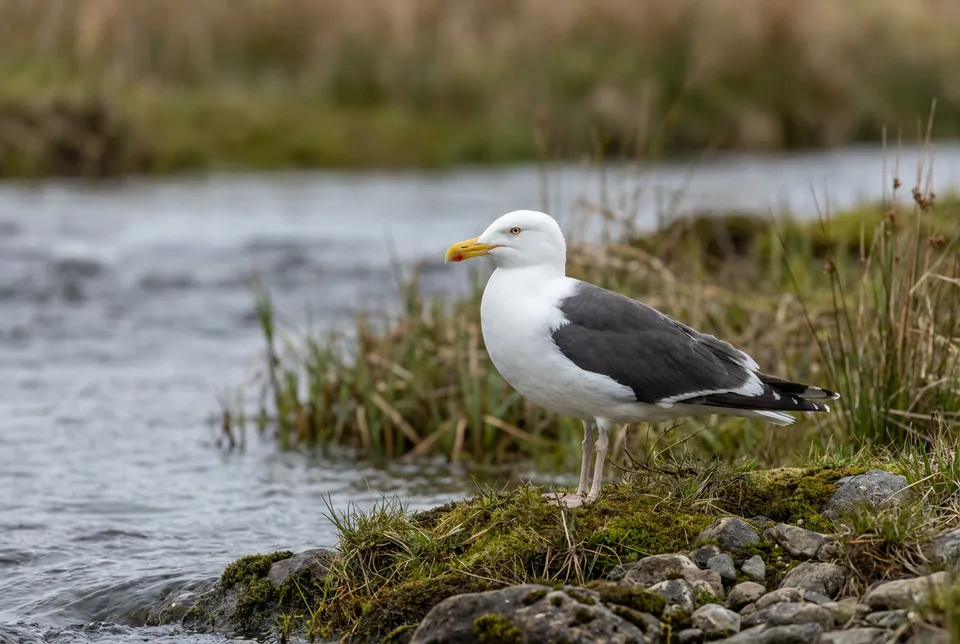
Great Black-Backed Gull in wetland habitat — Seine, River Cruises wildlifeAI-modified
Home›River Cruises›River Wildlife›Great Black-Backed Gull

Great Black-Backed GullLarus marinusWhere and when to see them

Previous speciesGreat Black HawkNext speciesGreat Blue Heron

Great Black-Backed Gull at a glance

The Great Black-backed Gull is a powerfully built gull whose adult dark mantle contrasts sharply with its white body. Cornell emphasises the heavy bill, thick neck and broad wings. On a Seine itinerary, its registered association belongs to the lower tidal estuary toward Honfleur and Le Havre, not the freshwater Paris reaches. Source: https://www.allaboutbirds.org/guide/Great_Black-backed_Gull/lifehistory
Behaviour & reproduction

Size
Species-specific body-length measurement not verified.
Weight
Species-specific weight not verified.
Lifespan
Species-specific lifespan not verified.
Status
A current formal global conservation assessment was not verified.

This gull can hunt, scavenge and steal food from other animals. Cornell describes birds following fishing vessels and searching shorelines or mudflats. Resting groups can remain still for long periods, making patient scope work useful. An individual confronting another bird may be seeking food rather than defending a nest.

Top wildlife locations

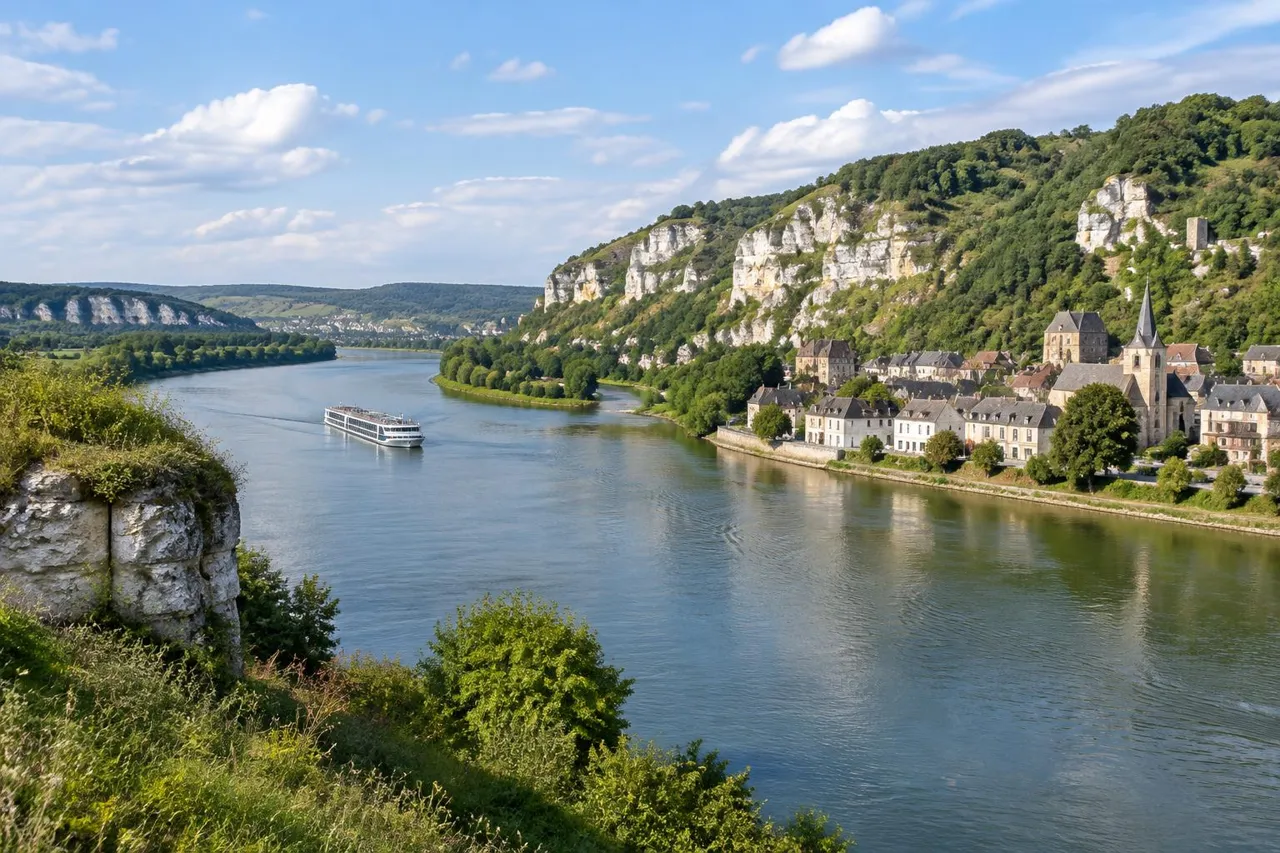
Seine river landscape — River Cruises wildlife habitatAI-modified

Seine

OPTIONAL ESTUARY: ZPS Estuaire et marais de la Basse-Seine, lower tidal Seine toward Honfleur/Le Havre; includes protected flats beyond port, not Paris freshwater reaches. Viewing guidance: Winter monitoring; estuary water and banks. Tide-dependent; use authorized shore viewpoints; monitoring evidence 2015–2018, not a current sighting promise.
Explore river cruises

Destinations describe the species' habitat, not guaranteed cruise stops. Some animals require an optional inland excursion or are found in restricted reserves.

Fun facts about the Great Black-Backed Gull

  • Adults have pink legs.
  • The adult mantle is nearly black.
  • Young birds have checkered upperparts.
  • Its bill is particularly heavy.
  • It both hunts and scavenges.
  • Food theft is part of its feeding behaviour.

Best time to see the Great Black-Backed Gull

The registry refers to winter monitoring from 2015–2018, a useful qualitative context but not a retrieved species-specific numerical occurrence calendar. Tidal exposure changes where gulls gather within a day and must not be confused with monthly seasonality. No month range is assigned from winter wording alone.

Great Black-Backed Gull: season matrix by destination

Highlighted months reflect the stated local evidence, not guaranteed encounters. Neutral months mean no verified monthly viewing window, not absence. Observation records and recommended viewing windows are distinct.

Seine

No qualifying local recurring monthly observation calendar was verified. Registry guidance is retained as qualitative context only; dated sightings, breeding dates and general migration patterns are not converted into months.

JanFebMarAprMayJunJulAugSepOctNovDec
Explore river cruises

Where the Great Black-Backed Gull lives

The verified general account includes ocean coasts, fishing docks, mudflats and open resting places. Locally the scope is the protected Estuaire et marais de la Basse-Seine, including flats beyond the ports. Access must remain on authorised viewpoints; a port visit is not permission to walk onto protected intertidal feeding grounds.

What the Great Black-Backed Gull eats

Cornell documents fish, marine invertebrates, carrion, discarded food and other birds or their eggs. The species can also obtain meals by stealing from other feeders. This flexible diet helps explain why birds appear in both natural shore habitats and working harbours. A lower-Seine quantitative diet study was not verified.

Species at a glance

Common name
Great Black-Backed Gull
Scientific name
Larus marinus
Animal group
Birds
Size
Species-specific body-length measurement not verified.
Weight
Species-specific weight not verified.
Lifespan
Species-specific lifespan not verified.
Status
A current formal global conservation assessment was not verified.
Identification
Adults have nearly black upperparts, white head and underparts, pink legs and a heavy yellowish bill with a red lower-mandible spot. Younger birds are checkered rather than black-backed. Cornell stresses their large, stout build. Pink legs help separate adults from yellow-legged dark-backed gulls. https://www.allaboutbirds.org/guide/Great_Black-backed_Gull/id

Great Black-Backed Gull: frequently asked questions

Where can I see the Great Black-Backed Gull?
Seine. Use binoculars to locate the largest dark-backed gulls, then inspect leg colour and bill structure through a telescope. Keep the tidal flats undisturbed. Compare several birds at the same distance, since perspective can make size comparisons misleading. Never use food to attract a gull closer for identification.
When is the best time to see the Great Black-Backed Gull?
The registry refers to winter monitoring from 2015–2018, a useful qualitative context but not a retrieved species-specific numerical occurrence calendar. Tidal exposure changes where gulls gather within a day and must not be confused with monthly seasonality. No month range is assigned from winter wording alone.
How big does the Great Black-Backed Gull get?
Species-specific body-length measurement not verified.. Adult weight: Species-specific weight not verified.. Size varies with age, sex and population.
How should I behave around the Great Black-Backed Gull?
Use binoculars to locate the largest dark-backed gulls, then inspect leg colour and bill structure through a telescope. Keep the tidal flats undisturbed. Compare several birds at the same distance, since perspective can make size comparisons misleading. Never use food to attract a gull closer for identification.
What does the Great Black-Backed Gull eat?
Cornell documents fish, marine invertebrates, carrion, discarded food and other birds or their eggs. The species can also obtain meals by stealing from other feeders. This flexible diet helps explain why birds appear in both natural shore habitats and working harbours. A lower-Seine quantitative diet study was not verified.
Are wildlife sightings guaranteed on a river cruise?
No. Animals move freely and routes, weather, access restrictions and local conditions influence every outing. Confirm the actual itinerary and shore program before booking.

Compare wildlife in the same destinations

Explore other birds recorded in these destinations. Similar surroundings do not mean the animals share the same habits or viewing season.

Species comparison by animal group and destination
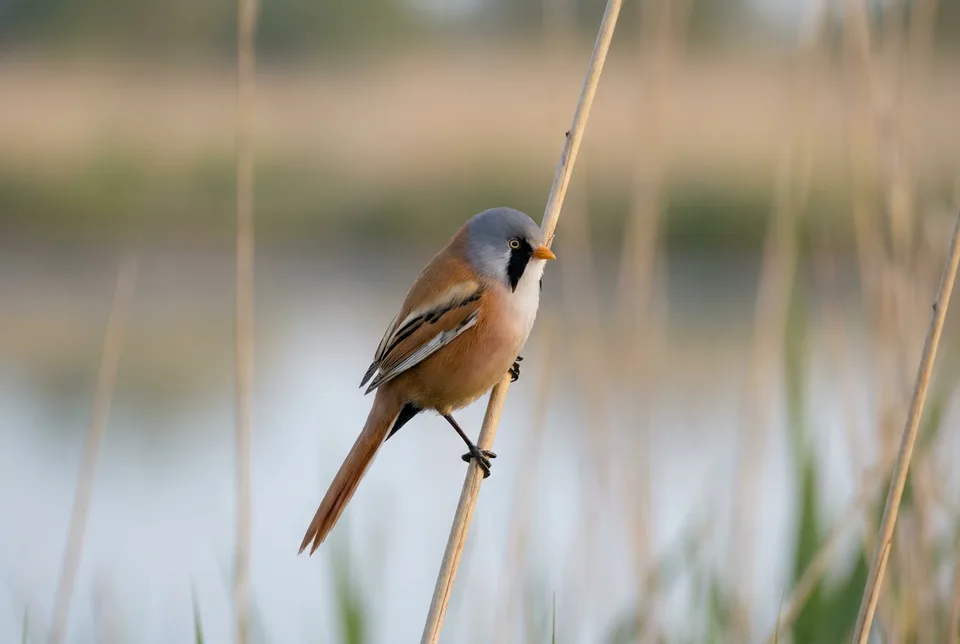
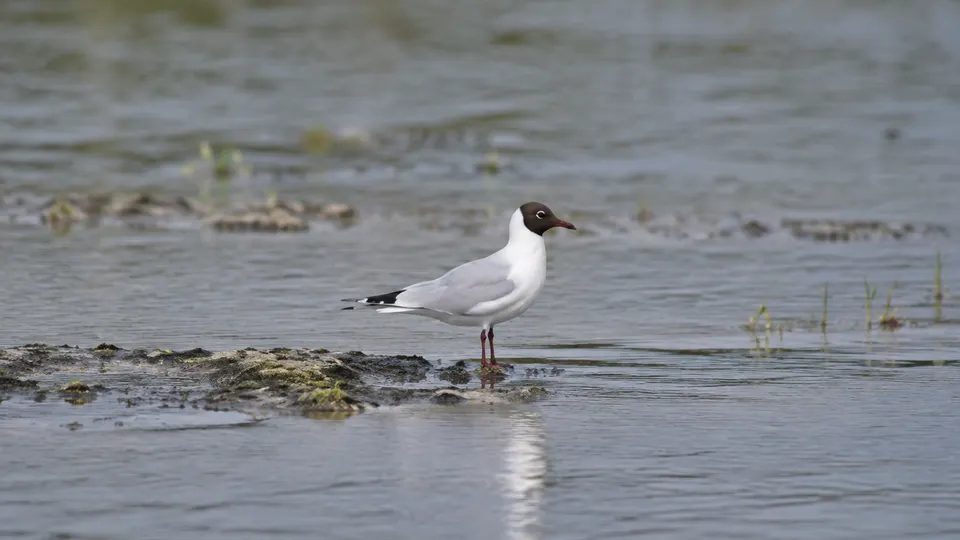
Great Black-Backed Gull in wetland habitat — Seine, River Cruises wildlifeAI-modifiedGreat Black-Backed GullBearded Reedling in wetland habitat — Seine, River Cruises wildlifeAI-modifiedBearded ReedlingBlack-headed gull in wetland habitat — Saone, Seine, Nile, Douro, River Cruises wildlifeAI-modifiedBlack-Headed Gull
Animal groupBirdsAnimal groupBirdsAnimal groupBirds
DestinationsSeineDestinationsSeineDestinationsSaone, Seine, Nile, Douro
Scientific name
Larus marinus
Scientific name
Scientific name
Previous speciesGreat Black HawkNext speciesGreat Blue Heron
All river wildlife
On this page
  • 01About
  • 02Behaviour & reproduction
  • 03Top wildlife locations
  • 04Fun facts
  • 05Best season
  • 06Season matrix by destination
  • 07Habitat
  • 08Diet
  • 09Species at a glance
  • 10Questions & answers
  • 11Compare

Find your river cruise

AI-modified
Plan your trip

Find your next river journey

Compare destinations, shore programs and dates with the animals and habitats you would love to see.

  • Daily shore excursions
  • Responsible wildlife watching
  • Boutique river ships
Explore river cruises