Bluerides – Blue Rides - Book Liveaboards worldwideOCEAN ADVENTURES
River CruisesRiversNature & WildlifeOur Promise
River CruisesRiversNature & WildlifeOur PromiseSign In

River destinations

  • River destinations
  • Amazon
  • Danube
  • Rhine
  • Mekong
  • Nile

Ships & departures

  • River Cruise Search
  • Deals

Nature & Wildlife

  • Nature & Wildlife

Travel support

  • Our Promise
  • Contact

Contact

Get in Touch

Get in touch anytime, we're happy to help you find the right trip or sort out any question.

EmailWrite us, we usually reply within a few hours.
contact@bluerides.com
WhatsAppChat with us on WhatsApp, Mon–Fri 10:00–16:00 (CET).
Start WhatsApp Chat
PhoneCall us, we're happy to help.
Free call, Mon–Fri 10 AM – 8 PM (CET).
Europe+49 800 1144 990USA+1 888 557 7735UK+44 800 707 4152Australia+61 2 8599 6113Canada+1 888 557 7735
Which river journey is yours?Answer 8 quick questions and find the river cruise that fits you.
8 questions, 1 minute·Plus Gift
Secure Payment MethodsYour payments are fully secured with AES-256 encryption.
Powered byStripeWiseAMEXPayGoogle PaySEPABank
Imprint·Terms & Conditions·Privacy Policy·About·Contact·Liability Waiver·Affiliate Program·Cruise·Blog·
Visit us here

© 2026 Blue Rides. All rights reserved.

Bluerides – Blue Rides - Book Liveaboards worldwideOCEAN ADVENTURES
River CruisesRiversNature & WildlifeOur Promise
River CruisesRiversNature & WildlifeOur PromiseSign In
Greater Coucal in wetland habitat — Mekong, River Cruises wildlifeAI-modified
Home›River Cruises›River Wildlife›Greater Coucal

Greater CoucalCentropus sinensisWhere and when to see them

Previous speciesGreater AniNext speciesGreater White-fronted Goose

Greater Coucal at a glance

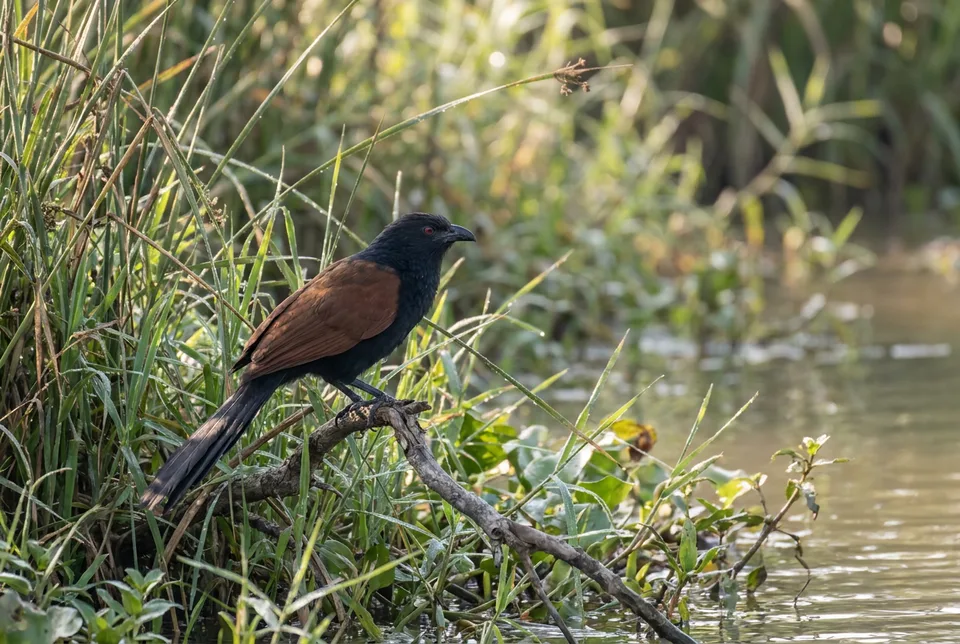
The Greater Coucal is a large cuckoo of southern and southeastern Asia, with a dark body, chestnut wings and a conspicuous long tail. It is not a pheasant, despite the alternative name crow pheasant used in some accounts. Unlike brood-parasitic cuckoos, it builds a nest and raises its own young. The Animal Diversity Web account describes both parents participating in nesting and care. Its association with rivers concerns thick vegetation beside water, rather than a dependence on the open channel. The registered Mekong record belongs to Tra Su flooded forest near Chau Doc, an optional shore excursion. That historical survey establishes occurrence there, not predictable sightings from a passing cruise vessel.

Behaviour & reproduction

Size
Unknown
Weight
Unknown
Lifespan
Unknown
Status
Unknown

Walking, climbing and creeping through vegetation are central to Greater Coucal behaviour. Animal Diversity Web describes it as a weak flier that commonly pursues prey on the ground or within dense cover. A bird disappearing into shrubs has therefore not necessarily left the area. Early morning and late afternoon activity, and morning sunbathing on vegetation, offer useful behavioural contexts rather than guaranteed appointment times. Sunbathing birds may spread their wings and remain alone or with a partner. Deep, resonant repeated calls can reveal an otherwise hidden bird; softer exchanges occur between partners. These species-level observations help interpret an encounter at Tra Su but are not evidence of local abundance or breeding.

Top wildlife locations

Mekong river landscape — River Cruises wildlife habitatAI-modified

Mekong

Thirty birds are evidenced at Tra Su wetland in Vietnam’s Mekong Delta, requiring a suitable shore excursion. Four larger waterbirds refer to a separate Prek Toal/Tonlé Sap excursion in Cambodia. Northern Cambodian dolphin pools are excluded.
Explore river cruises

Destinations describe the species' habitat, not guaranteed cruise stops. Some animals require an optional inland excursion or are found in restricted reserves.

Fun facts about the Greater Coucal

  • It is a cuckoo, not a pheasant.
  • Chestnut wings contrast with the dark adult body.
  • The adult eye is deep reddish brown.
  • It commonly walks and climbs through dense cover.
  • It may sunbathe with its wings spread.
  • Its calls include deep repeated resonant notes.
  • Both parents participate in raising young.
  • Its diet includes arthropods and some small vertebrates.
  • Fruit and seeds are also reported foods.

Best time to see the Greater Coucal

No recurring monthly viewing window has been verified for the exact registered reach. The retained local evidence establishes historical occurrence rather than a sequence of repeat observations through the year. A trip date, a national residency description or a breeding season elsewhere cannot supply that missing local calendar. Accordingly, the location month arrays remain empty, and no season is labelled a guaranteed opportunity. For practical planning, consult the current site manager or a local guide about recent sightings and permitted access before arranging an excursion. Fresh information can guide a particular visit, but a single new sighting would still not establish an annual pattern. General biology in this profile should be read separately from local availability.

Greater Coucal: season matrix by destination

Highlighted months reflect the stated local evidence, not guaranteed encounters. Neutral months mean no verified monthly viewing window, not absence. Observation records and recommended viewing windows are distinct.

Mekong

No river-specific wildlife calendar is confirmed. Check the actual river reach, local conditions and excursion access with your operator.

JanFebMarAprMayJunJulAugSepOctNovDec
Explore river cruises

Where the Greater Coucal lives

Dense cover is the most useful habitat feature to look for, not simply the presence of a river. The checked account includes agricultural land, rainforest, woodland, scrub, grassland and gardens near human settlement. It specifically mentions vegetation near canals and rivers. These settings provide places to walk, climb and search for food while remaining partly concealed. Tra Su is the narrowly registered viewing context, so its wooded wetland margins are relevant search areas during an authorised excursion. This does not extend the record to every Mekong village, rice field or navigation channel. A continuous wall of vegetation may hold suitable cover while still allowing very little visibility from a visitor path.

What the Greater Coucal eats

Animal Diversity Web describes a mixed diet including arthropods, fruit, seeds and occasional small vertebrates. Named animal foods include moths, caterpillars, beetles, dragonflies, mice and reptiles. The account also describes ground-level searching and movement through densely vegetated areas. That is a very different feeding strategy from plunging into the river for fish or pursuing insects high above open water. The listed foods establish breadth, not a measured Tra Su diet. No local prey percentages, capture rates or seasonal food ratios are assigned here. During a sighting, distinguish a clearly observed capture from a bird merely walking through cover; do not identify a swallowed item that was never visible.

Species at a glance

Common name
Greater Coucal
Scientific name
Centropus sinensis
Animal group
Birds
Size
Unknown; not independently verified for this profile
Weight
Unknown; not independently verified for this profile
Lifespan
Unknown; not independently verified for this profile
Status
Unknown; current global assessment not independently verified
Identification
Check the combination of chestnut upperwings, dark body, long tail and deep reddish adult eye rather than relying on size alone. Animal Diversity Web describes a black bill and dark grey legs, with glossy purple-blue or black tones around the head and chest. Light can change the apparent sheen considerably. Juveniles differ, showing duller colours and barring, so an unfamiliar young bird should not be forced into an adult description. The local checklist includes Lesser Coucal as well, making a casual dark-bird identification inadequate. Obtain a stable view of the head, wings and tail where possible. If dense leaves conceal the distinguishing characters, retain the uncertainty instead of treating the checklist as confirmation.

Greater Coucal: frequently asked questions

Where can I see the Greater Coucal?
Mekong. During an authorised Tra Su flooded-forest excursion near Chau Doc, scan vegetated edges patiently for a dark bird with chestnut wings and listen before moving on. A resonant call may locate a hidden individual without providing a clear identification view. Let a walking bird emerge naturally instead of pushing into cover. Keep enough distance for normal behaviour to continue and use binoculars to inspect the eye, wings and tail. The local 2016 survey establishes historical occurrence, not a predictable main-channel sighting. Ask about current access and recent observations, and never use playback to bring a concealed bird towards the visitor route.
When is the best time to see the Greater Coucal?
No recurring monthly viewing window has been verified for the exact registered reach. The retained local evidence establishes historical occurrence rather than a sequence of repeat observations through the year. A trip date, a national residency description or a breeding season elsewhere cannot supply that missing local calendar. Accordingly, the location month arrays remain empty, and no season is labelled a guaranteed opportunity. For practical planning, consult the current site manager or a local guide about recent sightings and permitted access before arranging an excursion. Fresh information can guide a particular visit, but a single new sighting would still not establish an annual pattern. General biology in this profile should be read separately from local availability.
How big does the Greater Coucal get?
Unknown; not independently verified for this profile. Adult weight: Unknown; not independently verified for this profile. Size varies with age, sex and population.
How should I behave around the Greater Coucal?
During an authorised Tra Su flooded-forest excursion near Chau Doc, scan vegetated edges patiently for a dark bird with chestnut wings and listen before moving on. A resonant call may locate a hidden individual without providing a clear identification view. Let a walking bird emerge naturally instead of pushing into cover. Keep enough distance for normal behaviour to continue and use binoculars to inspect the eye, wings and tail. The local 2016 survey establishes historical occurrence, not a predictable main-channel sighting. Ask about current access and recent observations, and never use playback to bring a concealed bird towards the visitor route.
What does the Greater Coucal eat?
Animal Diversity Web describes a mixed diet including arthropods, fruit, seeds and occasional small vertebrates. Named animal foods include moths, caterpillars, beetles, dragonflies, mice and reptiles. The account also describes ground-level searching and movement through densely vegetated areas. That is a very different feeding strategy from plunging into the river for fish or pursuing insects high above open water. The listed foods establish breadth, not a measured Tra Su diet. No local prey percentages, capture rates or seasonal food ratios are assigned here. During a sighting, distinguish a clearly observed capture from a bird merely walking through cover; do not identify a swallowed item that was never visible.
Are wildlife sightings guaranteed on a river cruise?
No. Animals move freely and routes, weather, access restrictions and local conditions influence every outing. Confirm the actual itinerary and shore program before booking.

Compare wildlife in the same destinations

Explore other birds recorded in these destinations. Similar surroundings do not mean the animals share the same habits or viewing season.

Species comparison by animal group and destination
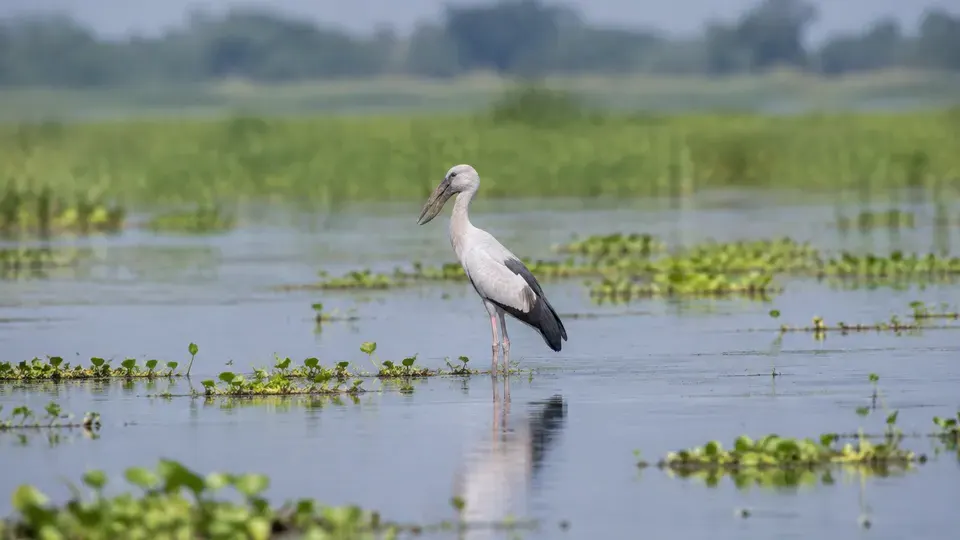
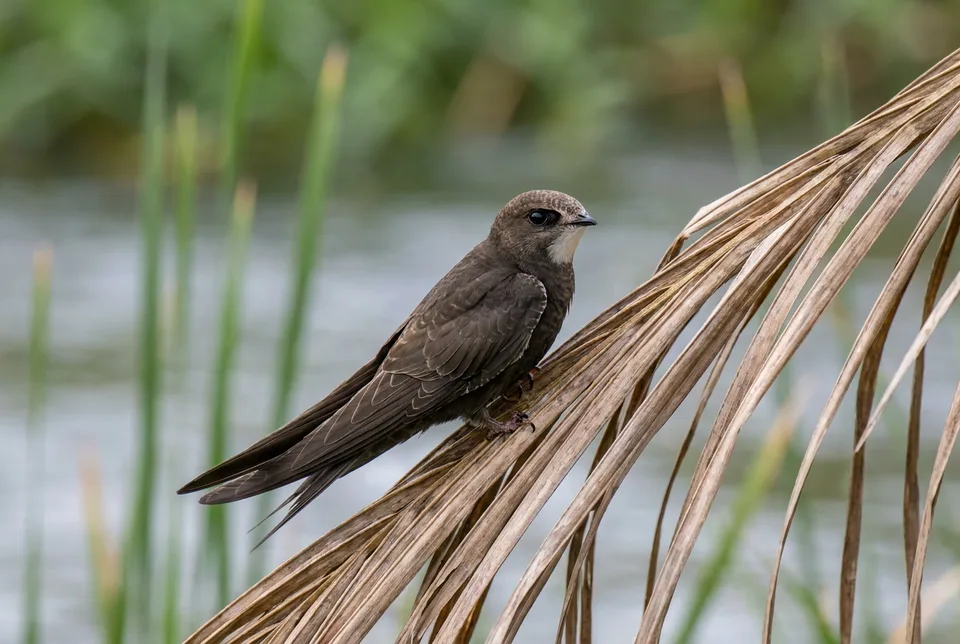
Greater Coucal in wetland habitat — Mekong, River Cruises wildlifeAI-modifiedGreater CoucalAsian openbill in wetland habitat — Mekong, River Cruises wildlifeAI-modifiedAsian OpenbillAsian Palm Swift in wetland habitat — Mekong, River Cruises wildlifeAI-modifiedAsian Palm Swift
Animal groupBirdsAnimal groupBirdsAnimal groupBirds
DestinationsMekongDestinationsMekongDestinationsMekong
Scientific name
Centropus sinensis
Scientific name
Scientific name
Previous speciesGreater AniNext speciesGreater White-fronted Goose
All river wildlife
On this page
  • 01About
  • 02Behaviour & reproduction
  • 03Top wildlife locations
  • 04Fun facts
  • 05Best season
  • 06Season matrix by destination
  • 07Habitat
  • 08Diet
  • 09Species at a glance
  • 10Questions & answers
  • 11Compare

Find your river cruise

AI-modified
Plan your trip

Find your next river journey

Compare destinations, shore programs and dates with the animals and habitats you would love to see.

  • Daily shore excursions
  • Responsible wildlife watching
  • Boutique river ships
Explore river cruises