
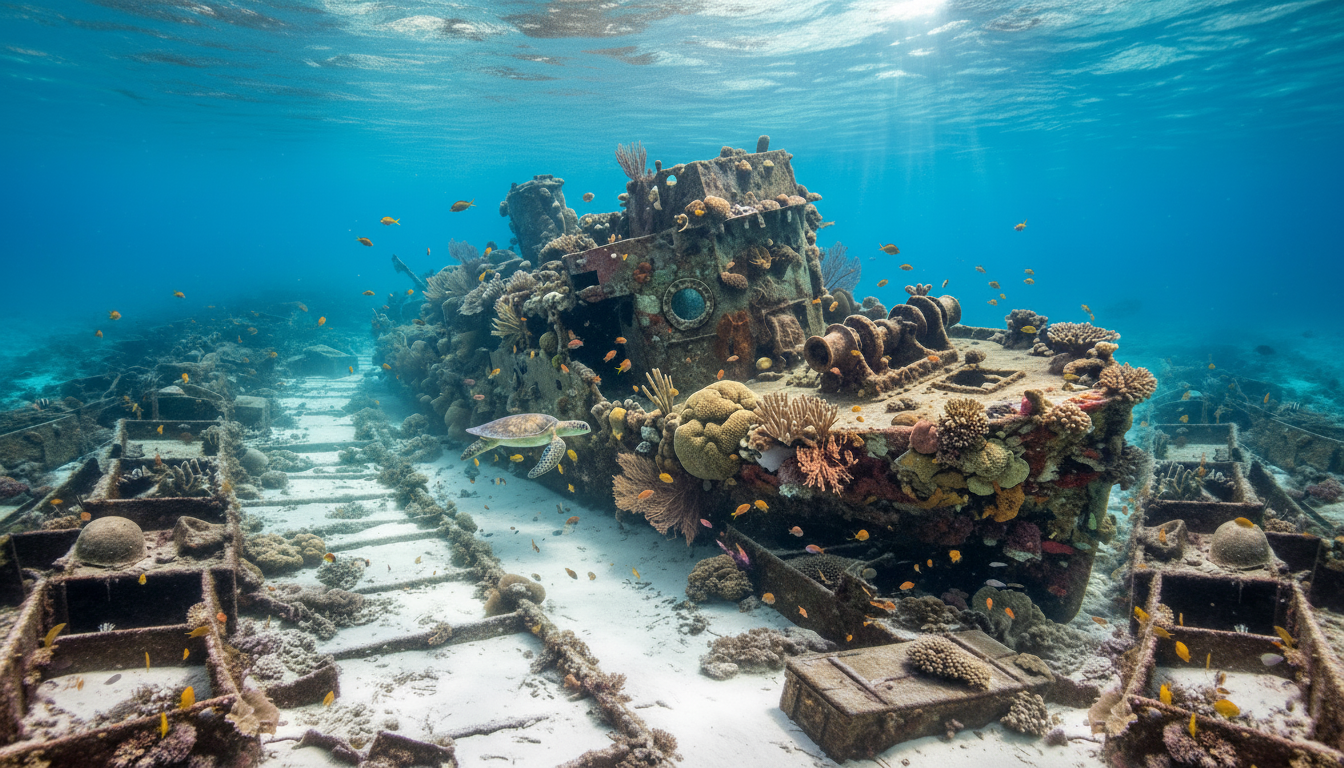
Imagine descending into the silent archives of history, where the coral-encrusted remains of war’s fury lay perfectly preserved, a testament to events that shaped the modern world. This isn’t a scene from a Hollywood epic; it’s an immersive, poignant reality awaiting you in the Solomon Islands. Welcome to the WWII Wreck Trail, an experience so profound it transcends mere diving, offering a tangible connection to the past beneath the shimmering surface of the Pacific.
Why WWII Wreck Trail Belongs on Your Bucket List
The Solomon Islands, specifically the waters surrounding Guadalcanal, are legendary for what lies beneath: the famed Iron Bottom Sound. This stretch of ocean, named for the sheer number of ships and aircraft that met their demise here during the brutal Battle of Guadalcanal, offers some of the most historically significant and archaeologically rich wreck diving on the planet. For history buffs, wreck enthusiasts, or anyone seeking a dive experience with unparalleled depth—both literally and figuratively—the WWII Wreck Trail isn't just a dive trip; it's a pilgrimage.
What sets this experience apart globally is the sheer concentration and diversity of intact WWII relics. You’re not just exploring a single wreck; you’re navigating an underwater museum, a sprawling battlefield frozen in time. From mighty naval destroyers and troop transports to fighter planes and bombers, each wreck tells a story, beautifully blending human tragedy with the astonishing resilience of marine life. This isn't just about admiring craftsmanship or challenging your diving skills; it’s about engaging with a monumental chapter of human history, a hauntingly beautiful legacy that only a select few will ever witness firsthand.
The WWII Wreck Trail appeals to a specific kind of diver: one who appreciates history, possesses a sense of adventure, and respects the solemnity of these underwater memorials. While the vibrant coral gardens and teeming reef life of the Solomons are spectacular in their own right, the wrecks are the undeniable stars here. It’s for those who seek more than just pretty fish – who crave a sense of discovery, a brush with the past, and an experience that will resonate long after the last air bubble has ascended.
What You'll See and Do
Diving the WWII Wreck Trail means encountering a breathtaking juxtaposition of history and natural beauty. Take, for instance, the famous "Oil Slick" – the wreck of the Japanese transport ship, Hirokawa Maru. Here, you’ll explore cavernous cargo holds filled with military vehicles, aircraft parts, and personal effects, all overgrown with a kaleidoscope of hard and soft corals. Schools of fusiliers and snapper swirl around the superstructure, while reef sharks patrol the periphery. The Kinugawa Maru, another Japanese transport, offers similar treasures, with its deck guns and trucks providing excellent photo opportunities while barracuda often congregate above.
The depths vary significantly, allowing for a range of dive styles. Shallow wrecks like the Bonegi I (MV Nagato Maru) and Bonegi II (MV Kyushu Maru) sit in less than 30 metres (100 feet), easily accessible to advanced open water divers, showcasing beautiful coral growth and resident reef fish. For technical divers, or those equipped with specialist certifications, deeper sites like the iconic USS Atlanta, a light cruiser, lie in over 100 metres (330 feet), revealing a more pristine, less-colonised interior. You'll encounter a rich diversity of marine life across all depths, from macro critters nesting among ammunition crates to larger pelagics moving silently through the wreckage.
Beyond the ships, the Solomon Islands are a treasure trove of submerged aircraft. The "Japanese Zero" and the "American Corsair" are two such examples, beautifully preserved on the seabed, complete with engines, wings, and props. These intimate encounters with fighter planes offer a different perspective on the conflict, often surrounded by curious reef fish and sometimes even sea turtles. The sheer variety ensures that every dive site offers a unique narrative and a fresh blend of historical exploration and marine life observation, fostering an unforgettable experience.
Best Time to Go
One of the many benefits of planning a trip to the Solomon Islands is its year-round diving potential. The nation enjoys a tropical climate, with relatively consistent conditions throughout the year. However, the cooler, drier months from May to November are often preferred, as these typically bring slightly calmer seas and lower humidity, enhancing comfort both topside and underwater.
Water temperatures are wonderfully warm and stable, hovering around 28-30°C (82-86°F) year-round, meaning a 3mm shorty or even just a rashguard and board shorts will suffice for most divers. Visibility is generally excellent, often exceeding 20-30 metres (65-100 feet), providing clear views of the majestic wrecks. While currents can be present on some sites, particularly drift dives along reef walls, many of the wreck sites in Iron Bottom Sound are relatively sheltered, making for more relaxed exploration. There’s no truly "bad" time to visit; the wrecks are always there, waiting to be discovered.
How to Dive WWII Wreck Trail
Accessing the WWII Wreck Trail is best achieved via liveaboard. While day-boat operations from Guadalcanal are possible for some of the more accessible wrecks, a liveaboard offers unparalleled flexibility, allowing you to venture further, explore more remote sites, and maximise your dive time with multiple dives per day. This also means comfortable amenities, delicious food, and the camaraderie of fellow wreck enthusiasts.
To safely and fully appreciate these historical sites, an Advanced Open Water certification is generally considered the minimum. Many wrecks lie beyond recreational limits, and penetrating some of the larger vessels requires additional training. We highly recommend having a good number of logged dives (at least 50-100), particularly with experience in currents and deeper environments. Specialised courses such as Enriched Air Nitrox are invaluable for extending bottom time on repetitive deeper dives, and a Deep Diver Specialty or even a Wreck Diver Specialty certification will significantly enhance your experience. As for gear, beyond your standard dive kit, consider a good dive torch for exploring interiors and a durable wetsuit (3mm is plenty for warmth) to protect against incidental contact with wreckage or jagged coral. A robust pair of fins for manoeuvrability around structures is also beneficial.
Conservation and Responsible Diving
Diving the WWII Wreck Trail is a privilege that comes with a solemn responsibility to preserve these invaluable historical and ecological sites. These wrecks are not just dive attractions; they are war graves and historical artefacts. Therefore, a strict no-touch policy is paramount. Do not remove any artefacts, as they belong to the Solomon Islands and serve as crucial components of the historical record.
Maintain excellent buoyancy control at all times to avoid stirring up silt, which can reduce visibility for subsequent divers and potentially damage fragile coral formations or historical items. When taking photographs, be respectful and avoid manipulating the environment or disturbing marine life for a shot. Remember that the delicate ecosystems that have developed on these wrecks are living memorials. Responsible diving ensures these significant sites can be appreciated by future generations of divers and explorers.
Plan Your Trip
The WWII Wreck Trail in the Solomon Islands offers a unique blend of history, adventure, and unparalleled underwater exploration. It's an experience that leaves its mark not just on your logbook, but on your soul. Begin your journey into history and extraordinary diving by exploring the premium liveaboard options available with Blue Rides, departing for the captivating waters of the Solomon Islands.