
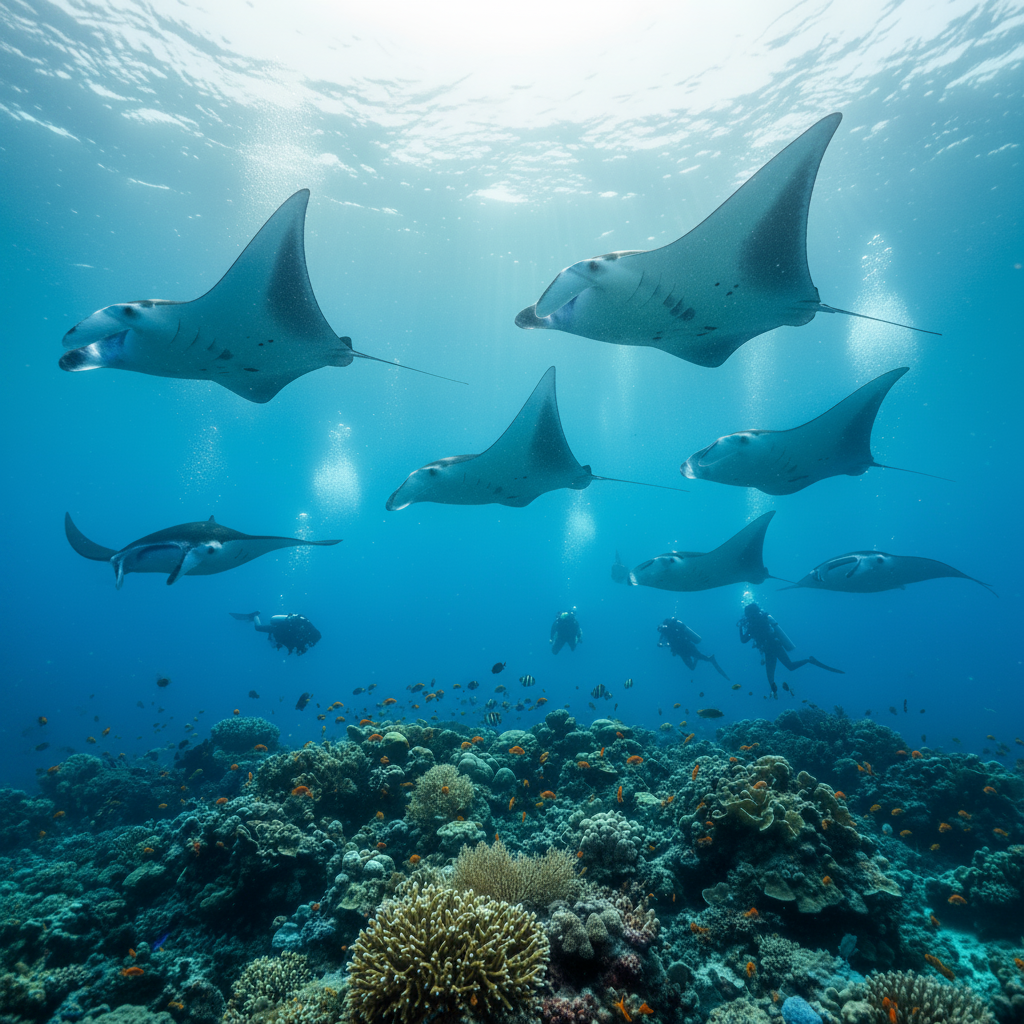
Imagine drifting silently through sun-dappled waters, a vast, wing-like shadow emerging from the blue. Then another. And another. You’re not just watching; you’re being enveloped in a graceful ballet of giants, a truly humbling spectacle that redefines your understanding of the ocean's majesty. This isn't a dream; this is the Manta Ray Encounters in the Solomon Islands, a dive experience so profound it will etch itself into your very soul.
Why Manta Ray Encounters Belongs on Your Bucket List
There are manta rays, and then there are the mantas of the Solomon Islands. What sets this experience apart, particularly in the Russell Islands, is not just the sheer number, but the intimate, often prolonged interactions you can have with these magnificent oceanic manta rays (Mobula birostris). While other destinations might offer fleeting glimpses, the nutrient-rich channels and pristine cleaning stations here provide a reliable stage for these gentle giants to perform. It's the "wow factor" amplified – the elegant, seemingly effortless flight of a creature with a wingspan that can exceed seven metres, gliding just metres from you, its intelligent eyes seemingly studying your every move.
This isn't merely a dive; it's an immersion into a vibrant, untouched ecosystem where marine life thrives. The Solomon Islands, shielded from mass tourism, offers an authenticity that is increasingly rare. For divers seeking a genuine connection with nature, an escape from the ordinary, and a truly unforgettable encounter with one of the ocean's most iconic inhabitants, Manta Ray Encounters is unparalleled. It’s perfect for both seasoned divers longing for something truly special and those who appreciate the quiet grandeur of the underwater world.
What makes it globally unique is the convergence of superb visibility, healthy coral reefs attracting robust fish populations, and specific cleaning stations frequented by the mantas. These aren't just chance encounters; they are often predictable, allowing for planned, respectful observations of these creatures going about their natural business – a privilege few dive destinations can consistently offer with such regularity and quality of interaction.
What You'll See and Do
Your primary goal, of course, will be the oceanic manta rays. These colossal filter feeders are utterly mesmerising, their graceful movements a masterclass in aquatic flight. At cleaning stations, typically shallower reefs or bommies, you'll observe them hovering patiently while cleaner wrasse and other small fish remove parasites from their skin. This behaviour offers incredible photographic opportunities and allows for extended viewing times. Beyond the mantas, the channels of the Russell Islands teem with life. Expect to encounter large schools of pelagic fish like barracuda, jacks, and dogtooth tuna patrolling the currents. Reef sharks, including grey reef sharks and white-tip reef sharks, are common, patrolling the vibrant coral ecosystems.
Keep your eyes peeled for other intriguing macro life hidden within the corals, such as pygmy seahorses, nudibranchs, and various types of shrimp and crab. Dive sites around the Russell Islands, such as Kicha, Leru Cut, and Custom Cave, also offer stunning coral gardens, dramatic wall dives, and fascinating swim-throughs that reveal the geological wonders of the region. Depths will vary depending on the specific cleaning station or reef, generally ranging from 10 to 30 metres (33 to 98 feet). Dive styles will span gentle drifts over rich reef systems to static dives at popular cleaning stations, ensuring a diverse and engaging experience.
The behaviour of the mantas themselves is the true highlight. They often appear curious, circling divers, or gliding majestically overhead. Observing their "barrel rolling" feeding behaviour in strong currents, where they tumble through the water to consume plankton, is another unforgettable sight. These interactions are almost always unhurried, allowing you ample time to truly appreciate their magnificence.
Best Time to Go
The prime season for Manta Ray Encounters in the Solomon Islands, particularly around the Russell Islands, runs from November to April. During these months, the prevailing currents bring a greater abundance of plankton, attracting the manta rays to the area's cleaning stations and feeding grounds. While mantas can be seen year-round, this period offers the most consistent and spectacular encounters.
Water temperatures during this peak season are comfortably warm, typically ranging from 28°C to 30°C (82°F to 86°F), making for pleasant, extended dives. Visibility is generally excellent, often exceeding 20 metres (65 feet) and frequently reaching 30+ metres (100+ feet), especially on calm days. However, when plankton blooms are heavy, visibility might drop slightly, but this is precisely what attracts the mantas, providing a trade-off worth experiencing. Currents can range from mild to strong, particularly in the channels and at some cleaning stations, which is a factor in attracting pelagic life and requires appropriate dive planning.
How to Dive Manta Ray Encounters
The most effective way to experience Manta Ray Encounters in the Solomon Islands is via a dedicated liveaboard. Liveaboards provide unparalleled access to the best dive sites in the Russell Islands and beyond, allowing you to reach remote cleaning stations and diverse reefs that are inaccessible by day boats. This also maximises your bottom time and increases your chances of multiple manta encounters, as the schedule is built around the best diving conditions. Day boats simply cannot offer the same reach or flexibility required for consistent manta sightings.
While the Solomon Islands offers diving for all levels, to fully appreciate the Manta Ray Encounters and the challenging currents that can sometimes accompany them, we recommend divers hold an Advanced Open Water certification. A minimum of 50 logged dives is advisable to ensure comfort and proficiency in varying conditions. The use of Enriched Air Nitrox is highly recommended, as it allows for longer bottom times, particularly beneficial during extended interactions with mantas or when exploring deeper cleaning stations. Further specialty courses such as Drift Diver or Peak Performance Buoyancy will significantly enhance your experience. For wetsuit thickness, a 3mm shorty or full suit is typically sufficient given the warm water temperatures, primarily for sun and minor abrasion protection rather than thermal insulation. Standard dive gear is suitable, but consider a larger tank for extended dives and a safety sausage (SMB) for drift dives is essential.
Conservation and Responsible Diving
Encountering manta rays is a privilege, and it's paramount that we approach these interactions with the utmost respect and an understanding of their vulnerable status. Manta rays are filter feeders, and their populations are susceptible to human impact. Always maintain a respectful distance (at least 3 metres/10 feet), never touch or attempt to ride them, and avoid blocking their path or chasing them. Fast or erratic movements can stress the animals and disrupt their natural behaviour, potentially driving them away from cleaning stations. Ensure good buoyancy control to avoid damaging delicate coral ecosystems, which are vital habitats for mantas and countless other species. When taking photos, use natural light where possible and avoid excessive flash photography, which can also startle marine life. Choose liveaboard operators who adhere to strict responsible diving guidelines and contribute to local conservation efforts.
Plan Your Trip
The Manta Ray Encounters in the Solomon Islands represent a pinnacle of dive travel, promising not just incredible sightings but a journey into a truly wild and unspoiled corner of our planet. When you're ready to make this dream a reality, explore the range of Blue Rides liveaboards departing for the Solomon Islands and embark on an adventure that will forever change your perspective on the ocean.