
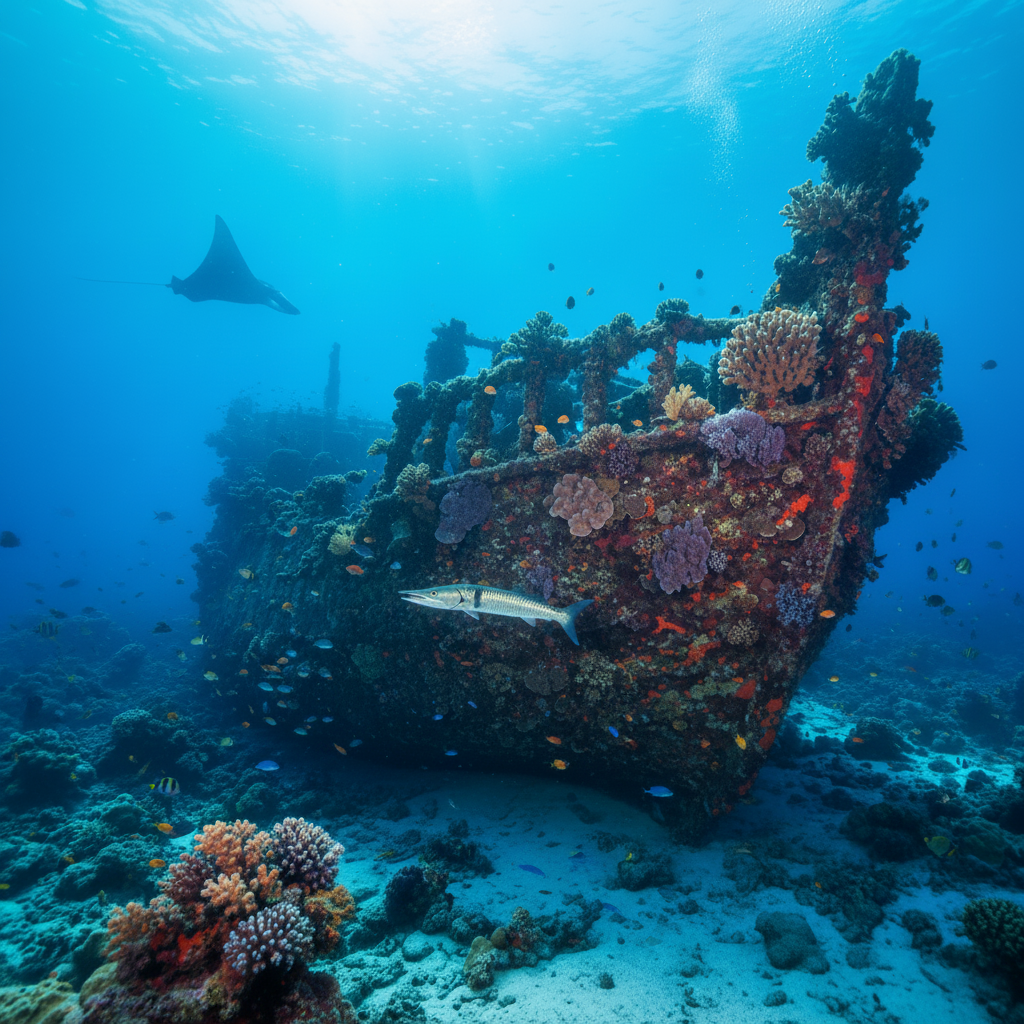
Imagine descending into an underwater realm where history whispers from the coral-encrusted beams of long-lost vessels, where each dive is a journey through time and a vibrant encounter with the Red Sea’s prolific marine life. This isn't just diving; it's an archaeological expedition, a vibrant reef visit, and a profound connection to the maritime legends of Saudi Arabia's hidden coast. Prepare to add an utterly unique adventure to your diving logbook, one that fuses antiquity with breathtaking biodiversity.
Why Historic Shipwrecks Belongs on Your Bucket List
The Red Sea’s Saudi Arabian coastline, particularly around the ancient port city of Yanbu, is not just a dive destination; it's a testament to centuries of seafaring, trade, and the unforgiving nature of the oceans. What makes the "Historic Shipwrecks" experience truly phenomenal is the sheer density and diversity of these submerged relics. You’re not just exploring one or two wrecks; you’re embarking on a chronological deep-dive into an entire graveyard of ships, spanning from ancient dhows that plied the incense routes to more modern freighters that met their demise in the bustling shipping lanes.
Unlike many shipwreck sites globally, which often feature singular, well-known wrecks, Saudi Arabia offers an entire underwater museum. These wrecks, through decades or even centuries of submersion, have been utterly transformed into thriving artificial reefs. They are bursting with life, serving as crucial habitats for an astonishing array of Red Sea species. This convergence of history, ecology, and adventure creates a "wow" factor that is hard to match elsewhere. It's an experience that deeply resonates with seasoned wreck divers, history buffs, underwater photographers, and anyone who cherishes the thrill of discovery.
From the gracefully aged wooden hulls slowly decaying into the seabed, now vibrant with soft corals, to the steel behemoths that stand largely intact and offer incredible penetration opportunities, the spectrum of wrecks is immense. This unique blend of discovery and environmental transformation places Saudi Arabia’s Historic Shipwrecks squarely at the top of any serious diver’s bucket list, promising an adventure steeped in wonder and historical significance.
What You'll See and Do
As you descend onto these historic sites, you’ll discover a mesmerising fusion of rusting metal or decaying wood gracefully draped in a kaleidoscope of hard and soft corals. Expect to encounter resident schools of teeming reef fish – snappers, fusiliers, and bannerfish – swirling around the wrecks' superstructures. The sheer volume of fish life is often overwhelming, transforming even the most austere wreck into a pulsating metropolis of marine activity. Within the darker recesses and crevices, you might spot moray eels, lionfish, stonefish, and various nudibranchs, each adding to the intricate ecosystem that has developed.
More exhilarating encounters are also highly probable. Pelagic visitors, drawn to the rich food source and currents around these structures, include barracuda, various species of jacks (such as trevally), and occasionally, reef sharks like the grey reef shark or whitetip reef shark patrolling the perimeters. Some wrecks, particularly those on deeper shelves, attract larger marine life. Keep an eye out for inquisitive turtles leisurely gliding by or even an eagle ray gracefully soaring through the blue. The varied depths of these wrecks, ranging from shallow propositions at 10-15 metres to deeper technical dives beyond 40 metres, cater to a wide range of certification levels and offer diverse photographic opportunities, from wide-angle contextual shots to intricate macro details.
Specific dive behaviour around these wrecks often involves exploring the exterior, circling distinct features, and for appropriately certified divers, undertaking controlled penetrations into cargo holds or engine rooms. The challenge lies in navigating the sometimes-unpredictable currents while maintaining excellent buoyancy control to avoid disturbing the fragile coral growth or silting up the interior of the wreck. Each dive tells a different story, making repeat visits to the same wreck just as captivating as discovering a new one.
Best Time to Go
One of the significant advantages of diving the Historic Shipwrecks of Saudi Arabia is that the Red Sea offers fantastic conditions year-round. This is truly a twelve-month destination, meaning you don't face the restrictive seasonal windows common in other regions. During the cooler months, from October to April, air temperatures average between 20-30°C (68-86°F), and water temperatures are a comfortable 24-27°C (75-81°F). Visibility during this period is often at its peak, frequently exceeding 30 metres (100 feet) and sometimes reaching an astounding 40 metres (130 feet).
The summer months, from May to September, bring hotter air temperatures, often above 35°C (95°F), but the water remains invitingly warm at 28-31°C (82-88°F). While visibility might occasionally drop slightly due to plankton blooms – which paradoxically can attract larger filter feeders – it generally remains excellent, typically above 20 metres (65 feet). Currents are generally mild to moderate, making for comfortable drift dives along some sites, but can intensify near certain channels or exposed wrecks. Overall, the consistent warmth and clarity of the Red Sea make any time of year ideal for exploring these submerged treasures.
How to Dive Historic Shipwrecks
Accessing the Historic Shipwrecks of Saudi Arabia is predominantly achieved via liveaboard expeditions, which offer the most comprehensive and comfortable way to explore these often-remote sites. While some day-boat operations exist from Yanbu, a liveaboard allows you to maximise dive time, reach the pristine, less-frequented wrecks, and enjoy the convenience of multiple dives per day without daily commutes. You’ll typically embark from Yanbu, venturing into the vast stretches of the Red Sea.
To fully appreciate these sites, a minimum PADI Advanced Open Water Diver or equivalent certification is highly recommended, as many of the more captivating wrecks lie beyond 18 metres (60 feet). While not strictly mandatory for all sites, having 50+ logged dives under your belt will greatly enhance your comfort and enjoyment, especially when navigating currents or exploring deeper sections. Essential recommended courses include Enriched Air Nitrox (to extend bottom time on repetitive deeper wreck dives) and the PADI Wreck Diver Speciality, which provides crucial training in safe wreck penetration techniques and overhead environment procedures. A Deep Diver Speciality is also beneficial for accessing the deepest points of some sites. For wetsuit thickness, a 3mm shorty or full suit is usually sufficient year-round, given the warm water temperatures, though some divers might prefer a 5mm for extended dives or during the cooler months. Bring your own dive computer, an SMB (Surface Marker Buoy), and a reliable dive torch, as the interiors of wrecks can be dark even in clear water.
Conservation and Responsible Diving
Diving these historic shipwrecks comes with a profound responsibility to protect both the historical artefacts and the marine life that now calls them home. The shipwrecks are, by their nature, fragile environments. Strict adherence to no-touch policies is paramount; never disturb or remove anything from a wreck site, whether it be a coral fragment or a historical artefact. These sites are protected cultural heritage and vibrant ecological nurseries. Maintain excellent buoyancy control to avoid contact, which can damage delicate corals or stir up silt, degrading visibility for yourself and others. Practise responsible photography, ensuring your focus and technique do not stress marine life or cause physical interaction. By diving respectfully, you help preserve these irreplaceable underwater museums for future generations to explore and marvel at.
Plan Your Trip
The "Historic Shipwrecks" experience in Saudi Arabia offers an unparalleled blend of historical intrigue and vibrant marine life, promising an unforgettable adventure. To embark on this bucket-list journey and discover the secrets hidden beneath the waves of the Red Sea, browse the exceptional liveaboard options available with Blue Rides today. Your ultimate dive adventure awaits.