Imagine a place where every fin kick unveils a new spectacle, where the sheer volume and diversity of life underwater defy belief. This isn't a fantastical dream; it's a tangible reality waiting for you in the heart of the Coral Triangle. If you've been searching for that one dive experience that truly transcends all others, prepare yourself for an immersion into the "Highest Marine Biodiversity" — an adventure that will redefine your understanding of the ocean's boundless wonders.
Why Highest Marine Biodiversity Belongs on Your Bucket List
The term "biodiversity hotspot" barely begins to describe Central Raja Ampat. This isn't just another beautiful reef; it's the undisputed epicentre of marine life, a biological crucible where evolution has painted its most vibrant masterpieces. You see, while many dive destinations boast impressive coral gardens or abundant fish, Raja Ampat offers a convergence unlike anywhere else on Earth. With over 1,500 recorded fish species and more than 600 species of reef-building corals – a staggering 75% of the world's known coral species – this is a living, breathing testament to nature's ultimate artistry. It's the kind of place that leaves even the most seasoned diver speechless, a constant cascade of "I've never seen that before!" moments. This unparalleled uniqueness is precisely why the "Highest Marine Biodiversity" experience isn't merely a trip; it's a profound pilgrimage for anyone who cherishes the aquatic realm. It suits those with a deep appreciation for healthy ecosystems, macro enthusiasts, wide-angle photographers, and anyone yearning to witness the pinnacle of marine evolutionary success.
The "WOW" factor here isn't just about the numbers; it's about the sheer density and variety you'll encounter on a single dive. Imagine dropping onto a reef where every square metre teems with life – schooling barracuda, vibrant parrotfish, camouflaged Wobbegong sharks, and the kaleidoscopic glow of soft corals swaying in the current. This isn't a place where you search for marine life; it’s a place where marine life overwhelms your senses, revealing itself in every crevice, under every overhang, and across every expansive reef flat. It's a humbling experience to witness such pristine, protected waters, knowing that these ecosystems are the cornerstone of marine health globally. The sheer vitality and exuberance of life here are infectious, leaving you with a renewed sense of awe and a deeper connection to the planet's most precious underwater treasures.
What You'll See and Do
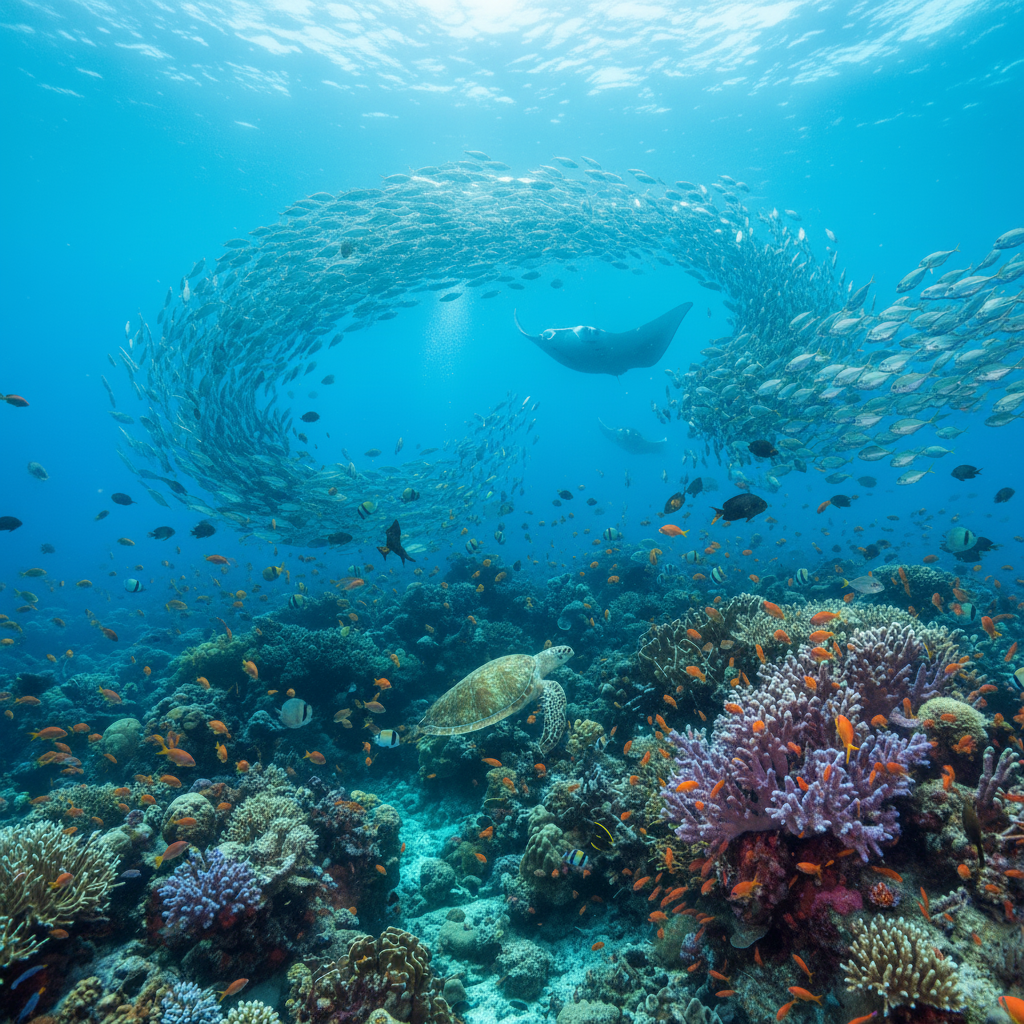
Diving in Central Raja Ampat is a sensory overload in the best possible way. Prepare for encounters with a staggering array of marine organisms, from the massive to the minuscule. You'll glide over vibrant coral gardens dominated by labyrinthine brain corals, delicate table corals, and forests of soft corals in every imaginable hue. Look out for the iconic walking shark (Hemiscyllium hallstromi), an endemic species that uses its fins to "walk" along the seabed. Be on the lookout for majestic Manta rays (Manta alfredi and Manta birostris) gracefully soaring through cleaning stations, particularly at sites like Manta Ridge or Manta Sandy. Schools of Fusiliers, Sweetlips, and Snappers create dazzling displays, often patrolled by reef sharks such as Blacktip and Whitetip sharks. Even larger pelagics like Barracuda and Tuna are common sights in the deeper blue. Macro enthusiasts will be in paradise, discovering pygmy seahorses (Hippocampus bargibanti) camouflaged on gorgonian fans, colourful nudibranchs, and intricate porcelain crabs hidden among anemones. Frogfish, often masters of disguise, are also frequently spotted.
The dive styles here are as varied as the marine life. Expect drifts over expansive reef systems where the current does much of the work, revealing endless vistas of soft corals and schooling fish. You'll explore vibrant coral walls, discover hidden caverns, and investigate sandy slopes where unique bottom dwellers reside. Depths vary from shallow coral gardens at 5-10 metres to exhilarating deeper drifts reaching 30 metres (though many of the most vibrant reefs are in the 15-25 metre range). The behaviour you'll witness is equally captivating: feeding frenzies, intricate cleaning symbiosis, and the fascinating hunting strategies of various predators. Dive sites like Cape Kri are legendary for their record-breaking fish counts, while sites such as Melissa's Garden offer incredible hard coral formations. At Blue Magic, you might find yourself surrounded by large schools of Jacks and Barracuda, with the chance of spotting oceanic Manta rays. These aren't just dives; they're immersive expeditions into a living, breathing natural spectacle.
Best Time to Go
To experience the "Highest Marine Biodiversity" at its absolute finest, plan your trip between October and April. This period coincides with Raja Ampat's dry season, offering the most stable weather conditions and generally calmer seas, which are ideal for exploring its numerous dive sites. During these months, surface temperatures typically hover around 28-32°C (82-90°F), making for comfortable topside relaxation. Underwater, the water temperature remains consistently warm, ranging from 28-30°C (82-86°F), meaning most divers will be perfectly comfortable in a 3mm shorty or even just a rash guard and board shorts for shorter dives. Visibility is generally excellent during this peak season, often exceeding 20-30 metres, allowing for breathtaking wide-angle photography and unparalleled views of the vibrant reefs. While currents can be present year-round, they are often a key factor in bringing nutrients to the reefs and attracting pelagic life, necessitating drift diving techniques, especially during spring tides. The winds during the October to April window are typically lighter, ensuring a smoother liveaboard experience and easier access to more exposed dive sites, maximizing your opportunities to explore this incredible region.
While October to April is the prime window, it’s worth noting that Raja Ampat is diveable year-round. However, the shoulder months or off-season (May to September) may bring slightly choppier seas and increased rainfall, particularly in June and July. This doesn't necessarily mean bad diving; often, the visibility might be slightly reduced in some areas due to runoff, but the marine life remains abundant. For the optimal combination of calm conditions, excellent visibility, and the highest chance of encounters with a vast array of species, sticking to the recommended October-April season is your best bet to fully appreciate the "Highest Marine Biodiversity" experience.
How to Dive Highest Marine Biodiversity
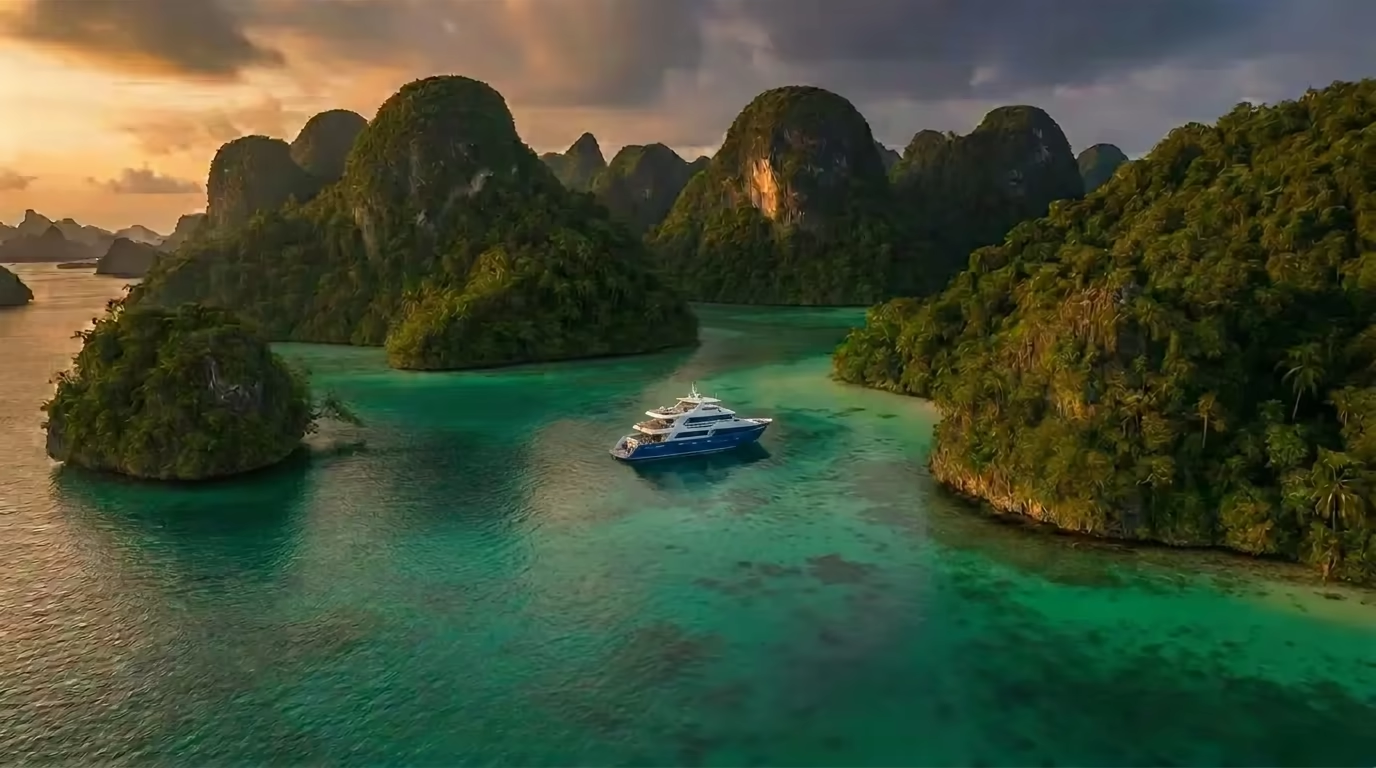
The preferred and highly recommended way to access Puncak Keanekaragaman Hayati, the "Highest Marine Biodiversity" in Raja Ampat, is undoubtedly via a liveaboard. The sheer remoteness and vastness of the archipelago mean that day-boat operations are limited to specific, often populated areas, while a liveaboard allows you to reach the most pristine and untouched dive sites, often far from any land-based infrastructure. A liveaboard offers the mobility to follow the best conditions, explore diverse regions like Dampier Strait, Fam Islands, and Wayag, and make the most of every daylight hour with multiple dives daily. This ensures you're immersing yourself in the heart of the marine action, with meals, accommodation, and transport seamlessly integrated into your dive adventure. The typical duration for a liveaboard trip covering this region is 7 to 10 nights, allowing ample time to explore thoroughly.
While there are no strict minimum certification level requirements beyond Open Water Diver for some sites, to truly get the most out of this experience, an Advanced Open Water certification is highly recommended. Many of the most exhilarating dives involve deeper profiles or drift diving. Furthermore, logging around 50-100 dives would provide a comfort level that allows you to fully enjoy the rich environment without being preoccupied with basic dive skills. Specific recommended courses include Nitrox (Enriched Air Diver), which extends your bottom time on multiple dives, enhancing your photographic opportunities and overall enjoyment. A Drift Diver specialisation is also invaluable, preparing you for the prevalent currents that sweep these nutrient-rich reefs. For equipment, a 3mm wetsuit is generally sufficient, though some might prefer a 5mm for longer or repetitive dives. Given the often strong currents, a sturdy reef hook and a dive computer capable of handling multiple, successive dives within deco limits are essential. A Surface Marker Buoy (SMB) is also a critical piece of safety gear, especially when drift diving in open water. Remember to pack spares for critical equipment like masks and fin straps, and bring appropriate camera gear to capture the unparalleled spectacle.
Conservation and Responsible Diving
Diving in a region as ecologically significant as Raja Ampat comes with a profound responsibility. The "Highest Marine Biodiversity" is a fragile treasure, and its continued health depends entirely on respectful and ethical diving practices. Always maintain excellent buoyancy control to avoid any contact with the delicate corals – one misguided fin kick can undo decades of growth. Never touch marine life, chase animals, or interact in any way that might cause stress or disrupt natural behaviours. This includes maintaining a respectful distance from cleaning stations and Manta rays. For photographers, exercise extreme caution; do not reposition animals for a better photo, harass critter species, or use excessive flash that might disturb nocturnal creatures or sensitive eyes. Stick to marked anchorages or use non-damaging mooring lines. Support operators who actively engage in conservation efforts and adhere strictly to local regulations, which are designed to protect this unparalleled ecosystem for generations to come. Your actions underwater directly impact the future of these pristine waters.
Plan Your Trip
The allure of the "Highest Marine Biodiversity" in Raja Ampat is undeniable. It's more than a dive trip; it's a journey to the very heart of marine creation, an experience that promises to enrich your understanding of the ocean beyond measure. If you're ready to answer the call of this unparalleled underwater paradise, browse the selection of premium liveaboards departing for this extraordinary destination. Your adventure into the world's most vibrant marine ecosystem awaits, ready to deliver memories that will last a lifetime.