
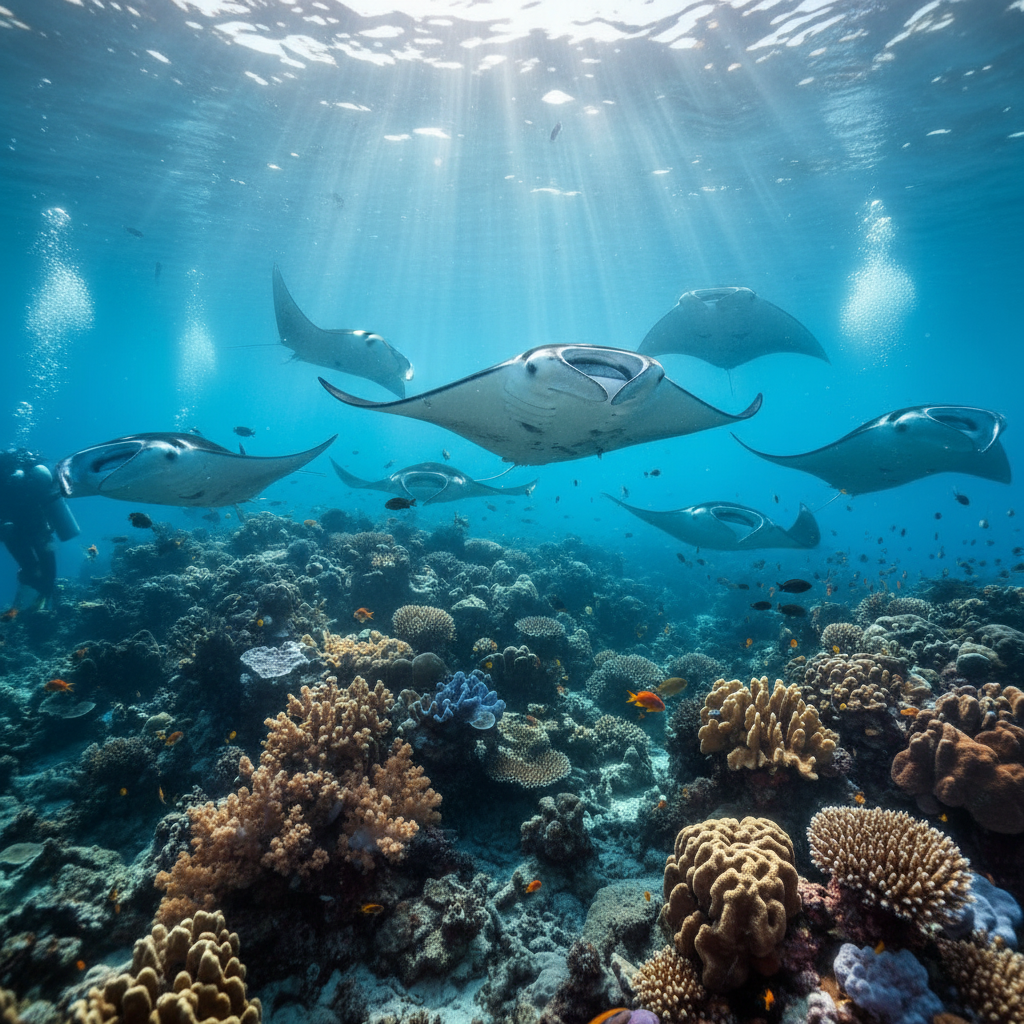
Imagine gliding through crystal-clear waters, a shimmering canvas of blue above and vibrant coral kingdoms below, when a shadow gracefully emerges from the depths. Then another. And another. Soon, you’re not just observing; you’re immersed in a majestic ballet choreographed by nature itself. This isn't just a dive; it's an encounter so profound it lingers long after you’ve surfaced, an indelible memory etched into your soul.
For the lucky few, this dream becomes a reality in Raja Ampat's Dampier Strait, home to one of the ocean's most extraordinary spectacles: the Manta Ray Aggregation. It’s where reef manta rays, those intelligent and elegant filter feeders, gather in numbers that defy belief, offering divers and snorkelers an unparalleled opportunity to witness their serene majesty up close.
Why Manta Ray Aggregation Belongs on Your Bucket List
The allure of the Manta Ray Aggregation in Raja Ampat lies in its sheer scale and reliability. While manta encounters are cherished worldwide, the Dampier Strait offers a unique confluence of conditions that attract dozens of reef manta rays simultaneously, creating a truly mesmerising tableau. This is no fleeting glimpse of a lone manta; this is a full immersion into their world, observing their social behaviours, graceful movements, and symbiotic relationship with their marine environment. It's a "wow factor" that few other dive experiences can genuinely match, transcending the thrill of discovery to become a deeply spiritual connection with marine megafauna.
What makes this experience globally unique is largely due to Raja Ampat's unparalleled biodiversity and its strategic location within the Coral Triangle. The Dampier Strait, in particular, is riddled with nutrient-rich currents that funnel plankton into specific cleaning stations and feeding grounds, acting as a magnet for these gentle giants. Unlike oceanic mantas, which are often found in open water, the reef mantas (Mobula alfredi) here are accustomed to frequenting specific, relatively shallow sites, making them accessible to divers and snorkelers alike. This consistent presence, combined with the pristine condition of the reefs, elevates the Raja Ampat aggregation far beyond a mere sighting; it’s an immersive, educational, and deeply moving wildlife encounter.
This bucket list experience is perfectly suited for anyone with a profound appreciation for marine life and a desire for truly exceptional underwater encounters. Whether you're an experienced diver eager to spend extended periods observing their intricate behaviours or a keen snorkeler wanting to glide alongside them at the surface, the Manta Ray Aggregation caters to all. Its suitability also extends to underwater photographers and videographers, offering unrivalled opportunities for capturing stunning imagery of these magnificent creatures in their natural habitat, often against a backdrop of vibrant coral and schooling fish.
What You'll See and Do
At sites like Manta Sandy and Manta Ridge, you’ll be entering the mantas’ domain, observing them in their natural cyclical patterns. These specific locations are renowned cleaning stations, where smaller fish (like butterflyfish, wrasses, and bannerfish) help to remove parasites and dead skin from the mantas’ bodies. You’ll witness mantas circling patiently over coral bommies, often in a queue, waiting their turn to be cleaned. This behaviour is not only fascinating but also indicative of their intelligence and the vital role these specific sites play in their ecosystem.
Beyond the cleaning stations, you might also observe mantas engaged in feeding frenzies, barrel-rolling through concentrated patches of plankton, their cephalic fins unfurled like giant scoops. While reef mantas are the star attraction, the Dampier Strait teems with an astounding array of other marine life. Keep an eye out for wobbegong sharks camouflaged on the reef, majestic green and hawksbill sea turtles, vibrant schools of fusiliers, snappers, and surgeonfish, and the occasional critically endangered dugong. The pristine coral gardens themselves are a spectacle, forming intricate landscapes of hard and soft corals that host an incredible macro-life, from pygmy seahorses to various nudibranchs.
The depths at these aggregation sites can vary, from mere surface encounters for snorkelers to around 10-20 metres for divers at the cleaning stations. Dive styles are predominantly drift dives due to the prevailing currents in the Strait, which also bring the nutrient-rich waters vital for the mantas. Encounters are typically long and serene, allowing for ample observation time. Divers are often advised to find a stationary position down-current from a cleaning station, allowing the mantas to approach naturally, often performing multiple passes just metres away. Snorkellers, guided by experienced professionals, can drift gently above, enjoying an equally intimate perspective as the mantas rise to the surface.
Best Time to Go
One of the most remarkable aspects of the Raja Ampat Manta Ray Aggregation in the Dampier Strait is its year-round accessibility. Unlike many other seasonal manta hotspots, the unique oceanographic conditions and consistent plankton blooms here mean that these graceful giants are present throughout the year, making it a reliable destination for manta encounters regardless of when you plan your trip.
While mantas are a constant presence, the general dive season for Raja Ampat runs roughly from October to May, offering the calmest seas and best visibility, though the differences outside this window are often minimal in areas like the Dampier Strait. Water temperatures are consistently warm, typically ranging from 28-30°C (82-86°F), making for incredibly comfortable diving and snorkelling. Visibility is generally excellent, often exceeding 15-25 metres, allowing for clear views of the mantas and the vibrant reef ecosystems. While currents can be moderate to strong in the Dampier Strait – a key factor in attracting the mantas – dive sites are chosen to accommodate this, often utilising drift diving techniques. The weather remains tropical year-round, with occasional rain showers that typically do not disrupt diving schedules significantly, and the region is outside the typhoon belt, ensuring relatively stable conditions.
How to Dive Manta Ray Aggregation
Accessing the Manta Ray Aggregation in Raja Ampat is best achieved via a liveaboard vessel. Liveaboards offer unparalleled access to the remote dive sites, allowing you to spend multiple days exploring the Dampier Strait and other Raja Ampat highlights without the daily commute of a day-boat operation. This maximises your chances of multiple manta encounters across various tides and conditions, providing flexibility and convenience that land-based options simply cannot match. While some land-based resorts do offer day trips to these sites, their reach is more limited, and the extensive travel times can cut into valuable dive time. A liveaboard ensures you are already positioned in the heart of the action, ready for early morning dives or sunset drifts with the mantas.
To fully appreciate the Manta Ray Aggregation experience, a minimum certification level of Open Water Diver is required for diving, though Advanced Open Water Diver is highly recommended due to the potential for moderate currents and deeper drift dives. We suggest having at least 20-30 logged dives to ensure comfort and proficiency in variable conditions. Recommended courses include Enriched Air Nitrox, which allows for extended bottom times at the cleaning stations, maximising your observation periods. A Drift Diver Specialty course can also be beneficial, equipping you with the skills to navigate currents safely and efficiently. For wetsuit thickness, a 3mm shorty or full suit is generally sufficient given the warm water temperatures, primarily for protection against sun and coral rather than warmth. Basic gear notes include ensuring your dive computer is in good working order and having a signal device like an SMB (Surface Marker Buoy) for drift diving safety.
Conservation and Responsible Diving
The privilege of encountering manta rays comes with a significant responsibility to protect these magnificent creatures and their fragile habitat. Always maintain a respectful distance (typically at least 3 metres horizontally and 4 metres vertically), allowing the mantas to dictate the interaction. Never touch a manta ray; their skin is covered in a protective mucous layer that can be damaged by human touch, making them vulnerable to infection. Avoid blocking their paths or disturbing them at cleaning stations. When taking photographs, do so from a respectful distance, avoiding flash photography where possible, as bright lights can disorient them. Support operators who adhere strictly to marine park regulations and eco-friendly practices. By demonstrating exemplary behaviour, you contribute to a sustainable future for these incredible aggregations and set a positive example for others to follow.
Plan Your Trip
The Manta Ray Aggregation in Raja Ampat's Dampier Strait is more than just a dive; it's a profound journey into the heart of marine wonder. Don't let this unparalleled experience remain a dream. Explore the curated selection of premium liveaboards departing for Raja Ampat with Blue Rides and embark on an adventure that will redefine your underwater explorations.