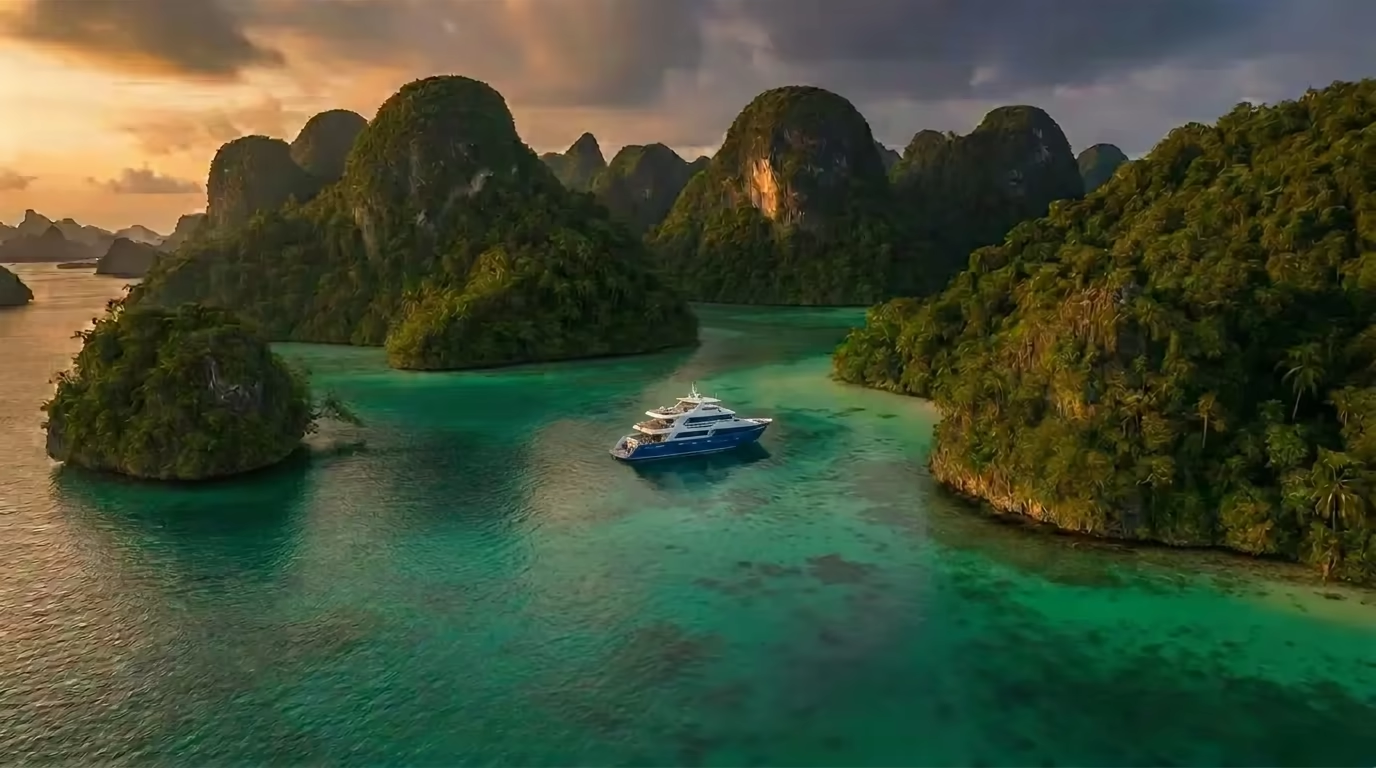
For the ardent diver, the pursuit of the extraordinary often leads to whispered tales of encounters so profound they redefine your understanding of the ocean. These are the moments that stick with you, the ones you retell with shining eyes. In the vast blue, few spectacles rival the sheer majesty and ethereal grace of a mobula ray migration. And if you’re charting your course for such an experience, then the ancient, volcanic archipelago of the Azores, Portugal, should be indelibly marked on your dive map.
Why Mobula Ray Migration Belongs on Your Bucket List
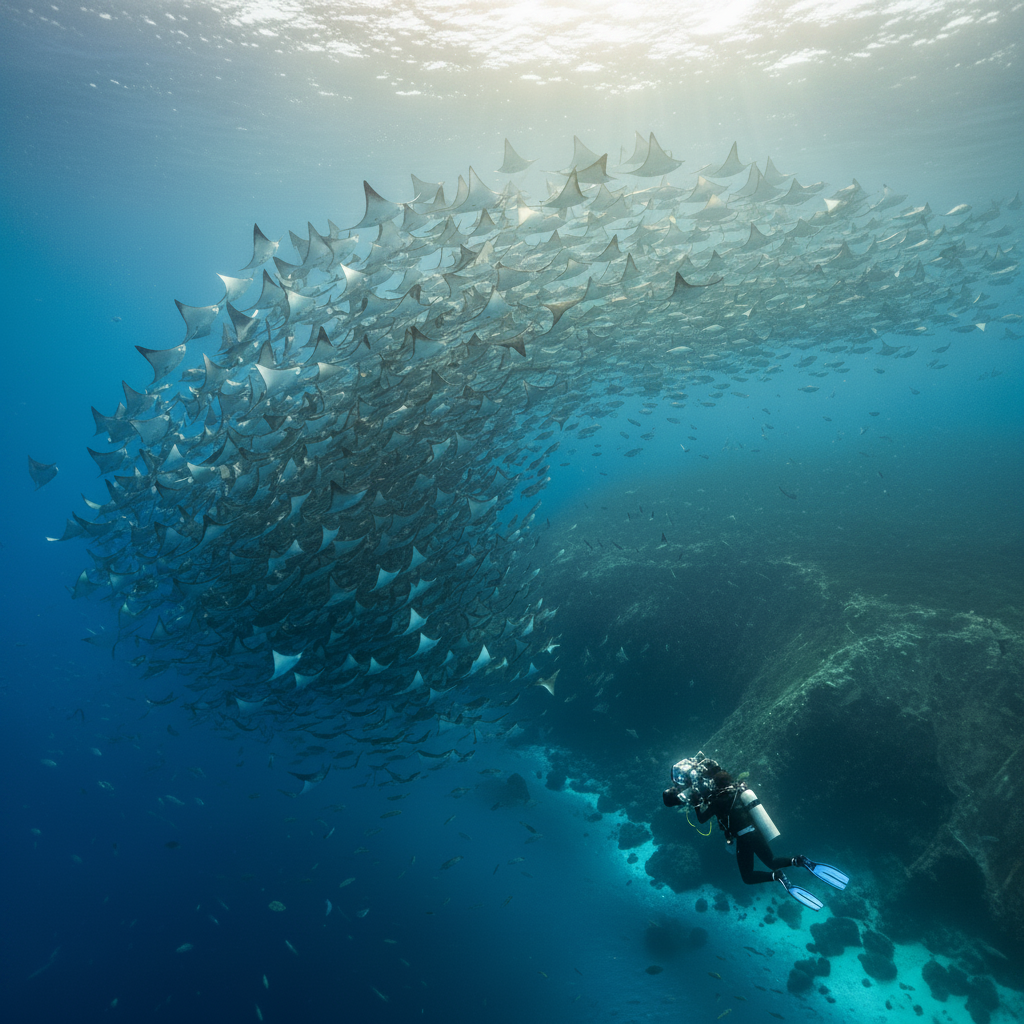
Imagine surfacing from a dive, only to find yourself amidst a swirling vortex of shadow and light, as hundreds, perhaps thousands, of sleek, diamond-shaped bodies undulate effortlessly around you. This isn’t a dream; this is the Mobula Ray Migration in the Azores, a phenomenon that elevates a simple diving holiday into an unforgettable pilgrimage. What separates this from other celebrated marine migrations is its sheer scale and the intimate, yet awe-inspiring, proximity you can achieve with these magnificent creatures. Unlike their larger manta cousins, mobulas are known for their acrobatic displays, breaching clean out of the water, spiralling in unison, and creating breathtaking "cyclone" formations as they feed on plankton blooms.
The Azores, rising majestically from the mid-Atlantic Ridge, is a biodiversity hotspot, a magnet for large pelagics, and a prime staging ground for this annual spectacle. Its remote location and protected waters provide a vital sanctuary for several species of mobula rays, predominantly the lesser devil ray (Mobula hypostoma) and the spinetail devil ray (Mobula japanica). This isn't just about seeing a mobula ray; it's about being immersed in their world, witnessing a collective journey that has been unfolding for millennia. For any diver seeking a profound connection with marine wildlife, for those who crave the truly unique, and for anyone who lives for the 'aha!' moment underwater, the Azorean mobula migration is less a trip and more a transformative experience.
This experience is uniquely suited to adventurous souls who appreciate the raw, untamed beauty of the open ocean. It appeals to photographers battling to capture that elusive, perfect shot of a mobula breaching, to marine enthusiasts who yearn to observe complex animal behaviours in their natural habitat, and to anyone who finds profound peace and exhilaration in being a tiny observer in the grand theatre of the ocean. It demands patience and respect, rewarding those who give it with memories that will last a lifetime.
What You'll See and Do
Your Azorean encounters will primarily focus on the smaller, yet equally captivating, lesser devil rays and spinetail devil rays. These graceful elasmobranchs, with their distinctive cephalic fins, can reach wingspans of up to 2.5 to 3 metres, though you'll often encounter them in vast aggregations, dwarfing individual sizes with their sheer numbers. The primary draw is witnessing their feeding behaviours: as they filter-feed on microscopic plankton, they form dazzling "cyclones" or "vortexes," spiralling upwards from the deep, an experience that has been described as a living tornado. This phenomenon is often accompanied by their famous breaching, as large groups launch themselves into the air with surprising power and grace. You might also observe them being cleaned by resident wrasse and trevally at specific seamount cleaning stations.
Beyond the mobulas, the rich waters of the Azores teem with life. Expect to encounter several species of whales and dolphins – including sperm whales, common dolphins, and bottlenose dolphins – particularly during boat transfers to and from dive sites. Schools of inquisitive pelagic fish like barracuda, jacks, and tuna are common. You could also spot oceanic sunfish (Mola mola), various species of shark (blue sharks and mako sharks are seasonal visitors), and the vibrant macro life endemic to the Atlantic’s volcanic reefs. Diving depths for mobula encounters typically range from 15 to 30 metres, often at seamounts or offshore pinnacles like the famous Princess Alice Bank (Banco Princesa Alice), located approximately 90 kilometres southwest of Faial Island. Other notable sites around the main islands include the Condor Bank and the Ambrósio Bank near Santa Maria. Dive styles will mostly be drift dives due to the prevalent currents, allowing you to cover significant ground with the migrating rays. The encounters are often in blue water, requiring divers to be comfortable away from visual references.
Best Time to Go
The prime season for the Mobula Ray Migration in the Azores runs from July to September. During these months, the warmer waters and increased plankton blooms attract the mobula rays in significant numbers as they gather to feed and, potentially, to mate. July and August often offer the most consistent high-volume sightings, with September still providing excellent opportunities as the season peaks before the rays gradually disperse. Outside of this window, sightings become far less predictable and less frequent.
Water temperatures during this period average a comfortable 22-25°C (72-77°F), though deeper dives or prolonged exposure may still warrant slightly thicker suits. Visibility is generally excellent, often exceeding 20-30 metres (65-100 feet) in good conditions, especially at offshore banks. However, plankton blooms, while vital for the mobulas, can occasionally reduce visibility temporarily. Currents can be moderate to strong, particularly at the exposed seamounts where the rays congregate, requiring confident drift diving. Surface conditions can range from calm to choppy, especially further offshore, so a degree of sea-worthiness is beneficial. Air temperatures are pleasantly warm, ranging from 23-28°C (73-82°F), with plenty of sunshine and minimal rainfall, making for ideal surface intervals and exploring the islands.
How to Dive Mobula Ray Migration
Accessing the key mobula sites like Princess Alice Bank is predominantly done via liveaboard, which offers the distinct advantage of multiple dives per day at remote locations without the significant daily travel time from shore. Most day-boat operations from islands like Faial or Pico will focus more on local dive sites, which, while beautiful, are less likely to guarantee large-scale mobula encounters as often as a dedicated liveaboard itinerary. A liveaboard ensures you're already in the prime hunting grounds, maximising your chances for those elusive, breathtaking moments with the rays. These are often longer trips, 7 to 10 days, allowing for ample opportunities to explore various banks and seamounts.
Due to the nature of the diving – often in open ocean, with currents, and at depths up to 30 metres – an Advanced Open Water Diver certification is highly recommended, if not mandatory, by most operators. You should have a minimum of 50 logged dives, with experience in drift diving and comfort in blue water. For extended bottom times and deeper mobula encounters, a Nitrox certification is a significant advantage, increasing your no-decompression limits. Additionally, a Drift Diver specialty course would certainly enhance your experience and confidence in these conditions. A 5mm or 7mm full wetsuit is appropriate for the water temperatures, even in peak season, especially for multiple dives over several days. Ensure your gear is well-maintained and reliable, and consider bringing a surface marker buoy (SMB) and a dive computer with audible decompression alarms. A good quality underwater camera with appropriate wide-angle lens is also highly recommended if you wish to capture the scale of this experience.
Conservation and Responsible Diving
The mobula rays of the Azores are a threatened species, facing pressures from bycatch in fisheries and habitat degradation. As divers, we play a crucial role in their conservation through responsible practices. Adhere strictly to a ‘look, don’t touch’ policy. Never chase, harass, or attempt to ride these magnificent creatures. Give them ample space and allow them to approach you on their own terms. Maintain neutral buoyancy at all times to avoid disturbing the seabed and any marine life. When taking photographs, be mindful of your fin kicks and ensure your presence doesn't alter their natural behaviour. Choose operators with strong conservation ethics and a commitment to protecting the marine environment, many of whom actively participate in research and monitoring efforts. Your respectful conduct ensures these incredible migrations can continue for generations to come.
Plan Your Trip
The Mobula Ray Migration in the Azores offers an unparalleled opportunity to witness one of the ocean's most spectacular wildlife events. It promises adventure, discovery, and truly profound encounters that will redefine your appreciation for marine life. Ready to embark on this bucket-list journey? Explore Blue Rides' curated selection of premium liveaboards departing for the Azores during the prime mobula season, and let us help you chart your course to this extraordinary underwater world.