Imagine diving into a world where the ocean pulsates with life, a raw, untamed spectacle visible only to the privileged few. This isn't just another dive; it's a pilgrimage to one of Earth's most significant marine congregations. We're talking about the Fakarava Shark Wall, a phenomenon so profound it redefines what you thought was possible underwater.
Why Fakarava Shark Wall Belongs on Your Bucket List
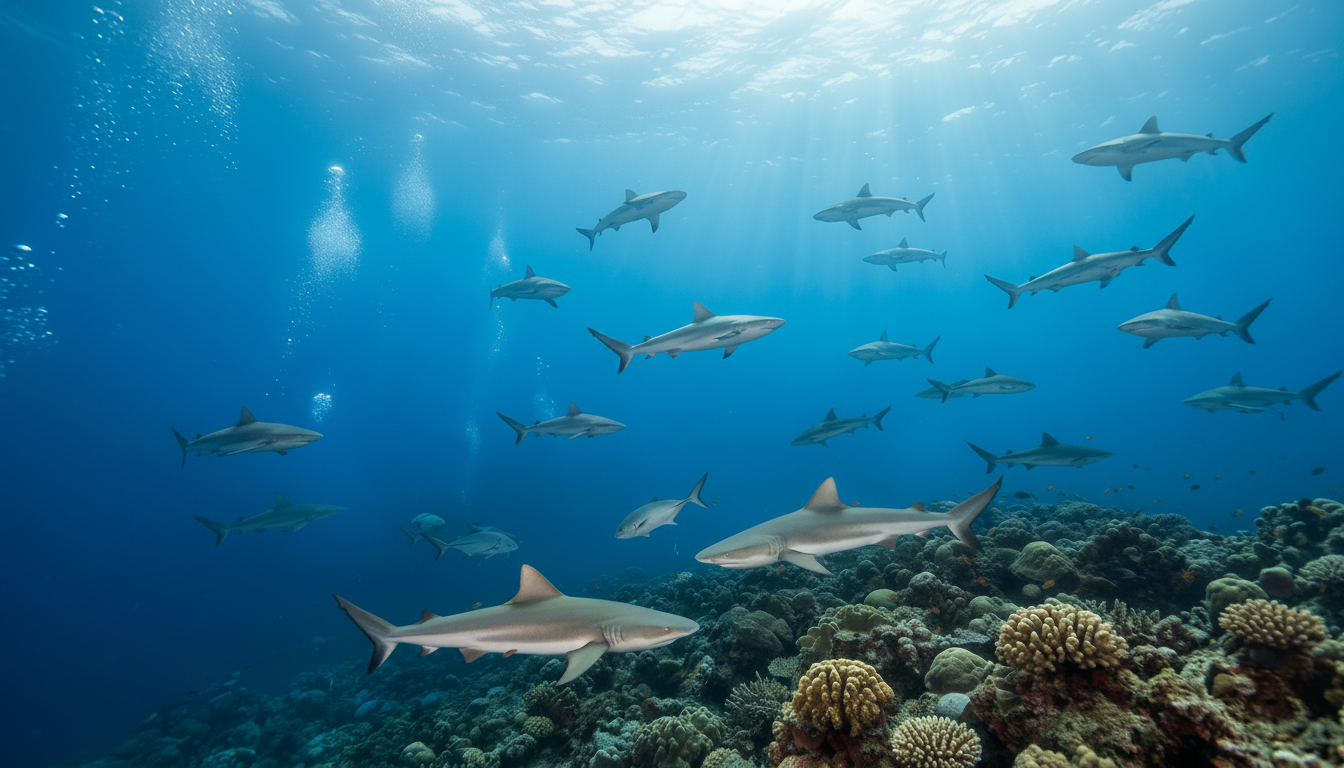
There are dive experiences, and then there’s Fakarava's Shark Wall. What elevates this particular encounter from simply 'great' to 'bucket list essential' is its sheer scale and the pristine, natural behaviour you witness. Unlike staged shark feeds or baited encounters, the Fakarava Shark Wall is a spectacular natural aggregation, driven by the ancient rhythms of the ocean during the annual grouper spawning season. Hundreds, sometimes thousands, of grey reef sharks descend upon the South Pass (Garuae Pass), transforming it into a living, breathing wall of muscle and teeth.
This isn't merely a fleeting glance at a few majestic predators; it's an immersive experience where you are literally surrounded by them. The density of sharks is astonishing, creating a dynamic, awe-inspiring panorama. For any diver who has ever felt the thrill of encountering a shark, this is the ultimate affirmation of their power and beauty. It’s for the adventurous spirit, the underwater photographer seeking that iconic shot, and anyone who yearns to witness nature's raw power in an unspoiled, UNESCO Biosphere Reserve setting.
Beyond the sharks themselves, Fakarava offers an unparalleled glimpse into a thriving coral ecosystem. The atoll is not just a shark sanctuary; it’s a vibrant tapestry of hard and soft corals, teeming with an incredible diversity of reef fish. This combination of top predator spectacle and thriving reef life ensures that every dive is a kaleidoscopic journey into the heart of the South Pacific.
What You'll See and Do
The star of the show, without a doubt, is the grey reef shark (Carcharhinus amblyrhynchos). During the peak spawning season, these magnificent predators gather in astounding numbers in the South Pass, forming what is aptly known as the 'Shark Wall.' You'll be drifting along, often carried by a gentle to moderate current, and suddenly, they're everywhere – above, below, and on all sides. It's an almost surreal experience, a feeling of being completely enveloped by these powerful, graceful creatures.
While the grey reef sharks dominate, keep your eyes peeled for other impressive pelagics. Silvertip sharks, blacktip reef sharks, and even the occasional hammerhead or tiger shark are known to patrol these rich waters. The sharks are primarily drawn by the mass spawning of marbled groupers (Epinephelus polyphekadion), a remarkable event in itself, where thousands of groupers gather to reproduce. This food source creates a dynamic ecosystem of predator and prey, played out before your very eyes.
The dives here are predominantly drift dives, making them exhilarating and efficient. As you are carried along, you'll encounter not only the sharks but also schools of barracuda, snapper, and jacks. The coral gardens are pristine and host a colourful array of reef fish, including parrotfish, butterflyfish, and angelfish. Depths typically range from 15 to 30 metres (50 to 100 feet), allowing for ample bottom time to soak in the spectacle. You'll often hook into the reef to observe for extended periods, or simply drift through the channel, letting the current guide you through this living panorama.
Best Time to Go
The prime window for experiencing the Fakarava Shark Wall in its full glory is during the months of June and July. This period coincides with the full moon, often the new moon too, when the marbled groupers congregate in the South Pass for their annual spawning event. This natural phenomenon, in turn, attracts the staggering numbers of grey reef sharks, creating the legendary 'Shark Wall.'
During these mid-year months, French Polynesia typically enjoys its dry season, meaning clearer skies and generally calmer conditions above water. Water temperatures in Fakarava are consistently warm, ranging from a comfortable 26 to 28°C (79 to 82°F). Visibility within the passes is usually excellent, often exceeding 30 metres (100 feet), offering crystal-clear views of the bustling marine life. Be prepared for currents, however; diving in Fakarava's passes inherently involves drift diving, with currents ranging from mild to strong, especially around the times of tidal changes. Proper current diving techniques are essential to fully enjoy these dives.
How to Dive Fakarava Shark Wall
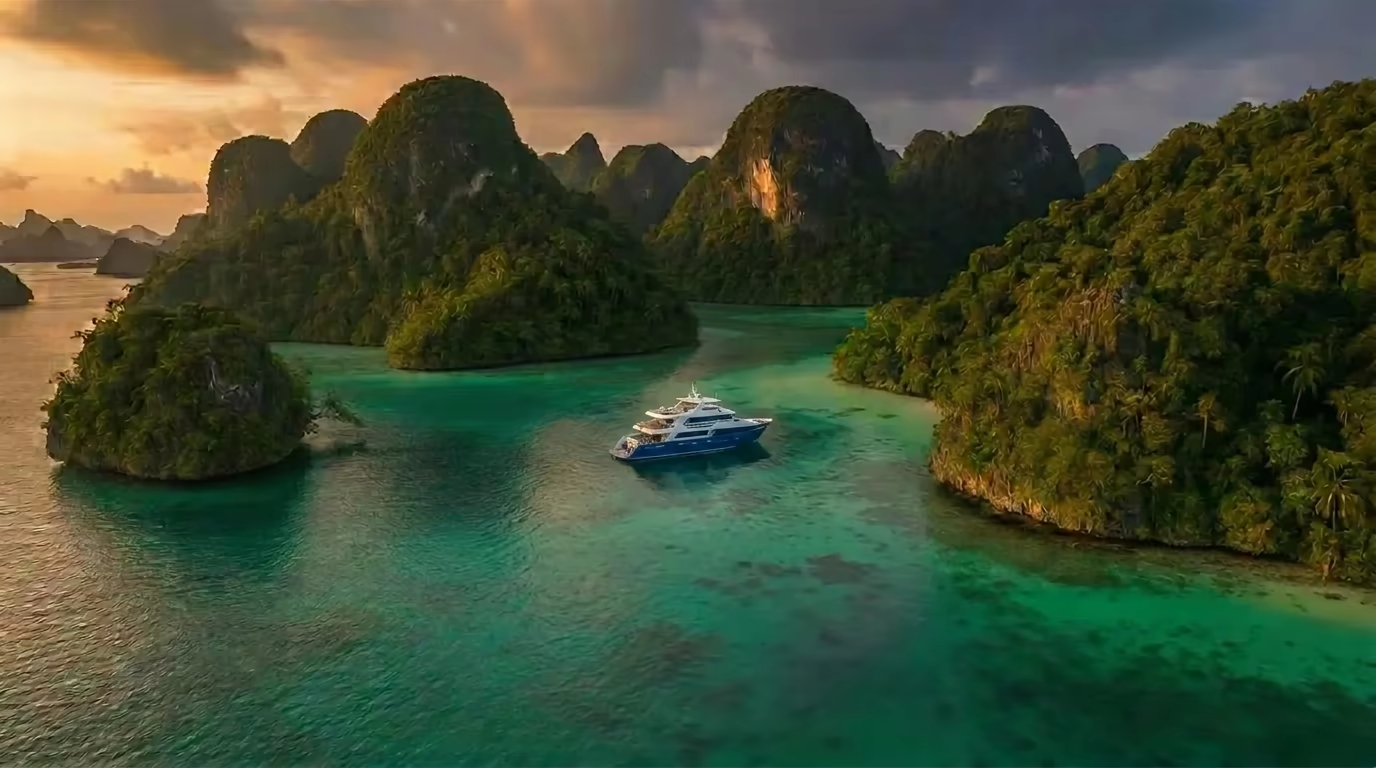
Accessing the Fakarava Shark Wall is best achieved via a liveaboard. While day boats from local guesthouses can take you out, a liveaboard offers unparalleled flexibility, allowing you to position yourself ideally for the multiple dives required to fully experience the pass, often including early morning or twilight dives when activity is at its peak. Liveaboards also provide a comprehensive itinerary, often combining Fakarava with other stunning atolls like Rangiroa or Tiputa, enhancing your overall French Polynesian dive adventure.
Given the nature of the diving – drift diving in potentially strong currents and moderate depths – you should be an Open Water Diver at a minimum, but ideally an Advanced Open Water Diver. We strongly recommend having at least 50 logged dives under your belt, with some experience in current or drift diving. Essential recommended courses include the PADI or SSI Drift Diver Speciality, which will equip you with the necessary skills and confidence. Furthermore, Nitrox certification is highly beneficial. The additional bottom time provided by Nitrox allows for longer observation of the shark wall, making the most of every precious minute underwater. For wetsuit thickness, a 3mm shorty or full suit is generally sufficient given the warm water temperatures, but some divers prefer a 5mm for extended comfort during multiple drift dives.
Conservation and Responsible Diving
Diving the Fakarava Shark Wall comes with a profound responsibility to protect this extraordinary ecosystem. As a UNESCO Biosphere Reserve, Fakarava is a jewel of marine biodiversity, and our presence as divers must be mindful and respectful. The fundamental principle is 'take only pictures, leave only bubbles.' This means absolutely no touching of coral, fish, or any marine life – especially the sharks. Maintain a respectful distance and avoid any actions that could alter their natural behaviour.
When photographing, be conscious of your buoyancy and finning techniques to avoid kicking up silt or damaging the reef. Flash photography should be used judiciously, if at all, as it can disrupt marine animals. Avoid chasing or cornering animals for a shot. Our role is to be silent observers, appreciating the raw beauty of this wild place without interfering. Supporting dive operators who adhere to strict conservation policies and educate their guests on responsible diving practices is also paramount in safeguarding the Fakarava Shark Wall for future generations.
Plan Your Trip
The Fakarava Shark Wall is more than just a dive; it’s an epic journey into the wild heart of the ocean. If this once-in-a-lifetime encounter calls to you, now is the time to plan your adventure. Explore Blue Rides’ curated selection of premium liveaboards, designed to take you directly to the heart of this incredible French Polynesian spectacle. Your bucket list awaits.