
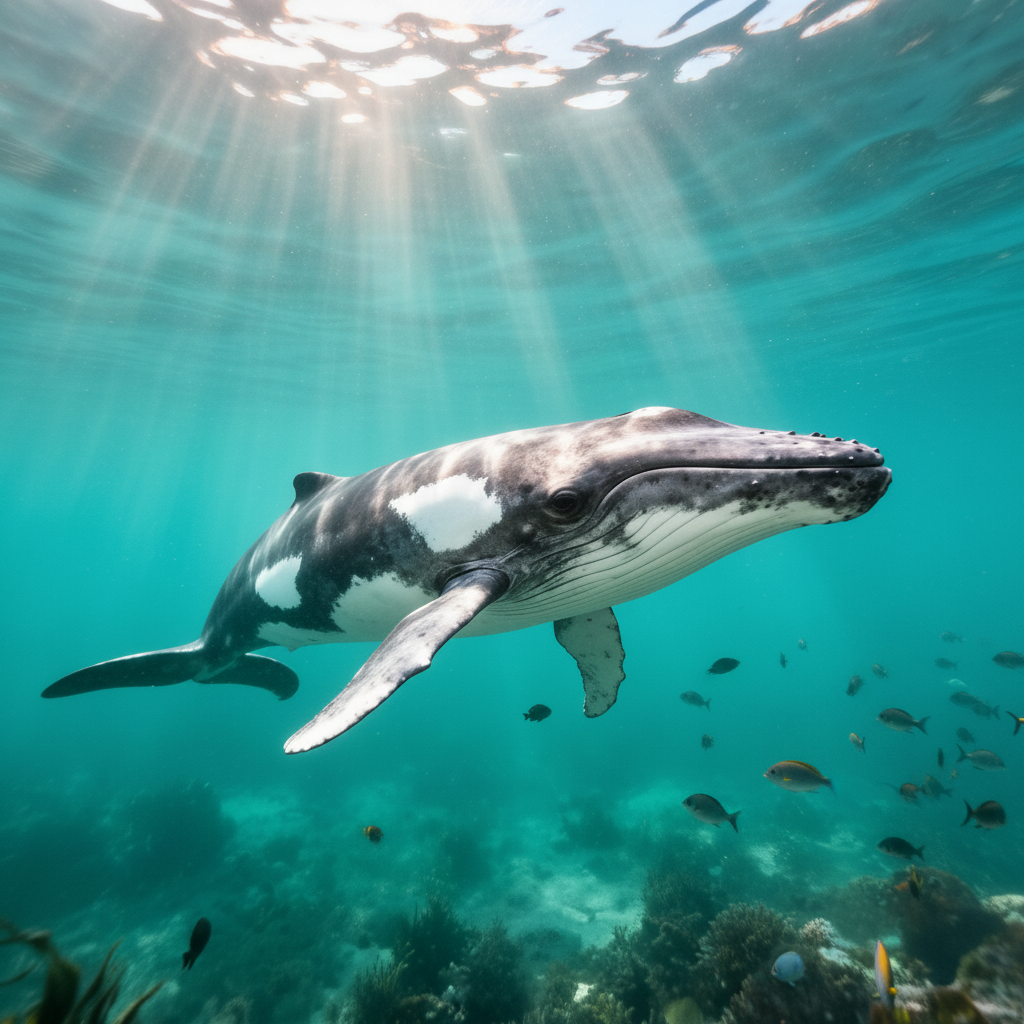
Forget the predictable. Forget the 'seen it, done it' destinations. If you're yearning for an unparalleled marine encounter, one that will redefine your understanding of ocean giants and leave an indelible mark on your soul, then you need to turn your gaze toward the emerald waters of Milne Bay, Papua New Guinea. Here, amidst a tapestry of vibrant reefs and rich biodiversity, a truly extraordinary event unfolds each year – the chance to immerse yourself in the world of dwarf minke whales.
Why Dwarf Minke Whale Encounters Belongs on Your Bucket List
There are 'bucket list' items, and then there are bucket list items. Snorkelling with dwarf minke whales in Milne Bay undoubtedly falls into the latter category. What elevates this experience beyond mere observation is the breathtaking intimacy of the interactions. These aren't fleeting glimpses from a distance; these are prolonged, often curious encounters with magnificent, intelligent creatures who choose to approach you. This isn't a guaranteed event engineered by humans; it's a privilege, a wild dance on nature's terms.
The sheer ‘wow’ factor of being eye-to-eye with a 7-8 meter cetacean, feeling the subtle vibrations of its presence in the water, and witnessing its grace unfold just feet away, is something few other destinations can offer. Unlike their larger baleen whale cousins, dwarf minkes are remarkably inquisitive. They seem to genuinely engage with snorkelers, often circling, observing, and even performing gentle passes. It's a mutual curiosity that transcends the species barrier, an interaction so profound it often moves participants to tears.
This experience is tailor-made for the adventurer who values authentic wildlife encounters over canned experiences, for the diver or snorkeler who seeks a deeper connection with the marine world. It suits those with a keen sense of respect for nature, an appreciation for the unpredictable beauty of the ocean, and a desire to witness a truly unique natural phenomenon in one of the planet's last wild frontiers.
What You'll See and Do
The primary focus, of course, is the dwarf minke whale (Balaenoptera acutorostrata subspecies). During these encounters, you'll be in the water, typically on a drift snorkel, observing these sleek, streamlined whales. Their distinctive white patch on the flipper and robust body are easily identifiable as they glide effortlessly through the water. While primarily a snorkel encounter to ensure minimal disturbance and allow for whale-initiated interactions, the vibrant reef systems of Milne Bay are also a diver’s paradise.
Beyond the minke whales, Milne Bay boasts an astonishing diversity of marine life. Its myriad dive sites, such as the famous "House Reef" at Tawali or the iconic "Michelle's Reef," teem with macro wonders – frogfish, pygmy seahorses, nudibranchs galore, and numerous species of pipefish. You might encounter pelagics like barracuda or trevally schooling around pinnacles, or even a resident whitetip reef shark or two. The vibrant coral gardens are kaleidoscopic, home to an untold number of reef fish, from brightly coloured anthias to majestic Napoleon wrasse.
Encounters with the minkes are typically passive. You’ll float on the surface, allowing the whales to approach. There’s no chasing or aggressive pursuit. Sometimes a minke will pass by once, other times you might have an individual or a small pod circling for minutes, even extended periods, offering incredible photo and video opportunities. Underwater visibility in Milne Bay is generally excellent, often exceeding 20-30 meters (65-100 feet), providing clear views of the whales' graceful movements against the deep blue backdrop. Depths for diving range from shallow coral gardens at 5-10m to deeper bommies and walls exceeding 30m, but the whale interactions occur at the surface.
Best Time to Go
The window for dwarf minke whale encounters in Milne Bay, Papua New Guinea, is relatively short and precise, making careful planning essential. The most reliable season spans from June through to August. This period coincides with the whales' annual migration, bringing them into the warmer, nutrient-rich waters of Milne Bay.
During these months, the weather is generally favourable, characterized by calmer seas, lighter winds, and a reduced chance of heavy rainfall compared to the shoulder seasons. Water temperatures are comfortably warm, typically ranging from 27°C to 29°C (81°F to 84°F), making for enjoyable extended snorkel sessions. Visibility is consistently excellent, often exceeding 25-30 meters (80-100 feet), crucial for spotting these magnificent creatures from a distance and appreciating their full grandeur up close. While some currents can be present around certain dive sites, they are generally manageable and often bring in the nutrient-rich waters that attract the diverse marine life, including the whales themselves. Being prepared for slight surface chop during some whale encounters is always a good idea, though the calmest conditions are sought for the best interactions.
How to Dive Dwarf Minke Whale Encounters
Accessing the dwarf minke whale grounds in Milne Bay is almost exclusively done via liveaboard. While there are land-based resorts in the region, the best chance for sustained and multiple whale encounters comes from the mobility and dedicated expedition structure of a liveaboard vessel. This allows captains to strategically position the boat in known aggregation areas and move with the whales if needed, maximizing your time in the water. Furthermore, liveaboards provide unparalleled access to remote dive sites and pristine reefs that would be otherwise inaccessible, offering a comprehensive dive and snorkel experience.
For the diving portion of your trip, an Open Water Diver certification is the minimum requirement, though an Advanced Open Water certification is highly recommended to fully explore the diverse depths of Milne Bay's dive sites. Many liveaboards will also offer speciality courses onboard. Having logged at least 20-30 dives is advisable, particularly for those less experienced with drift diving or varying conditions. For optimal bottom time and safety, completing a Nitrox certification before your trip is a significant advantage, allowing for extended no-decompression limits on repetitive dives. Given the potential for currents around some reef systems, a Drift Diver specialty course would also be beneficial, enhancing your comfort and proficiency in those conditions. In terms of gear, a 3mm wetsuit is generally sufficient for the warm waters, though some may prefer a 5mm for extended time in the water or for evening dives. Always bring a reef hook, a dive computer, and consider a safety sausage (SMB) and whistle for surface signalling.
Conservation and Responsible Diving
Participating in dwarf minke whale encounters comes with a profound responsibility to protect these magnificent creatures and their habitat. Adhering strictly to the guidelines set by your liveaboard crew and local authorities is paramount. This means no touching, chasing, or aggressive swimming towards the whales. All interactions must be whale-initiated and passive on the part of the snorkeler. Maintain a respectful distance, allowing the whales to control the proximity of the encounter. Always approach from the side, slowly and calmly. Photography is encouraged, but avoid using flash, and ensure your equipment doesn’t interfere with the whales’ natural behaviour. By being a silent and respectful observer, you contribute to the longevity of these encounters and provide valuable, undisturbed insights for researchers. Remember, we are guests in their home.
Plan Your Trip
The prospect of swimming with dwarf minke whales is an experience that transcends the ordinary. It's an opportunity to connect with nature's grandeur in a way few ever will. If you're ready to answer the call of the wild and add this incredible odyssey to your diving resume, explore the range of Blue Rides liveaboards departing for Milne Bay during the June-August season. Your dream encounter awaits.