There are dive sites, and then there are legends. For seasoned divers, a whisper of Palau’s Blue Corner evokes a thrill, a knowing nod to one of the ocean’s truly phenomenal spectacles. It’s a place where the nutrient-rich currents of the Pacific converge, creating an underwater theatre that consistently delivers heart-stopping encounters. If you’ve ever dreamt of being truly immersed in an apex predator’s domain, this is where that dream becomes a breathtaking reality.
Why Blue Corner Wall Dive Belongs on Your Bucket List
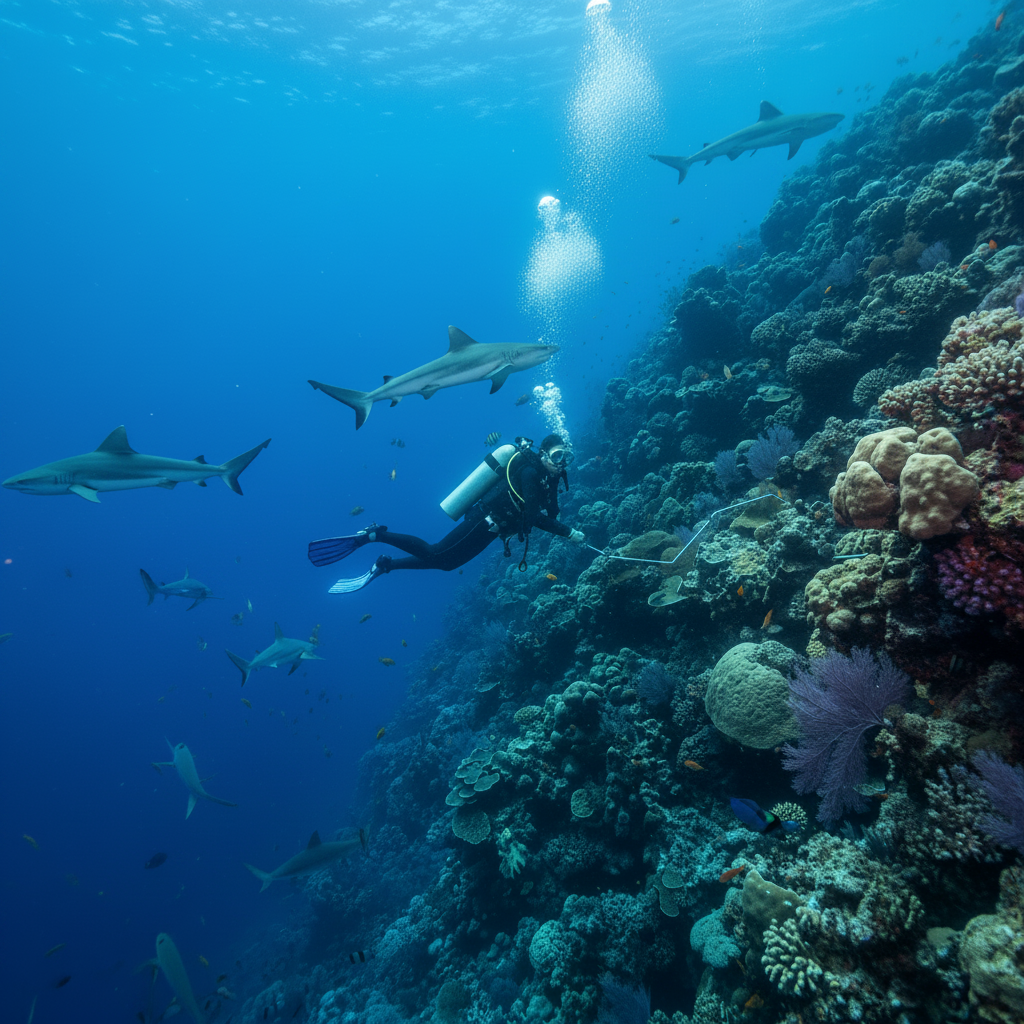
The Blue Corner isn't just another beautiful reef; it’s an ecological engine, a biological hotspot that thrums with an almost overwhelming energy. Its unique geographical position, jutting out into the open ocean, acts as a magnet for pelagic life. This isn't a dive where you meticulously search for micro-critters (though they are certainly present); this is a dive where you become part of a larger, grander drama. It’s the ultimate expression of current diving, where, with the aid of a reef hook, you literally hang suspended, witnessing the ocean’s wild ballet unfold before you.
What makes it globally unique is the sheer density and diversity of large marine life that consistently patrols its coral-encrusted edges. You’re not just hoping to see a shark; you're expecting to see dozens. It's the kind of dive that resets your expectations for what a healthy ocean can look like, a vibrant, thriving ecosystem that caters to divers who crave exhilarating experiences and close-up interactions with powerful ocean creatures. This dive suits adventurous spirits, those who appreciate the raw, untamed beauty of the marine world, and divers who find immense joy in being an observer, rather than an active participant, in nature's grand display.
What You'll See and Do
The experience at Blue Corner typically begins with a descent to the reef wall, often around 15-20 metres (50-65 feet). The plan is usually to hook into the reef at a strategic point, allowing the current to billow around you while you secure yourself, becoming a stationary observer. The depths here can reach well beyond recreational limits, but the main theatre of action is generally in the 18-30 metre (60-100 feet) range. From this vantage point, the magic truly begins.
The cast of characters is nothing short of spectacular. Grey reef sharks are the undisputed stars, patrolling with an almost hypnotic grace, often in groups of twenty or more. You'll see them emerge from the blue, navigate the currents effortlessly, and occasionally sweep past within arm's reach. But they are far from alone. Schools of barracuda, often forming shimmering tornadoes, are a common sight, as are large groups of red snapper. Keep an eye out for impressive schools of bigeye trevally, their silver scales flashing in unison. Eagle rays often glide past, their elegant forms silhouetted against the open ocean, and dogtooth tuna can be seen streaking by at incredible speeds. If you're lucky, you might spot a Napoleon wrasse, its large, inquisitive eyes surveying the scene, or even a majestic oceanic manta ray making a rare appearance. Hammerheads are occasionally sighted deeper, for those with the appropriate certification. The sheer volume of life, from vibrant reef fish like triggerfish and parrotfish to the larger pelagics, creates an overwhelming mosaic of marine activity.
The behaviour you’ll witness is dictated by the current. Sharks and other pelagics use the upwelling currents to feed and hunt, making the Blue Corner a natural aggregation point. You'll observe territorial displays, hunting patterns, and the perpetual motion of the reef ecosystem. While hooked in, you're not actively swimming much, but rather absorbing the dynamic environment, making small adjustments to your buoyancy and body position to best appreciate the show. Each dive is unique, offering a different permutation of marine life and interactions, but always delivering on the promise of a world-class encounter.
Best Time to Go
The optimal season to experience the Blue Corner in Palau, Micronesia, is generally from October to May. During these months, the weather is typically drier and more stable, leading to consistently better diving conditions. While Palau is a year-round diving destination, this period offers the best chance for calm surface conditions and optimal visibility.
Throughout the year, water temperatures in Palau remain wonderfully consistent and warm, typically ranging from 27°C to 30°C (81°F to 86°F). This means comfort in the water is almost a given. Visibility is also consistently excellent, often exceeding 20-30 metres (65-100 feet), providing crystal-clear views of the spectacular marine life. Currents at the Blue Corner, however, are a defining characteristic, and they can range from moderate to very strong, regardless of the season. Stronger currents are often associated with more pelagic activity. While the designated season offers the best overall conditions, weather patterns in the tropics can always be somewhat unpredictable, meaning occasional squalls or choppier seas are possible even during the 'best' months.
How to Dive Blue Corner Wall Dive
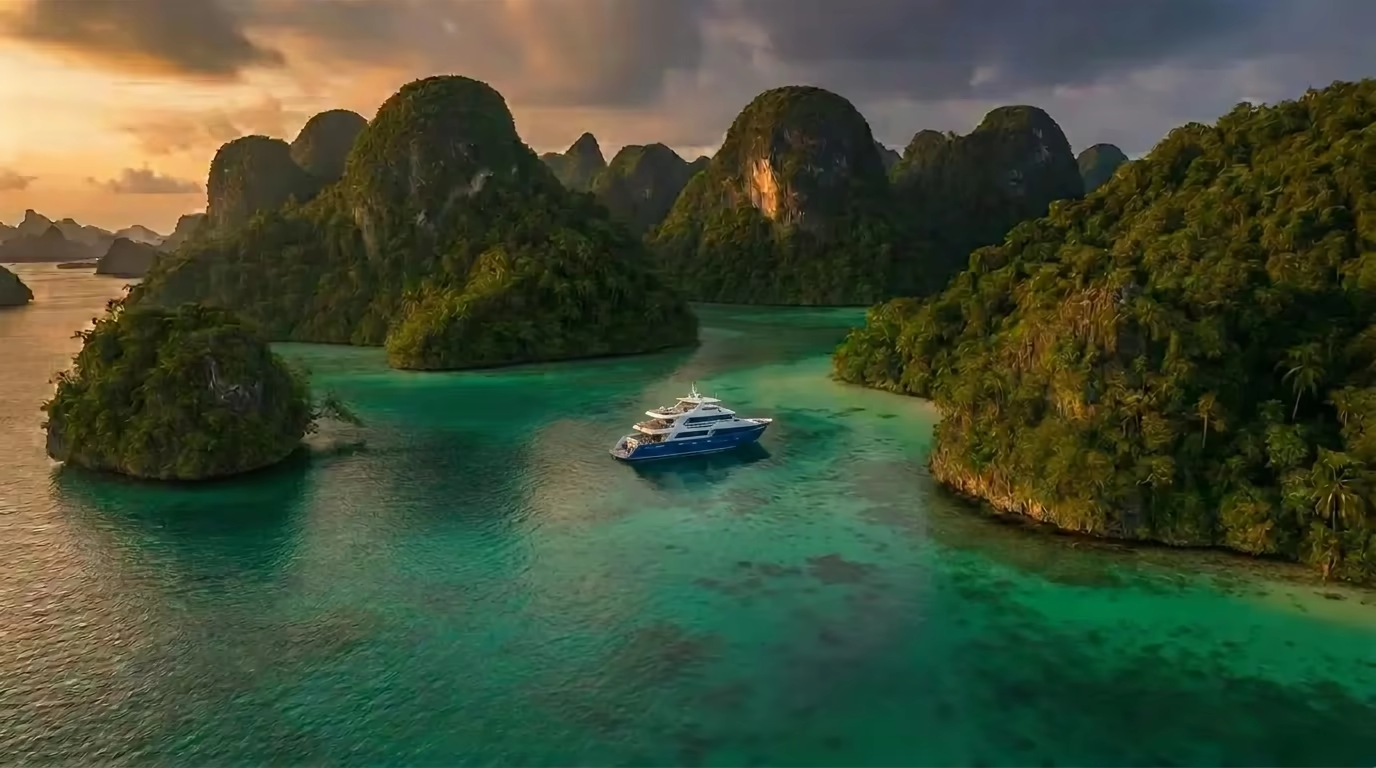
Accessing the Blue Corner is primarily done via day-boats operating out of Koror, the main hub of Palau. However, for the ultimate, immersive dive experience, a liveaboard offers unparalleled access and convenience. Liveaboards typically visit the Blue Corner multiple times over the course of a trip, often timing dives for optimal current and marine activity, sometimes even offering night dives (though the Blue Corner is typically a daytime dive). This allows for repeated exposure to the site under varying conditions, increasing your chances of seeing particular species or behaviours.
To safely dive the Blue Corner, a minimum certification of Advanced Open Water Diver or equivalent is highly recommended due to the depths involved and the challenging nature of current diving. Most operators will also require a reasonable number of logged dives, perhaps 50 or more, to ensure divers are comfortable and proficient in various conditions. Experience with drift diving is a huge advantage, and undergoing a PADI Drift Diver specialty course ahead of time would be extremely beneficial. Nitrox certification is also strongly advised for extending bottom times and enhancing safety during multiple deep dives. A 3mm wetsuit is usually sufficient for the warm waters, but some divers prefer a 5mm for added comfort during longer dives or for multiple dives per day. Essential gear includes a reef hook (usually provided or available for rent from dive operators), a surface marker buoy (SMB) for safety, and an underwater signalling device.
Conservation and Responsible Diving
Palau is a world leader in marine conservation, and its commitment to protecting its pristine reefs and rich biodiversity is evident throughout the country. As divers, it's our responsibility to uphold these high standards. When diving the Blue Corner, adherence to responsible diving practices is paramount. Never touch the coral, rocks, or any marine life. Your reef hook should only be attached to dead rock, never live coral. Maintain excellent buoyancy control to avoid accidental contact with the reef. Respect the space of the marine animals; do not chase or harass them. When taking photos, be mindful of other divers and avoid positioning yourself in a way that could obstruct their view or disturb the wildlife. Palau's forward-thinking approach, including its shark sanctuary, has allowed places like the Blue Corner to thrive, and by practicing respectful behaviour, you contribute to its continued health for future generations of divers.
Plan Your Trip
Ready to experience the thrill of the Blue Corner for yourself? Let Blue Rides help you navigate the options and find the perfect liveaboard experience that will take you to this extraordinary Patagonian dive Mecca. Our curated selection of premium liveaboards departing for Micronesia are waiting to show you the adventure of a lifetime.