
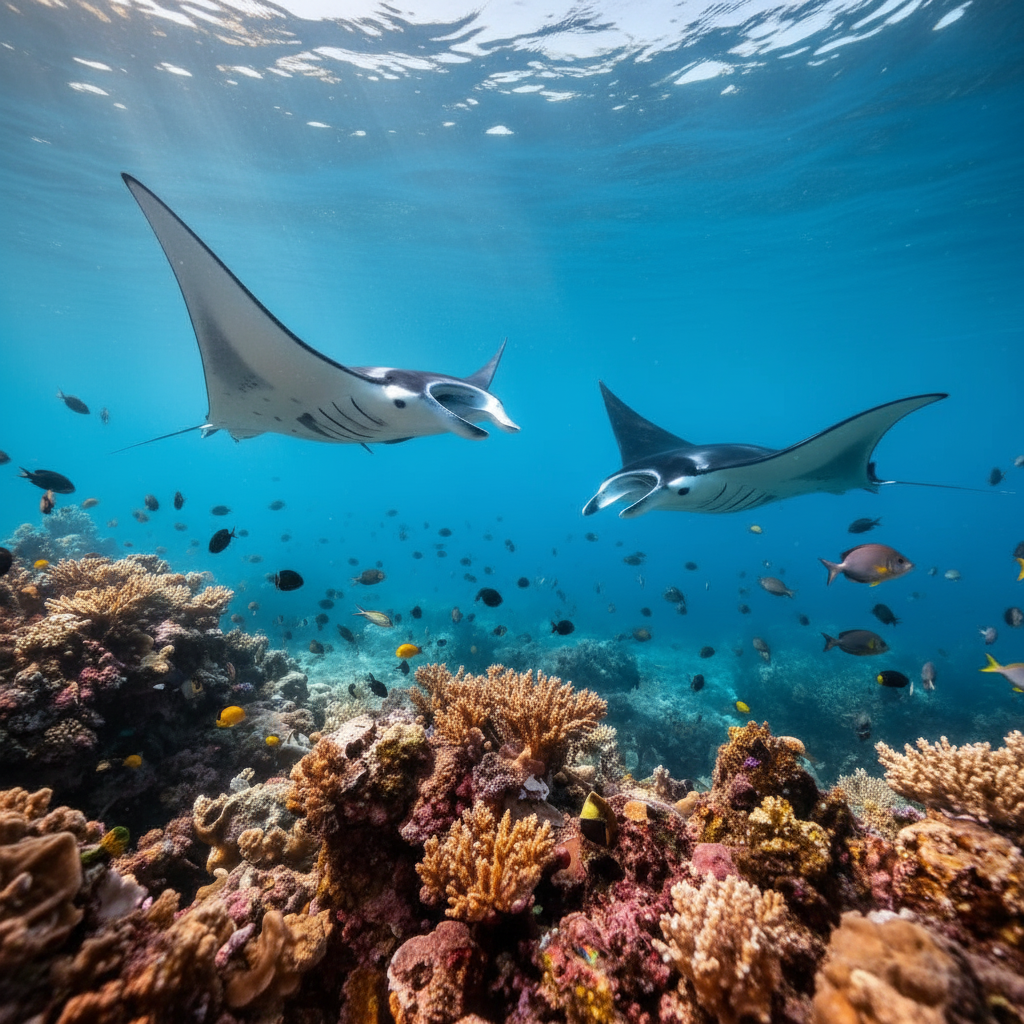
Imagine drifting effortlessly as shadows glide above and below, an intricate ballet of giants playing out just metres from your mask. This isn't a dream from a nature documentary; this is the visceral, awe-inspiring reality awaiting you in Komodo’s most celebrated marine amphitheatre, Manta Alley. As seasoned dive travel editors, we've had our share of underwater marvels, but even for us, Manta Alley remains a pinnacle, a place where the ocean’s gentle giants convene in numbers that defy belief.
Why Manta Alley Dives Belongs on Your Bucket List
Komodo, an archipelago synonymous with ancient dragons and pristine reefs, holds a glittering jewel in its southern reaches: Manta Alley. This isn't just another dive; it's an encounter with one of the ocean's most charismatic creatures on an unparalleled scale. What makes Manta Alley globally unique is the sheer density and diversity of manta rays – both oceanic (Mobula birostris) and reef (Mobula alfredi) mantas frequenting the same cleaning stations. While other dive sites might boast mantas, few offer the consistent, predictable, and often overwhelming numbers you'll experience here.
The "wow" factor of Manta Alley is undeniable. Picture yourself suspended mid-water, a gentle current guiding you past rocky outcrops, only to be enveloped by a swirling vortex of these magnificent pelagics. They come here for the same reasons we visit a spa – to be meticulously cleaned by tiny wrasse and butterflyfish that inhabit the coral bommies. This symbiotic relationship provides divers with an intimate spectacle as mantas queue patiently, performing graceful loops and barrel rolls, seemingly oblivious to our presence. It’s an experience that transcends mere observation; it's a communion with nature, a deep dive into the rhythms of the marine world that leaves an indelible mark on your soul.
This experience is tailor-made for any diver who dreams of face-to-face encounters with large marine animals, those who appreciate the delicate balance of an ecosystem, and certainly those who find profound peace in the underwater realm. Whether you're a seasoned photographer seeking that perfect shot, a naturalist eager to observe complex behaviours, or simply a diver looking for an unforgettable adventure, Manta Alley delivers. It suits those with an adventurous spirit, comfortable with currents, and a deep respect for marine life.
What You'll See and Do
At Manta Alley, the stars of the show are, undoubtedly, the manta rays. You'll witness them congregating around specific cleaning stations, elegant wings spanning up to five metres, effortlessly gliding through the water. While individual mantas are magnificent, it's the groups of 10, 20, sometimes even 50 or more, that truly take your breath away. They might swim directly towards you, veering off at the last moment, or perform their elegant feeding behaviour, known as ram feeding, sifting plankton-rich waters with their wide mouths. Keep an eye out for their distinctive cephalic lobes, used to funnel food, and their unique ventral spot patterns, which are like individual fingerprints.
Beyond the mantas, Manta Alley boasts a vibrant and healthy reef ecosystem. The rocky bottom and coral bommies teem with life. You'll often spot marbled groupers (Epinephelus coioides), schools of fusiliers, bannerfish, and various species of angelfish flitting amongst the corals. Occasionally, you might catch a glimpse of a bamboo shark (Chiloscyllium punctatum) resting under an overhang or a green sea turtle (Chelonia mydas) munching on algae. Given the strong currents, pelagic fish are also common, including dogtooth tuna (Gymnosarda unicolor) and various trevallies hunting in the blue.
Diving at Manta Alley usually involves negative entry due to the strong surface currents, quickly descending to the cleaning stations, which typically range from 10 to 20 metres. Depending on the current and the mantas' behaviour, your dive guide will interpret the best approach, often positioning the group to allow the mantas to come to you. The dive styles here are predominantly drift dives, allowing you to cover significant ground with minimal effort, gracefully carried along by the ocean's flow while staying tuned to the manta action. The maximum depth is relatively shallow, usually not exceeding 25-30 metres, which allows for longer bottom times and extended manta encounters.
Best Time to Go
While mantas can be sighted year-round in Komodo, the period from December to February is widely considered the prime season for Manta Alley. During these months, the nutrient-rich waters brought by seasonal shifts provide an abundance of plankton, drawing in mantas in greater numbers and with increased consistency. This is, however, also Komodo's rainy season, so while topside weather can be overcast with occasional downpours, the underwater world is often at its most spectacular.
Water temperatures in South Komodo during this peak season typically range from a refreshing 25°C to 28°C (77°F to 82°F), making for comfortable diving. Visibility can vary significantly due to the plankton blooms that attract the mantas, ranging anywhere from a clear 15 metres to a milky 5 metres. While lower visibility might seem less appealing, it's often a direct indicator of high plankton, and thus, high manta activity. Currents are a defining feature of Manta Alley and can range from mild to very strong, often switching direction throughout the day. These currents are precisely what makes the site so dynamic and productive for mantas, but they also demand respect and appropriate dive skills. Weather during this time tends to be more humid but generally conducive to liveaboard operations, which are the primary way to access this remote site.
How to Dive Manta Alley Dives
Accessing Manta Alley Dives primarily involves a liveaboard experience. Day boats typically do not go this far south in Komodo due to the distance and often challenging sea conditions. A liveaboard allows for multiple dives at this site, often at different current stages, maximizing your chances for extraordinary manta encounters. These vessels are equipped to handle the logistical demands of diving remote locations like Manta Alley, providing experienced dive guides who know the site intimately, comfortable accommodations, and all necessary safety features. Choosing a liveaboard also means you get to experience the wider Komodo National Park, from healthy coral reefs to macro diving hotspots.
To safely and enjoyably dive Manta Alley, a minimum PADI Open Water or equivalent certification is required, but we highly recommend an Advanced Open Water certification, especially for its drift diving and deep diving components. Crucially, a good level of experience is invaluable; divers should have at least 50 logged dives, with some prior experience in current. The ability to handle yourself calmly in strong currents, maintain good buoyancy, and excellent air consumption are all assets. While not strictly mandatory, Nitrox certification is highly recommended to extend your bottom time and safely maximize multiple dives. Drift Diver Specialty is also a great course to undertake beforehand to fine-tune your current skills. A 3mm to 5mm wetsuit is generally sufficient for the water temperatures, with some divers opting for a hooded vest for added warmth on successive dives. Ensure your gear is in excellent working order, especially fins that offer good propulsion against current, and consider bringing a surface marker buoy (SMB) and a reef hook as standard safety equipment for current diving.
Conservation and Responsible Diving
Manta rays are a vulnerable species, and their continued presence in Manta Alley depends heavily on responsible diving practices. Always maintain a respectful distance from the mantas – a minimum of 3-4 metres. Never touch, chase, or harass these magnificent creatures. Doing so can disrupt their natural behaviour, particularly at cleaning stations, and remove their protective mucus layer, making them susceptible to illness. Adhere strictly to your dive guide's instructions, especially regarding positioning and photo ethics. Avoid using flash photography, as it can disorient and stress marine life. Good buoyancy control is paramount to avoid damaging the delicate coral cleaning stations or stirring up sediment. By adhering to these simple guidelines, you contribute to the preservation of this incredible ecosystem, ensuring that Manta Alley remains a haven for mantas and a highlight for future divers.
Plan Your Trip
The allure of Manta Alley is undeniable – a spectacular showcase of nature's grandeur that promises cherished memories and breathtaking encounters. If Komodo's southern reaches and its graceful giants are calling your name, it's time to transform that dream into a reality. Browse our curated selection of premium liveaboards departing for this unparalleled dive experience and embark on your ultimate manta adventure with Blue Rides.