
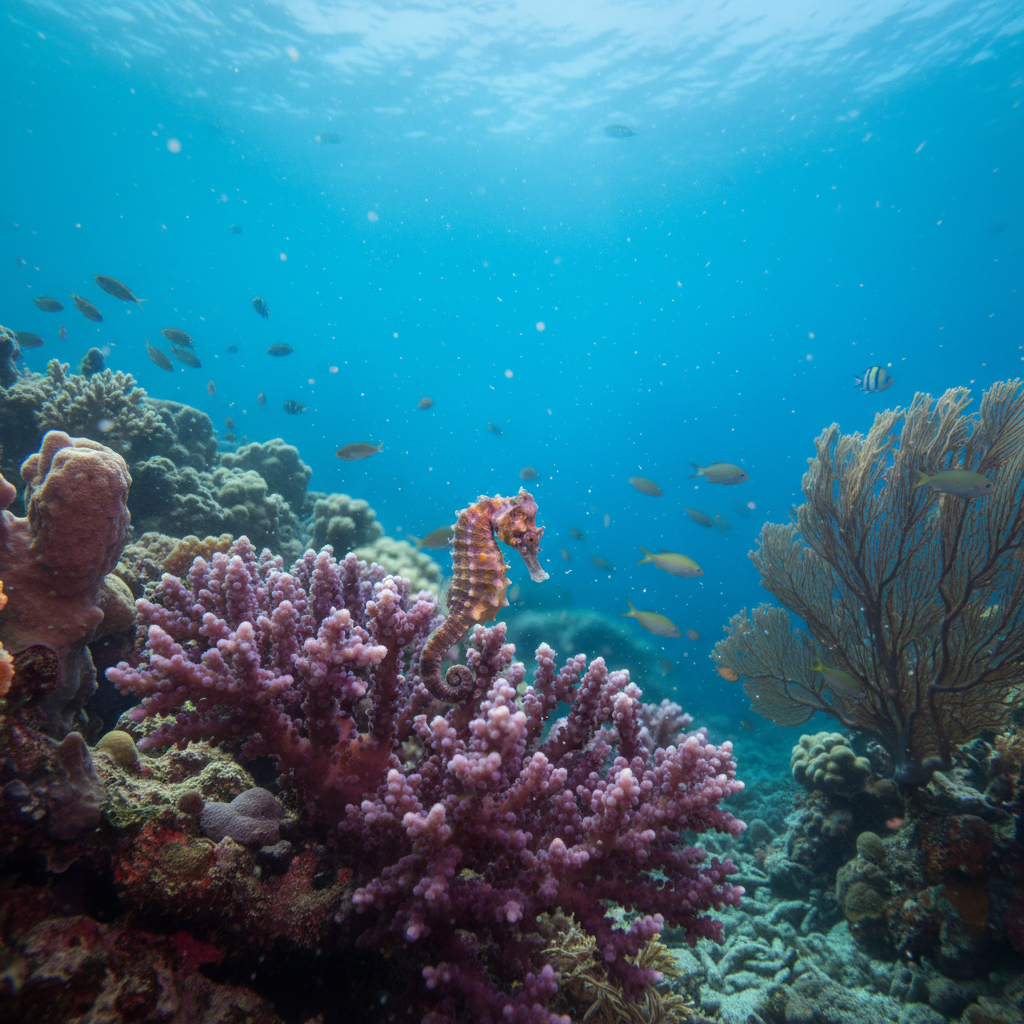
Imagine a creature so masterfully camouflaged it disappears into its coral home, a tiny jewel of the ocean, waiting to be discovered by those with the keenest eyes. This isn't a fantasy; it's the thrill of the “Pygmy Seahorse Discovery” in Indonesia's legendary Lembeh Strait, a dive experience that transcends the ordinary and firmly plants itself on the pinnacle of underwater bucket lists.
Why Pygmy Seahorse Discovery Belongs on Your Bucket List
The Lembeh Strait is globally renowned as the "Muck Diving Capital of the World," a humble title for a destination that offers such profound biodiversity. Yet, within this extraordinary realm of oddities and wonders, the pygmy seahorse stands out as a true superstar. What makes this experience so globally unique isn't just the opportunity to see these minuscule marvels, but the sheer concentration of different pygmy seahorse species found here – more than anywhere else on Earth. You're not just looking for a pygmy seahorse; you're embarking on a specific quest, a treasure hunt for nature's most elusive, diminutive masterpieces.
This isn't an experience for the adrenaline junkie seeking pelagics, nor for the unobservant. This is for the macro enthusiast, the patient photographer, the diver who finds immense satisfaction in the intricate details of the marine world. It's for those who appreciate the delicate balance of an ecosystem and the ingenious adaptations life develops to survive. The Lembeh Strait provides the perfect canvas for this pursuit, with its nutrient-rich waters fostering an incredible array of critter life, offering a constant parade of fascinating subjects even between pygmy seahorse sightings. It's a dive trip that will fundamentally change how you perceive underwater ecosystems, sharpening your focus and deepening your appreciation for the small wonders.
What You'll See and Do
Your primary mission during the Pygmy Seahorse Discovery is, of course, to locate these incredible creatures. You'll be searching for species like the Bargibant's pygmy seahorse (Hippocampus bargibanti), perfectly blending into the polyps of Muricella gorgonian corals, or the Denise's pygmy seahorse (Hippocampus denise), often found on more varied soft coral types, its texture and colour mimicking its host exactly. The challenge lies in their size, typically less than 2.5 cm (1 inch), and their uncanny camouflage, making them incredibly difficult to spot without an experienced guide and a finely tuned eye.
Beyond the pygmy seahorses, Lembeh Strait offers an unparalleled opportunity for macro photography and critter spotting. You'll encounter an endless parade of bizarre and beautiful marine life, often just inches from the surface of the volcanic-sand seabed. Expect to find flamboyant cuttlefish (Metasepia pfefferi) "walking" across the sand, mimic octopuses (Thaumoctopus mimicus) transforming their shape, hairy frogfish (Antennarius striatus) lurking in sponges, various species of nudibranchs adorned with vibrant colours, and countless shrimp and crab species hiding in plain sight. Dives are typically shallow, often staying between 10-25 metres (30-80 feet), allowing for extended bottom times to observe behaviours and capture stunning photographs. The focus is on slow, deliberate diving, often hovering or resting gently on the sandy bottom, perfectly suited for the meticulous search for pygmy seahorses and other rarely seen critters.
Best Time to Go
One of the many appealing aspects of a Pygmy Seahorse Discovery in Lembeh Strait is its accessibility year-round. While there are subtle seasonal variations, the diving remains consistently excellent. The dry season, roughly from April to October, generally offers calmer seas and slightly lower chances of rain. However, the "rainy season" from November to March doesn't significantly impact underwater conditions; rain often falls overnight or in short bursts during the day, and dive sites are typically sheltered within the strait.
Water temperatures in Lembeh are consistently balmy, averaging between 26-29°C (79-84°F) throughout the year, making a 3mm or 5mm wetsuit perfectly adequate for most divers. Visibility typically ranges from 10-20 metres (30-65 feet). While this might sound modest compared to some crystal-clear reef destinations, it's considered excellent for muck diving, where the focus is on the immediate foreground rather than distant vistas. Currents within the strait are generally mild to moderate, especially at the popular muck diving sites, but some of the reefier sites, or drift dives, can experience stronger flows. Overall, Lembeh offers comfortable and reliable diving conditions for its unique inhabitants.
How to Dive Pygmy Seahorse Discovery
The Lembeh Strait is uniquely set up for this kind of specialised diving, with operators offering both dedicated liveaboard and day-boat experiences. While day-boat operations from resorts offer immense flexibility and return to shore comforts each evening, a liveaboard experience allows you to maximise your dive time, often reaching more remote sites and offering multiple dives daily, including night dives, without the daily transfers. For Pygmy Seahorse Discovery, both options are excellent, but liveaboards often provide a more immersive experience for the dedicated critter hunter.
While an Open Water Diver certification is the minimum requirement, we strongly recommend divers have their Advanced Open Water certification, especially for those wanting to maximise their bottom time and explore slightly deeper areas. A significant number of logged dives (50+) will ensure you have the comfort and buoyancy control necessary for macro photography and patient critter searching without disturbing the environment. Key recommended courses include PADI Enriched Air Diver (Nitrox), which significantly extends no-decompression limits for longer observation periods at shallow depths, and a PADI Peak Performance Buoyancy specialty, essential for hovering perfectly still and avoiding contact with the delicate seabed. A 3mm full-length wetsuit is usually sufficient, though some prefer a 5mm for extra warmth on repetitive dives. Bring a good quality macro camera setup if photography is your passion, along with a powerful focus light and a spotting stick (used respectfully for balance, never for poking).
Conservation and Responsible Diving
The delicate nature of pygmy seahorses and their habitat demands the utmost respect and responsible diving practices. Never touch the corals or the seahorses themselves. Their camouflage is their only defence, and any disturbance can cause them stress or even harm their delicate skin. When photographing, avoid excessive flash or prolonged focusing lights, as this can disorient or disturb these tiny creatures. Maintain impeccable buoyancy control to prevent fin kicks from stirring up the sediment, which impacts visibility and smothers marine life. Choose reputable dive operators who employ local, experienced guides trained in ethical critter spotting and environmental awareness. Their expertise is invaluable for finding the smallest creatures without disturbing them, ensuring that the magic of the Pygmy Seahorse Discovery remains for future generations of divers.
Plan Your Trip
Ready to embark on a truly unforgettable underwater adventure and tick the Pygmy Seahorse Discovery off your bucket list? Blue Rides offers an exquisite selection of liveaboards designed to navigate the incredible waters of the Lembeh Strait, providing unparalleled access to the best dive sites and the expertise needed to find these extraordinary creatures. Browse our carefully curated itineraries and begin planning your journey into the heart of Indonesia's macro paradise.