
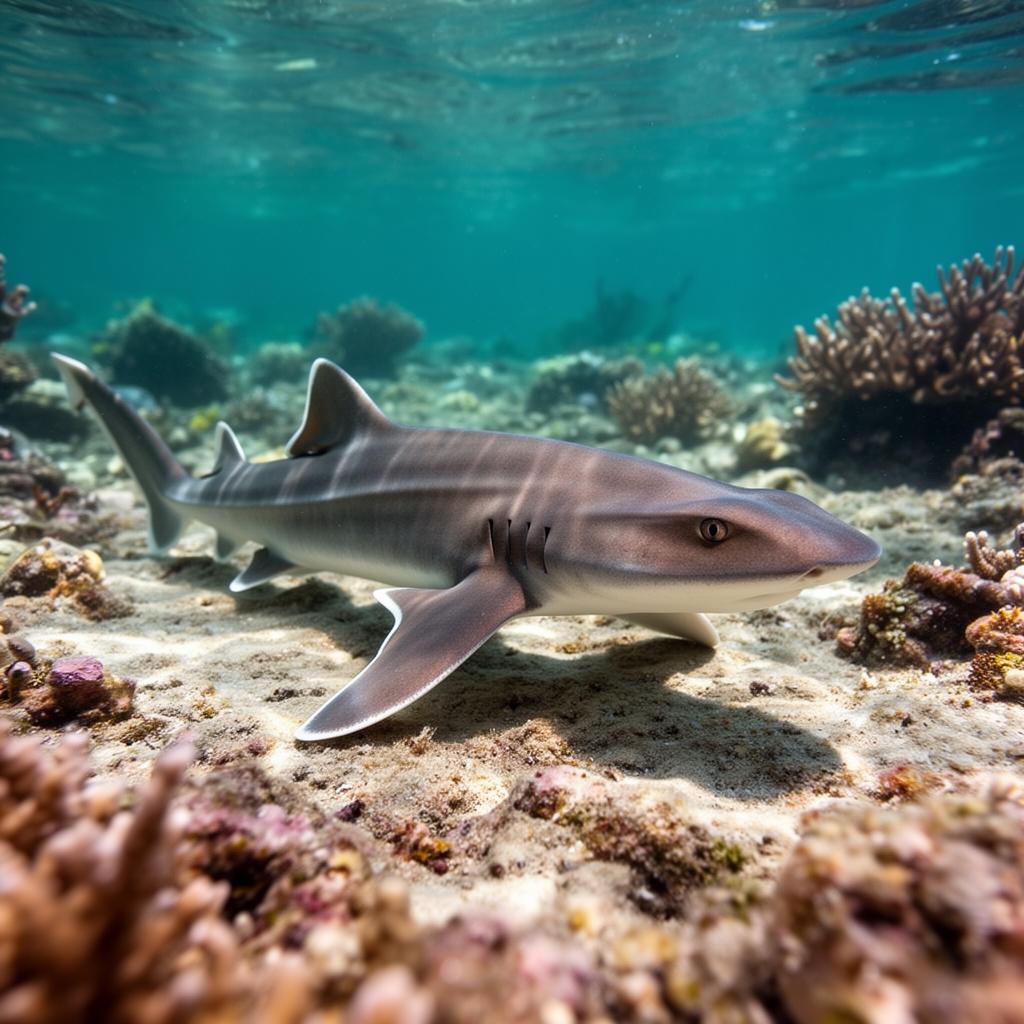
Imagine a shark not swimming, but walking. Not a creature of the deep, a fleeting shadow, but a distinct, identifiable individual, ambling across a coral wonderland as if strolling through a garden. This isn't a scene from a fantasy novel; it's the enthralling reality awaiting you in the vibrant waters of Raja Ampat.
Why Walking Sharks of Raja Ampat Belongs on Your Bucket List
The "Walking Sharks of Raja Ampat" experience isn't merely another dive; it's an encounter with evolutionary brilliance, a testament to nature's boundless inventiveness. These aren't your typical pelagic predators; we're talking about epaulette sharks (Hemiscyllium ocellatum), a truly unique species endemic to the shallow, thriving reefs of West Papua. Their moniker comes from the striking, eye-like spot (the 'epaulette') behind their pectoral fins, but it's their locomotion that truly captivates. They literally use their strong, muscular paired fins to "walk" over the seabed, navigating intricate coral structures and foraging for benthic invertebrates with a charming, almost endearing gait.
What makes this experience globally unique is its exclusivity to Raja Ampat. You won't find this particular behaviour, this specific species, anywhere else on Earth. It’s an intimate glimpse into one of the most astonishing adaptive strategies in the marine world, a prime example of convergent evolution. Watching an epaulette shark gracefully "stroll" across a patch of hard coral, or squeeze into a crevice using its fins, is an absolutely breathtaking moment that transcends a typical shark encounter. It's an immersive observation of a species perfectly adapted to its rich, biodiverse ecosystem.
This bucket-list adventure is perfectly suited for divers who appreciate the extraordinary, who seek out interactions beyond the usual, and who have an insatiable curiosity for the natural world. It appeals to macro enthusiasts, underwater photographers, and anyone who cherishes the quieter, more intricate wonders of the reef. It's not about speed or grand scale, but about detailed observation, patience, and the profound joy of witnessing something truly special and rare.
What You'll See and Do
Diving for epaulette sharks primarily involves exploring the shallow reef flats and intricate coral gardens where these nocturnal hunters spend their days resting. While they are often observed at depths between 3 to 15 metres, some encounters may be even shallower, allowing for extended bottom times and excellent natural light for photography. You'll witness them slowly propelling themselves across the substrate, using their strong, paddle-like pectoral and pelvic fins, a movement that mimics walking. This unique locomotion allows them to explore tight spaces, navigate complex reef structures, and effectively hunt small fish and crustaceans hiding within the coral. Their mottled patterns provide excellent camouflage against the vibrant backdrop of Raja Ampat's reefs.
Beyond the epaulette sharks, Raja Ampat’s underwater tapestry is astonishingly rich. While observing the "walking sharks," you'll be surrounded by an almost unbelievable diversity of marine life. Expect to see an explosion of colourful soft and hard corals, giant clams, schools of fusiliers, damselfish, and anthias. Keep a keen eye out for other fascinating creatures like wobbegong sharks (often found perfectly camouflaged on sandy bottoms or under ledges), pygmy seahorses on gorgonian fans, various species of nudibranchs, and a plethora of reef fish. You might even spot reef sharks cruising the current at slightly deeper sections of the dive, or majestic manta rays gliding gracefully through cleaning stations.
Dive styles will predominantly be slow, observational drifts or stationary dives, allowing you ample time to appreciate the epaulette sharks and their surroundings. Night dives offer another excellent opportunity for encounters, as the epaulettes become more active hunters under the cover of darkness. The behaviour you'll observe is one of quiet determination, as these sharks methodically search for food. It’s a chance to connect with these creatures on a very intimate level, understanding their place within the complex food web of Raja Ampat.
Best Time to Go
The optimal season for experiencing the Walking Sharks of Raja Ampat, and indeed for diving Raja Ampat in general, stretches from October to April. During these months, the region typically experiences calmer seas and more settled weather conditions, which are ideal for liveaboard itineraries and ensuring access to the best dive sites. While Raja Ampat is a year-round diving destination due to its equatorial location, the October to April period minimises the chance of encountering stronger winds and heavier rainfall that can occasionally occur during the "shoulder" months.
Water temperatures in Raja Ampat are consistently warm and inviting throughout the year, generally ranging between 28°C and 30°C (82°F to 86°F). This allows for comfortable diving, often requiring only a thin wetsuit. Visibility is typically excellent, often exceeding 20 metres (65 feet) and frequently reaching 30 metres (100 feet) or more, providing crystal-clear views for observing the intricate reef life and the epaulette sharks. While some currents can be present, especially around passages and points, these are often manageable and can provide exhilarating drift dives, carrying you effortlessly over vibrant coral gardens. For the epaulette shark encounters in shallower, more sheltered areas, currents are usually much milder or non-existent, allowing for focused observation.
How to Dive Walking Sharks of Raja Ampat
The most comprehensive and rewarding way to experience the Walking Sharks of Raja Ampat is undoubtedly via a liveaboard. Given the remote and dispersed nature of Raja Ampat’s dive sites, including those known for epaulette shark sightings (such as around Batanta, Misool, and Dampier Strait), a liveaboard offers unparalleled access, allowing you to explore multiple distant locations without repeated travel. Day-boat operations exist from Sorong or Waisai, but they are limited in reach and usually focus on specific, closer sites. A liveaboard itinerary maximises your chances of multiple epaulette shark encounters and provides a deeper immersion into the entire Raja Ampat ecosystem.
To fully enjoy diving in Raja Ampat, a PADI Advanced Open Water Diver or equivalent certification is highly recommended, as many spectacular drift dives and deeper exploration opportunities exist. While epaulette sharks often reside in shallow depths, overall comfort and experience are beneficial. We suggest a minimum of 50 logged dives to comfortably handle varying conditions and make the most of the diverse dive profiles. Enrolling in a Nitrox certification course before your trip is also highly advisable; enriched air nitrox greatly extends your bottom time, especially on repetitive dives common on liveaboards, allowing for longer, more relaxed observations of the unique marine life. A Drift Diver Specialty course could also be beneficial, preparing you for the occasional stronger currents. For gear, due to the warm water temperatures, a 3mm shorty or full-length wetsuit is generally sufficient. Remember to bring a dive computer, surface marker buoy, and reef hook (for currenty sites, used responsibly to avoid coral contact) as standard safety equipment. An underwater camera is an absolute must to capture all the wonders you'll encounter, especially the charismatic walking sharks.
Conservation and Responsible Diving
The delicate ecosystems of Raja Ampat, home to the unique walking sharks, are incredibly fragile and demand our utmost respect and care. As divers, we are privileged visitors to this underwater paradise, and it is our responsibility to minimise our impact. This means absolutely no touching of any marine life, including the epaulette sharks. Observing them from a respectful distance allows them to behave naturally and prevents accidental disturbance or harm. Always maintain excellent buoyancy control to avoid contact with the corals and seabed, which can easily be damaged. When taking photographs, be mindful of your fin kicks and do not harass or chase the animals in pursuit of a perfect shot. Raja Ampat is a globally significant biodiversity hotspot, and responsible diving practices are paramount to ensure these incredible species and their habitats thrive for generations to come. Support liveaboard operators and dive centres that actively promote and adhere to sustainable tourism and conservation efforts.
Plan Your Trip
The opportunity to witness the astonishing Walking Sharks of Raja Ampat is an experience that will redefine your understanding of marine life and leave an indelible mark on your diving journey. Begin planning your adventure to this unparalleled destination. Browse the exquisite selection of Blue Rides liveaboards departing for Raja Ampat, and set forth on an expedition that promises discovery, wonder, and memories to last a lifetime.