
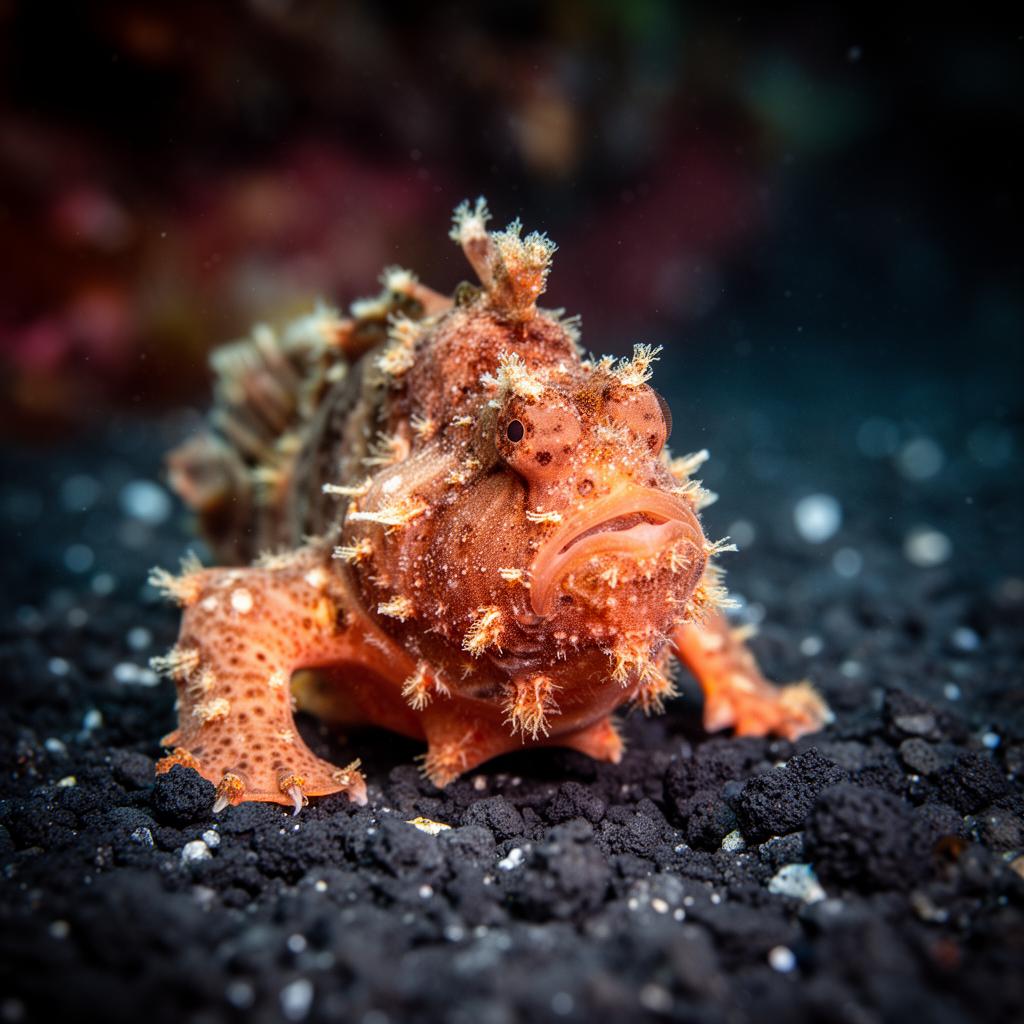
Ever gazed at an alien landscape and wondered what bizarre creatures might inhabit its strange depths? Imagine an environment unlike any other, where the usual vibrant corals are replaced by volcanic sand and fallen leaves, yet teems with life so utterly unique it defies expectation. This isn't science fiction; it's the enthralling reality of muck diving, and there’s one place on Earth that has perfected this art form: Lembeh Strait.
Why Lembeh Muck Diving Capital Belongs on Your Bucket List
Lembeh Strait, nestled between Sulawesi and Lembeh Island in Indonesia, isn't just a dive destination; it's a phenomenon. This narrow stretch of water has earned its undisputed title as the "Muck Diving Capital of the World" for a reason that becomes immediately apparent upon your first descent. Forget pristine coral gardens and schools of pelagics (though Indonesia has plenty of those elsewhere); Lembeh offers an unparalleled showcase of the ocean's most outlandish and captivating critters. It's a macro photographer's dream and a naturalist's playground, attracting those who find beauty in the unusual, the camouflaged, and the truly bizarre.
What makes Lembeh globally unique is its habitat: a nutrient-rich, volcanic sandy bottom littered with detritus – everything from coconut shells and discarded fishing line to old tyres. This seemingly unappealing environment is precisely what has fostered an incredible evolutionary arms race of mimicry, camouflage, and survival tactics. Critters here aren't just rare; they've evolved specific adaptations to thrive in this seemingly barren landscape, often resembling their surroundings to an astonishing degree. This isn't high-speed, adrenaline-pumping diving; it's a slow, deliberate exploration, a treasure hunt where every square metre could reveal a species you've only ever dreamt of seeing in a textbook.
This experience is tailor-made for divers with a keen eye, immense patience, and an insatiable curiosity for marine biology. If you find joy in discovering the tiniest wonders, in observing intricate behaviours, and in the thrill of the hunt for that elusive creature, then Lembeh will not only meet but exceed your expectations. It’s a journey into the extraordinary, an ecosystem that proves life finds a way to be spectacular even in unexpected places.
What You'll See and Do
Prepare to reset your definition of marine life. In Lembeh, the rockfish aren't just rockfish; they're ornate, tasseled, and perhaps even painted. The scorpionfish are masters of disguise, blending seamlessly with sponges or rubble. You'll spend your dives gently finning over volcanic sand, broken coral, and patchy reef, all the while scrutinising every detail under the expert guidance of dive guides who possess an almost supernatural ability to spot the near-invisible. These guides are the unsung heroes of Lembeh, turning a seemingly empty patch of sand into a vibrant microcosm of life.
The roll call of Lembeh's residents reads like a fantasy novel: the flamboyant cuttlefish, marching across the seabed with iridescent colours and flashing patterns; the elusive blue-ringed octopus, tiny but deadly, often found hiding in discarded bottles; the bizarre hairy frogfish, an anglerfish covered in filamentous growths that make it look like a walking piece of seaweed; and numerous species of pygmy seahorse, camouflaged perfectly in their gorgonian homes. You might encounter multiple species of octopus, from the mimic octopus morphing its shape to impersonate other marine animals, to the wonderpus, with its striking striped arms. Nudibranchs in every conceivable hue and pattern adorn every available surface, and various types of ghost pipefish (ornate, robust, or delicate) sway gently in the mild currents.
Dives typically range from 5 to 25 metres, allowing for ample bottom time to observe and photograph. The water temperature hovers pleasantly around 26-29°C (79-84°F), making for comfortable extended dives. Most dives are slow-paced, often involving hovering over a particular patch as your guide points out a new discovery. Night dives are particularly rewarding in Lembeh, as many nocturnal critters emerge from their daytime hiding spots, offering a whole new cast of characters and behaviours, from hunting octopi to glowing flashlights fish. Every single dive becomes a meticulous exploration, a profound appreciation for the subtle intricacies of the underwater world.
Best Time to Go
One of Lembeh's many advantages is its year-round appeal. Unlike some regions with strict seasonal windows, the Muck Diving Capital truly delivers its treasures regardless of the month. While conditions can vary slightly, the diving remains consistently excellent. The dry season typically runs from May to October, offering generally calmer surface conditions and clearer skies, though this doesn't dramatically impact the underwater spectacle.
The wet season, from November to April, sees more rainfall, but crucial to understanding Lembeh, this doesn’t impede diving. In fact, the runoff from the surrounding islands often enhances the nutrient levels in the strait, contributing to the rich biodiversity. Water temperatures throughout the year remain wonderfully warm, consistently between 26°C and 29°C (79°F and 84°F). Visibility, while not crystal clear like some coral reefs, is perfectly adequate for macro observation, generally ranging from 10 to 20 metres. Strong currents are rare within the strait itself, making it an ideal environment for focused macro diving and photography, where slight movements are crucial. While the wind and occasional rain showers can occur, they rarely disrupt dive plans, cementing Lembeh's reputation as a reliable and rewarding destination any time you choose to visit.
How to Dive Lembeh Muck Diving Capital
Accessing Lembeh’s dive sites is predominantly done via day-boat operations from resorts situated along the strait, or through short transfers from Bitung where some liveaboards embark. While liveaboards do operate in the wider North Sulawesi region, an extended stay at a land-based resort on Lembeh is often preferred for dedicated muck diving, allowing for multiple daily dives on various sites without long transits. However, some liveaboards include several days in Lembeh as part of a longer itinerary, offering a fantastic combination with other North Sulawesi highlights like Bunaken National Park.
For this experience, a minimum PADI Open Water Diver or equivalent certification is required, but honestly, the more experience you have, the better you’ll appreciate the nuances of muck diving. We recommend having at least 30-50 logged dives, primarily because the patience and buoyancy control required to observe delicate critters without disturbing them come with practice. The PADI Advanced Open Water Diver certification is highly recommended, particularly for the Deep Adventure Dive, but also because it enhances your overall comfort and skill set. The Enriched Air Nitrox Diver certification is an absolute must-have; it significantly extends your bottom time, allowing you to spend more precious minutes with each rare sighting. Drift Diver training isn't typically essential for most Lembeh sites but can be useful if your itinerary includes areas with more flow. A 3mm full wetsuit or even a rash guard is usually sufficient given the warm water, though some divers prefer a 5mm for extended multiple dives or if they chill easily. Essential gear notes include bringing a good macro lens for photographers and a keen eye for everything else!
Conservation and Responsible Diving
The unique and often fragile creatures of the Lembeh Strait necessitate a deep commitment to responsible diving practices. The delicate nature of many species, such as nudibranchs and pygmy seahorses, means that physical contact can cause immense harm. Therefore, the cardinal rule of "look, don't touch" is paramount here. Divers must maintain impeccable buoyancy control to avoid kicking up silt, which can obscure visibility and stress marine life, or worse, accidentally damage the substrate where many critters hide. Photographers, in particular, should exercise extreme caution: avoid excessive flash use, never move or harass animals for a better shot, and always be mindful of where your equipment is going. Our guides are trained in marine conservation and will enforce these principles rigorously to ensure the continued health and biodiversity of this irreplaceable ecosystem. Respect for the environment and its inhabitants is not just encouraged; it is essential for the future of Lembeh's extraordinary muck diving.
Plan Your Trip
Embarking on a dive adventure to the Lembeh Muck Diving Capital is more than just a trip; it's an immersion into a world few ever get to witness. Whether you choose a dedicated resort stay or incorporate it into a broader Indonesian liveaboard itinerary, this destination promises encounters that will redefine your understanding of undersea life. Begin your journey today and explore the unparalleled selection of premium liveaboards departing for this incredible Indonesian experience with Blue Rides.