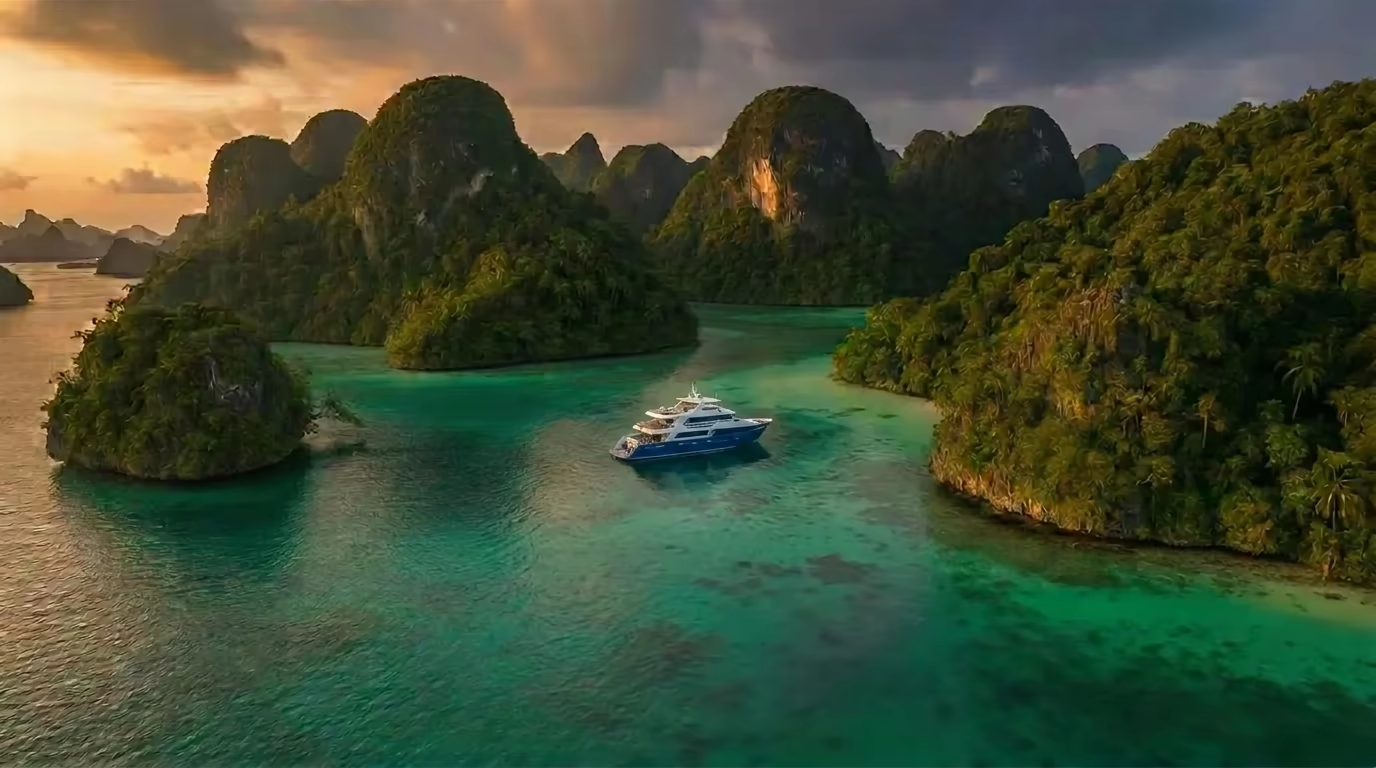
If you're reading this, chances are you've already experienced the thrill of a world-class dive. You've probably ticked off a few bucket list contenders, marvelled at vibrant coral gardens, or perhaps even come face-to-face with a majestic pelagic. But there's a dive experience that transcends the ordinary, a place so rich in marine life it redefines what you thought possible. It's the beating heart of the Coral Triangle, a dive into the epicentre of biodiversity, and it absolutely demands your attention.
Why Coral Triangle Heart Belongs on Your Bucket List
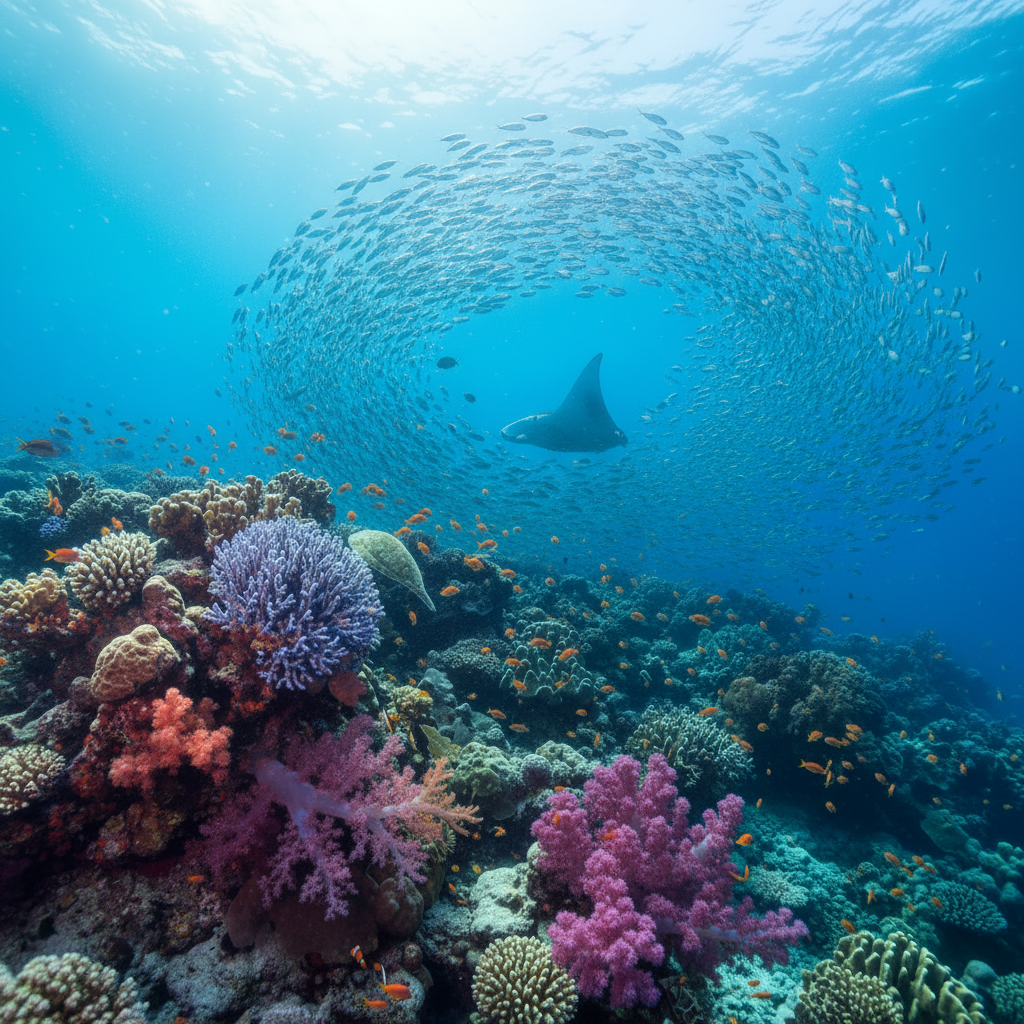
Imagine a place where every dive is a kaleidoscope of colour and life, where the sheer abundance of species makes other dive sites, no matter how spectacular, pale in comparison. This is the "Coral Triangle Heart" – the very core of marine biodiversity found in Central Indonesia. It's not just a dive; it's an immersion into an ecosystem that boasts more coral, fish, and invertebrate species than anywhere else on Earth. Divers affectionately call this region "the Amazon of the Seas" for good reason. It’s a global hotspot that continually astounds even the most seasoned underwater explorers.
What makes this destination globally unique is its unparalleled species richness. Scientists believe this region acts as an evolutionary 'cradle' and 'refuge', giving rise to new species and sustaining existing ones through periods of climate change. For you, the diver, this translates into an almost overwhelming visual feast. You'll witness ecosystems perfectly balanced, a complex web of life thriving in crystal-clear waters. This experience isn't just for casual observers; it's for those seeking to truly understand and appreciate the pinnacle of marine biodiversity. It appeals to macro enthusiasts eager to spot minute, undescribed critters as much as it does to wide-angle photographers hoping to capture teeming reefscapes and passing pelagics.
The "Coral Triangle Heart" calls to those who crave not just a dive, but an educational journey. It's for the adventurer who wants to witness evolution in action, the photographer who desires an endless array of subjects, and the conservationist who wants to understand what true marine health looks like. It's a gold standard, a benchmark against which all other dive experiences will be measured, and it offers a profound connection to the ocean's most vibrant arteries.
What You'll See and Do
Prepare for an explosion of marine life that will challenge your ability to process it all. In areas like Raja Ampat and Komodo, for instance, you'll encounter over 1,500 species of reef fish and around 600 species of hard coral – numbers truly staggering. Expect to drift along vibrant walls cloaked in soft corals, encounter bustling reefs teeming with fusiliers, snappers, and large schools of trevally. Macro life here is legendary; keep an eye out for pygmy seahorses camouflaged on gorgonian fans, flamboyant cuttlefish displaying their mesmerising colour changes, and a bewildering array of nudibranchs. Manta rays are frequent visitors at cleaning stations, often gliding gracefully just metres from you, their wingtips almost brushing the surface. Reef sharks – including blacktip, whitetip, and even grey reef sharks – are common sights, patrolling the outer edges of the reefs.
The behaviours you'll witness are equally captivating. Observe intricate predator-prey dynamics, cleaner shrimp meticulously grooming larger fish, and the symbiotic relationships that define a healthy reef. Diving depths typically range from 5 metres on vibrant coral gardens to exhilarating drifts along walls descending to 30 metres (100 feet) or more. Dive styles are varied, from gentle drift dives over pristine soft coral slopes to challenging pinnacles swept by currents, promising pelagic encounters. Key sites like Cape Kri (Raja Ampat) hold world records for fish diversity on a single dive, while Batu Bolong (Komodo) is renowned for its sheer abundance and dramatic topography.
Beyond the common sightings, if you're lucky, you might spot Wobbegong sharks tucked under ledges, elusive walking sharks on night dives, or even glimpses of bumphead parrotfish cruising the reef crests. The sheer density and variety of creatures ensures every single dive is unique. You'll surface from each immersion feeling invigorated, perhaps a little overwhelmed, and utterly privileged to have witnessed such an extraordinary underwater spectacle.
Best Time to Go
One of the many benefits of diving the Coral Triangle Heart in Central Indonesia is its year-round accessibility, though regional variations exist. Generally, the diving conditions are excellent regardless of the calendar month. Water temperatures are consistently warm and inviting, typically ranging from 27°C to 30°C (81°F to 86°F) – often described as "bathwater warm" by divers. This means comfortable diving with minimal thermal protection. Visibility is generally outstanding, often exceeding 20-30 metres (65-100 feet), providing crystal-clear views of the expansive coral gardens and abundant marine life.
While the region doesn't experience distinct "seasons" in the way temperate zones do, certain parts of Central Indonesia might have slightly calmer seas or more prevalent manta ray sightings during specific months. For instance, the main liveaboard season for Komodo typically runs from April to November, offering consistently calm conditions and prime opportunities for diving its famous sites. Raja Ampat, while diveable year-round, is often highlighted from October to April for its generally flatter seas. Current conditions are a significant feature of many prime dive sites here, often a prerequisite for the abundance of pelagic life. Liveaboards skilfully plan itineraries to maximise drift dives and visit sites during optimal current windows, ensuring exhilarating, yet safe, experiences.
How to Dive Coral Triangle Heart
To truly immerse yourself in the Coral Triangle Heart, a liveaboard expedition is overwhelmingly the recommended, and often only, way to access the most pristine and remote dive sites. These dedicated vessels typically offer 7 to 14-day itineraries, allowing you to venture deep into the marine parks, away from coastal crowds, and experience multiple dives per day across diverse locations. While some land-based resorts offer fantastic diving, particularly in areas like Bali or North Sulawesi, the unparalleled diversity and remoteness of destinations like Raja Ampat, Komodo, and the Banda Sea are best explored from a liveaboard; they are designed specifically for this purpose, providing access to sites unreachable by day-trip boats.
This experience is suitable for certified divers at various levels, but to truly make the most of it, we strongly recommend you hold an Advanced Open Water Diver certification. Many of the most thrilling dives involve depths beyond 18 metres (60 feet) or require experience with drift diving. Having 50+ logged dives under your belt will ensure you're comfortable and confident in potentially current-rich environments. Prior experience with drift diving is highly beneficial, and a specialty course in this area is a great idea. Furthermore, a Nitrox certification is a huge advantage, allowing for extended bottom times on repetitive dives, which is particularly valuable in a region where every minute underwater is a precious discovery. For wetsuit thickness, a 3mm shorty or full suit is usually ample due to the warm waters, primarily offering protection from bumps and scrapes rather than cold. Don't forget reef hooks for current-heavy sites (used responsibly, never on live coral) and a surface marker buoy (SMB) for safety on drift dives.
Conservation and Responsible Diving
Diving the Coral Triangle Heart comes with a profound responsibility to protect this irreplaceable ecosystem. The health of these reefs is precarious, facing threats from climate change, overfishing, and pollution. As a diver, your role in conservation is paramount. Always maintain excellent buoyancy control to avoid contact with the delicate corals – even a gentle brush can cause damage. Never touch, harass, or attempt to feed marine life. Observe from a respectful distance, allowing the creatures to behave naturally. When taking photographs, be mindful of your fin kicks and proximity, ensuring no reef or animal is disturbed in pursuit of the perfect shot. Avoid using reef hooks on live coral; use them only on dead rock or sand when absolutely necessary. By adhering to these ethical guidelines, you contribute directly to the preservation of this incredible underwater paradise for future generations of divers and, most importantly, for the marine life that calls it home.
Plan Your Trip
The "Coral Triangle Heart" awaits, promising an adventure that will redefine your perception of the underwater world. If you're ready to explore Indonesia's unparalleled biodiversity and dive into some of the healthiest, most vibrant reefs on the planet, then look no further. Browse Blue Rides' extensive selection of liveaboards departing for this extraordinary experience and let us help you plan the dive trip of a lifetime.