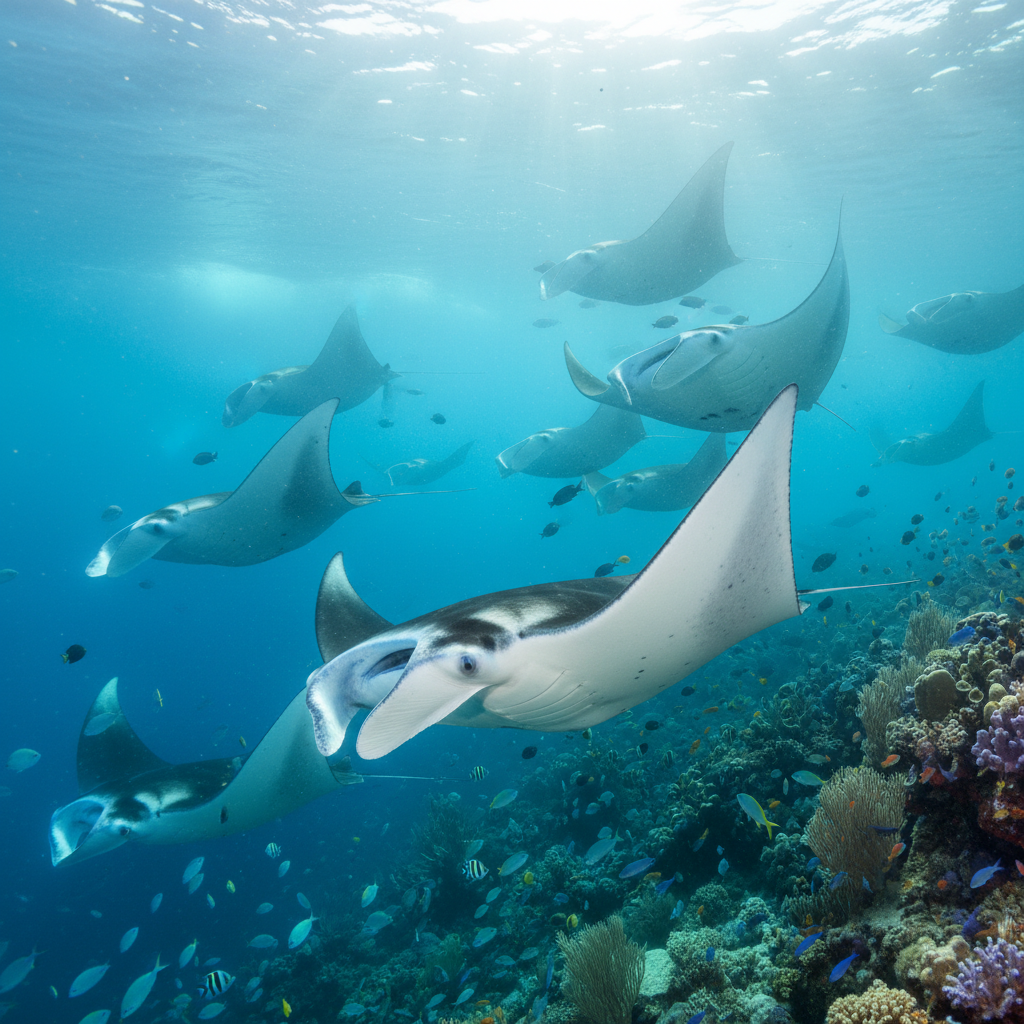
Imagine gliding through crystal-clear waters, a gentle current guiding you as a colossal silhouette materialises from the blue. Then another, and another, until you are enveloped in a graceful ballet of oceanic giants. This isn't a dream; it's the Fiji Manta Ray Season, an experience that transcends mere diving to become a profound connection with one of the ocean's most charismatic creatures.
For those who chase underwater wonder, Fiji’s Yasawas offer an unparalleled opportunity to witness these majestic filter feeders in their prime, a spectacle that solidifies its place as a bucket-list contender for divers worldwide.
Why Manta Ray Season Belongs on Your Bucket List
The Yasawa Islands, a stunning chain of volcanic islands in Fiji, are renowned for their vibrant coral reefs, pristine beaches, and unparalleled marine biodiversity. But perhaps their most celebrated offering is the annual Manta Ray Season. What truly sets this experience apart is the sheer reliability and intimacy of manta ray encounters. Unlike some destinations where fleeting glimpses are the norm, Fiji’s nutrient-rich channels, particularly around sites like Manta Passage, act as consistent highways and refuelling stations for both oceanic (Mobula birostris) and reef mantas (Mobula alfredi). Here, interactions are often prolonged, offering divers ample time to observe their intricate behaviours.
This isn't just about seeing a manta; it’s about witnessing their intricate social dynamics, their graceful feeding rituals, and their vital visits to cleaning stations where smaller fish diligently remove parasites. The sheer scale and elegance of these animals, combined with the warm, clear waters of Fiji, create a truly immersive and awe-inspiring environment. This experience is perfectly suited for experienced divers seeking significant marine life encounters, as well as underwater photographers aiming to capture breathtaking images of these gentle giants.
What You'll See and Do
During the Manta Ray Season, your dives will predominantly focus on specific channels and passages where mantas are known to congregate. You’ll spend significant time at designated cleaning stations, shallow coral bommies where cleaner wrasse and other small fish perform their essential services. Here, mantas will hover almost motionless, giving you an incredible opportunity to observe them up close without disruption. It’s fascinating to watch their gills flare as cleaners dart in and out, a testament to the symbiotic relationships that thrive beneath the waves.
Beyond cleaning stations, you'll also encounter mantas gracefully feeding. During peak plankton blooms, they perform mesmerising barrel rolls and chain feeding, scooping up microscopic organisms with their cephalic fins. While reef mantas are more common in the shallows (often seen from 5-20 meters), patience and a keen eye might reveal the larger oceanic mantas in deeper water. Other marine life is, of course, abundant; expect to see grey reef sharks, vibrant reef fish like parrotfish and surgeonfish, various species of colourful nudibranchs, and perhaps even turtles or eagle rays. Dive styles usually involve drift dives through channels where currents deliver plankton, as well as stationary observations at cleaning stations. Depths typically range from 5 metres to 25 metres, making it accessible for most certified divers.
Best Time to Go
The "Manta Ray Season" in Fiji, specifically the Yasawa Islands, runs from May to October. This period aligns with the cooler, drier months in Fiji, which typically coincide with increased plankton blooms, drawing the mantas to the productive channels. While sightings can occur outside this window, these months offer the highest probability of consistent encounters.
During this season, water temperatures are wonderfully warm, generally ranging from 25°C to 28°C (77°F to 82°F). Visibility is consistently excellent, often exceeding 20 metres (65 feet) and frequently reaching 30 metres (100 feet) or more on calm days. While currents can be present in the channels, they are generally manageable and often leveraged for drift diving, allowing divers to effortlessly glide alongside the mantas. Surface conditions are typically pleasant with less rainfall compared to the wet season, contributing to an overall comfortable diving experience.
How to Dive Manta Ray Season
To truly immerse yourself in the Fiji Manta Ray Season, a liveaboard offers the most comprehensive access. Liveaboards provide unparalleled flexibility, allowing you to move between different manta aggregation sites and ensuring you’re in the best position for encounters, often arriving before day-boats. They also offer multi-day itineraries, maximising your chances of seeing these magnificent creatures across various conditions and locations within the Yasawas. While some resorts in the region offer day trips, a liveaboard journey significantly enhances your opportunities and overall dive experience.
For this experience, an Open Water Diver certification is the minimum requirement, though we highly recommend Advanced Open Water certification (or equivalent) due to potential currents and deeper cleaning stations. Having at least 30-50 logged dives will ensure you are comfortable and proficient in various underwater conditions. Specific courses that will enhance your enjoyment include Drift Diver (essential for navigating currents safely and efficiently), Enriched Air Nitrox (to extend your bottom time on longer dives), and potentially a distinctive Manta Ray Awareness speciality. A 3mm shorty or full-length wetsuit is generally sufficient given the warm water temperatures, but some divers prefer a 5mm for longer or multiple dives. Always bring your own mask, fins, and snorkel, while BCDs and regulators are typically available for rent. Remember to pack a sturdy surface marker buoy (SMB) and a reef hook, particularly for current-heavy sites.
Conservation and Responsible Diving
Diving with manta rays is a privilege, and it comes with the responsibility of ensuring these incredible animals are protected. Always maintain a respectful distance (at least 3-4 metres) and never attempt to touch, chase, or disrupt their natural behaviour. Avoid blocking their path to cleaning stations or feeding areas. Photographers should ensure their strobes are not too powerful or disruptive, and never use flash directly at the mantas’ eyes. Adhere strictly to your dive guide's instructions, as they are experts in local conditions and manta etiquette. Remember, we are guests in their underwater world, and our actions play a crucial role in safeguarding their future and the health of Fiji's vibrant marine ecosystems.
Plan Your Trip
The Fiji Manta Ray Season offers an unforgettable immersion into the world of these gentle giants, set against the backdrop of one of the planet's most beautiful island nations. If an intimate and awe-inspiring encounter with manta rays is high on your diving agenda, now is the time to start planning. Blue Rides features a curated selection of premium liveaboards departing for this extraordinary experience, ready to guide you to the heart of Fiji's manta ray action.