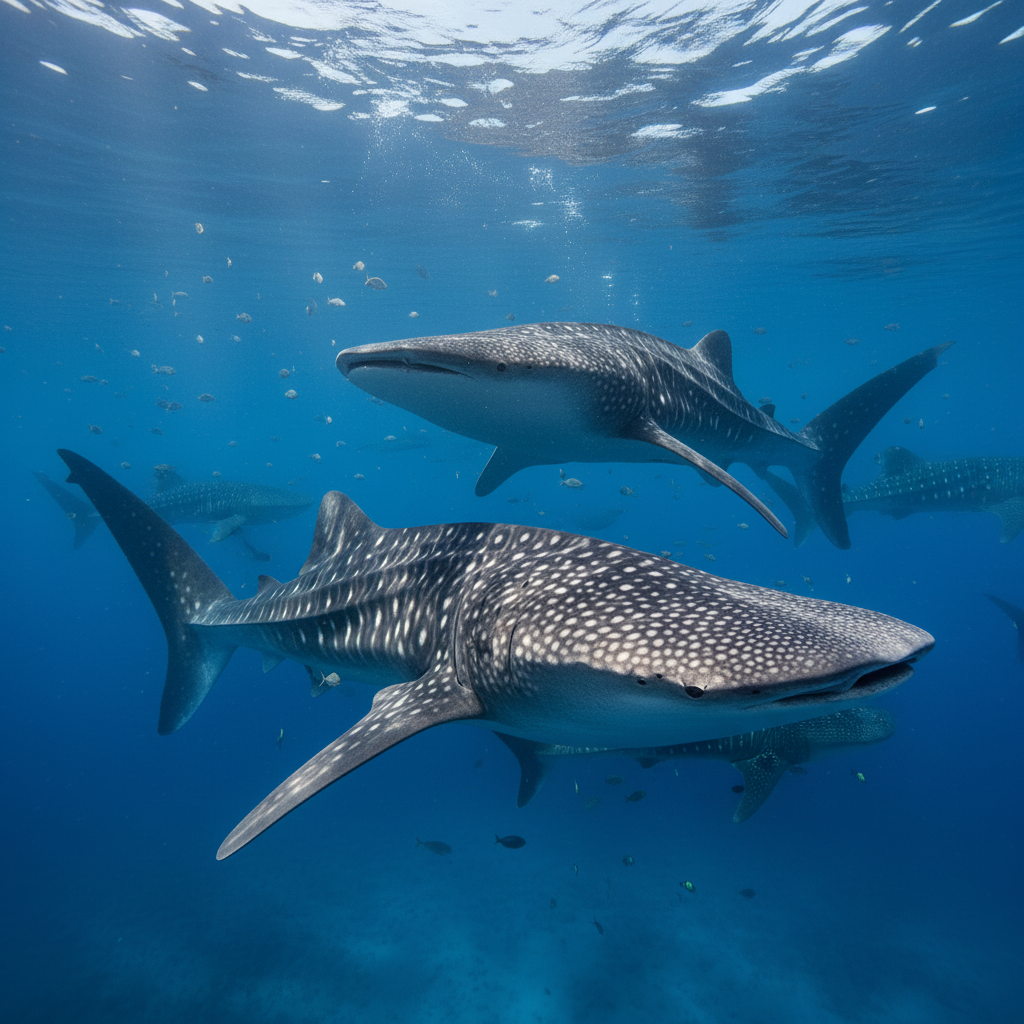
Imagine being immersed in an azure world, a gentle giant gracefully gliding past, its polka-dotted skin a testament to nature's artistry. Now, multiply that encounter by dozens, even hundreds, with marine biologists often struggling to count every individual. This isn't a fantasy; it's the annual spectacle awaiting you in the warm waters of Djibouti.
Why Whale Shark Aggregation Belongs on Your Bucket List
There are whale shark encounters, and then there's Djibouti's Whale Shark Aggregation. What elevates this experience from a mere wildlife sighting to a truly bucket-list calibre event is the sheer predictability and concentration of juvenile whale sharks. Unlike many other destinations where spotting a single whale shark can feel like winning the lottery, the Gulf of Tadjoura offers one of the most reliable and prolific opportunities globally to swim alongside these magnificent creatures. Year after year, from late autumn through winter, these young rhincodons gather here, feasting on the nutrient-rich waters, providing an unparalleled chance for divers and snorkelers to interact with them in their natural habitat.
This isn't just about seeing a whale shark; it's about being surrounded by them. The "wow" factor comes not only from their impressive size – even juveniles can be substantial – but from the sheer number of independent encounters you can have in a single day. Imagine swimming along, and then another, and another, emerges from the blue, each with its unique spot pattern, a living fingerprint. It's a profound, humbling experience that connects you deeply with the ocean's largest fish. This particular aggregation is especially suited to those who dream of extended, unhurried interactions, a truly immersive experience rather than fleeting glimpses.
What makes Djibouti uniquely suited for this phenomenon? The Gulf of Tadjoura acts as a natural nursery, a veritable pantry for these young whale sharks. Its sheltered, plankton-rich waters provide an ideal feeding ground, drawing in these juveniles reliably each season. For the discerning underwater enthusiast, this isn't just another dive trip; it's an educational journey into marine biology, a testament to the delicate balance of oceanic ecosystems, and an unforgettable personal adventure.
What You'll See and Do
The primary attraction, of course, is the whale shark. While these are predominantly juveniles, ranging from about 3 to 7 metres (10 to 23 feet) in length, their presence in such numbers is astounding. You'll observe them feeding near the surface, mouths agape, filter-feeding on plankton. These encounters are typically snorkel-focused to minimise disturbance, allowing for prolonged surface interactions while these gentle giants go about their business. You'll be alongside them, watching their deliberate, powerful tail movements propelling them through the water. The experience is often described as serene, almost meditative, as you fin gently beside these colossal, docile animals.
While the whale sharks steal the show, the Gulf of Tadjoura and its surrounding waters offer other marine life to discover. Coral reefs are present, supporting a variety of reef fish, though the emphasis is undeniably on the pelagic encounters. Diving in the area often takes place in sites around the Seven Brothers Islands (Sawabi Islands), known for their vibrant coral formations and abundant fish life, including barracuda, snapper, and schools of fusiliers. Keep an eye out for manta rays and various species of sharks (excluding whale sharks, which are fish), such as grey reef sharks and white tip reef sharks, though these are less predictable.
Depths for whale shark encounters are almost exclusively at the surface, making them accessible to snorkelers and divers alike. For actual scuba diving, sites around the Seven Brothers Islands offer a range of depths, typically from 10 to 30 metres (33 to 100 feet). Dive styles tend to involve drift diving along vibrant walls or exploring coral gardens. The focus is always on respectful interaction, ensuring minimal impact on the marine environment and giving ample space to the whale sharks and other inhabitants.
Best Time to Go
The magic window for the Whale Shark Aggregation in Djibouti is reliably from November to February. This four-month period offers the highest probability of encountering these majestic creatures in significant numbers. While encounters outside this window are possible, they are far less consistent and numerous.
During this peak season, the water temperatures are wonderfully comfortable, typically ranging between 26°C and 29°C (79°F to 84°F), making a full-body wetsuit perhaps unnecessary for some, or a lighter 3mm suit ideal for others. Visibility during this time can be excellent, often reaching 15 to 30 metres (50 to 100 feet), though plankton blooms – the very reason the whale sharks are there – can occasionally reduce it locally. Currents in the Gulf of Tadjoura are generally mild, especially within the sheltered areas where the whale sharks aggregate, making for relaxed snorkel and dive conditions. Surface conditions are usually calm, contributing to a pleasant experience both on and in the water. The weather is warm and sunny, true to a tropical desert climate, perfect for extended days on the water.
How to Dive Whale Shark Aggregation
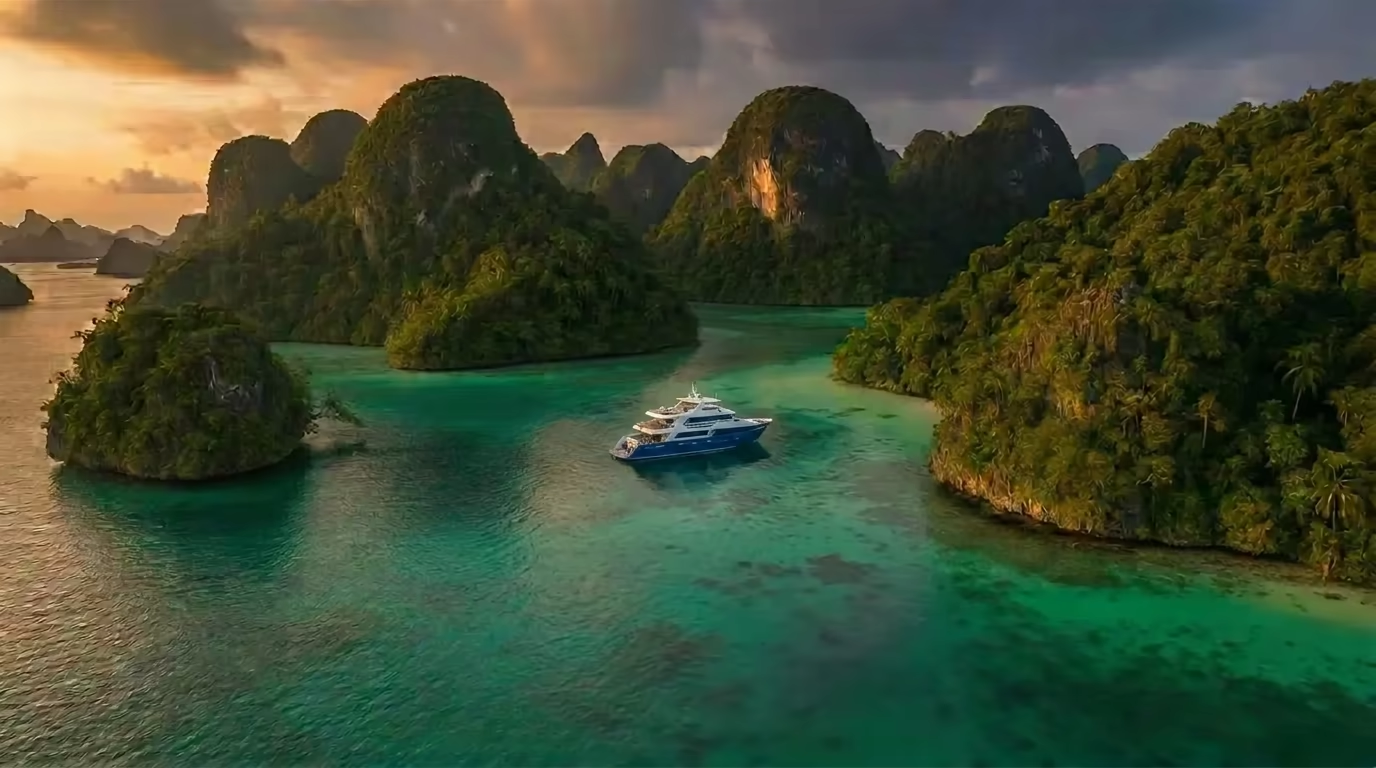
Accessing the whale shark aggregation in Djibouti is predominantly done via liveaboard, particularly for those wishing to maximise their time in the prime viewing areas and explore other excellent dive sites such as the Seven Brothers Islands. Liveaboards offer the unparalleled advantage of reaching remote locations, spending multiple days in the best areas, and often provide more opportunities for multiple daily encounters. While some day-boat operators exist, especially from Djibouti City, a liveaboard significantly enhances the overall experience by offering better reach and comfort. Given the unique nature of this experience, aiming for a liveaboard is highly recommended for a truly immersive trip.
For the whale shark encounters themselves, a basic swimming ability and comfort in the water are paramount, as most interactions are at the surface via snorkelling. For scuba diving, an Open Water Diver certification is the minimum requirement. However, to fully appreciate the diversity of the region's dive sites, particularly around the Seven Brothers Islands, we highly recommend holding an Advanced Open Water Diver certification. This allows access to deeper sites and enhances your comfort and safety. While not strictly mandatory for the whale shark portions (as they are often snorkel-based), having a good number of logged dives (e.g., 30+) will build confidence. Completing a Nitrox Diver specialty is always a bonus for extending bottom time on subsequent dives, and a Drift Diver specialty can be beneficial for specific dive sites, though currents are generally manageable. Regarding gear, a 3mm shorty or full wetsuit is usually sufficient for thermal protection given the warm water, though some prefer a rashguard for sun protection. Remember to bring a good quality mask, snorkel, and fins, as you'll be using them extensively. A dive computer is essential for any scuba diving.
Conservation and Responsible Diving
Responsible diving and snorkelling practices are paramount when interacting with whale sharks. These magnificent creatures are an endangered species, and their continued presence relies entirely on respectful human interaction. Always maintain a respectful distance, typically a minimum of 3-4 metres (10-13 feet), and never attempt to touch, ride, or impede their natural movement. Avoid flash photography, especially close to their eyes, and minimise noise and sudden movements. Operators adhere to strict codes of conduct to protect both the animals and the environment. You will be briefed extensively on these guidelines before any in-water encounters. Remember, we are guests in their underwater home, and our actions directly impact their well-being. Supporting operators demonstrably committed to sustainable tourism and conservation is crucial for the future of this incredible aggregation.
Plan Your Trip
Ready to tick one of the most incredible marine encounters off your bucket list? The annual Whale Shark Aggregation in Djibouti offers a profoundly immersive and reliable experience that will stay with you long after you've returned to shore. Explore our curated selection of premium liveaboards departing for this extraordinary adventure and begin planning your journey to the heart of the Gulf of Tadjoura.