There are dive experiences, and then there are dive experiences. The kind that etch themselves into your memory, shaping your understanding of life beneath the waves. The kind that, even before you go, you know will redefine your diving journey. For many, that pinnacle is the ethereal ballet of mobula ray aggregations in Costa Rica.
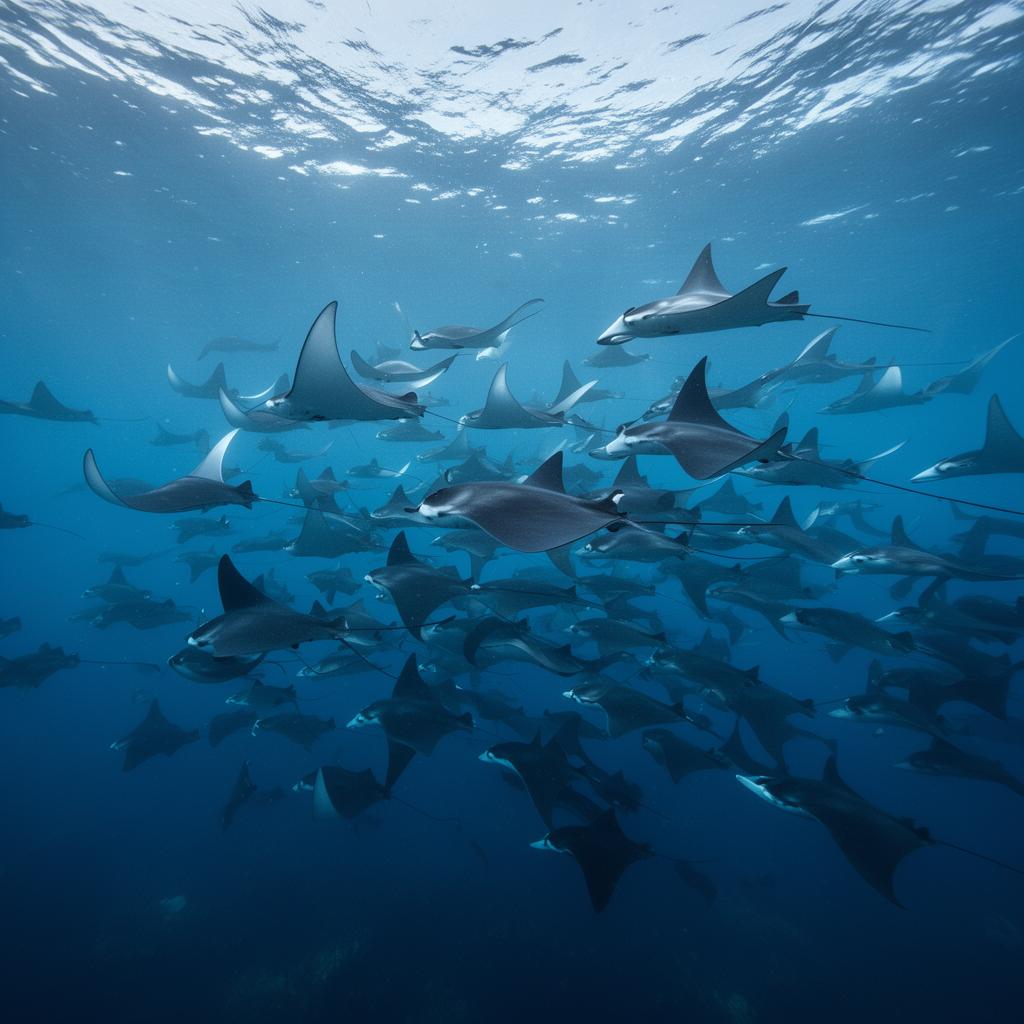
Imagine slipping beneath the surface into a liquid world, where the ocean itself seems to breathe with an ancient rhythm. Suddenly, a shadow forms, then another, until the water around you pulsates with life – hundreds, sometimes thousands, of mobula rays, gracefully swooping and gliding in a mesmerising, choreographed dance. This isn't just a dive; it's an immersive spectacle that speaks to the wild, untamed heart of the Pacific.
Why Mobula Ray Aggregations Belongs on Your Bucket List
Few marine spectacles on Earth rival the sheer scale and profound beauty of mobula ray aggregations. What sets this Costa Rican encounter apart isn't just the abundance of these magnificent creatures, but often their unique behaviour. Unlike their larger manta ray cousins who are often seen individually or in small groups, mobulas here gather in truly massive schools, creating living tapestries that shift and flow with breathtaking fluidity. These aggregations, often seen spiralling upwards through the water column, are not just a chance visual; they are often a predictable, seasonal phenomenon, making them accessible to those who time their trips correctly.
This experience offers a powerful, visceral connection to the ocean's raw power and delicate balance. It's a testament to the thriving biodiversity of the Eastern Pacific and a stark reminder of the wild wonders that still exist. For photographers, it’s a dream canvas; for marine enthusiasts, a pilgrimage; and for any diver, an emotional encounter that transcends the mere act of exploring a coral reef. It’s a bucket-list contender because it offers not just a glimpse, but an immersion into a natural phenomenon of epic proportions, a truly global marvel that deserves a place at the very top of any serious diver's aspirations.
What You'll See and Do
Diving with mobula ray aggregations around the Catalina Islands and in the Gulf of Papagayo is an unparalleled underwater odyssey. The primary stars, of course, are the Mobula rays (often Mobula thurstoni or Mobula munkiana), known for their elegant, diamond-shaped bodies and often reaching wingspans of up to 3 metres. You'll witness them gliding effortlessly, often in massive schools that can number in the hundreds, sometimes even thousands. Their signature behaviour, the spiralling "cyclone" or "vortex" formation as they ascend through the water column, is an unforgettable sight, a living testament to their innate social intelligence and feeding strategies.
Beyond the hypnotic mobulas, the rich, nutrient-laden waters teem with other large pelagics. Keep an eye out for enormous Pacific manta rays gracefully cruising by, as well as a variety of shark species including white-tip reef sharks resting on ledges, and occasionally even hammerheads in deeper waters. Schools of eagle rays, devil rays, and cownose rays also frequent these areas, adding to the pelagic diversity. The rocky pinnacles and volcanic formations you'll dive around are often home to green moray eels, large schools of jacks, barracuda, and various snapper, while macro life clings to the rocks, though the focus here is undoubtedly on the big stuff.
Encounters typically occur at varying depths, from relatively shallow safety stops where rays might ascend, to deeper dives tracking the schools. The dive style is predominantly drift diving, as the rays are constantly on the move, and currents can be a factor. The goal is often to position yourself ahead of a moving school, allowing them to pass over or around you, creating an immersive, 360-degree experience. Many encounters will be at approximately 15-25 metres, though schools can pop up anywhere.
Best Time to Go
The prime window for experiencing the extraordinary mobula ray aggregations in Costa Rica, specifically around the Catalina Islands and in the Gulf of Papagayo, is during the country's "green season" generally from May through October. This period coincides with increased rainfall (hence the "green" moniker), which flushes nutrient-rich matter into the coastal waters, creating the ideal feeding conditions that attract these incredible congregations of rays.
During these months, water temperatures typically range from a comfortable 26-29°C (79-84°F) at the surface, though thermoclines can be present, dropping temperatures a few degrees at depth. Visibility can vary significantly, usually ranging from 10-25 metres, although it can occasionally be less due to the very nutrients that draw the mobulas. Currents can often be moderate to strong, which is a key factor in drift diving with the rays. While it's the rainy season on land, most dives occur during calm periods, with showers often limited to afternoons or evenings, making surface conditions generally manageable for diving activities. This season offers the best chance to witness this breathtaking natural spectacle.
How to Dive Mobula Ray Aggregations
Accessing the mobula ray aggregations is primarily done via day boats operating out of coastal towns like Playas del Coco, Tamarindo, or Flamingo for day trips to the Catalina Islands. While Costa Rica does offer liveaboard options, particularly for destinations further offshore like Cocos Island, for the mobula aggregations, day boats are the predominant and most efficient mode of transport. Typically, you'll travel to the dive sites, conduct 2-3 dives, and return to shore in the afternoon.
To safely and enjoyably experience these dives, a PADI Advanced Open Water Diver or equivalent certification is highly recommended. The potential for strong currents and deeper encounters means that comfort and proficiency in drift diving are crucial. We also strongly advise having at least 50 logged dives under your belt, demonstrating a good level of experience and buoyancy control. Specialist courses such as the PADI Drift Diver or even the PADI Enriched Air Diver (Nitrox) certification are highly beneficial; Nitrox extends your bottom time, allowing for longer observation periods with the rays. For equipment, a 3mm or 5mm full-body wetsuit is ideal to protect against potential thermoclines and for comfort during multiple dives. A safety sausage (DSMB) is also essential for signalling, especially in areas with potential current and boat traffic.
Conservation and Responsible Diving
Encountering mobula rays is a privilege, and their conservation is paramount. These magnificent creatures, like many other marine megafauna, are facing increasing threats from overfishing, bycatch, and habitat degradation. When diving with mobula aggregations, it is vital to adhere strictly to responsible diving practices. This means maintaining a respectful distance, never attempting to touch or chase the rays, and always allowing them to approach you on their terms. Disrupting their natural behaviour, especially during feeding or schooling, can cause stress and negatively impact their aggregations. Buoyancy control is crucial to avoid damaging any substrate or disturbing other marine life. For photographers, ethical practice means refraining from using aggressive lighting or pursuing the animals for a shot. By acting as responsible ambassadors underwater, we contribute to the long-term protection of these extraordinary animals and ensure future generations can also witness this breathtaking spectacle.
Plan Your Trip
The allure of hundreds of mobula rays spiralling through the sun-dappled water is a call that few divers can resist. This is not just a dive; it's a profound encounter with one of nature's most spectacular phenomena, set against the backdrop of Costa Rica's rich Pacific coast. If witnessing this incredible aggregation of life is on your dive bucket list, now is the time to plan your journey. Discover the perfect Blue Rides liveaboard or dive resort package that will bring you face-to-fin with these majestic creatures.