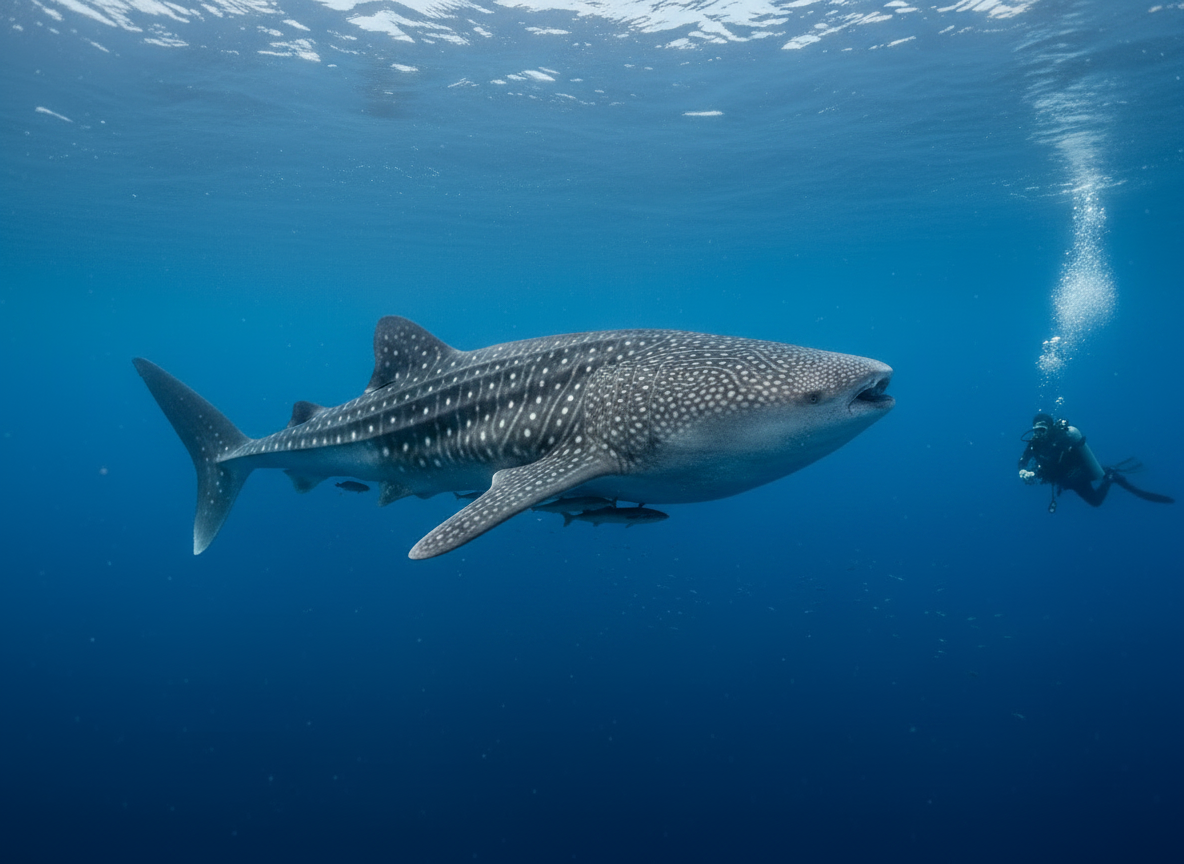
Imagine finding yourself in the vast, cerulean embrace of the Banda Sea, a feeling of awe washing over you as a colossal shadow emerges from the depths. This isn't just diving; this is an encounter, a connection with one of the ocean's most magnificent and gentle giants. It’s an experience that transcends the ordinary, etching itself into your memory as a profound moment of unity with the wild.
Why Whale Shark Encounters Belongs on Your Bucket List
There are certain experiences that define a diver’s journey, and interacting with whale sharks in the Banda Sea is unequivocally one of them. What sets this particular encounter apart is its raw, untamed nature. You’re not visiting a known feeding ground thronged with boats; instead, you’re venturing into a remote oceanic expanse where these gentle giants make their seasonal migrations. This is true open-ocean diving, an unpredictable dance with nature that rewards patience and a sense of adventure. It’s the kind of experience that shifts your perspective, reminding you of the ocean’s immense scale and its hidden wonders.
This journey is tailor-made for the seasoned explorer, the diver who seeks genuine immersion rather than curated spectacles. It suits individuals who appreciate the challenge of remote diving and the thrill of discovery. While sightings are never guaranteed – such is the beauty of wild animal encounters – the sheer possibility of swimming alongside the world's largest fish in the crystal-clear waters of the Banda Sea is a draw powerful enough to beckon the most intrepid of divers. It’s a profound connection with marine life on their terms, an intimate look at an incredible journey.
The "wow" factor here isn't just the size of the whale sharks; it's the environment, the journey, and the authenticity of the interaction. You’re diving in one of the most biodiverse, yet least explored, regions of the Coral Triangle. The Banda Sea is a crossroads of currents and marine highways, and witnessing the majestic whale shark gracefully filter-feeding amidst this vibrant ecosystem is a privilege. It’s an experience that speaks to the soul of every diver who dreams of truly wild encounters. It's a reminder of the ocean's vastness and the incredible life it sustains.
What You'll See and Do
During a "Whale Shark Encounters" trip in the Banda Sea, your primary focus will be on seeking out these magnificent filter feeders. Divers often spend time near seamounts and oceanic ridges, where upwellings bring nutrient-rich waters to the surface, attracting plankton blooms – the whale shark’s primary food source. Imagine descending into the deep blue, scanning the seemingly endless expanse, before a colossal form begins to materialise. These gentle giants, often measuring between 5 to 12 metres (16 to 40 feet) or more, glide with an effortless grace that belies their enormous size.
Beyond the primary target, the Banda Sea is a hotbed of marine activity. While searching for whale sharks, you might encounter massive schools of tuna, barracuda, and jacks patrolling the blue. Hammerhead sharks are also frequently sighted in schools around certain areas like the seamounts of Lucipara and Gunung Api, especially during these cooler transition months. Manta rays, often seen at cleaning stations or feeding in currents, add to the pelagic spectacle. The reefs themselves, while not always the main focus during pelagic searches, harbour a dazzling array of macro life and vibrant soft corals, particularly in areas like the outer reefs of the Banda Islands or around forgotten atolls.
Encounters typically involve drifting with the current, either at the surface with snorkelling gear or at a comfortable depth on scuba, observing the whale sharks as they feed or simply cruise by. Depths will vary, but most interactions occur within the top 20 metres (65 feet), allowing for excellent natural light and extended bottom times. Drift diving is a common style here, as you let the currents carry you along the underwater topography, increasing your chances of covering larger areas and encountering migrating species. The sheer scale of these animals, combined with their docile nature, provides an unparalleled photographic opportunity and a memory that will last a lifetime.
Best Time to Go
The "Whale Shark Encounters" experience in the Banda Sea is best undertaken during the transition seasons, specifically from September to November. This period marks the shift between the southeast and northwest monsoons, creating unique oceanographic conditions. The changing currents bring nutrient-rich waters to the surface, triggering significant plankton blooms, which in turn attract the migrating whale sharks to these productive waters for feeding.
During these months, water temperatures are generally warm and inviting, averaging between 27°C and 29°C (81°F to 84°F). Visibility, while always subject to conditions, is typically excellent, often ranging from 20 to 40 metres (65 to 130 feet), providing crystal-clear views for spotting distant pelagics. While currents can range from mild to strong, especially around seamounts and passes, they are often a crucial element, bringing the nutrients and thus the marine life. Surface conditions are generally calmer during these transition periods, offering more comfortable liveaboard cruises, though some choppier days can occur, particularly if a storm passes through.
How to Dive Whale Shark Encounters
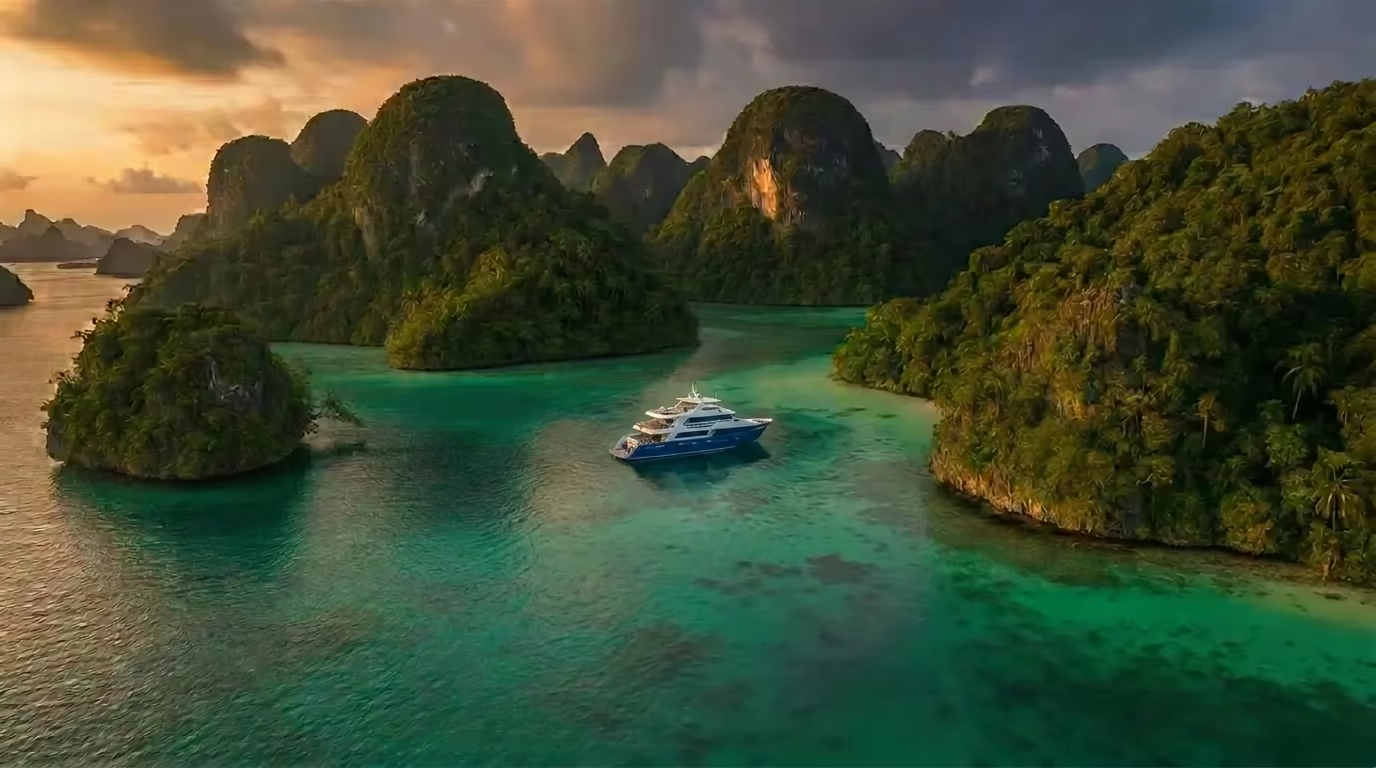
Accessing the remote, open waters of the Banda Sea for whale shark encounters is predominantly achieved via liveaboard. This is not a destination for day-boat operations due to the vast distances involved and the unpredictable nature of open-ocean whale shark sightings. A liveaboard affords you the mobility to travel long distances, position yourself in the best aggregation areas, and maximise your chances of encounters. You’ll typically travel overnight between various dive sites and search areas, making the most of your time in this incredible region.
For this kind of expedition, an Advanced Open Water certification is generally considered a minimum requirement due to the potential for deeper dives (though whale shark encounters are often shallower) and the prevalent drift diving. We highly recommend having a significant number of logged dives – ideally 50 or more – as confidence and comfort in varying conditions, potentially strong currents, and open-ocean environments are critical. Pursuing specialties like Enriched Air Nitrox is strongly recommended to extend bottom times and maximise your observation period with these elusive creatures. A Drift Diver specialty would also be highly beneficial. In terms of gear, a 3mm or 5mm wetsuit is usually sufficient given the warm water temperatures. Make sure your regulator is well-serviced and bring a reliable dive computer, ideally with air integration. A signalling device, such as a SMB (Surface Marker Buoy) and whistle, is essential for safety in open water and drift dives.
Conservation and Responsible Diving
Encountering whale sharks is an immense privilege, and adhering to strict conservation guidelines is paramount. Always maintain a respectful distance, typically at least 3-4 metres (10-13 feet) from the animal. Never attempt to touch, ride, or impede the path of a whale shark. These actions can stress the animal, alter its natural behaviour, and are detrimental to its well-being. When taking photographs or videos, ensure your flash is off and avoid using extreme wide-angle lenses that necessitate getting uncomfortably close. Listen carefully to your dive guide's instructions, as they are experienced in responsible interaction protocols. By being a respectful observer, you contribute to the protection of these magnificent creatures and ensure that future generations can also experience the wonder of a wild whale shark encounter.
Plan Your Trip
Embarking on a whale shark encounter in the Banda Sea is more than just a dive trip; it's an expedition into one of the ocean's last frontiers. If you're ready to answer the call of the wild and experience one of the planet's most humbling marine animal interactions, browse our selection of premium liveaboards departing for the Banda Sea. Your ultimate dive adventure awaits.