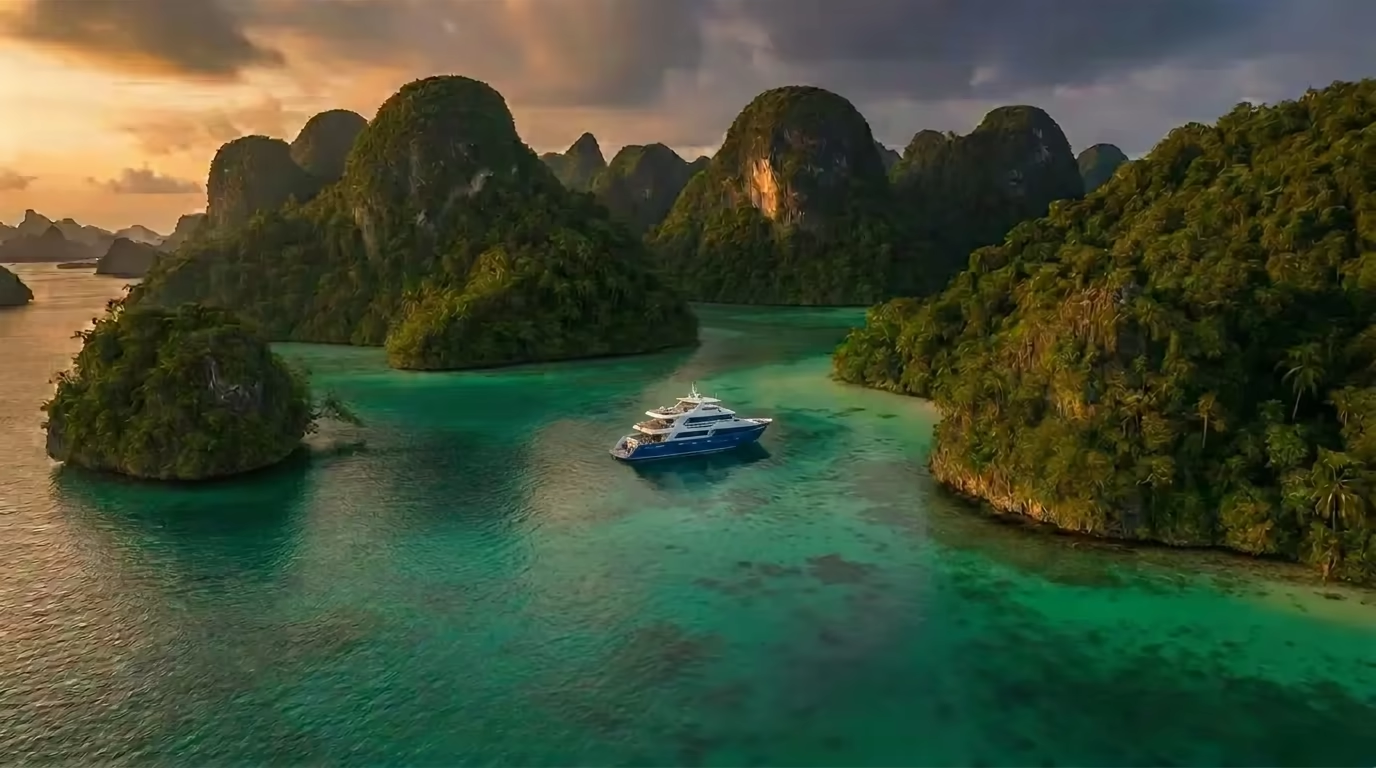
Imagine a vast expanse of ocean, stretching emerald green under a tropical sun, an ancient mariner's route where spices once commanded empires. Now, picture yourself beneath its surface, suspended in gin-clear water, as colossal, graceful shadows glide effortlessly above you. This isn't a dream; it's the Banda Sea, and right now, it's peak season for an encounter that will redefine your understanding of marine majesty. Welcome to the "Manta Ray Season," a journey into the heart of Indonesia's Ring of Fire, where the ocean's gentle giants gather for a spectacular display.
Why Manta Ray Season Belongs on Your Bucket List
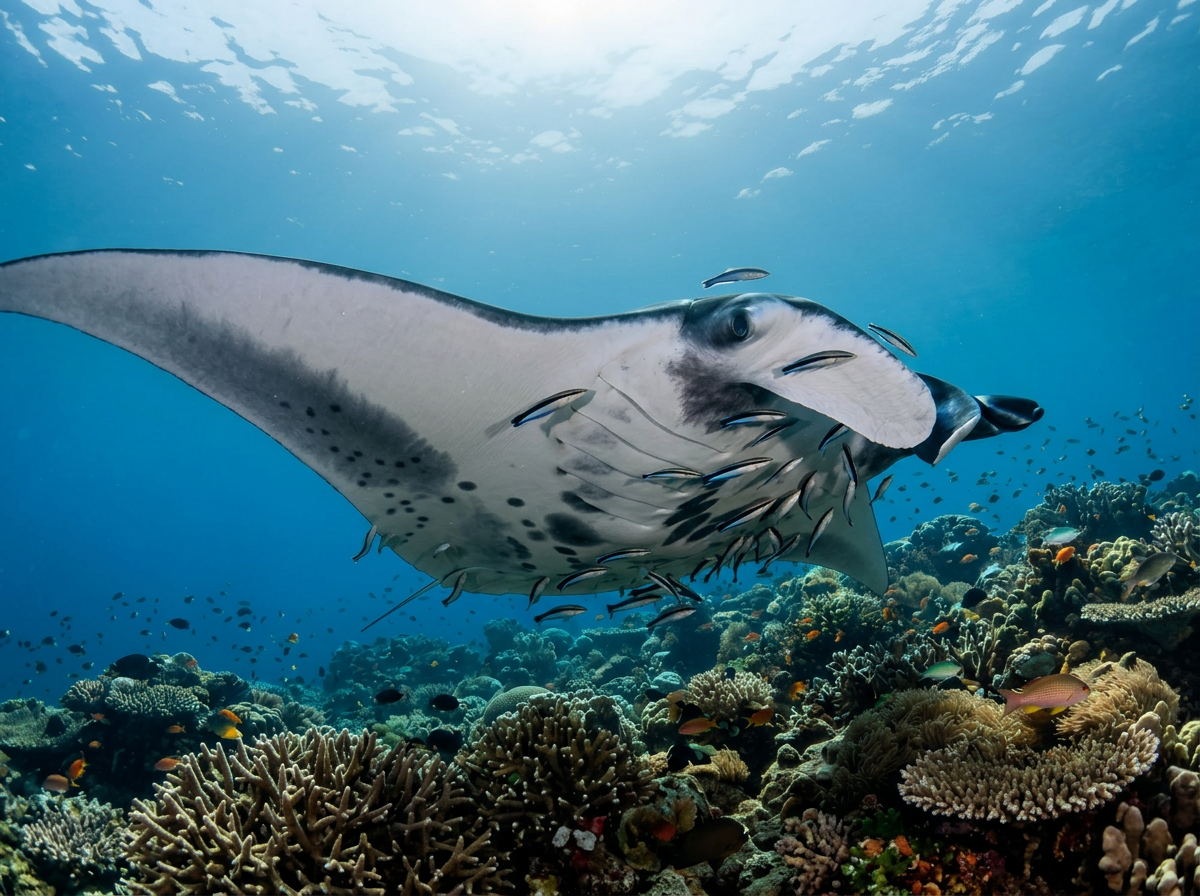
There are dives that thrill, dives that awe, and then there are dives that fundamentally shift your perspective. Manta Ray Season in the Banda Sea falls squarely into the latter category. What makes this experience so profoundly unique isn't just the sheer number of manta rays, but the intimacy and reliability of the encounters. Unlike fleeting glimpses in other parts of the world, here, you're not just hoping for a sighting; you're likely to be immersed in an aquatic ballet where reef manta rays (Mobula alfredi) cruise gracefully, often for extended periods, seemingly oblivious to your presence.
This is a bucket list encounter for anyone who craves genuine connection with marine megafauna. It's for the seasoned diver seeking a profound, humbling experience, but equally, it's accessible and incredibly rewarding for those with a solid foundation in diving. The Banda Sea itself, a crucible of biodiversity and tectonic activity, adds another layer to the appeal. It's a remote, pristine frontier, far removed from mass tourism, ensuring that your interactions with these magnificent creatures feel truly special and undisturbed. The "wow" factor isn't just in the mantas themselves, but in the entire package: the vibrant coral reefs, the dramatic volcanic landscapes, and the feeling of exploring a truly wild, untamed corner of our planet.
What You'll See and Do
The star attractions during Manta Ray Season are, without a doubt, the reef manta rays. These majestic filter feeders congregate with incredible regularity around specific sites in the Banda Islands archipelago, primarily Batu Kapal and the Sonegat Channel. Here, they visit designated cleaning stations, allowing smaller fish to remove parasites and dead skin. This behaviour offers divers an unparalleled opportunity to observe them at close quarters, often hovering just above the coral, or gracefully circling the cleaning station like enormous, benevolent birds.
You can expect to witness mantas performing what are known as "barrel rolls" as they feed on plankton, or soaring effortlessly in formations, their cavernous mouths agape. Underwater photographers will find endless opportunities as these gentle giants glide past, often curious and unafraid. Beyond the mantas, the Banda Sea is a treasure trove of marine biodiversity. You’ll encounter vibrant coral gardens teeming with reef fish – colourful parrotfish, inquisitive damselfish, schooling fusiliers, and intricate nudibranchs. Keep an eye out for larger pelagics too; opportunities exist for sightings of schooling barracuda, trevally, and even occasional sharks, though it's the mantas that truly steal the show. Depths at these cleaning stations typically range from 10-25 metres, allowing for good bottom times and excellent light penetration, perfect for both observation and photography. Dive styles will primarily be drift dives, given the nutrient-rich currents that fuel the plankton blooms attracting the mantas.
Best Time to Go
The optimal window for experiencing Manta Ray Season in the Banda Sea is from September to November. During these months, the inter-monsoon period brings calmer surface conditions and a higher probability of manta ray aggregations. The nutrient-rich waters circulating through the various channels stimulate the plankton blooms that draw the mantas in their numbers.
Water temperatures during this period typically range from a comfortable 27-29°C (81-84°F). Visibility is generally excellent, often exceeding 20-30 metres, providing crystal-clear views of the mantas and the vibrant reefs. While currents can be present, especially around channels like Sonegat, they are often manageable, providing exciting drift opportunities rather than challenging conditions. Surface weather is usually pleasant, characterised by warm, sunny days and gentle breezes, making for an enjoyable liveaboard experience both above and below the waterline. This specific seasonality and favourable conditions are precisely why booking a trip during this narrow window is so crucial for maximising your manta encounters.
How to Dive Manta Ray Season
Accessing the remote beauty of the Banda Sea's Manta Ray Season is almost exclusively done via liveaboard. This is by far the most immersive and practical way to experience the region, allowing your floating hotel to travel to the best dive sites and stay there. Day-boat operations are virtually non-existent for such a vast and sparsely populated area. A liveaboard offers multiple dives daily, comfortable accommodation, and excellent cuisine, all while taking you to the prime manta aggregation points.
While mantas are graceful and generally unthreatening, the Banda Sea's currents and depths mean that this isn't a beginner's destination. You should ideally hold an Advanced Open Water certification, and we highly recommend having at least 50-100 logged dives to ensure you're comfortable in varying conditions. Courses like Nitrox are invaluable for extending bottom time during multiple daily dives, maximising your encounters with the mantas. A Drift Diver specialisation is also highly beneficial given the dynamic nature of some of the sites. For wetsuit thickness, a 3mm shorty or full suit is usually sufficient given the warm water, but some divers prefer a 5mm for longer dives or simply personal comfort, especially when doing multiple dives a day. Make sure your BCD and regulator are well-maintained, and bring a dive computer, as multi-day diving necessitates careful management of your nitrogen levels.
Conservation and Responsible Diving
Encountering manta rays is a privilege, and it comes with the responsibility of ensuring their continued protection. These magnificent creatures are listed as Vulnerable by the IUCN, primarily due to fishing pressure and habitat degradation. When diving with mantas, always maintain a respectful distance – typically 3-5 metres – and position yourself to observe without interfering with their natural behaviour. Never touch or chase them, as this can distress them and disrupt their essential cleaning or feeding rituals. Avoid blocking their path or separating them from groups. Underwater photographers should also be mindful, avoiding flash photography that could startle the animals. Your adherence to responsible diving practices not only protects the mantas but also enhances the experience for every diver present. By being a silent, respectful observer, you contribute directly to the conservation of these incredible animals and their fragile ecosystem.
Plan Your Trip
The allure of the Manta Ray Season in the Banda Sea is undeniable, offering an unparalleled opportunity to witness one of nature's most spectacular marine gatherings. If the vision of gliding alongside these gentle giants amongst pristine reefs ignites your adventurous spirit, now is the time to plan your journey. Browse Blue Rides' curated selection of premium liveaboards departing for this extraordinary experience and secure your place on a trip that promises memories to last a lifetime.