
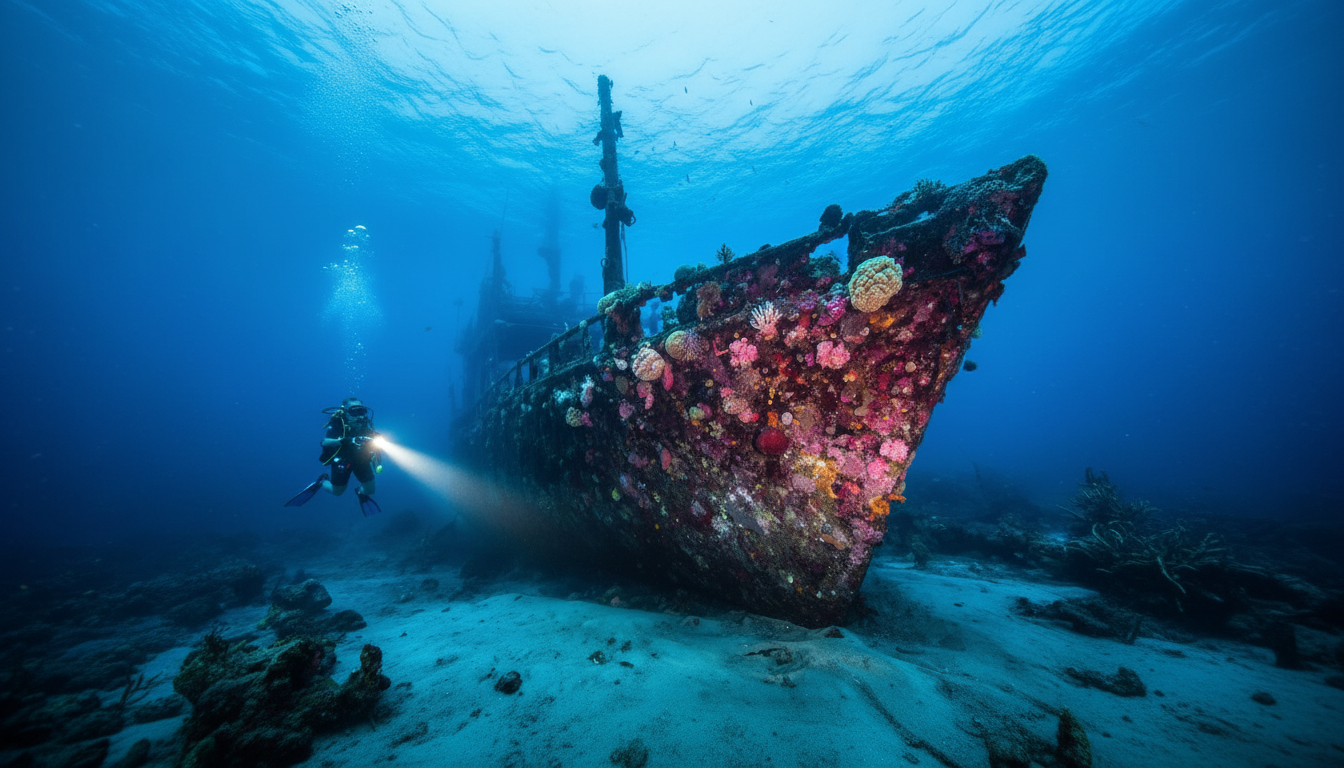
There are dive sites, and then there are dive sites that etch themselves into your very core, changing your perception of underwater beauty forever. The USAT Liberty Wreck in Tulamben, Bali, isn't just another shipwreck; it's a living, breathing testament to nature's relentless artistry and a poignant whisper from history. If you're seeking an experience that marries dramatic allure with spectacular marine life, look no further – this is where your next unforgettable adventure begins.
Why USAT Liberty Wreck Belongs on Your Bucket List
Imagine plunging into the warm embrace of the Balinese sea, and mere moments later, a colossal silhouette emerges from the blue. This isn't a deep-water technical dive; the USAT Liberty wreck begins a mere 30 metres from shore, its bow teasing the surface as shallow as 5 metres. What makes this wreck globally unique isn't just its accessibility, but its transformation. Seventy years after being torpedoed by a Japanese submarine in 1942 and subsequently beached, this 120-meter cargo ship was nudged into deeper water by an earthquake in 1963. Since then, it has become one of the world's most vibrant artificial reefs, completely smothered in a kaleidoscope of soft corals, hard corals, spectacular sea fans, and sponges.
This isn't just a dive for history buffs or wreck enthusiasts; it's a vibrant, thriving ecosystem that caters to every level of diver, from discovery dives to seasoned professionals. The sheer scale and biodiversity found here are mesmerising, making it a "must-do" for underwater photographers, marine biology enthusiasts, and anyone simply seeking an extraordinary encounter. Its gentle slope, from 5 metres down to around 30 metres at its deepest point, allows for extended bottom times and a truly immersive exploration without demanding advanced decompression skills. The Liberty is a place where you can return again and again, discovering new nuances with every descent.
What You'll See and Do
The USAT Liberty Wreck is a teeming metropolis beneath the waves, often hosting over 400 species of reef fish. Navigating through her scattered holds and engine room is like swimming through an enormous, living sculpture. You'll encounter colossal schools of Bigeye Trevally weaving and pulsating as one, a truly breathtaking spectacle. Look closer, and you might spot the intricate details of a colourful nudibranch, or a shy ribbon eel peeking from its sandy burrow. Keep an eye out for patrolling barracuda, their silver bodies glinting in the shafts of light that pierce the wreck's superstructure. The resident population of Bumphead Parrotfish are a common sight, majestically munching on coral, while the highly sought-after Napoleon Wrasse glides by with an air of regal indifference.
Beyond the larger inhabitants, the wreck's coral formations are a universe unto themselves. Delicate gorgonian fans filter plankton in the currents, anemones host playful clownfish, and intricate branching corals provide shelter for countless juvenile fish. The opportunity for macro photography is endless, with pygmy seahorses, various species of blennies, and ghost pipefish often found tucked away within the corals. Don't miss a night dive here; the wreck transforms into an entirely different realm. Flashlights illuminate sleeping parrotfish encased in their mucous cocoons, hunting moray eels slither through crevices, and Spanish dancer nudibranchs unfurl their vibrant skirts in an underwater ballet. It’s an experience that truly redefines "the nightlife."
Best Time to Go
Tulamben, Bali, enjoys a tropical climate, meaning the USAT Liberty Wreck is divable year-round. However, for optimum conditions that truly showcase this marvel, aim for the dry season, which runs from April to November. During these months, you can expect consistently calm waters, minimal rainfall, and abundant sunshine – ideal for both diving and topside exploration. Water temperatures are wonderfully warm, typically ranging from a balmy 27°C to 30°C (81°F to 86°F), so a 3mm shorty or full suit is usually more than sufficient for comfort.
Visibility at the Liberty is generally excellent, often reaching 15-25 metres (50-80 feet), providing clear views of the wreck's vast expanse and intricate details. While currents can occasionally be present, they are generally mild to moderate, making drift dives enjoyable and accessible around the wreck. Even during the "wet season" (December to March), diving is still fantastic; daily rain showers are common but usually brief, and the underwater conditions remain largely unaffected, often resulting in fewer crowds. So while the dry season is statistically better, you truly can't go wrong any time of the year.
How to Dive USAT Liberty Wreck
The beauty of the USAT Liberty is its incredible accessibility. Being a shore dive, it’s perfect for all certification levels, including those completing their Open Water training. For a more comprehensive exploration and to fully appreciate the wreck's deeper sections (down to 30m), an Advanced Open Water certification is highly recommended. Nitrox is also a fantastic asset here, allowing for significantly extended bottom times, especially on repetitive dives, letting you linger longer among the schools of fish or within the wreck's numerous nooks and crannies. Given the potential for mild currents, a Drift Diver specialty or at least some experience with drift diving can also be beneficial.
Many divers access the Liberty via day-boat operations from nearby areas or directly from shore-based resorts in Tulamben. However, for the ultimate, hassle-free dive odyssey across Bali's legendary sites, pairing your Liberty dives with a liveaboard expedition offers unparalleled convenience, expert guidance, and access to a wider array of stunning locations. A 3mm wetsuit is typically sufficient for the warm Balinese waters, but if you tend to get cold easily or plan on multiple dives a day, a 5mm might offer a little more comfort. Essential gear includes a dive computer, surface marker buoy (SMB), and for those captivating night dives, a reliable dive torch. For photographers, wide-angle lenses will allow you to capture the sheer scale of the wreck, while macro setups will delight in the abundant small critters.
Conservation and Responsible Diving
The USAT Liberty is a precious ecosystem, and its preservation is paramount. As responsible divers, we must adhere to strict no-touch policies. Corals are living animals, easily damaged by even the slightest contact. Practise excellent buoyancy control to avoid making contact with the wreck or the delicate marine life. Remember, take nothing but photographs, leave nothing but bubbles. Do not feed any marine animals, as this disrupts their natural behaviours and can have detrimental effects on their health and the ecosystem. When photographing, be mindful of your fin kicks and avoid crowding animals, allowing them space and autonomy.
Plan Your Trip
The USAT Liberty Wreck isn't just a dive; it's a journey into history, a vibrant marine sanctuary, and a photographer's dream, all wrapped into one incredibly accessible package. It's an experience that consistently ranks among the top wreck dives in the world for good reason, and it absolutely deserves a prime spot on your diving bucket list. Ready to experience the magic of the Liberty and Bali's other incredible dive sites? Browse Blue Rides' curated selection of liveaboards departing for this unforgettable destination and let us help you plan your ultimate dive adventure.