
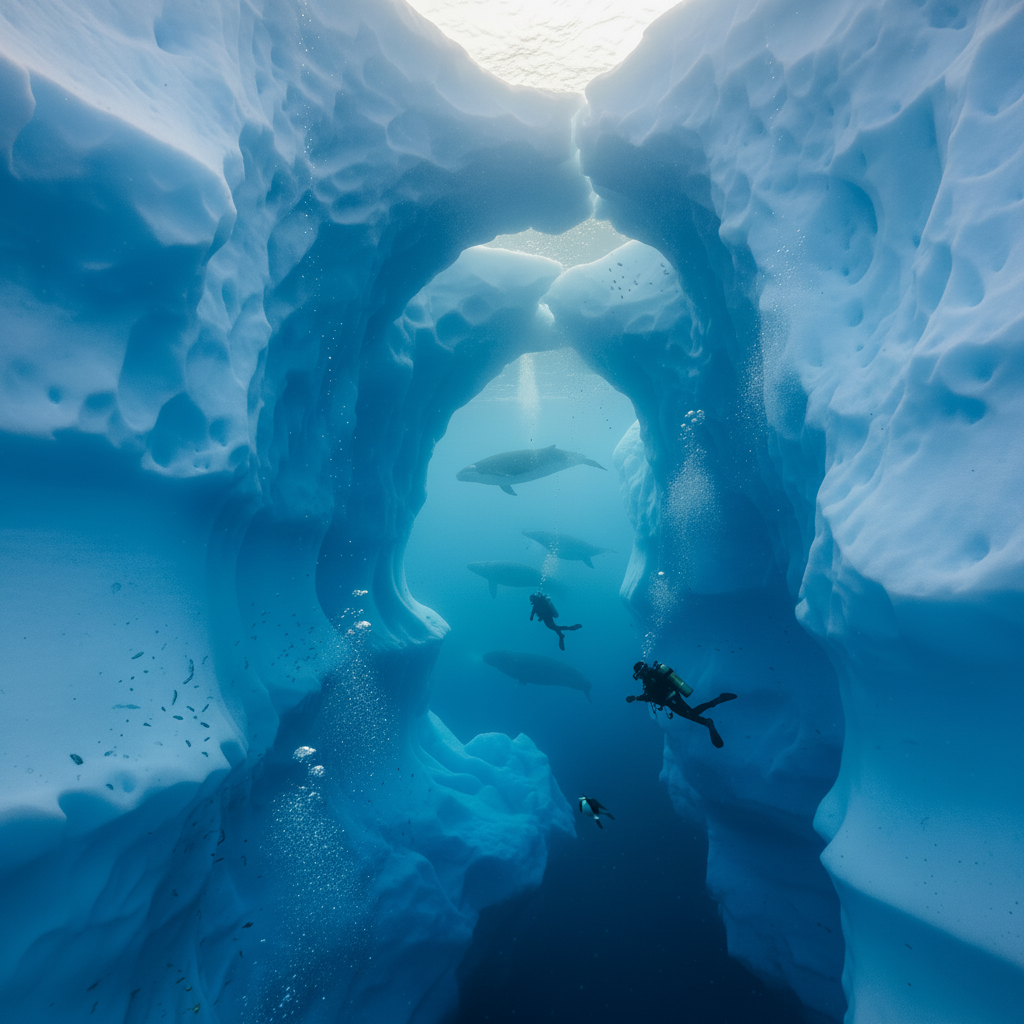
Imagine a world where colossal cathedrals of ice rise from the frigid depths, their crystalline arches and spires sculpted by ocean currents into forms more fantastical than any dream. Beneath the surface, a surreal blue light filters through, illuminating a vibrant, alien landscape. This isn't science fiction; it's the unparalleled reality of an Iceberg Cathedral Dive in Antarctica's Lemaire Channel, a truly once-in-a-lifetime expedition that promises an experience available nowhere else on Earth.
Why Iceberg Cathedral Dives Belongs on Your Bucket List
You’ve seen the photos, read the accounts, but nothing truly prepares you for the sheer majesty of diving in Antarctica. The "Iceberg Cathedral Dives" in the Lemaire Channel isn't just another dive site; it's a profound journey into nature's most dramatic artistry. What sets this experience apart is the extraordinary interaction between light, ice, and marine life that you simply won't find anywhere else. Picture yourself suspended in water so clear it feels like air, surrounded by the colossal, submerged structures of icebergs – walls of iridescent blue, intricate arches, and dark, echoing tunnels. These aren't static formations; they are constantly evolving, shaped by wind and current, ensuring no two dives are ever precisely alike.
This experience is for the discerning diver, the adventurer who has explored many of the world's renowned reefs but seeks something profoundly different, something that challenges preconceptions and rewires the senses. It’s for those who appreciate raw, untamed wilderness and are drawn to the extraordinary. The Antarctic underwater environment offers a stark beauty, a quiet grandeur that speaks to the soul. It's not about vibrant coral gardens; it's about the spectral beauty of ice, the hardy resilience of polar marine life, and the profound sense of being a privileged observer in one of the planet's most extreme and pristine habitats.
The Lemaire Channel itself, often referred to as "Kodak Alley" for its breathtaking surface scenery, deepens this allure. Here, the icebergs are not just props; they are the main event, forming dynamic, ephemeral cathedrals waiting to be explored from below. It's a deep immersion, both literally and figuratively, into a world where nature's power and delicate beauty converge.
What You'll See and Do
Descending into the "Iceberg Cathedral Dives," you'll discover a world of ethereal beauty and surprising life. The primary draw, of course, is the ice itself. Imagine drifting past vast, sculptured ice walls, their underwater surfaces shimmering with shades of electric blue and emerald green, fractured by ancient air bubbles. You might navigate through incredible ice arches, their natural engineering defying belief, or peek into temporary tunnels forged by the relentless power of the ocean. The play of light filtering through the ice creates a mesmerising, otherworldly glow, shifting with the sun's position and the iceberg's depth.
While the ice reigns supreme, the marine life here is equally captivating. You'll encounter a fascinating array of hardy species adapted to these extreme conditions. Expect to see various species of jellyfish, drifting gracefully – from delicate ctenophores to lion's mane jellyfish with their trailing tentacles. Look for krill swarms, the foundational food source of the Antarctic ecosystem, drawing in larger predators. Around the base of the icebergs and on the seabed, you might spot Antarctic sea stars (such as Odontaster validus), anemones, and a variety of amphipods and isopods, clinging to life in this nutrient-rich environment. Encounters with larger creatures are always a possibility: leopard seals (Hydrurga leptonyx) are known for their inquisitive nature, and while a sighting is rare, it’s an unforgettable experience. Crabeater seals (Lobodon carcinophaga) might be seen resting on ice floes from below, their silhouettes casting fascinating shadows.
Dives are typically shallower, often between 5 to 15 metres, focusing on the intricate structures of the icebergs and the dramatic light effects. Deeper excursions are possible but less common and are always dependent on visibility and conditions. Drift diving is occasionally employed as you follow the natural movement of the iceberg or current, adding another layer of adventure. The experience is less about deep penetration or extensive bottom time and more about mindful observation, photography, and simply marvelling at the unprecedented environment surrounding you.
Best Time to Go
The prime season for embarking on the "Iceberg Cathedral Dives" in Antarctica is during the Austral summer, specifically from December through February. This period offers the most favourable conditions for exploration and provides the longest daylight hours, maximising your opportunities for both surface and underwater photography.
During these months, water temperatures are at their warmest, relatively speaking. Expect surface temperatures to range from a chilly -1°C to 2°C (30°F to 36°F). Below the surface, temperatures remain consistently around 0°C to 1°C (32°F to 34°F). Visibility, while variable, can be excellent, often exceeding 20 metres (65 feet) in calm conditions, revealing the true majesty of the ice formations. Currents in the Lemaire Channel can be moderate, especially around the narrowest sections and depending on tidal influences, which your dive guides will expertly navigate. Weather during this summer period is generally more stable, though Antarctic weather is notoriously unpredictable and can change rapidly, with calm, sunny days often giving way to brisk winds and snow flurries. Despite the cold, the sheer beauty and unique nature of the dives make the challenging conditions utterly worthwhile.
How to Dive Iceberg Cathedral Dives
Accessing the "Iceberg Cathedral Dives" in the Lemaire Channel is exclusively via liveaboard expedition vessels. There are no day-boat operations to this remote region. These purpose-built ships provide not only the means to reach Antarctica but also serve as your heated, comfortable base for exploration, typically offering several Zodiac trips daily for both diving and land excursions. When choosing a liveaboard, ensure it explicitly offers Antarctic diving as part of its itinerary, as not all expedition cruises do.
To participate, you'll generally need to be an experienced dry suit diver. While specific certification requirements vary slightly among operators, most will require Advanced Open Water Diver certification as a minimum. A strong recommendation, if not an outright requirement, is at least 50-100 logged dives, with significant experience in dry suit diving and cold water environments, including proficiency with complex gear setups. Courses like PADI Dry Suit Diver, PADI Enriched Air Diver (Nitrox, for extended bottom times at shallower depths), and PADI Drift Diver are highly recommended to enhance your safety and enjoyment. For gear, a robust 7mm or 9mm wetsuit under your dry suit or a double-layered dry suit with appropriate thermal undergarments is essential. High-quality cold-water regulators (two independent systems are recommended), a reliable dive computer, a surface marker buoy, and adequate thermal protection for your hands and head (thick dry gloves and a well-insulated hood) are non-negotiable items for comfort and safety in these extreme conditions.
Conservation and Responsible Diving
Diving in Antarctica is an immense privilege, and with it comes a profound responsibility to protect this pristine environment. Adhering to strict conservation principles is paramount. Always maintain a respectful distance from marine life, especially seals and penguins, both in and out of the water. This is a no-touch environment – never disturb or attempt to interact with any creatures, nor should you touch, collect, or remove any naturally occurring items. Expedition leaders and dive guides will provide comprehensive briefings on responsible behaviour specific to the Antarctic Treaty System guidelines. Your role is primarily one of observation; leave no trace, take only photographs, and always follow the instructions of your guides to ensure minimal impact on this fragile ecosystem. Your actions help preserve Antarctica for future generations.
Plan Your Trip
Embarking on an "Iceberg Cathedral Dive" is an extraordinary adventure that requires careful planning and a spirit of exploration. If you're ready to answer the call of the wild and witness the unparalleled beauty of Antarctica’s underwater world, Blue Rides offers a curated selection of premium liveaboard expeditions to this incredible destination. Browse our itineraries today and begin your journey to the bottom of the world.