
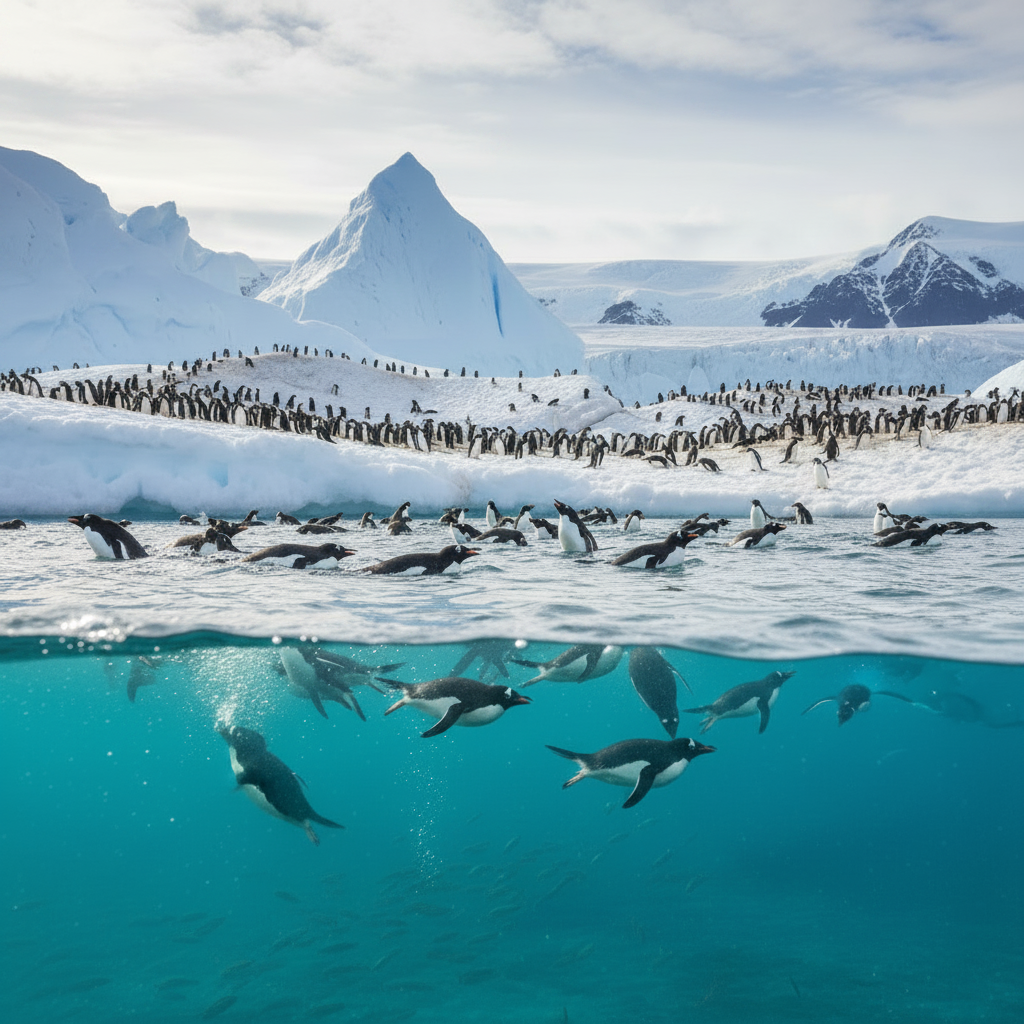
Imagine a world of ice and snow, where life thrives against all odds, painted in stark black and white. Now picture yourself not just observing, but being immersed in that world, witnessing one of nature's most extraordinary spectacles up close. This isn't just another dive trip; it's a pilgrimage to the edge of the world, an encounter with the pure, untamed heart of the Antarctic. Welcome to the unparalleled thrill of Penguin Colony Encounters.
Why Penguin Colony Encounters Belongs on Your Bucket List
There are dive experiences, and then there are transformative dive experiences. Penguin Colony Encounters in the Antarctic Peninsula falls firmly into the latter. What makes this so globally unique isn't just the sheer number of penguins – though seeing tens, even hundreds of thousands of Gentoo, Chinstrap, and Adélie penguins across vast, sprawling colonies is undeniably awe-inspiring. It's the profound sense of being a privileged observer in one of earth's last truly wild frontiers. This is a journey for the discerning adventurer, for those who seek not just beauty, but true wilderness, and a deep connection with the natural world that the majority of humanity will never experience.
The "wow" factor here comes from the multi-sensory immersion. The cacophony of their calls, the distinctive scent of guano, the bustling activity of countless individuals going about their daily lives – feeding, breeding, nurturing chicks, and navigating the harsh polar environment. Below the surface, the dynamic changes entirely. You're no longer just watching from afar; you're entering their aquatic domain. Imagine penguins torpedoing past you, sleek and effortless, a blur of motion against the deep blue. This isn't just for seasoned polar divers; it's for anyone with a sense of wonder and a desire to witness life's incredible resilience.
What You'll See and Do
Your primary objective during Penguin Colony Encounters is, of course, the penguins. On land, you'll witness their social structure, their frantic efforts to build nests with pebbles, their comical waddling, and the sheer volume of their colonies at sites like Port Lockroy or Neko Harbour. The experience changes dramatically when you enter the water. While diving, you’ll encounter penguins actively hunting for krill, darting through the water column with incredible speed and agility. They are curious creatures, and often, they will approach divers, circling playfully, offering truly once-in-a-lifetime photo opportunities. It's a ballet of nature, graceful and exhilarating.
But the Antarctic underwater world offers so much more than just penguins. You'll be diving amidst colossal ice formations, where the light filters through the ice, creating an ethereal glow. Encounters with various seal species are common – agile Leopard Seals, crabeater seals lounging on ice floes, and Weddell seals. You might also spot various Antarctic fish species, intricate nudibranchs, jellyfish, and even the occasional whale swimming gracefully through the deeper waters. Most dives will be relatively shallow, focusing on the vibrant ecosystem just beneath the surface, where light penetration is still good. Expect a mix of shallow shore dives (from Zodiacs) and some drift dives along ice walls, always accompanied by experienced guides.
Best Time to Go
The optimal season for Penguin Colony Encounters in the Antarctic Peninsula is from November to March, coinciding with the austral summer. Each month offers unique highlights. Early season (November – early December) sees penguins returning to their colonies for mating, with pristine icebergs and fewer crowds. Mid-season (December – January) is prime for seeing chicks hatch and grow, with peak activity across the colonies. Late season (February – March) offers the busiest colonies with fledging chicks, abundant krill, and the possibility of more whale sightings as they feed before migrating.
Water temperatures in the Antarctic Peninsula typically range from -1°C to 2°C (30°F to 36°F). This is cold-water diving, requiring appropriate thermal protection. Visibility can be excellent, often reaching 15-30 metres (50-100 feet), especially later in the season as the krill blooms dissipate. Currents are generally manageable but can be present, particularly around certain ice formations or channels. The weather is notoriously unpredictable, with sudden changes in wind, snow, and sunshine all possible within a single day. Flexibility and preparedness are key.
How to Dive Penguin Colony Encounters
Accessing the Antarctic Peninsula for diving is almost exclusively done via liveaboard vessels. These ships are specially designed for polar conditions, offering stability, warmth, and the capability to deploy Zodiacs for shore excursions and dive operations. Day-boats are not an option for this remote region. For this experience, a minimum certification of PADI Advanced Open Water or equivalent is usually required, along with a dry suit certification or significant cold-water dry suit experience. You'll likely need at least 50+ logged dives, with a good number in colder conditions, to be comfortable and safe.
Recommended courses include Dry Suit Diver, of course, and potentially a Nitrox certification to extend bottom times, especially valuable in these shallower, light-filled environments. While not generally a strong current area, a Drift Diver specialty could also be beneficial. For thermal protection, a 7mm semi-dry or, more commonly, a robust dry suit with appropriate undergarments is absolutely essential. A good quality hood, gloves (dry gloves are highly recommended), and thermal boots are non-negotiable. Don't forget your camera gear – wide-angle lenses for the scenery and macro capabilities for the smaller critters will serve you well. Remember, reliable, well-maintained gear is paramount in such a remote environment.
Conservation and Responsible Diving
Antarctica is a truly pristine environment, and its preservation is paramount. When embarking on Penguin Colony Encounters, responsible diving and behaviour are not just recommended, they are mandatory. Always maintain respectful distances from all wildlife, both above and below the surface, adhering strictly to your expedition leader's guidelines. Never touch, feed, or interfere with any animals. This includes penguins, seals, and other marine life. Keep interactions passive and observational. Underwater, practice excellent buoyancy control to avoid contact with the seabed or delicate organisms. Follow the "Leave No Trace" principle, ensuring nothing is left behind and nothing is taken from the environment. Your presence is a privilege, and protecting this fragile ecosystem for future generations is everyone's responsibility. Be mindful of your fin kicks and always respect the integrity of the environment.
Plan Your Trip
Embarking on a Penguin Colony Encounters dive adventure is more than just a trip; it's a profound journey to the heart of the Antarctic wilderness. With Blue Rides, you can explore a curated selection of premium liveaboards offering unparalleled access to this incredible region, ensuring your expedition to the end of the earth is as comfortable as it is unforgettable. Begin your planning today and prepare for the ultimate dive encounter.