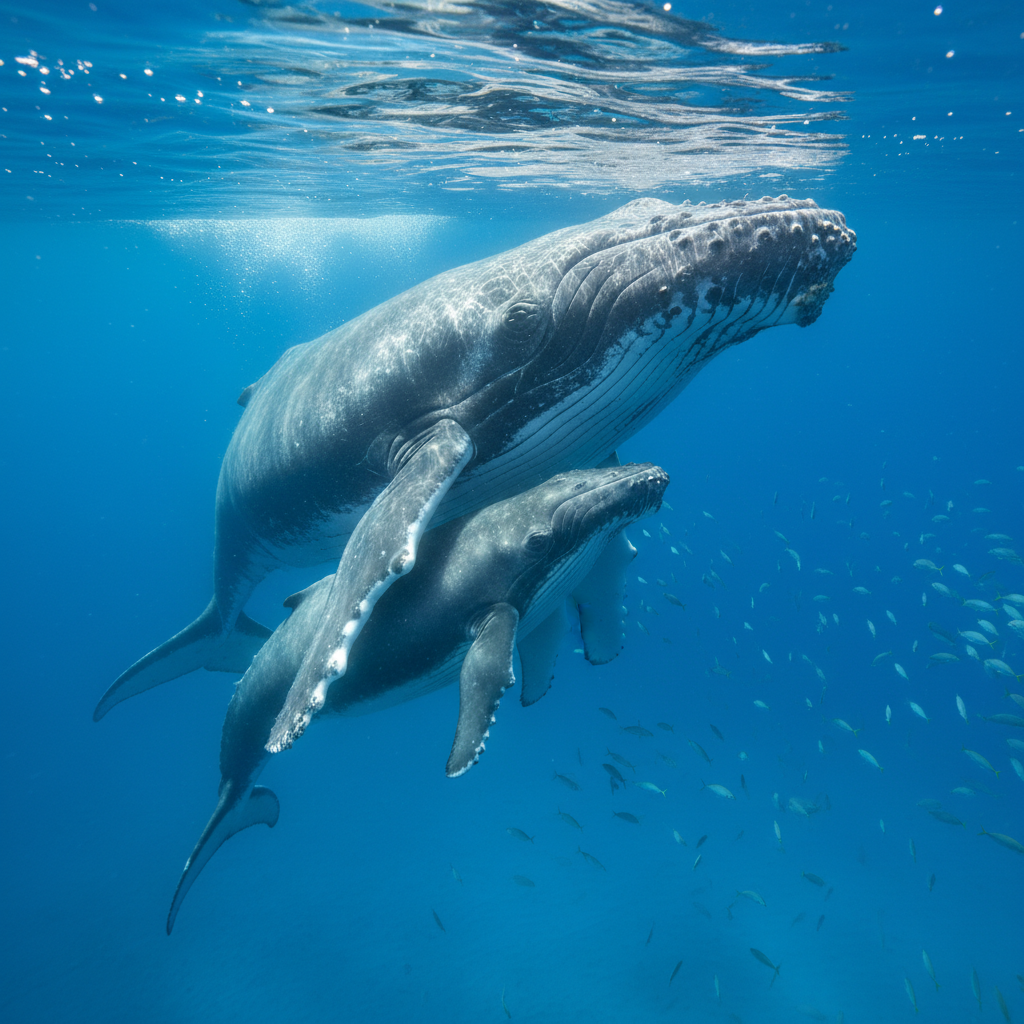
Imagine a world where colossal giants breach the icy Antarctic waters, their immense forms rising majestically against a backdrop of snow-capped peaks and glaciers. This isn't a scene from a nature documentary; it's an immersive reality awaiting you in the Gerlache Strait, where the annual humpback whale migration offers an unparalleled spectacle. Few experiences on Earth can rival the primal thrill of encountering these magnificent creatures in their natural habitat, making it an undisputed contender for any serious diver's ultimate bucket list.
Why Humpback Whale Migration Belongs on Your Bucket List
There’s a profound difference between seeing a whale from a distant boat and being eye-level with one as it bubble-net feeds, its immense body creating a swirling vortex of krill and seawater. The Humpback Whale Migration in Antarctica delivers this 'wow' factor in spades. The sheer scale of these animals, combined with the pristine, ethereal beauty of the Antarctic Peninsula, creates an almost spiritual encounter. It's a journey into one of the world's last true wildernesses, allowing you to witness complex feeding behaviours and playful breaches that are simply not accessible in the same way anywhere else on the planet.
This experience isn't just about whales; it's about the entire ecosystem thriving in a place of extreme beauty and raw power. While it undoubtedly appeals to seasoned divers seeking unique interactions, it also captivates naturalists, photographers, and anyone with a deep appreciation for wildlife and adventure. Unlike many dive destinations, Antarctica offers a multi-faceted expedition where scuba diving is just one incredible component of a broader exploration. You're not just a diver; you're an explorer navigating a realm teeming with life, from microscopic krill to the largest animals on Earth.
What You'll See and Do
The core of this experience revolves around the humpback whales (Megaptera novaeangliae) themselves. During the feeding season in the Gerlache Strait, you'll witness their incredible feeding strategies, most notably bubble-net feeding. This cooperative behaviour sees a group of whales releasing bursts of air bubbles to create a "net" that corrals krill into a dense column, allowing them to surface through the centre with open mouths. It's a mesmerising and often loud display, visible both from the surface and, occasionally, from submerged perspectives. Breaching, tail slapping, and spy-hopping are also common, showcasing their playful and curious nature. These encounters often occur from the deck of your liveaboard or, more intimately, from Zodiac inflatable boats, putting you within arm's reach of these gentle giants.
Beyond the humpbacks, the Gerlache Strait is a vibrant marine ecosystem. You'll likely encounter other cetaceans such as Minke whales and orcas, though the humpbacks are the stars. Numerous species of seals – Weddell, Crabeater, Leopard, and Fur seals – are ever-present, often basking on icebergs or curiously approaching Zodiacs. Various penguin species, including Adélie, Gentoo, and Chinstrap penguins, populate the shorelines and dense waters, adding their unique charm. Underwater, the seabed is surprisingly colourful with vibrant anemones, sponges, and nudibranchs, especially around shallower ice and rock formations. Dive styles are predominantly drift dives or static dives from Zodiacs, often in proximity to ice features or sheltered bays.
Depths vary, but most dives will be relatively shallow, focusing on the interface between ice and open water, and typically not exceeding 20-30 metres due to the cold and often overhead environment. The emphasis is on observing marine life in its natural state, rather than exploring deep wrecks or reefs. The encounters are dynamic and unpredictable, making each dive a unique adventure. During Zodiac excursions, you might also have opportunities for shore landings to observe vast penguin colonies or even try kayaking among icebergs.
Best Time to Go
The optimal season for experiencing the Humpback Whale Migration in Antarctica, specifically the Gerlache Strait, runs from February to April. This period coincides with the late austral summer and early autumn, when krill populations are at their highest, attracting the humpbacks to these nutrient-rich waters for intense feeding. While the ice conditions are generally more stable, they do begin to shift as autumn approaches, offering stunning opportunities for zodiac cruising among sculpted ice formations.
Water temperatures during this window are predictably frigid, typically ranging from -1°C to 2°C (30°F to 36°F). Visibility, however, can be surprisingly good, often ranging from 10 to 30 metres, particularly away from areas disturbed by feeding or glacial melt. Currents in the Gerlache Strait can be moderate to strong, especially around headlands and channels, so an understanding of drift diving is beneficial. While this time generally offers more settled weather compared to early summer, Antarctic weather is inherently unpredictable and can change rapidly, with strong winds and snow squalls being possible at any moment. The longer daylight hours of late summer also provide ample opportunity for photography and exploration.
How to Dive Humpback Whale Migration
Access to the Humpback Whale Migration experience is almost exclusively via specialist liveaboard vessels. These ships are equipped with ice-strengthened hulls, a fleet of Zodiacs for landings and dives, and experienced expedition crew. Day trips from land are simply not feasible for reaching the remote Gerlache Strait. A liveaboard offers not only the best access but also the comfort and infrastructure required for such an expedition, including dedicated dive decks, compressors, and heated common areas for gear preparation and debriefs.
For this advanced expedition, a minimum certification level of PADI Advanced Open Water Diver or equivalent is typically required. More importantly, significant cold-water diving experience and a healthy number of logged dives (100+ strongly recommended, with at least 20 in dry suits) are crucial. Dry suit certification is an absolute must, as are robust cold-water regulators (two independent first stages are highly advised). Recommended courses include Enriched Air Nitrox Diver for extending bottom times, and a good understanding of drift diving techniques. Your wetsuit thickness will be irrelevant here; a high-quality dry suit with appropriate thermal layering underneath is essential to manage the extreme water temperatures. Redundant exposure protection, such as thick gloves, hood, and heated vests, can significantly enhance comfort. Bring extra batteries for cameras, as cold drains them quickly, and robust, cold-weather-rated dive gear is paramount.
Conservation and Responsible Diving
Antarctica is one of humanity's last true wildernesses, and its delicate ecosystem demands the utmost respect. The Humpback Whale Migration experience is not just about witnessing nature's grandeur but also about contributing to its preservation. All interactions with marine life, especially whales, are conducted under strict guidelines enforced by the International Association of Antarctic Tour Operators (IAATO) and national regulations. This means maintaining safe distances, never approaching animals directly, and absolutely no touching. Your liveaboard crew will provide detailed briefings on responsible behaviour, which must be adhered to at all times. Photography should be conducted respectfully, with minimal disturbance, and without the use of artificial lights that could stress marine life. By choosing a reputable liveaboard operator, you're supporting tourism that adheres to these high ethical standards, contributing to the long-term conservation of this incredible region and its magnificent inhabitants.
Plan Your Trip
The Humpback Whale Migration in Antarctica truly is a dive journey of a lifetime. It’s an adventure that promises unparalleled wildlife encounters in a landscape of breathtaking beauty, forging memories that will last forever. If you’re ready to embark on this extraordinary expedition, browse the carefully curated selection of Blue Rides liveaboards departing for this incredible experience, and let us help you plan the ultimate Antarctic adventure.