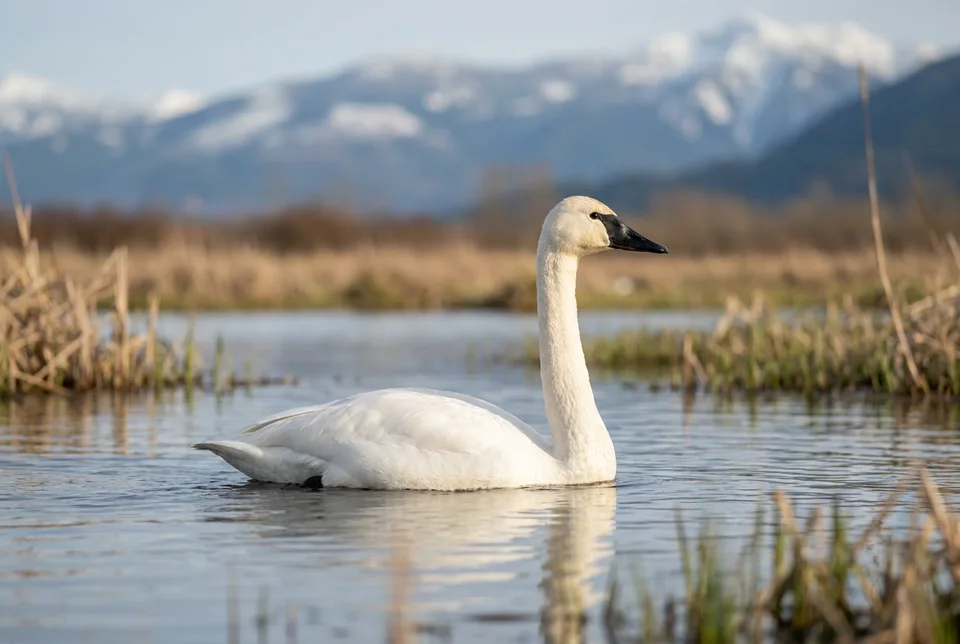
This species belongs to Anatidae, the duck, goose and swan family. Its biology explains why sheltered feeding water can be more productive than the middle of a busy navigation channel. A river association describes a recorded reach, not uniform occupancy across an entire river system. Tundra Swans are white waterbirds with black bills; many show a small yellow spot at the bill base. The North American form is often called the Whistling Swan, a name associated with sound made by the wings. They breed on Arctic lakes, ponds and river deltas in Alaska and Canada, rather than nesting throughout their winter range. Outside the breeding season, flocks use lakes, estuaries, bays, ponds and rivers, often near agricultural feeding areas. They eat aquatic tubers, stems and leaves, and also take mollusks and arthropods rather than being strictly vegetarian. Feeding birds can tip up like dabbling ducks, stretching their necks underwater to reach submerged vegetation. On migration and wintering grounds they also glean harvested corn, soybeans and rice and eat growing winter crops.
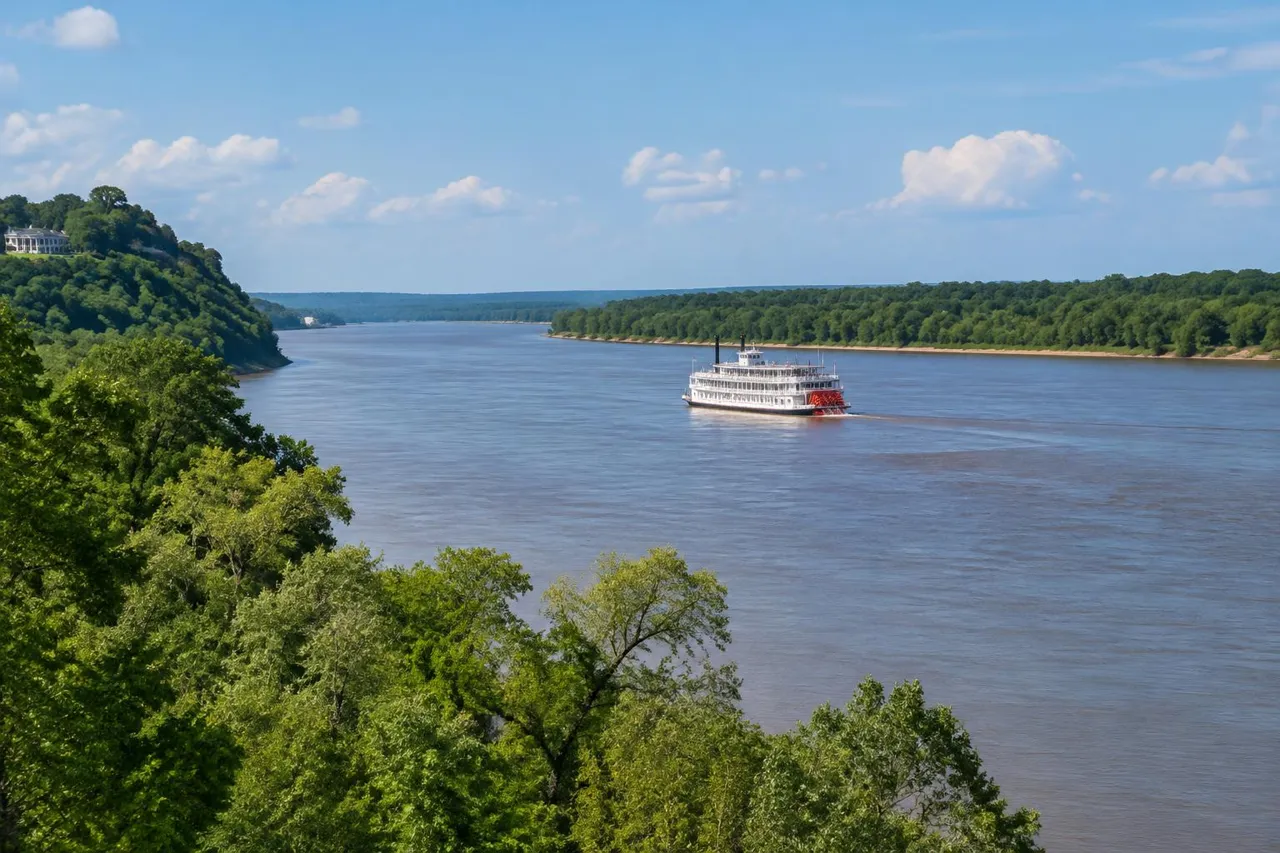
Mississippi
Upper Mississippi — Upper Mississippi River NWR, Wabasha MN–Rock Island IL. Use refuge backwaters and established shore overlooks rather than assuming equivalent views along the navigation channel. Brownsville Overlook in Minnesota is the specifically documented swan viewing place.