Bluerides – Blue Rides - Book Liveaboards worldwideOCEAN ADVENTURES
River CruisesRiversNature & WildlifeOur Promise
River CruisesRiversNature & WildlifeOur PromiseSign In

River destinations

  • River destinations
  • Amazon
  • Danube
  • Rhine
  • Mekong
  • Nile

Ships & departures

  • River Cruise Search
  • Deals

Nature & Wildlife

  • Nature & Wildlife

Travel support

  • Our Promise
  • Contact

Contact

Get in Touch

Get in touch anytime, we're happy to help you find the right trip or sort out any question.

EmailWrite us, we usually reply within a few hours.
contact@bluerides.com
WhatsAppChat with us on WhatsApp, Mon–Fri 10:00–16:00 (CET).
Start WhatsApp Chat
PhoneCall us, we're happy to help.
Free call, Mon–Fri 10 AM – 8 PM (CET).
Europe+49 800 1144 990USA+1 888 557 7735UK+44 800 707 4152Australia+61 2 8599 6113Canada+1 888 557 7735
Which river journey is yours?Answer 8 quick questions and find the river cruise that fits you.
8 questions, 1 minute·Plus Gift
Secure Payment MethodsYour payments are fully secured with AES-256 encryption.
Powered byStripeWiseAMEXPayGoogle PaySEPABank
Imprint·Terms & Conditions·Privacy Policy·About·Contact·Liability Waiver·Affiliate Program·Cruise·Blog·
Visit us here

© 2026 Blue Rides. All rights reserved.

Bluerides – Blue Rides - Book Liveaboards worldwideOCEAN ADVENTURES
River CruisesRiversNature & WildlifeOur Promise
River CruisesRiversNature & WildlifeOur PromiseSign In
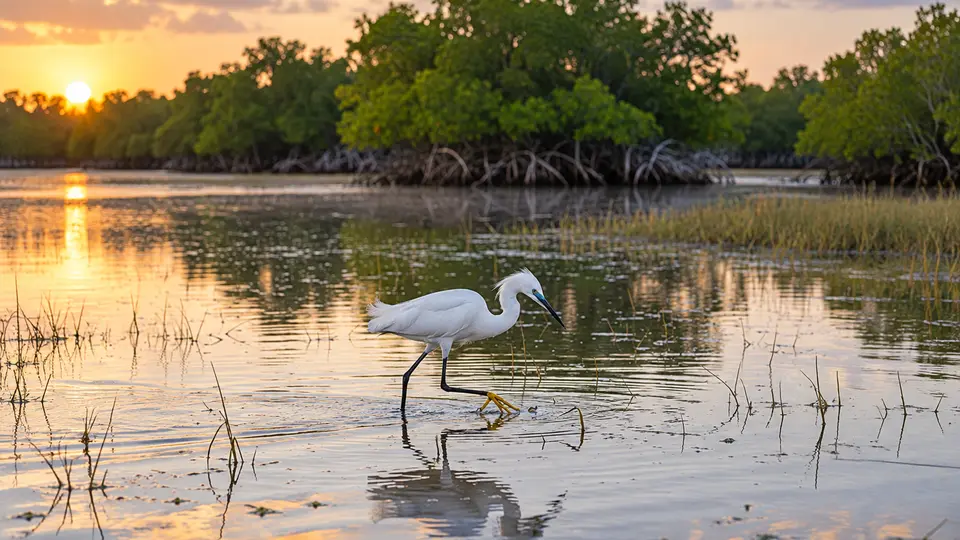
Snowy egret in wetland habitat — Amazon, River Cruises wildlifeAI-modified
Home›River Cruises›River Wildlife›Snowy Egret

Snowy EgretEgretta thulaWhere and when to see them

Previous speciesSnow GooseNext speciesSpotted Dove

Snowy Egret at a glance

The Snowy Egret is a relatively small white heron whose contrasting feet and active hunting make it memorable. In the Amazon registry it belongs to the Peruvian Iquitos–Nauta, Ucayali and connected-tributary itinerary. Its presence there should not be confused with a guarantee of close birds beside the main ship. Species reference: https://www.allaboutbirds.org/guide/Snowy_Egret/lifehistory

Behaviour & reproduction

Size
56–66 cm (22–26 in) total length, AnimalSpot species account (https://www.animalspot.net/snowy-egret.html).
Weight
About 370 g (13.1 oz) average, AnimalSpot species account.
Lifespan
Species-specific lifespan not verified.
Status
Formal global conservation category not verified.

Feeding is often energetic. Birds walk, run or hop, sometimes stirring with their feet, swaying the head or flicking wings. Cornell describes several methods rather than one fixed routine. A bird standing still is not therefore inconsistent with the species; watch long enough to see a sequence before drawing conclusions from behaviour.

Top wildlife locations

Amazon river landscape — River Cruises wildlife habitatAI-modified

Amazon

Peru — Iquitos/Nauta, Ucayali and connected tributaries (2017 cruise) Guided skiff/side-channel viewing; not guaranteed from main ship. Scan river-edge trees, banks and open water.

Explore river cruises

Destinations describe the species' habitat, not guaranteed cruise stops. Some animals require an optional inland excursion or are found in restricted reserves.

Fun facts about the Snowy Egret

  • Its yellow feet can help disturb prey.
  • It uses several hunting techniques.
  • Aquatic insects are among its foods.
  • It can forage in mixed-species groups.
  • Nests are built in colonies.
  • Young birds can show greener legs than adults.

Best time to see the Snowy Egret

No recurring local monthly evidence was verified for the registered Peruvian reach. The 2017 itinerary is historical occurrence evidence rather than an annual seasonal calendar. All Amazon months remain empty; neither broad tropical distribution nor assumptions about low water have been used to fill them.

Snowy Egret: season matrix by destination

Highlighted months reflect the stated local evidence, not guaranteed encounters. Neutral months mean no verified monthly viewing window, not absence. Observation records and recommended viewing windows are distinct.

Amazon

No recurring species-specific monthly source verified for this exact Amazon reach. Historical itinerary evidence and general water-level cycles do not establish observation months.

JanFebMarAprMayJunJulAugSepOctNovDec
Explore river cruises

Where the Snowy Egret lives

Shallow wetlands are central: marshes, pools, swamps, estuary edges and other shallow waters are documented across its range. Nesting often occurs in vegetation within colonies. In Peru, exposed side-channel shallows and wetland margins are more relevant viewing targets than deep channel centres. No nesting colony was verified for the registered cruise route.

What the Snowy Egret eats

Fish, frogs, worms, crustaceans and insects are among the aquatic foods. Foot movements can disturb prey before the bill strikes. General descriptions from Cornell do not establish the relative importance of each food near Iquitos. Avoid feeding birds or disturbing substrate to create an artificial hunting opportunity for a photograph.

Species at a glance

Common name
Snowy Egret
Scientific name
Egretta thula
Animal group
Birds
Size
56–66 cm (22–26 in) total length, AnimalSpot species account (https://www.animalspot.net/snowy-egret.html).
Weight
About 370 g (13.1 oz) average, AnimalSpot species account.
Lifespan
Species-specific lifespan not verified.
Status
Formal global conservation category not verified.
Identification
Adults combine white plumage, a slender dark bill, dark legs and bright yellow feet. Young birds can have duller, greener legs, so adult field marks must be used carefully. Great Egrets are larger with different bill and foot colours. Mud or submerged feet can conceal the very feature needed for a secure identification.

Snowy Egret: frequently asked questions

Where can I see the Snowy Egret?
Amazon. Use a guided skiff to look along shallow banks and emergent vegetation. Wait for a view of the feet if the bird is standing in water, and compare it with nearby white herons. Keep a respectful distance from any gathering that might be a colony, especially where birds repeatedly enter dense vegetation.
When is the best time to see the Snowy Egret?
No recurring local monthly evidence was verified for the registered Peruvian reach. The 2017 itinerary is historical occurrence evidence rather than an annual seasonal calendar. All Amazon months remain empty; neither broad tropical distribution nor assumptions about low water have been used to fill them.
How big does the Snowy Egret get?
56–66 cm (22–26 in) total length, AnimalSpot species account (https://www.animalspot.net/snowy-egret.html).. Adult weight: About 370 g (13.1 oz) average, AnimalSpot species account.. Size varies with age, sex and population.
How should I behave around the Snowy Egret?
Use a guided skiff to look along shallow banks and emergent vegetation. Wait for a view of the feet if the bird is standing in water, and compare it with nearby white herons. Keep a respectful distance from any gathering that might be a colony, especially where birds repeatedly enter dense vegetation.
What does the Snowy Egret eat?
Fish, frogs, worms, crustaceans and insects are among the aquatic foods. Foot movements can disturb prey before the bill strikes. General descriptions from Cornell do not establish the relative importance of each food near Iquitos. Avoid feeding birds or disturbing substrate to create an artificial hunting opportunity for a photograph.
Are wildlife sightings guaranteed on a river cruise?
No. Animals move freely and routes, weather, access restrictions and local conditions influence every outing. Confirm the actual itinerary and shore program before booking.

Compare wildlife in the same destinations

Explore other birds recorded in these destinations. Similar surroundings do not mean the animals share the same habits or viewing season.

Species comparison by animal group and destination
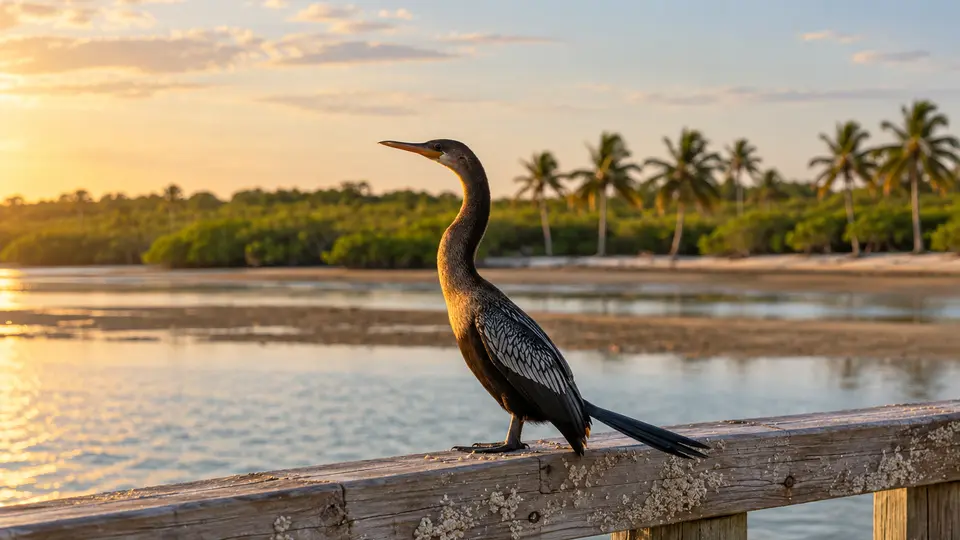
Snowy egret in wetland habitat — Amazon, River Cruises wildlifeAI-modifiedSnowy EgretAmazon kingfisher in wetland habitat — Amazon, River Cruises wildlifeAI-modifiedAmazon KingfisherAnhinga in wetland habitat — Amazon, River Cruises wildlifeAI-modifiedAnhinga
Animal groupBirdsAnimal groupBirdsAnimal groupBirds
DestinationsAmazonDestinationsAmazonDestinationsAmazon
Scientific name
Egretta thula
Scientific name
Scientific name
Previous speciesSnow GooseNext speciesSpotted Dove
All river wildlife
On this page
  • 01About
  • 02Behaviour & reproduction
  • 03Top wildlife locations
  • 04Fun facts
  • 05Best season
  • 06Season matrix by destination
  • 07Habitat
  • 08Diet
  • 09Species at a glance
  • 10Questions & answers
  • 11Compare

Find your river cruise

AI-modified
Plan your trip

Find your next river journey

Compare destinations, shore programs and dates with the animals and habitats you would love to see.

  • Daily shore excursions
  • Responsible wildlife watching
  • Boutique river ships
Explore river cruises