Bluerides – Blue Rides - Book Liveaboards worldwideOCEAN ADVENTURES
River CruisesRiversNature & WildlifeOur Promise
River CruisesRiversNature & WildlifeOur PromiseSign In

River destinations

  • River destinations
  • Amazon
  • Danube
  • Rhine
  • Mekong
  • Nile

Ships & departures

  • River Cruise Search
  • Deals

Nature & Wildlife

  • Nature & Wildlife

Travel support

  • Our Promise
  • Contact

Contact

Get in Touch

Get in touch anytime, we're happy to help you find the right trip or sort out any question.

EmailWrite us, we usually reply within a few hours.
contact@bluerides.com
WhatsAppChat with us on WhatsApp, Mon–Fri 10:00–16:00 (CET).
Start WhatsApp Chat
PhoneCall us, we're happy to help.
Free call, Mon–Fri 10 AM – 8 PM (CET).
Europe+49 800 1144 990USA+1 888 557 7735UK+44 800 707 4152Australia+61 2 8599 6113Canada+1 888 557 7735
Which river journey is yours?Answer 8 quick questions and find the river cruise that fits you.
8 questions, 1 minute·Plus Gift
Secure Payment MethodsYour payments are fully secured with AES-256 encryption.
Powered byStripeWiseAMEXPayGoogle PaySEPABank
Imprint·Terms & Conditions·Privacy Policy·About·Contact·Liability Waiver·Affiliate Program·Cruise·Blog·
Visit us here

© 2026 Blue Rides. All rights reserved.

Bluerides – Blue Rides - Book Liveaboards worldwideOCEAN ADVENTURES
River CruisesRiversNature & WildlifeOur Promise
River CruisesRiversNature & WildlifeOur PromiseSign In
Purple heron in wetland habitat — Danube, Nile, Mekong, River Cruises wildlifeAI-modified
Home›River Cruises›River Wildlife›Purple Heron

Purple HeronArdea purpureaWhere and when to see them

Previous speciesProboscis BatNext speciesPygmy Cormorant

Purple Heron at a glance

A narrow-bodied heron with a remarkably long neck, the Purple Heron is adapted to hunting within marsh vegetation. Chestnut and dark striping provide a better description than the misleading expectation of an entirely purple bird. Its three registered river settings are separate observation contexts, not a continuous cruise-wide distribution claim. Species reference: https://heronconservation.org/herons-of-the-world/list/purple-heron/

Behaviour & reproduction

Size
78–90 cm (30.7–35.4 in) long.
Weight
525–1,345 g (18.5–47.4 oz).
Lifespan
Species-specific lifespan not verified.
Status
Least Concern, BirdLife global assessment (2019).

Individuals hunt alone, standing for long periods with the bill close to the water or advancing with exceptionally slow steps. Long toes allow careful placement on marsh vegetation. Feeding territories may be defended. HeronConservation describes activity particularly around morning and evening, but this does not establish a local seasonal calendar.

Top wildlife locations

Danube river landscape — River Cruises wildlife habitatAI-modified

Danube

Romania: Danube Delta around Mahmudia and delta lakes/channels; separate lower-Danube/delta itinerary, NOT Passau–Vienna–Bratislava–Budapest. Spring/summer; reed edges; secretive. Checklist establishes occurrence, not guaranteed daily sightings.


Explore river cruises
Nile river landscape — River Cruises wildlife habitatAI-modified

Nile

Luxor–Esna–Edfu–Kom Ombo–Aswan; exact observation context in quote Wild birds from cruise deck or normal temple/riverbank visits; dated March 2007 observations, not year-round guarantees. Waterfowl and passage birds seasonal; small reed birds require binoculars.

Explore river cruises
Mekong river landscape — River Cruises wildlife habitatAI-modified

Mekong

Vietnam Mekong delta: Tra Su flooded forest, optional shore excursion from Chau Doc (not main-channel deck wildlife) Official 2016 BirdLife/IEBR survey checklist, not a current abundance claim. Boat/boardwalk/tower viewing; crakes, Watercock and coucals elusive. Migrant kingfishers, pond herons and waders seasonal.

Explore river cruises

Destinations describe the species' habitat, not guaranteed cruise stops. Some animals require an optional inland excursion or are found in restricted reserves.

Fun facts about the Purple Heron

  • The name does not mean the whole bird is purple.
  • Its toes are unusually long.
  • It often hunts from dense cover.
  • Fish are the principal prey group.
  • The neck carries strong dark striping.
  • The feet project conspicuously in flight.

Best time to see the Purple Heron

The delta registry suggests spring and summer, but its checklist is not a monthly calendar. The Nile report concerns March 2007 only. Tra Su supplies an occurrence checklist without recurring seasonality. None supports numerical months here. Plan around access to quiet marsh edges rather than transferring breeding dates from another population.

Purple Heron: season matrix by destination

Highlighted months reflect the stated local evidence, not guaranteed encounters. Neutral months mean no verified monthly viewing window, not absence. Observation records and recommended viewing windows are distinct.

Danube

The Mahmudia delta checklist establishes occurrence, not numerical monthly seasonality. Registry warm-season guidance is retained qualitatively only.

JanFebMarAprMayJunJulAugSepOctNovDec
Explore river cruises

Nile

March 2007 is a dated cruise observation, not evidence of an annual March season.

JanFebMarAprMayJunJulAugSepOctNovDec
Explore river cruises

Mekong

The 2016 BirdLife/IEBR checklist establishes Tra Su occurrence, not recurring monthly availability. Publication date is not season evidence.

JanFebMarAprMayJunJulAugSepOctNovDec
Explore river cruises

Where the Purple Heron lives

Dense emergent vegetation is central to its ecology. Reed fringes and secluded wetland margins matter more than broad open water. In the Danube Delta, look along channels and lakes around Mahmudia. On the Nile, the registered reach is Luxor to Aswan. The Mekong association is specifically Tra Su flooded forest.

What the Purple Heron eats

Fish are principal prey, supplemented by insects and other invertebrates, amphibians and occasional additional small vertebrates. It can seize fish crossways in the bill before handling them for swallowing. The specialist account reports variation between study areas; those studies do not establish prey proportions in any of the three registered reaches.

Species at a glance

Common name
Purple Heron
Scientific name
Ardea purpurea
Animal group
Birds
Size
78–90 cm (30.7–35.4 in) long.
Weight
525–1,345 g (18.5–47.4 oz).
Lifespan
Species-specific lifespan not verified.
Status
Least Concern, BirdLife global assessment (2019).
Identification
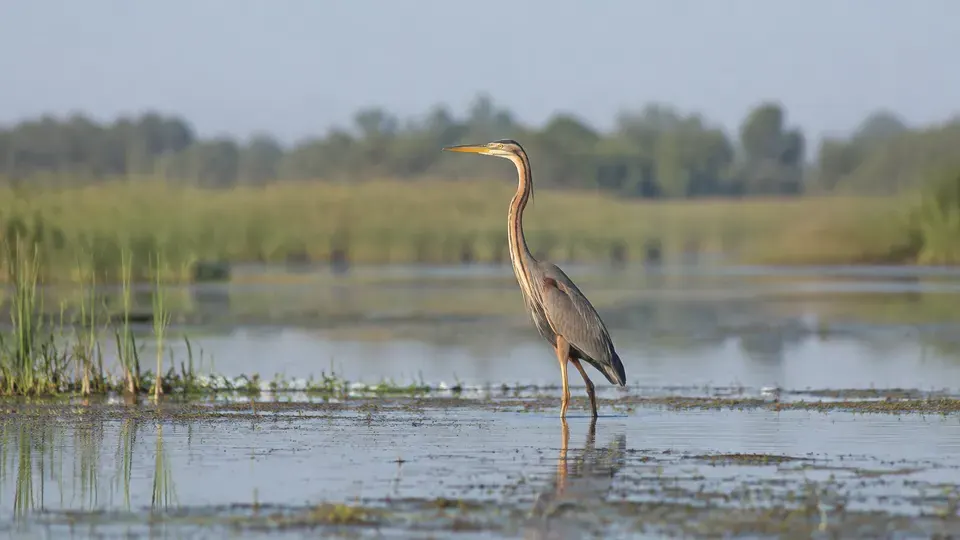
Look for a dark crown, chestnut neck with strong dark lines, long pointed bill and narrow body. Feet project well beyond the tail in flight, and the overall flying impression is darker and slimmer than a Grey Heron. Poor light can obscure colour, so compare neck pattern and proportions rather than relying on a purple sheen.

Purple Heron: frequently asked questions

Where can I see the Purple Heron?
Danube, Nile, Mekong. Watch gaps between reed stems and give a stationary bird time to move naturally. A departing heron may reveal more of its proportions, but deliberately flushing it is not acceptable. Small-boat delta trips and the Tra Su shore excursion offer different views from Nile deck scanning. Keep those contexts separate when recording sightings.
When is the best time to see the Purple Heron?
The delta registry suggests spring and summer, but its checklist is not a monthly calendar. The Nile report concerns March 2007 only. Tra Su supplies an occurrence checklist without recurring seasonality. None supports numerical months here. Plan around access to quiet marsh edges rather than transferring breeding dates from another population.
How big does the Purple Heron get?
78–90 cm (30.7–35.4 in) long.. Adult weight: 525–1,345 g (18.5–47.4 oz).. Size varies with age, sex and population.
How should I behave around the Purple Heron?
Watch gaps between reed stems and give a stationary bird time to move naturally. A departing heron may reveal more of its proportions, but deliberately flushing it is not acceptable. Small-boat delta trips and the Tra Su shore excursion offer different views from Nile deck scanning. Keep those contexts separate when recording sightings.
What does the Purple Heron eat?
Fish are principal prey, supplemented by insects and other invertebrates, amphibians and occasional additional small vertebrates. It can seize fish crossways in the bill before handling them for swallowing. The specialist account reports variation between study areas; those studies do not establish prey proportions in any of the three registered reaches.
Are wildlife sightings guaranteed on a river cruise?
No. Animals move freely and routes, weather, access restrictions and local conditions influence every outing. Confirm the actual itinerary and shore program before booking.

Compare wildlife in the same destinations

Explore other birds recorded in these destinations. Similar surroundings do not mean the animals share the same habits or viewing season.

Species comparison by animal group and destination
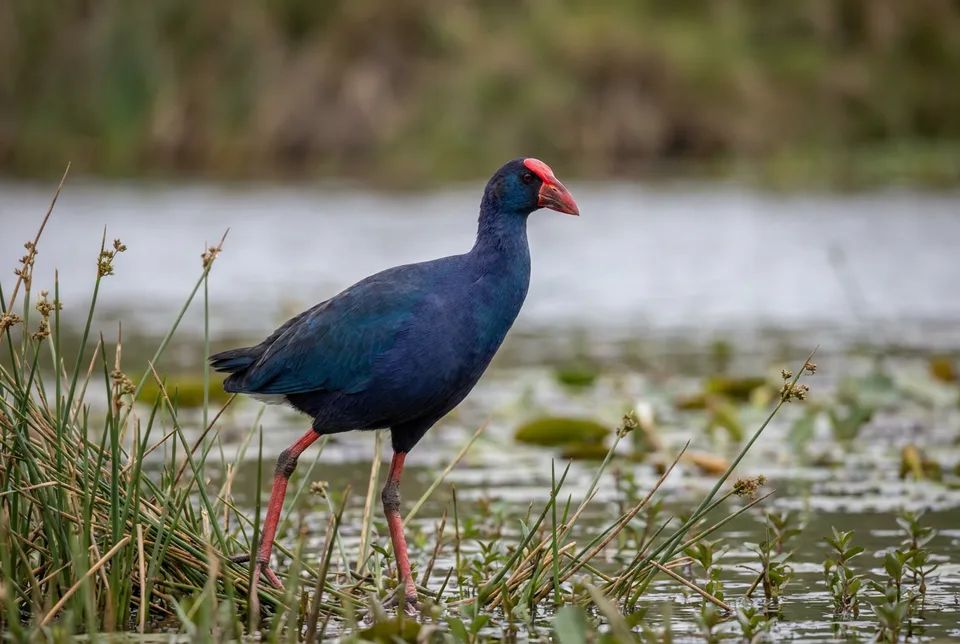
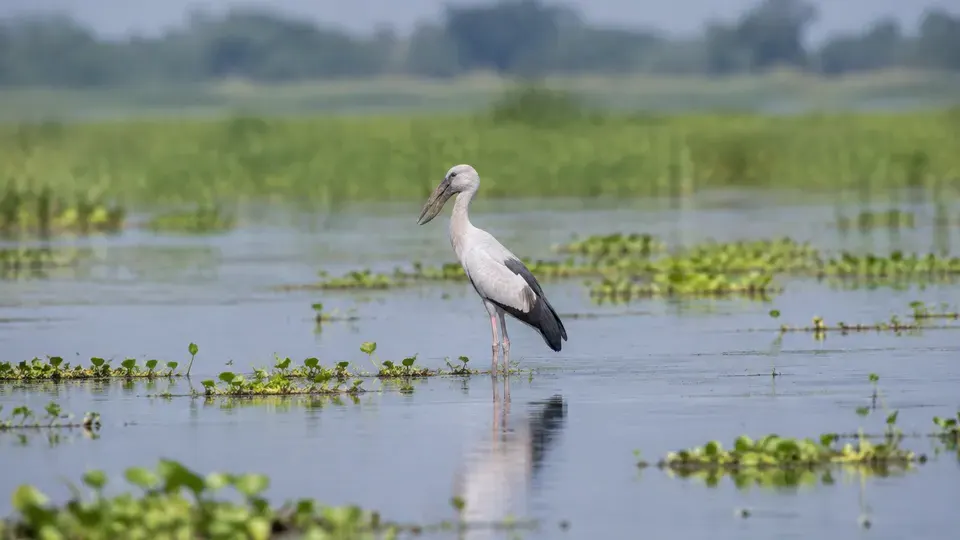
Purple heron in wetland habitat — Danube, Nile, Mekong, River Cruises wildlifeAI-modifiedPurple HeronAfrican Swamphen in wetland habitat — Nile, Egypt, River Cruises wildlifeAI-modifiedAfrican SwamphenAsian openbill in wetland habitat — Mekong, River Cruises wildlifeAI-modifiedAsian Openbill
Animal groupBirdsAnimal groupBirdsAnimal groupBirds
DestinationsDanube, Nile, MekongDestinationsNileDestinationsMekong
Scientific name
Ardea purpurea
Scientific name
Scientific name
Previous speciesProboscis BatNext speciesPygmy Cormorant
All river wildlife
On this page
  • 01About
  • 02Behaviour & reproduction
  • 03Top wildlife locations
  • 04Fun facts
  • 05Best season
  • 06Season matrix by destination
  • 07Habitat
  • 08Diet
  • 09Species at a glance
  • 10Questions & answers
  • 11Compare

Find your river cruise

AI-modified
Plan your trip

Find your next river journey

Compare destinations, shore programs and dates with the animals and habitats you would love to see.

  • Daily shore excursions
  • Responsible wildlife watching
  • Boutique river ships
Explore river cruises