Bluerides – Blue Rides - Book Liveaboards worldwideOCEAN ADVENTURES
River CruisesRiversNature & WildlifeOur Promise
River CruisesRiversNature & WildlifeOur PromiseSign In

River destinations

  • River destinations
  • Amazon
  • Danube
  • Rhine
  • Mekong
  • Nile

Ships & departures

  • River Cruise Search
  • Deals

Nature & Wildlife

  • Nature & Wildlife

Travel support

  • Our Promise
  • Contact

Contact

Get in Touch

Get in touch anytime, we're happy to help you find the right trip or sort out any question.

EmailWrite us, we usually reply within a few hours.
contact@bluerides.com
WhatsAppChat with us on WhatsApp, Mon–Fri 10:00–16:00 (CET).
Start WhatsApp Chat
PhoneCall us, we're happy to help.
Free call, Mon–Fri 10 AM – 8 PM (CET).
Europe+49 800 1144 990USA+1 888 557 7735UK+44 800 707 4152Australia+61 2 8599 6113Canada+1 888 557 7735
Which river journey is yours?Answer 8 quick questions and find the river cruise that fits you.
8 questions, 1 minute·Plus Gift
Secure Payment MethodsYour payments are fully secured with AES-256 encryption.
Powered byStripeWiseAMEXPayGoogle PaySEPABank
Imprint·Terms & Conditions·Privacy Policy·About·Contact·Liability Waiver·Affiliate Program·Cruise·
Visit us here

© 2026 Blue Rides. All rights reserved.·

Bluerides – Blue Rides - Book Liveaboards worldwideOCEAN ADVENTURES
River CruisesRiversNature & WildlifeOur Promise
River CruisesRiversNature & WildlifeOur PromiseSign In
Proboscis bat in wetland habitat — Amazon, River Cruises wildlife
Home›River Cruises›River Wildlife›Proboscis Bat

Proboscis BatRhynchonycteris nasoWhere and when to see them

Previous speciesPlumbeous KiteNext speciesPurple Heron

Proboscis Bat at a glance

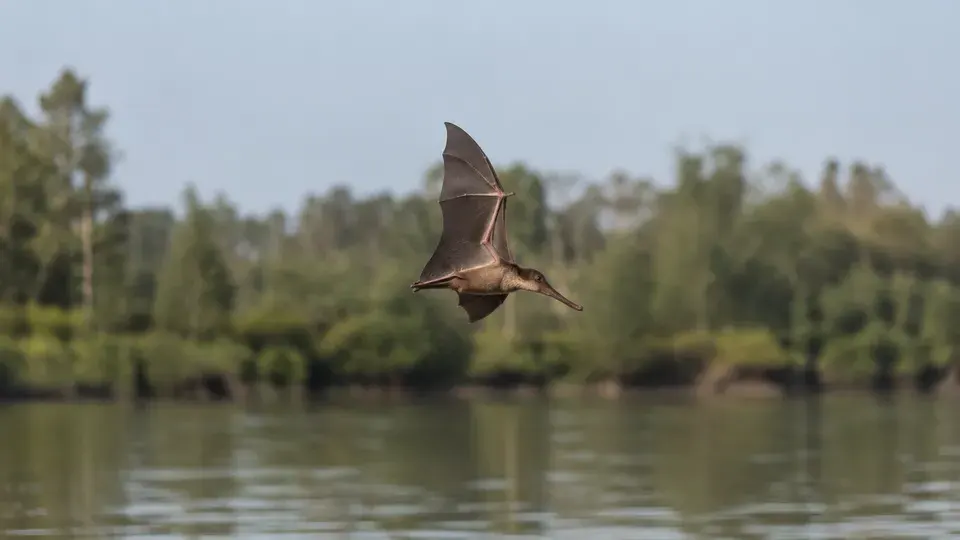
The Proboscis Bat is one of the most easily overlooked mammals on an Amazon excursion. Rather than hiding inside a dark cavity, it often rests openly on bark above water, where its mottled coat can resemble part of the tree. Its elongated muzzle gives the animal its name. Animal Diversity Web describes a very small insect-eating bat with pale markings on the back and distinctive tufts along the forearms. The registered river association is the Peruvian Iquitos–Nauta, Ucayali and connected tributary cruise route. A guide who knows how to search shoreline trunks may reveal a day roost from a respectful distance. Such a sighting is very different from identifying a bat passing rapidly overhead at night, when appearance alone is usually inadequate for a confident species record. Species reference: https://animaldiversity.org/accounts/Rhynchonycteris_naso/

Behaviour & reproduction

Size
A reliable standard body-length range was not verified; the retrieved ADW account has ambiguous length wording.
Weight
3.8–3.9 g (0.13–0.14 oz) in the ADW account; pregnant females may reach 6 g (0.21 oz).
Lifespan
Species-specific lifespan not verified.
Status
Least Concern, as reported by Animal Diversity Web; a newer original assessment was not verified.

Proboscis Bats are social and can arrange themselves in lines on their roosting surface. Larger groups may form other patterns or divide into smaller clusters. The ADW account describes colonies using several roost sites and moving when disturbed, which is a strong reason not to push a boat too close. Individuals sometimes rock gently in synchrony; this behaviour has been discussed as part of their camouflage rather than evidence that the animals want attention. Foraging normally begins around dusk and takes place low above water. Mothers carry attached young, so a roost can include particularly disturbance-sensitive animals even when the adults appear motionless. A colony that suddenly takes flight has not provided a better wildlife encounter: it has lost the security of its resting position.

Top wildlife locations

Amazon river landscape — River Cruises wildlife habitat

Amazon

Peru — Iquitos/Nauta, Ucayali and connected tributaries (2017 cruise) Guided skiff/side-channel viewing; not guaranteed from main ship. Night outing; roosts by day for proboscis bats.
Explore river cruises

Destinations describe the species' habitat, not guaranteed cruise stops. Some animals require an optional inland excursion or are found in restricted reserves.

Fun facts about the Proboscis Bat

  • Its muzzle is elongated.
  • It often rests openly on bark over water.
  • Small roosting groups can form a line.
  • Pale tufts occur along the forearms.
  • The back carries an hourglass-like pale pattern.
  • Its diet is insectivorous.
  • ADW reports synchronized gentle rocking.
  • A species-specific lifespan record was not found by the ADW author.

Best time to see the Proboscis Bat

The route-specific evidence is a single 2017 cruise list, not a recurring monthly roost survey. It cannot establish a numerical season, even if the species is broadly described as resident in parts of its range. The Amazon location therefore has no assigned months. The practical distinction for visitors is between daytime roost viewing and an authorised night outing. A daylight search can offer a stationary view of identifiable features, while a night excursion may reveal bats whose identity remains uncertain without specialist methods. Ask the local guide about accessible roosts and current restrictions rather than choosing dates from regional rainfall patterns. Water level can change a boat’s approach angle, but no unverified flood-season rule is substituted for a documented observation calendar in this profile.

Proboscis Bat: season matrix by destination

Highlighted months reflect the stated local evidence, not guaranteed encounters. Neutral months mean no verified monthly viewing window, not absence. Observation records and recommended viewing windows are distinct.

Amazon

The March 2017 cruise list is a single dated itinerary, not a recurring seasonal source. No months assigned.

JanFebMarAprMayJunJulAugSepOctNovDec
Explore river cruises

Where the Proboscis Bat lives

This species is closely associated with tropical lowland watercourses. ADW describes roosts on trunks and roots overhanging water, often in relatively well-lit situations, and reports use of some human-made structures too. Slowly or moderately moving water is more relevant than exposed fast current. On the Peruvian itinerary, sheltered tributary edges and side channels offer the appropriate search setting, but the species’ general habitat preference does not establish a roost on every suitable trunk. Roost position and bark pattern can make animals almost invisible from a moving boat. The important habitat connection is both structural and aquatic: a stable resting surface near water sits beside the airspace in which insects are hunted. Retaining overhanging shoreline trees protects something that a clear open-water view alone would fail to reveal.

What the Proboscis Bat eats

Proboscis Bats eat insects rather than fruit, nectar, fish or blood. The ADW account identifies flies, especially midges and mosquitoes, as important prey, with beetles and caddisflies also found in stomach-content studies. Hunting occurs in the air over water, where suitable insects can be abundant. These findings explain why the bat belongs in a river-wildlife collection without implying that it removes any measured number of mosquitoes from a particular cruise landing. No local Peruvian prey percentages or feeding-rate estimate were verified. A daytime roosting observation will generally show resting behaviour, not feeding, and visitors should not try to provoke flight to demonstrate the animal’s hunting ability. Avoid presenting generalized claims about bat pest control as a quantified ecological service supplied by this species at this reach.

Species at a glance

Common name
Proboscis Bat
Scientific name
Rhynchonycteris naso
Animal group
Mammals
Size
A reliable standard body-length range was not verified; the retrieved ADW account has ambiguous length wording.
Weight
3.8–3.9 g (0.13–0.14 oz) in the ADW account; pregnant females may reach 6 g (0.21 oz).
Lifespan
Species-specific lifespan not verified.
Status
Least Concern, as reported by Animal Diversity Web; a newer original assessment was not verified.
Identification
The bat has grey-grizzled brown upperparts with two pale lines forming an hourglass-like pattern across the lower back and rump. The underside is paler, while the ears and wing membranes are darker. The muzzle is conspicuously elongated, and regularly spaced pale fur tufts along the forearms are useful supporting marks. ADW distinguishes the species from related sac-winged bats partly through those facial and forearm features. A row of tiny shapes on bark is a promising clue but not a complete identification by itself. Look for the combination of roost position, pelage pattern and body structure. Numerical size deserves particular caution: the retrieved account’s length wording is ambiguous and its stated wingspan appears inconsistent, so those values are not repeated here as established measurements.

Proboscis Bat: frequently asked questions

Where can I see the Proboscis Bat?
Amazon. Let the guide locate the roost before the boat approaches the supporting tree. Use binoculars from a steady position and keep the hull, paddles and hands away from the bark. Do not touch animals, peel bark, shine a powerful light into the group or request repeated passes. A pale hourglass-like back pattern, long muzzle and forearm tufts are best assessed with magnification and a photograph taken without disturbance. Watch for movement within the colony without trying to make it move. If animals become alert or fly, withdraw rather than following them to their next resting place. Identification of night-flying bats requires different evidence; a brief shape crossing a spotlight is not enough. Follow the guide’s instructions and local biosecurity rules, and never handle a bat found grounded or injured.
When is the best time to see the Proboscis Bat?
The route-specific evidence is a single 2017 cruise list, not a recurring monthly roost survey. It cannot establish a numerical season, even if the species is broadly described as resident in parts of its range. The Amazon location therefore has no assigned months. The practical distinction for visitors is between daytime roost viewing and an authorised night outing. A daylight search can offer a stationary view of identifiable features, while a night excursion may reveal bats whose identity remains uncertain without specialist methods. Ask the local guide about accessible roosts and current restrictions rather than choosing dates from regional rainfall patterns. Water level can change a boat’s approach angle, but no unverified flood-season rule is substituted for a documented observation calendar in this profile.
How big does the Proboscis Bat get?
A reliable standard body-length range was not verified; the retrieved ADW account has ambiguous length wording.. Adult weight: 3.8–3.9 g (0.13–0.14 oz) in the ADW account; pregnant females may reach 6 g (0.21 oz).. Size varies with age, sex and population.
How should I behave around the Proboscis Bat?
Let the guide locate the roost before the boat approaches the supporting tree. Use binoculars from a steady position and keep the hull, paddles and hands away from the bark. Do not touch animals, peel bark, shine a powerful light into the group or request repeated passes. A pale hourglass-like back pattern, long muzzle and forearm tufts are best assessed with magnification and a photograph taken without disturbance. Watch for movement within the colony without trying to make it move. If animals become alert or fly, withdraw rather than following them to their next resting place. Identification of night-flying bats requires different evidence; a brief shape crossing a spotlight is not enough. Follow the guide’s instructions and local biosecurity rules, and never handle a bat found grounded or injured.
What does the Proboscis Bat eat?
Proboscis Bats eat insects rather than fruit, nectar, fish or blood. The ADW account identifies flies, especially midges and mosquitoes, as important prey, with beetles and caddisflies also found in stomach-content studies. Hunting occurs in the air over water, where suitable insects can be abundant. These findings explain why the bat belongs in a river-wildlife collection without implying that it removes any measured number of mosquitoes from a particular cruise landing. No local Peruvian prey percentages or feeding-rate estimate were verified. A daytime roosting observation will generally show resting behaviour, not feeding, and visitors should not try to provoke flight to demonstrate the animal’s hunting ability. Avoid presenting generalized claims about bat pest control as a quantified ecological service supplied by this species at this reach.
Are wildlife sightings guaranteed on a river cruise?
No. Animals move freely and routes, weather, access restrictions and local conditions influence every outing. Confirm the actual itinerary and shore program before booking.

Compare wildlife in the same destinations

Explore other mammals recorded in these destinations. Similar surroundings do not mean the animals share the same habits or viewing season.

Species comparison by animal group and destination
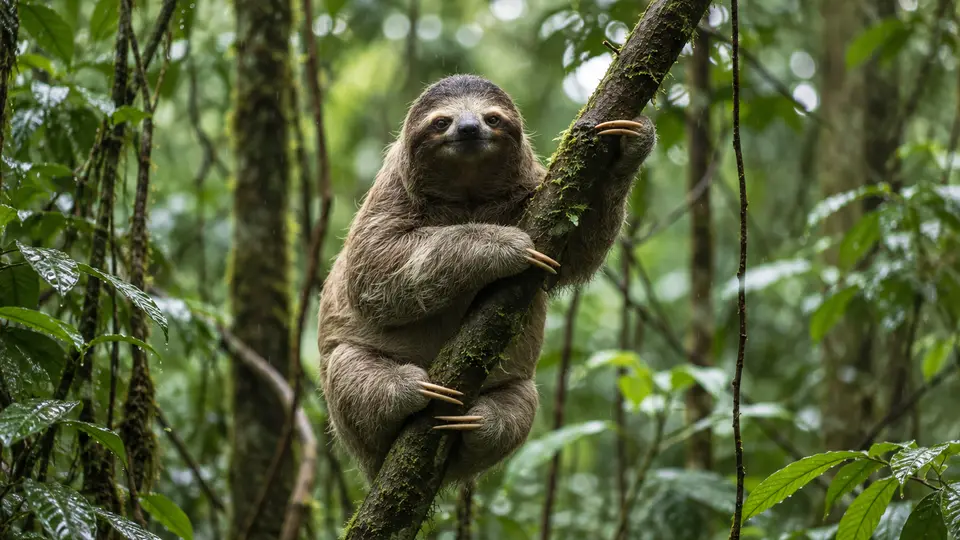
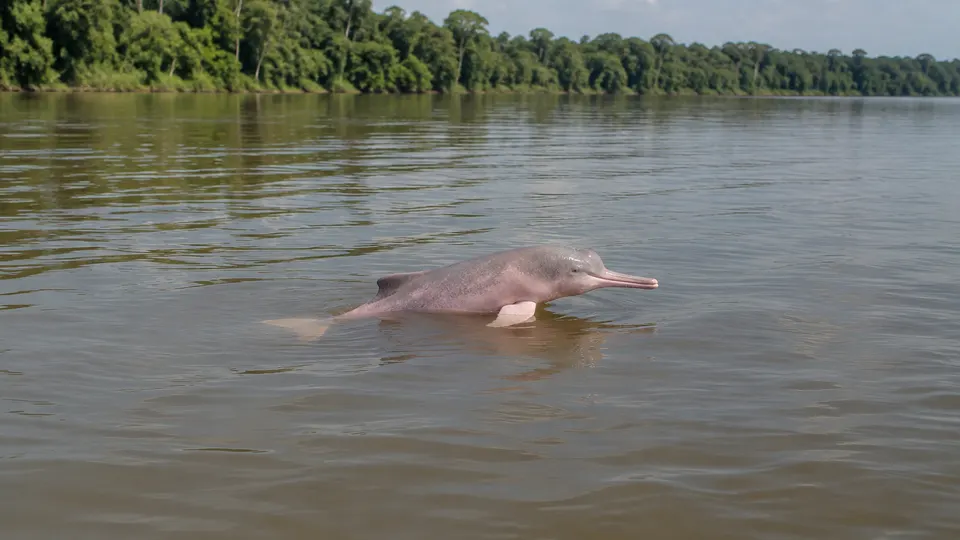
Proboscis bat in wetland habitat — Amazon, River Cruises wildlifeProboscis BatAmazon river dolphin in wetland habitat — Amazon, River Cruises wildlifeAmazon River DolphinBrown-throated sloth in wetland habitat — Amazon, River Cruises wildlifeBrown-throated Sloth
Animal groupMammalsAnimal groupMammalsAnimal groupMammals
DestinationsAmazonDestinationsAmazonDestinationsAmazon
Scientific name
Rhynchonycteris naso
Scientific name
Scientific name
Previous speciesPlumbeous KiteNext speciesPurple Heron
All river wildlife
On this page
  • 01About
  • 02Behaviour & reproduction
  • 03Top wildlife locations
  • 04Fun facts
  • 05Best season
  • 06Season matrix by destination
  • 07Habitat
  • 08Diet
  • 09Species at a glance
  • 10Questions & answers
  • 11Compare

Find your river cruise

Plan your trip

Find your next river journey

Compare destinations, shore programs and dates with the animals and habitats you would love to see.

  • Daily shore excursions
  • Responsible wildlife watching
  • Boutique river ships
Explore river cruises