Bluerides – Blue Rides - Book Liveaboards worldwideOCEAN ADVENTURES
River CruisesRiversNature & WildlifeOur Promise
River CruisesRiversNature & WildlifeOur PromiseSign In

River destinations

  • River destinations
  • Amazon
  • Danube
  • Rhine
  • Mekong
  • Nile

Ships & departures

  • River Cruise Search
  • Deals

Nature & Wildlife

  • Nature & Wildlife

Travel support

  • Our Promise
  • Contact

Contact

Get in Touch

Get in touch anytime, we're happy to help you find the right trip or sort out any question.

EmailWrite us, we usually reply within a few hours.
contact@bluerides.com
WhatsAppChat with us on WhatsApp, Mon–Fri 10:00–16:00 (CET).
Start WhatsApp Chat
PhoneCall us, we're happy to help.
Free call, Mon–Fri 10 AM – 8 PM (CET).
Europe+49 800 1144 990USA+1 888 557 7735UK+44 800 707 4152Australia+61 2 8599 6113Canada+1 888 557 7735
Which river journey is yours?Answer 8 quick questions and find the river cruise that fits you.
8 questions, 1 minute·Plus Gift
Secure Payment MethodsYour payments are fully secured with AES-256 encryption.
Powered byStripeWiseAMEXPayGoogle PaySEPABank
Imprint·Terms & Conditions·Privacy Policy·About·Contact·Liability Waiver·Affiliate Program·Cruise·
Visit us here

© 2026 Blue Rides. All rights reserved.·

Bluerides – Blue Rides - Book Liveaboards worldwideOCEAN ADVENTURES
River CruisesRiversNature & WildlifeOur Promise
River CruisesRiversNature & WildlifeOur PromiseSign In
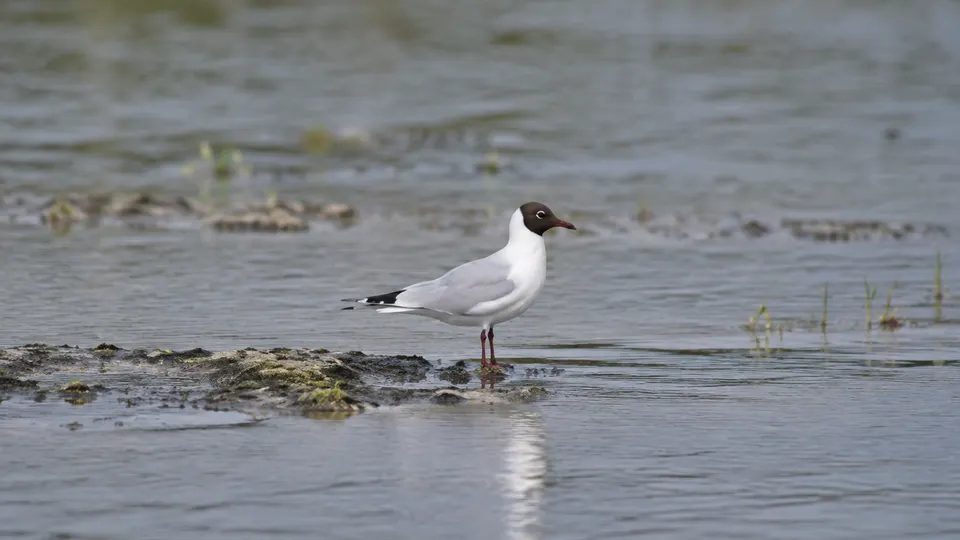
Mediterranean Gull in wetland habitat — Seine, River Cruises wildlife
Home›River Cruises›River Wildlife›Mediterranean Gull

Mediterranean GullIchthyaetus melanocephalusWhere and when to see them

Previous speciesMeadow PipitNext speciesMedium Egret

Mediterranean Gull at a glance

The Mediterranean Gull is an elegant, pale-winged gull whose name does not fully describe its breeding geography. BTO notes that its main breeding area is around the Black Sea and that it is comparatively scarce along much of the Mediterranean coast. Adults in breeding plumage combine a black hood, red bill and strikingly white wing tips. The registered Seine association is Grande Noë reserve at Val-de-Reuil, within the Léry-Poses loop between Les Andelys and Rouen. This is a floodplain gravel-pit lake visited on a shore excursion, not evidence of a colony beside the main navigation channel. BTO gives a reference weight of 328.4 grams and lists the global category as Least Concern. Identifying young birds requires more care than recognising a well-seen adult. Source: https://www.bto.org/learn/about-birds/birdfacts/mediterranean-gull

Behaviour & reproduction

Size
Body length not verified.
Weight
328.4 g (11.58 oz) reference value; BTO BirdFacts.
Lifespan
Species-specific lifespan not verified.
Status
Least Concern globally, as listed by BTO.

The local registry describes a spring and summer colony context at Grande Noë. Colony watching is best done as observation of a community from a fixed hide, not as a search for individual nests. Birds may be resting, calling, taking off or returning, and movement among other gulls can make a brief view misleading. BTO documents the species' expansion as a breeder in Britain and Ireland, but those historical dates do not establish the timing or size of the Normandy colony. A pale adult passing overhead may be easier to identify than a crowded bird on an island. Watch for repeated views of the wing tips and head rather than trying to make a single distant silhouette decisive. Remain behind public viewing screens and avoid causing colony-wide alarm.

Top wildlife locations

Seine river landscape — River Cruises wildlife habitat

Seine

Grande Noë reserve, Val-de-Reuil, inside Seine loop at Léry-Poses between Les Andelys and Rouen; shore excursion to floodplain gravel-pit lake, not main-channel deck evidence. Viewing context: Spring/summer colony; identification needs binoculars. Use public hides; sightings not guaranteed.
Explore river cruises

Destinations describe the species' habitat, not guaranteed cruise stops. Some animals require an optional inland excursion or are found in restricted reserves.

Fun facts about the Mediterranean Gull

  • Adult wing tips are white.
  • Breeding adults have a black hood.
  • The adult bill is bright red.
  • Young birds have more marked wings.
  • Its main breeding area is around the Black Sea.
  • BTO uses the genus Ichthyaetus.
  • Grande Noë is a floodplain lake, not the main Seine channel.

Best time to see the Mediterranean Gull

The registry identifies spring and summer as the colony-viewing context at Grande Noë. The retrieved reserve material includes dated observations and management reports, but no verified recurring numerical month range suitable for this species was extracted. The location therefore retains an empty months array. BTO's account of year-round occurrence in Britain is not a substitute for local Normandy evidence, and breeding dates elsewhere should not be imported. Ask the reserve manager which hides are open and whether the colony is currently active before arranging an excursion. A particular year's arrival or nesting count can be valuable news without defining a permanent viewing season. This profile preserves the qualitative colony association while avoiding a promise that birds will be present throughout any named sequence of months.

Mediterranean Gull: season matrix by destination

Highlighted months reflect the stated local evidence, not guaranteed encounters. Neutral months mean no verified monthly viewing window, not absence. Observation records and recommended viewing windows are distinct.

Seine

A recurring species-specific numerical month range for this exact reach was not verified. Months are left empty; occurrence, broad residency, breeding dates and single trips are not treated as a calendar.

JanFebMarAprMayJunJulAugSepOctNovDec
Explore river cruises

Where the Mediterranean Gull lives

Grande Noë is a lake reserve within a Seine floodplain loop, so the relevant habitat is not the main flowing river alone. Islands, open water and protected resting or nesting areas form the viewing context described in the registry. BTO's wider account includes coastal saltmarsh and beach use, demonstrating that the species is not restricted to inland lakes. Those general habitat examples should not be used to extend this location claim to every Seine port or to the tidal estuary. The reserve's public hides offer separation between visitors and birds. Current management, water levels and island vegetation can affect where birds gather, but no exact local habitat thresholds were verified. Follow the reserve manager's advice about which viewing structures are open rather than assuming older access information remains current.

What the Mediterranean Gull eats

A species-specific dietary inventory was not verified in the retrieved RSPB and BTO introductions. In particular, this profile does not assign a Grande Noë fish diet, local food percentages or a seasonal feeding range. A gull resting at a colony may have obtained food away from the lake, so proximity to water alone is not evidence of what it ate. Watching adults arrive or leave can be informative, but a distant carried item should remain unidentified unless it is genuinely visible. Do not use food to draw birds closer to a hide or to separate one gull from the group for photographs. Such intervention changes behaviour and can attract other species. The strongest verified material for this account concerns appearance, distribution and the site's shore-excursion context rather than a measured local feeding study.

Species at a glance

Common name
Mediterranean Gull
Scientific name
Ichthyaetus melanocephalus
Animal group
Birds
Size
Body length not verified.
Weight
328.4 g (11.58 oz) reference value; BTO BirdFacts.
Lifespan
Species-specific lifespan not verified.
Status
Least Concern globally, as listed by BTO.
Identification
In breeding plumage, adults have a genuinely black hood, rather than the dark brown hood of Black-headed Gull. The RSPB emphasises the adult's white wing tips and underwings and a substantial, bright red bill that can look slightly drooping. Mediterranean Gull is also somewhat larger than Black-headed Gull, although size alone is unreliable at a distance. Young birds have more extensive wing markings, so the clean white-winged adult pattern cannot be applied to every age. A nonbreeding adult loses the full dark hood, making structure and wing pattern important. Compare several views in good light and use a regional gull guide for immature plumages. The presence of a colony or a crowd of pale gulls does not by itself identify any one bird.

Mediterranean Gull: frequently asked questions

Where can I see the Mediterranean Gull?
Seine. Visit Grande Noë as a shore excursion near Val-de-Reuil and use the designated public hides. A telescope is particularly helpful when birds are mixed with other gulls on distant islands. Begin with adults whose wing tips and bill can be seen clearly, then examine younger birds only if the necessary detail is available. Do not approach nesting islands, launch a boat towards the colony or use sound to provoke movement. Check current access because reserve infrastructure can change; older reports may mention viewing structures that are no longer safe or open. A moving ship on the Seine does not provide an equivalent vantage over this lake. If a bird is hidden in a dense group, wait for it to move naturally instead of disturbing the group for a photograph.
When is the best time to see the Mediterranean Gull?
The registry identifies spring and summer as the colony-viewing context at Grande Noë. The retrieved reserve material includes dated observations and management reports, but no verified recurring numerical month range suitable for this species was extracted. The location therefore retains an empty months array. BTO's account of year-round occurrence in Britain is not a substitute for local Normandy evidence, and breeding dates elsewhere should not be imported. Ask the reserve manager which hides are open and whether the colony is currently active before arranging an excursion. A particular year's arrival or nesting count can be valuable news without defining a permanent viewing season. This profile preserves the qualitative colony association while avoiding a promise that birds will be present throughout any named sequence of months.
How big does the Mediterranean Gull get?
Body length not verified.. Adult weight: 328.4 g (11.58 oz) reference value; BTO BirdFacts.. Size varies with age, sex and population.
How should I behave around the Mediterranean Gull?
Visit Grande Noë as a shore excursion near Val-de-Reuil and use the designated public hides. A telescope is particularly helpful when birds are mixed with other gulls on distant islands. Begin with adults whose wing tips and bill can be seen clearly, then examine younger birds only if the necessary detail is available. Do not approach nesting islands, launch a boat towards the colony or use sound to provoke movement. Check current access because reserve infrastructure can change; older reports may mention viewing structures that are no longer safe or open. A moving ship on the Seine does not provide an equivalent vantage over this lake. If a bird is hidden in a dense group, wait for it to move naturally instead of disturbing the group for a photograph.
What does the Mediterranean Gull eat?
A species-specific dietary inventory was not verified in the retrieved RSPB and BTO introductions. In particular, this profile does not assign a Grande Noë fish diet, local food percentages or a seasonal feeding range. A gull resting at a colony may have obtained food away from the lake, so proximity to water alone is not evidence of what it ate. Watching adults arrive or leave can be informative, but a distant carried item should remain unidentified unless it is genuinely visible. Do not use food to draw birds closer to a hide or to separate one gull from the group for photographs. Such intervention changes behaviour and can attract other species. The strongest verified material for this account concerns appearance, distribution and the site's shore-excursion context rather than a measured local feeding study.
Are wildlife sightings guaranteed on a river cruise?
No. Animals move freely and routes, weather, access restrictions and local conditions influence every outing. Confirm the actual itinerary and shore program before booking.

Compare wildlife in the same destinations

Explore other birds recorded in these destinations. Similar surroundings do not mean the animals share the same habits or viewing season.

Species comparison by animal group and destination
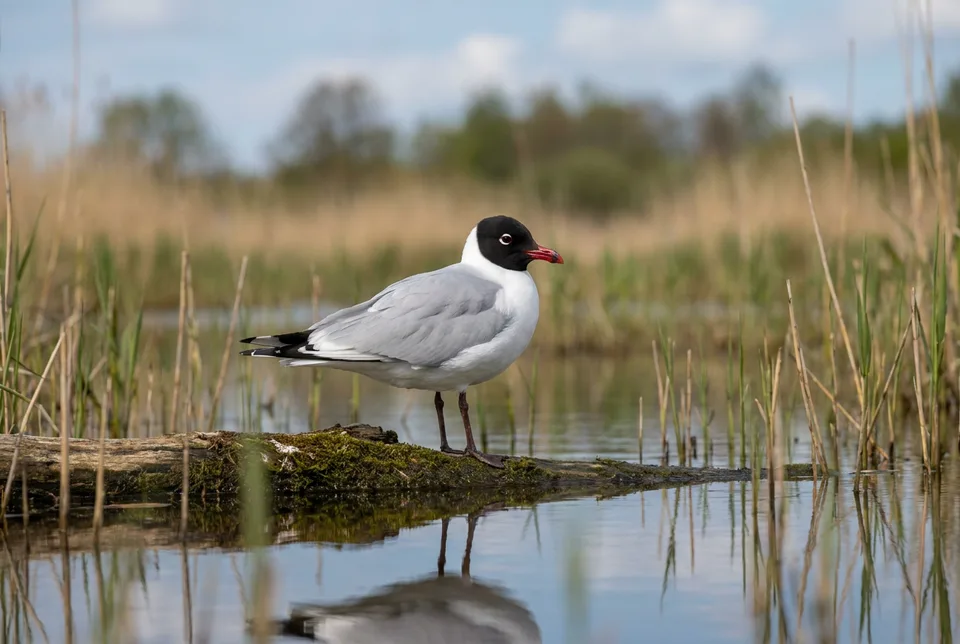
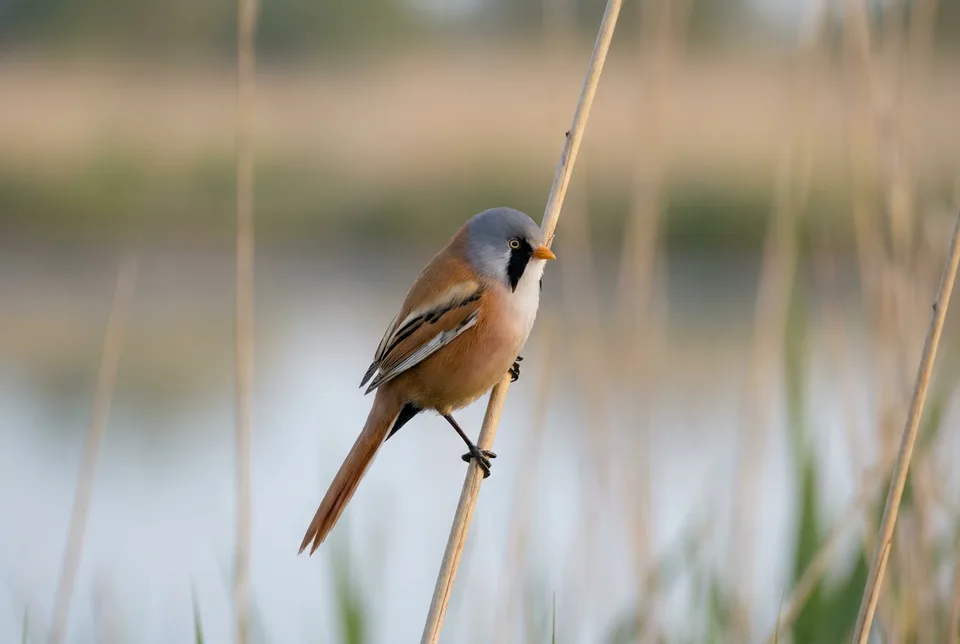
Mediterranean Gull in wetland habitat — Seine, River Cruises wildlifeMediterranean GullBearded Reedling in wetland habitat — Seine, River Cruises wildlifeBearded ReedlingBlack-headed gull in wetland habitat — Saone, Seine, Nile, Douro, River Cruises wildlifeBlack-Headed Gull
Animal groupBirdsAnimal groupBirdsAnimal groupBirds
DestinationsSeineDestinationsSeineDestinationsSaone, Seine, Nile, Douro
Scientific name
Ichthyaetus melanocephalus
Scientific name
Scientific name
Previous speciesMeadow PipitNext speciesMedium Egret
All river wildlife
On this page
  • 01About
  • 02Behaviour & reproduction
  • 03Top wildlife locations
  • 04Fun facts
  • 05Best season
  • 06Season matrix by destination
  • 07Habitat
  • 08Diet
  • 09Species at a glance
  • 10Questions & answers
  • 11Compare

Find your river cruise

Plan your trip

Find your next river journey

Compare destinations, shore programs and dates with the animals and habitats you would love to see.

  • Daily shore excursions
  • Responsible wildlife watching
  • Boutique river ships
Explore river cruises