Bluerides – Blue Rides - Book Liveaboards worldwideOCEAN ADVENTURES
River CruisesRiversNature & WildlifeOur Promise
River CruisesRiversNature & WildlifeOur PromiseSign In

River destinations

  • River destinations
  • Amazon
  • Danube
  • Rhine
  • Mekong
  • Nile

Ships & departures

  • River Cruise Search
  • Deals

Nature & Wildlife

  • Nature & Wildlife

Travel support

  • Our Promise
  • Contact

Contact

Get in Touch

Get in touch anytime, we're happy to help you find the right trip or sort out any question.

EmailWrite us, we usually reply within a few hours.
contact@bluerides.com
WhatsAppChat with us on WhatsApp, Mon–Fri 10:00–16:00 (CET).
Start WhatsApp Chat
PhoneCall us, we're happy to help.
Free call, Mon–Fri 10 AM – 8 PM (CET).
Europe+49 800 1144 990USA+1 888 557 7735UK+44 800 707 4152Australia+61 2 8599 6113Canada+1 888 557 7735
Which river journey is yours?Answer 8 quick questions and find the river cruise that fits you.
8 questions, 1 minute·Plus Gift
Secure Payment MethodsYour payments are fully secured with AES-256 encryption.
Powered byStripeWiseAMEXPayGoogle PaySEPABank
Imprint·Terms & Conditions·Privacy Policy·About·Contact·Liability Waiver·Affiliate Program·Cruise·
Visit us here

© 2026 Blue Rides. All rights reserved.·

Bluerides – Blue Rides - Book Liveaboards worldwideOCEAN ADVENTURES
River CruisesRiversNature & WildlifeOur Promise
River CruisesRiversNature & WildlifeOur PromiseSign In
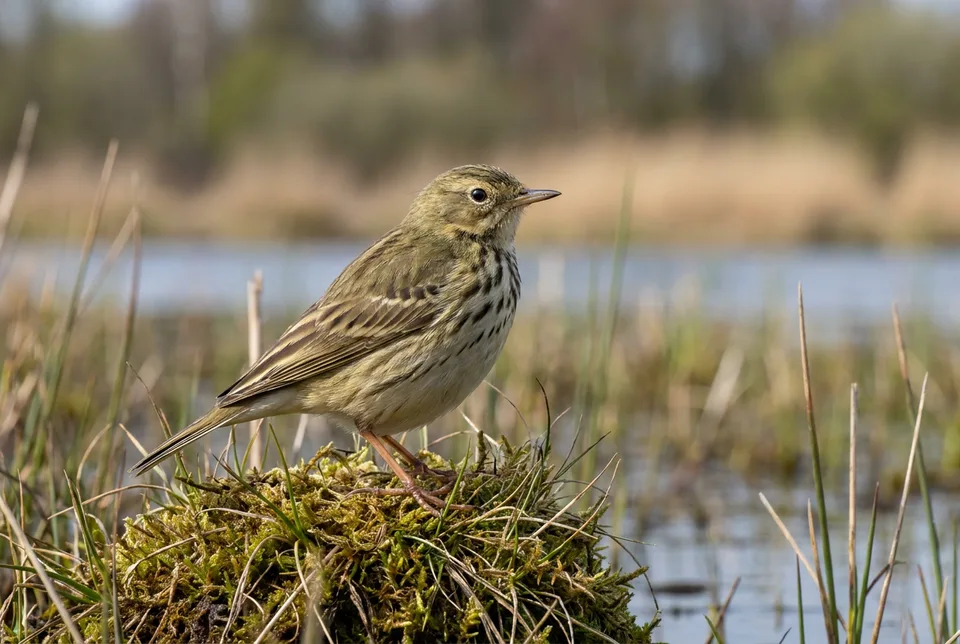
Meadow Pipit in wetland habitat — Douro, River Cruises wildlife
Home›River Cruises›River Wildlife›Meadow Pipit

Meadow PipitAnthus pratensisWhere and when to see them

Previous speciesMarsh TitNext speciesMediterranean Gull

Meadow Pipit at a glance

The Meadow Pipit is a small, streaked brown songbird that can be far less obvious than the waterbirds sharing an estuary. Its thin piping call and sudden rise from low plants may provide the first indication of its presence. BTO places it in grasslands, uplands and saltmarshes and gives a reference mass of 18.9 grams. The registered Douro association is the estuary reserve at Porto and Vila Nova de Gaia, including Afurada, Cabedelo and São Paio. It is not an assertion about inland cruise scenery around Régua or Pinhão. A visitor looking only at the open channel could miss the appropriate low-growing shore habitat entirely. British migration and breeding information provides background to the species, but cannot determine its monthly availability on this Portuguese estuary. Source: https://www.bto.org/learn/about-birds/birdfacts/meadow-pipit
Behaviour & reproduction

Size
Body length not verified.
Weight
18.9 g (0.67 oz) reference value; BTO BirdFacts.
Lifespan
Species-specific lifespan not verified.
Status
UK Amber-listed in the RSPB account; a current global assessment was not verified.

Outside the breeding period, the RSPB describes sociable small flocks that can remain hidden among plants before rising abruptly in a jerky flight. White outer tail feathers may flash as birds move away. BTO describes a parachuting song flight during breeding, but that behaviour should not be advertised as a regular Douro-estuary spectacle without local evidence. On a shore visit, watch for low movements between short vegetation patches and listen for the characteristic high call. Birds landing ahead may disappear immediately into cover, so choose a fixed viewpoint rather than repeatedly following them. A flock flushed by walkers is not a measure of normal feeding activity. Avoid deliberately walking through low plants to make pipits rise, especially where reserve access is restricted to paths and boardwalks.

Top wildlife locations

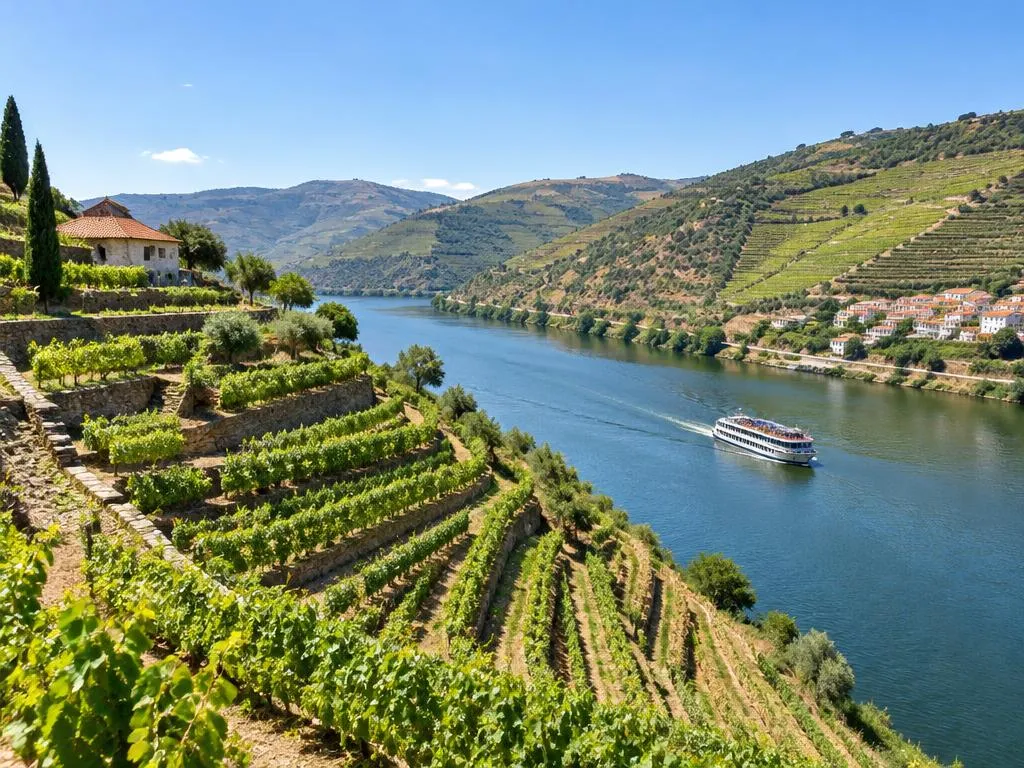
Douro river landscape — River Cruises wildlife habitat

Douro

Porto / Vila Nova de Gaia: Douro estuary reserve, Afurada–Cabedelo–São Paio; NOT a claim for inland Régua–Pinhão Viewing context: Accessible Porto shore visit with paths and hides; waders/gulls concentrated at low tide and migration/winter. Osprey and Short-eared Owl irregular/seasonal; no guaranteed sightings.
Explore river cruises

Destinations describe the species' habitat, not guaranteed cruise stops. Some animals require an optional inland excursion or are found in restricted reserves.

Fun facts about the Meadow Pipit

  • It belongs to the pipit family.
  • Its plumage is strongly streaked.
  • White outer tail feathers show in flight.
  • The call is high and piping.
  • Breeding birds can perform a parachuting display.
  • Nonbreeding birds can gather in small flocks.
  • The registered Douro location is the Porto estuary.

Best time to see the Meadow Pipit

BTO describes southward movement from Britain and northern Europe and the use of southern Europe during the nonbreeding period. That is broad migration context, not a recurring calendar for Porto's Douro reserve. The municipal site provides general seasonal advice for the reserve, but the retrieved passages do not explicitly give a Meadow Pipit month range. Neither source meets the requirement for numerical local months, so the location array is empty. Do not transfer winter dates from a British guide or assume that a Portuguese occurrence record establishes all-month presence. Ask the reserve about recent observations on accessible vegetated margins. Current reports can improve the practical prospects of a visit, while the published profile should continue to distinguish those reports from a verified recurring seasonal pattern.

Meadow Pipit: season matrix by destination

Highlighted months reflect the stated local evidence, not guaranteed encounters. Neutral months mean no verified monthly viewing window, not absence. Observation records and recommended viewing windows are distinct.

Douro

A recurring species-specific numerical month range for this exact reach was not verified. Months are left empty; occurrence, broad residency, breeding dates and single trips are not treated as a calendar.

JanFebMarAprMayJunJulAugSepOctNovDec
Explore river cruises

Where the Meadow Pipit lives

The useful habitat context is open ground with low vegetation, including saltmarsh and grassland as described by BTO. In the registered estuary landscape, that makes vegetated shore margins relevant alongside the mudflats and open water that attract more conspicuous birds. The municipal reserve information describes boardwalks and observatories overlooking marsh and sand areas, providing a way to view the habitat without entering it. No retrieved local source mapped Meadow Pipit territories or feeding patches, and the species' presence in the registry should not be upgraded to an abundance claim. A natural grassland edge and a heavily used beach are not equivalent simply because both lie near the river mouth. Keep observations within authorised visitor areas and retain the Porto-estuary scope.

What the Meadow Pipit eats

A detailed Meadow Pipit diet account was not verified in the retrieved BTO and RSPB material. No Douro-specific food study, named local prey or seasonal feeding proportions were available for this profile. It would be misleading to infer a precise menu from another pipit or from the bird's use of grassy ground. For visitors, watching ground-level searching and brief bill movements can still reveal how the bird uses its habitat without identifying the food. A bird dropping into marsh vegetation may be feeding, sheltering or merely moving between places; the action alone is not proof of diet. Avoid baiting or disturbing plants to expose tiny animals. The reserve's low vegetation is part of the wildlife habitat and should remain intact even when the bird itself is difficult to see.

Species at a glance

Common name
Meadow Pipit
Scientific name
Anthus pratensis
Animal group
Birds
Size
Body length not verified.
Weight
18.9 g (0.67 oz) reference value; BTO BirdFacts.
Lifespan
Species-specific lifespan not verified.
Status
UK Amber-listed in the RSPB account; a current global assessment was not verified.
Identification
Expect a small brown bird with conspicuous streaking and pinkish legs, as summarised by BTO. The RSPB highlights white outer tail feathers in flight and a characteristic high piping call. These features should be assessed together because other pipits can look similar, especially in poor light or when only the back is visible. Behaviour can assist: a small group moving through low vegetation fits the nonbreeding description, but it is not diagnostic by itself. The breeding parachute display is a useful natural-history feature, not a requirement for identifying a bird at the Douro estuary. Try to see the distribution of breast streaks, face pattern and overall proportions, then compare with an appropriate regional guide. Leave a sighting uncertain if the necessary details were not visible.

Meadow Pipit: frequently asked questions

Where can I see the Meadow Pipit?
Douro. At Afurada–Cabedelo–São Paio, divide attention between the estuary view and the low vegetation beside authorised routes. Listen for a high piping note, then scan ahead for a small bird standing or walking on the ground. A telescope can help once an individual settles, while binoculars are more practical for following a short flight. Watch where the bird lands without approaching to flush it again. Pipits can be difficult to separate, so obtain photographs showing the head, breast and legs when possible. Do not cross the marsh or sand habitat to shorten the distance. This is a Porto shore excursion, not a deck-viewing promise for the upstream Douro valley, and an unidentified small streaked bird should not be entered automatically as Meadow Pipit.
When is the best time to see the Meadow Pipit?
BTO describes southward movement from Britain and northern Europe and the use of southern Europe during the nonbreeding period. That is broad migration context, not a recurring calendar for Porto's Douro reserve. The municipal site provides general seasonal advice for the reserve, but the retrieved passages do not explicitly give a Meadow Pipit month range. Neither source meets the requirement for numerical local months, so the location array is empty. Do not transfer winter dates from a British guide or assume that a Portuguese occurrence record establishes all-month presence. Ask the reserve about recent observations on accessible vegetated margins. Current reports can improve the practical prospects of a visit, while the published profile should continue to distinguish those reports from a verified recurring seasonal pattern.
How big does the Meadow Pipit get?
Body length not verified.. Adult weight: 18.9 g (0.67 oz) reference value; BTO BirdFacts.. Size varies with age, sex and population.
How should I behave around the Meadow Pipit?
At Afurada–Cabedelo–São Paio, divide attention between the estuary view and the low vegetation beside authorised routes. Listen for a high piping note, then scan ahead for a small bird standing or walking on the ground. A telescope can help once an individual settles, while binoculars are more practical for following a short flight. Watch where the bird lands without approaching to flush it again. Pipits can be difficult to separate, so obtain photographs showing the head, breast and legs when possible. Do not cross the marsh or sand habitat to shorten the distance. This is a Porto shore excursion, not a deck-viewing promise for the upstream Douro valley, and an unidentified small streaked bird should not be entered automatically as Meadow Pipit.
What does the Meadow Pipit eat?
A detailed Meadow Pipit diet account was not verified in the retrieved BTO and RSPB material. No Douro-specific food study, named local prey or seasonal feeding proportions were available for this profile. It would be misleading to infer a precise menu from another pipit or from the bird's use of grassy ground. For visitors, watching ground-level searching and brief bill movements can still reveal how the bird uses its habitat without identifying the food. A bird dropping into marsh vegetation may be feeding, sheltering or merely moving between places; the action alone is not proof of diet. Avoid baiting or disturbing plants to expose tiny animals. The reserve's low vegetation is part of the wildlife habitat and should remain intact even when the bird itself is difficult to see.
Are wildlife sightings guaranteed on a river cruise?
No. Animals move freely and routes, weather, access restrictions and local conditions influence every outing. Confirm the actual itinerary and shore program before booking.

Compare wildlife in the same destinations

Explore other birds recorded in these destinations. Similar surroundings do not mean the animals share the same habits or viewing season.

Species comparison by animal group and destination
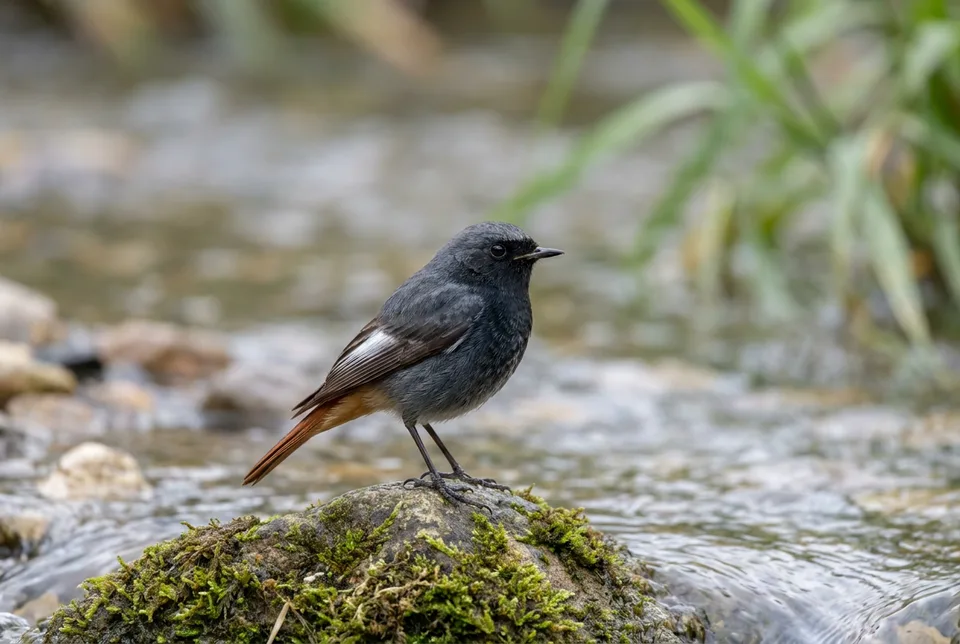
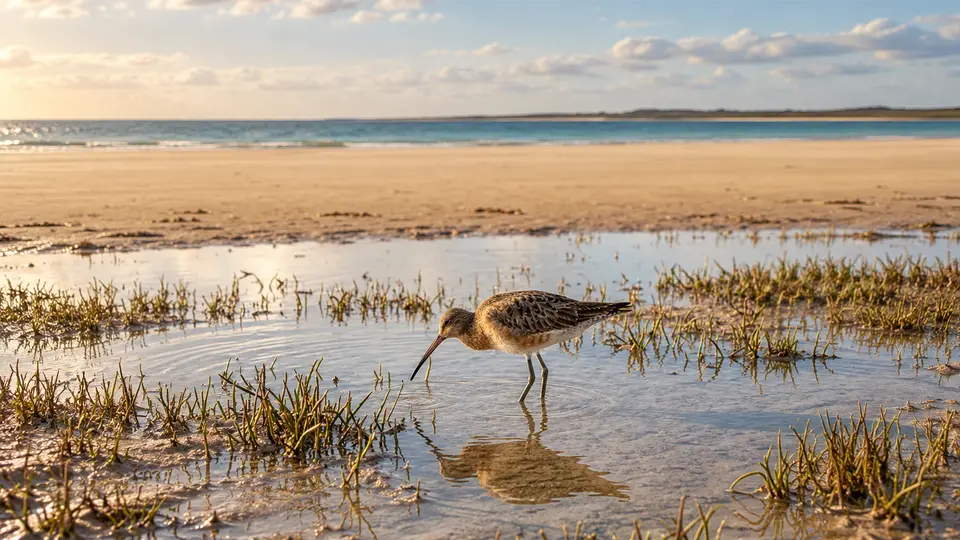
Meadow Pipit in wetland habitat — Douro, River Cruises wildlifeMeadow PipitBar-tailed godwit in wetland habitat — Douro, River Cruises wildlifeBar-tailed godwitBlack Redstart in wetland habitat — Saone, Douro, River Cruises wildlifeBlack Redstart
Animal groupBirdsAnimal groupBirdsAnimal groupBirds
DestinationsDouroDestinationsDouroDestinationsSaone, Douro
Scientific name
Anthus pratensis
Scientific name
Scientific name
Previous speciesMarsh TitNext speciesMediterranean Gull
All river wildlife
On this page
  • 01About
  • 02Behaviour & reproduction
  • 03Top wildlife locations
  • 04Fun facts
  • 05Best season
  • 06Season matrix by destination
  • 07Habitat
  • 08Diet
  • 09Species at a glance
  • 10Questions & answers
  • 11Compare

Find your river cruise

Plan your trip

Find your next river journey

Compare destinations, shore programs and dates with the animals and habitats you would love to see.

  • Daily shore excursions
  • Responsible wildlife watching
  • Boutique river ships
Explore river cruises