Bluerides – Blue Rides - Book Liveaboards worldwideOCEAN ADVENTURES
River CruisesRiversNature & WildlifeOur Promise
River CruisesRiversNature & WildlifeOur PromiseSign In

River destinations

  • River destinations
  • Amazon
  • Danube
  • Rhine
  • Mekong
  • Nile

Ships & departures

  • River Cruise Search
  • Deals

Nature & Wildlife

  • Nature & Wildlife

Travel support

  • Our Promise
  • Contact

Contact

Get in Touch

Get in touch anytime, we're happy to help you find the right trip or sort out any question.

EmailWrite us, we usually reply within a few hours.
contact@bluerides.com
WhatsAppChat with us on WhatsApp, Mon–Fri 10:00–16:00 (CET).
Start WhatsApp Chat
PhoneCall us, we're happy to help.
Free call, Mon–Fri 10 AM – 8 PM (CET).
Europe+49 800 1144 990USA+1 888 557 7735UK+44 800 707 4152Australia+61 2 8599 6113Canada+1 888 557 7735
Which river journey is yours?Answer 8 quick questions and find the river cruise that fits you.
8 questions, 1 minute·Plus Gift
Secure Payment MethodsYour payments are fully secured with AES-256 encryption.
Powered byStripeWiseAMEXPayGoogle PaySEPABank
Imprint·Terms & Conditions·Privacy Policy·About·Contact·Liability Waiver·Affiliate Program·Cruise·
Visit us here

© 2026 Blue Rides. All rights reserved.·

Bluerides – Blue Rides - Book Liveaboards worldwideOCEAN ADVENTURES
River CruisesRiversNature & WildlifeOur Promise
River CruisesRiversNature & WildlifeOur PromiseSign In
Eurasian spoonbill in wetland habitat — Danube, Rhine, Seine, Nile, River Cruises wildlife
Home›River Cruises›River Wildlife›Eurasian Spoonbill

Eurasian SpoonbillPlatalea leucorodiaWhere and when to see them

Previous speciesEurasian OystercatcherNext speciesEurasian Teal

Eurasian Spoonbill at a glance

The Eurasian spoonbill is a tactile shallow-water feeder, not a white heron with an unusually shaped beak. Its widened bill tip works through the water as the head sweeps from side to side, allowing prey to be detected without the precise visual strike typical of many herons. This feeding system ties it to water shallow enough for wading and to productive wetland edges. Breeding birds are colonial, sometimes sharing colonies with herons and cormorants, while feeding groups may travel away from the nesting site. The registry contains four distinct settings: the Romanian Danube Delta, Hardenhoek in the Dutch Rhine–Meuse delta, the optional lower Seine estuary and the historical Nile cruise context. These are separate evidence footprints. None establishes presence along every intervening river reach, and Dutch wetland records do not turn the Amsterdam–Rhine Canal into equivalent habitat.

Behaviour & reproduction

Size
Species-specific measurement not verified in retrieved sources
Weight
Species-specific weight not verified
Lifespan
Species-specific lifespan not verified
Status
See sourced assessment

A feeding spoonbill walks forward while swinging its partly submerged bill through a broad arc. Several birds may work the same shallows, producing a moving line of white bodies and sweeping heads. Resting birds can remain motionless with the bill hidden in their back feathers, making the defining feature temporarily invisible. Colonies may include other large waterbirds; BTO specifically notes associations with herons and inland-breeding cormorants. A typical clutch contains three or four eggs, incubated by both sexes for twenty-one to twenty-five days. The young hatch dependent and remain associated with the nest for a much longer developmental period than a ground-running plover chick; BTO gives about forty-five to fifty days to fledging. A flock feeding in a delta lake therefore does not by itself identify the colony location. Watch commuting flights rather than following adults into protected breeding habitat.

Top wildlife locations

Danube river landscape — River Cruises wildlife habitat

Danube

Romania: Danube Delta around Mahmudia and delta lakes/channels; separate lower-Danube/delta itinerary, NOT Passau–Vienna–Bratislava–Budapest.


Explore river cruises
Rhine river landscape — River Cruises wildlife habitat

Rhine

Dutch Rhine–Meuse delta: Hardenhoek, Biesbosch; optional wetland detour, NOT Amsterdam or Amsterdam–Rhine Canal.

Explore river cruises
Seine river landscape — River Cruises wildlife habitat

Seine

OPTIONAL ESTUARY: ZPS Estuaire et marais de la Basse-Seine, lower tidal Seine toward Honfleur/Le Havre; includes protected flats beyond port, not Paris freshwater reaches.

Explore river cruises
Nile river landscape — River Cruises wildlife habitat

Nile

Luxor–Esna–Edfu–Kom Ombo–Aswan; exact observation context in quote

Explore river cruises

Destinations describe the species' habitat, not guaranteed cruise stops. Some animals require an optional inland excursion or are found in restricted reserves.

Fun facts about the Eurasian Spoonbill

  • The broad bill tip detects prey during sideways sweeps.
  • Feeding requires wadeable water rather than deep channels.
  • Small fish and aquatic invertebrates are taken.
  • Colonies can include herons and cormorants.
  • Both parents incubate the eggs.
  • A typical clutch contains three or four eggs.
  • Incubation lasts about three to four weeks.
  • Breeding adults develop crest plumes and a yellowish breast patch.
  • Flight is with the neck extended, unlike most herons.

Best time to see the Eurasian Spoonbill

Seasonality must be kept separate for the four registered settings. Migration and postbreeding dispersal influence European spoonbill numbers, but a Dutch feeding flock does not establish the timetable of the Romanian delta or the lower Seine. The Nile evidence is a historical itinerary observation, not a current seasonal survey. BTO documents northward breeding expansion in Europe and some winter presence in Britain, yet neither provides a local monthly calendar for these entries. All existing numerical month lists therefore remain empty. A useful planning question is whether the intended wetland currently holds shallow feeding water, whether birds are using a colony nearby and whether public viewpoints reach the relevant pools. Those conditions can change within a season as water levels shift. Local counts could justify more precise advice later; the present sources support a qualitative wetland search, not a uniform four-river best-month recommendation.

Eurasian Spoonbill: season matrix by destination

Highlighted months reflect the stated local evidence, not guaranteed encounters. Neutral months mean no verified monthly viewing window, not absence. Observation records and recommended viewing windows are distinct.

Danube

Exact local species-specific monthly viewing evidence has not been verified; no monthly calendar is inferred.

JanFebMarAprMayJunJulAugSepOctNovDec
Explore river cruises

Rhine

Exact local species-specific monthly viewing evidence has not been verified; no monthly calendar is inferred.

JanFebMarAprMayJunJulAugSepOctNovDec
Explore river cruises

Seine

The Seine estuary reserve reported its strongest spoonbill passages from mid-February to early April and mid-July to mid-October in 2024; this is local monitoring, not guaranteed viewing.

JanFebMarAprMayJunJulAugSepOctNovDec
Explore river cruises

Nile

Exact local species-specific monthly viewing evidence has not been verified; no monthly calendar is inferred.

JanFebMarAprMayJunJulAugSepOctNovDec
Explore river cruises

Where the Eurasian Spoonbill lives

The useful microhabitat is shallow water over an accessible bottom, with enough room for the bill to sweep. Lagoon margins, flooded grassland, marsh pools, delta lakes and sheltered estuarine shallows can all supply it. Deep navigation channels cannot be worked in the same way, even when they lie close to an occupied wetland. Breeding colonies require secure nesting habitat as well as nearby feeding resources; a feeding group need not nest at the pool being watched. In Romania, the registry points to lakes and channels around Mahmudia in the Danube Delta, not the upper-Danube cities. In the Netherlands, Hardenhoek in the Biesbosch is an optional wetland detour. The Seine record concerns the lower tidal estuary, while the Nile record retains its historical excursion context. Water depth and local access should therefore guide the search differently at each site rather than being replaced by a generic riverbank recommendation.

What the Eurasian Spoonbill eats

Small aquatic animals are captured by sweeping the bill through shallow water. Fish, crustaceans, aquatic insects and other invertebrates form the relevant prey spectrum; the exact balance varies with the wetland. The expanded bill tip is a sensory feeding surface, so a spoonbill can exploit prey in water where visibility is poor. When contact is made, the bill closes and the head may lift for swallowing. This differs from the stationary watching and rapid spear-like strike of an egret. A good observation compares the speed of sweeping, the depth of immersion and the frequency of successful captures. Water deep enough to submerge the bird's feeding apparatus beyond comfortable reach is unsuitable even if prey are present. No retrieved source supplies a separate prey census for each registered river location, so the account should not assign particular fish species or food percentages to the Dutch, Romanian, French or Egyptian sites.

Species at a glance

Common name
Eurasian Spoonbill
Scientific name
Platalea leucorodia
Animal group
Birds
Size
Species-specific measurement not verified in retrieved sources
Weight
Species-specific weight not verified
Lifespan
Species-specific lifespan not verified
Status
Current global category not independently verified; regional conservation statements must not be presented as a global assessment.
Identification
The broad flattened tip of the long bill is decisive when visible. Adults are predominantly white with dark legs and a dark bill that can show a yellow tip. Breeding adults develop crest plumes and a yellowish breast patch, so a completely plain white appearance is not required in every season. Young birds can show darker tips to the flight feathers and a paler bill than mature adults. Sexes are similar enough that ordinary distant views should not be labelled male or female. In flight, the extended neck separates spoonbill from an egret or heron, which usually flies with the neck folded. At rest, a spoonbill with its head tucked away may resemble another large white waterbird; wait for movement rather than guessing from colour. A view from the front can hide the bill's width, so a turn of the head is often the most useful diagnostic moment.

Eurasian Spoonbill: frequently asked questions

Where can I see the Eurasian Spoonbill?
Danube, Rhine, Seine, Nile. Begin with the shallowest visible margins rather than the centre of a lake or channel. Scan white birds carefully, because resting spoonbills often conceal their bills and may be dismissed as egrets. Wait for a head to emerge or for a bird to begin sweeping; then compare its action with nearby herons. In the Biesbosch, keep the search attached to Hardenhoek rather than canal transit. In the Romanian delta, a guided excursion around the registered lakes and channels is more relevant than an upper-Danube deck watch. For the Seine, use the optional estuary visit and tide-appropriate viewpoints. On the Nile, record the actual shore or wetland context rather than implying that a historical report predicts every sailing. If a bird is colour-ringed, note the sequence only when it can be read without approaching the flock, and preserve uncertainty where colours or codes are unclear.
When is the best time to see the Eurasian Spoonbill?
Seasonality must be kept separate for the four registered settings. Migration and postbreeding dispersal influence European spoonbill numbers, but a Dutch feeding flock does not establish the timetable of the Romanian delta or the lower Seine. The Nile evidence is a historical itinerary observation, not a current seasonal survey. BTO documents northward breeding expansion in Europe and some winter presence in Britain, yet neither provides a local monthly calendar for these entries. All existing numerical month lists therefore remain empty. A useful planning question is whether the intended wetland currently holds shallow feeding water, whether birds are using a colony nearby and whether public viewpoints reach the relevant pools. Those conditions can change within a season as water levels shift. Local counts could justify more precise advice later; the present sources support a qualitative wetland search, not a uniform four-river best-month recommendation.
How big does the Eurasian Spoonbill get?
Species-specific measurement not verified in retrieved sources. Adult weight: Species-specific weight not verified. Size varies with age, sex and population.
How should I behave around the Eurasian Spoonbill?
Begin with the shallowest visible margins rather than the centre of a lake or channel. Scan white birds carefully, because resting spoonbills often conceal their bills and may be dismissed as egrets. Wait for a head to emerge or for a bird to begin sweeping; then compare its action with nearby herons. In the Biesbosch, keep the search attached to Hardenhoek rather than canal transit. In the Romanian delta, a guided excursion around the registered lakes and channels is more relevant than an upper-Danube deck watch. For the Seine, use the optional estuary visit and tide-appropriate viewpoints. On the Nile, record the actual shore or wetland context rather than implying that a historical report predicts every sailing. If a bird is colour-ringed, note the sequence only when it can be read without approaching the flock, and preserve uncertainty where colours or codes are unclear.
What does the Eurasian Spoonbill eat?
Small aquatic animals are captured by sweeping the bill through shallow water. Fish, crustaceans, aquatic insects and other invertebrates form the relevant prey spectrum; the exact balance varies with the wetland. The expanded bill tip is a sensory feeding surface, so a spoonbill can exploit prey in water where visibility is poor. When contact is made, the bill closes and the head may lift for swallowing. This differs from the stationary watching and rapid spear-like strike of an egret. A good observation compares the speed of sweeping, the depth of immersion and the frequency of successful captures. Water deep enough to submerge the bird's feeding apparatus beyond comfortable reach is unsuitable even if prey are present. No retrieved source supplies a separate prey census for each registered river location, so the account should not assign particular fish species or food percentages to the Dutch, Romanian, French or Egyptian sites.
Are wildlife sightings guaranteed on a river cruise?
No. Animals move freely and routes, weather, access restrictions and local conditions influence every outing. Confirm the actual itinerary and shore program before booking.

Compare wildlife in the same destinations

Explore other birds recorded in these destinations. Similar surroundings do not mean the animals share the same habits or viewing season.

Species comparison by animal group and destination
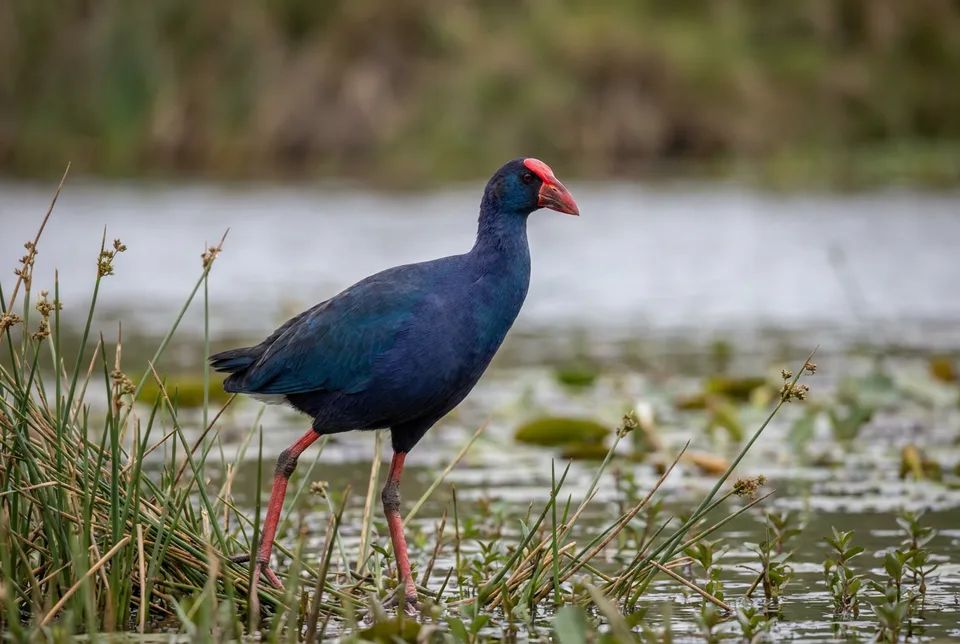
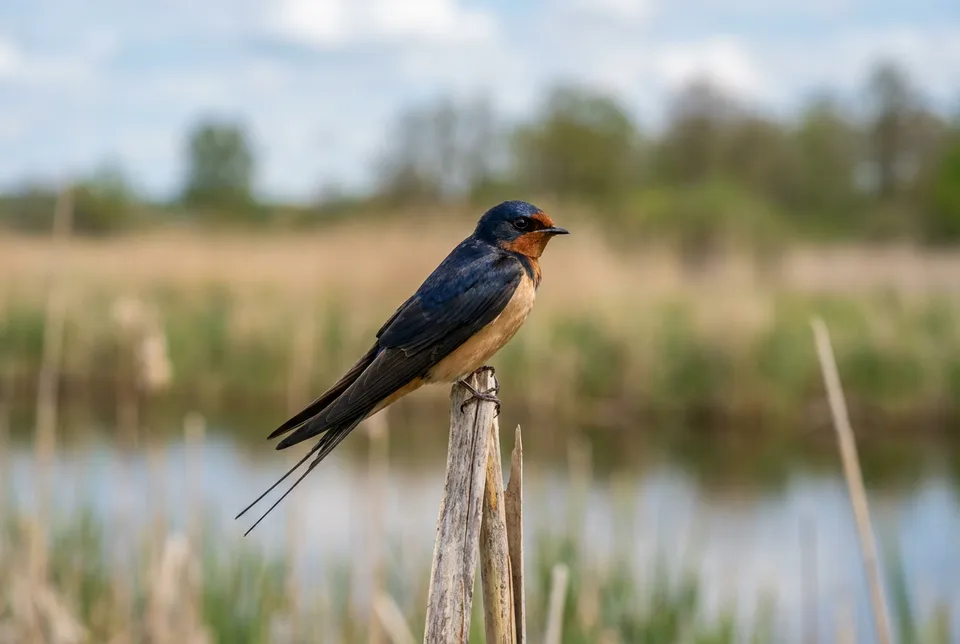
Eurasian spoonbill in wetland habitat — Danube, Rhine, Seine, Nile, River Cruises wildlifeEurasian SpoonbillAfrican Swamphen in wetland habitat — Nile, Egypt, River Cruises wildlifeAfrican SwamphenBarn Swallow in wetland habitat — Mississippi, Nile, River Cruises wildlifeBarn Swallow
Animal groupBirdsAnimal groupBirdsAnimal groupBirds
DestinationsDanube, Rhine, Seine, NileDestinationsNileDestinationsMississippi, Nile
Scientific name
Platalea leucorodia
Scientific name
Scientific name
Previous speciesEurasian OystercatcherNext speciesEurasian Teal
All river wildlife
On this page
  • 01About
  • 02Behaviour & reproduction
  • 03Top wildlife locations
  • 04Fun facts
  • 05Best season
  • 06Season matrix by destination
  • 07Habitat
  • 08Diet
  • 09Species at a glance
  • 10Questions & answers
  • 11Compare

Find your river cruise

Plan your trip

Find your next river journey

Compare destinations, shore programs and dates with the animals and habitats you would love to see.

  • Daily shore excursions
  • Responsible wildlife watching
  • Boutique river ships
Explore river cruises