Bluerides – Blue Rides - Book Liveaboards worldwideOCEAN ADVENTURES
River CruisesRiversNature & WildlifeOur Promise
River CruisesRiversNature & WildlifeOur PromiseSign In

River destinations

  • River destinations
  • Amazon
  • Danube
  • Rhine
  • Mekong
  • Nile

Ships & departures

  • River Cruise Search
  • Deals

Nature & Wildlife

  • Nature & Wildlife

Travel support

  • Our Promise
  • Contact

Contact

Get in Touch

Get in touch anytime, we're happy to help you find the right trip or sort out any question.

EmailWrite us, we usually reply within a few hours.
contact@bluerides.com
WhatsAppChat with us on WhatsApp, Mon–Fri 10:00–16:00 (CET).
Start WhatsApp Chat
PhoneCall us, we're happy to help.
Free call, Mon–Fri 10 AM – 8 PM (CET).
Europe+49 800 1144 990USA+1 888 557 7735UK+44 800 707 4152Australia+61 2 8599 6113Canada+1 888 557 7735
Which river journey is yours?Answer 8 quick questions and find the river cruise that fits you.
8 questions, 1 minute·Plus Gift
Secure Payment MethodsYour payments are fully secured with AES-256 encryption.
Powered byStripeWiseAMEXPayGoogle PaySEPABank
Imprint·Terms & Conditions·Privacy Policy·About·Contact·Liability Waiver·Affiliate Program·Cruise·
Visit us here

© 2026 Blue Rides. All rights reserved.·

Bluerides – Blue Rides - Book Liveaboards worldwideOCEAN ADVENTURES
River CruisesRiversNature & WildlifeOur Promise
River CruisesRiversNature & WildlifeOur PromiseSign In
Eurasian beaver in wetland habitat — Danube, Rhine, Saone, River Cruises wildlife
Home›River Cruises›River Wildlife›Eurasian Beaver

Eurasian BeaverCastor fiberWhere and when to see them

Previous speciesEmperor DragonflyNext speciesEurasian Bittern

Eurasian Beaver at a glance

The Eurasian Beaver is a large, plant-eating rodent whose tree felling and burrowing can reshape river margins. Donau-Auen National Park calls it a master builder because its activities create structures used by other animals. Its presence along a river does not imply that visitors will find a conspicuous dam or a classic lodge. The park explains that local beavers usually excavate bank burrows and generally do not dam the main current of the Danube. The registry includes three distinct river contexts: Donau-Auen east of Vienna, Bislicher Insel on the Lower Rhine, and the lower Saône promenade north of Lyon. These are separate local excursion settings, not evidence for every cruise stop between them. For travellers, gnawed timber may be more realistic evidence of beaver activity than a clear view of the animal. An occupied riverbank should always be observed without entering burrows or disturbing cover.

Behaviour & reproduction

Size
75–100 cm (29.5–39.4 in) body length
Weight
13–35 kg (28.7–77.2 lb), according to Donau-Auen National Park
Lifespan
Not verified
Status
See sourced assessment

Donau-Auen describes beavers as primarily nocturnal, most active at dusk and during the night. They remain active in winter, including beneath ice, rather than entering a seasonal hibernation. Family groups consist of the parents and offspring from the current and previous years. The park reports lifelong pairing, mating in January and February, and births roughly three months later, usually involving one to four young. Those are local reproductive details, not recommended months for approaching family shelters. Older offspring may leave or be driven from the territory, contributing to dispersal. When disturbed in water, a beaver can slap its broad tail against the surface before diving. That alarm response is a reason to give the animal space, not a performance to provoke. Quiet observation should allow normal swimming and feeding to continue without blocking access to the bank or underwater entrances.

Top wildlife locations

Danube river landscape — River Cruises wildlife habitat

Danube

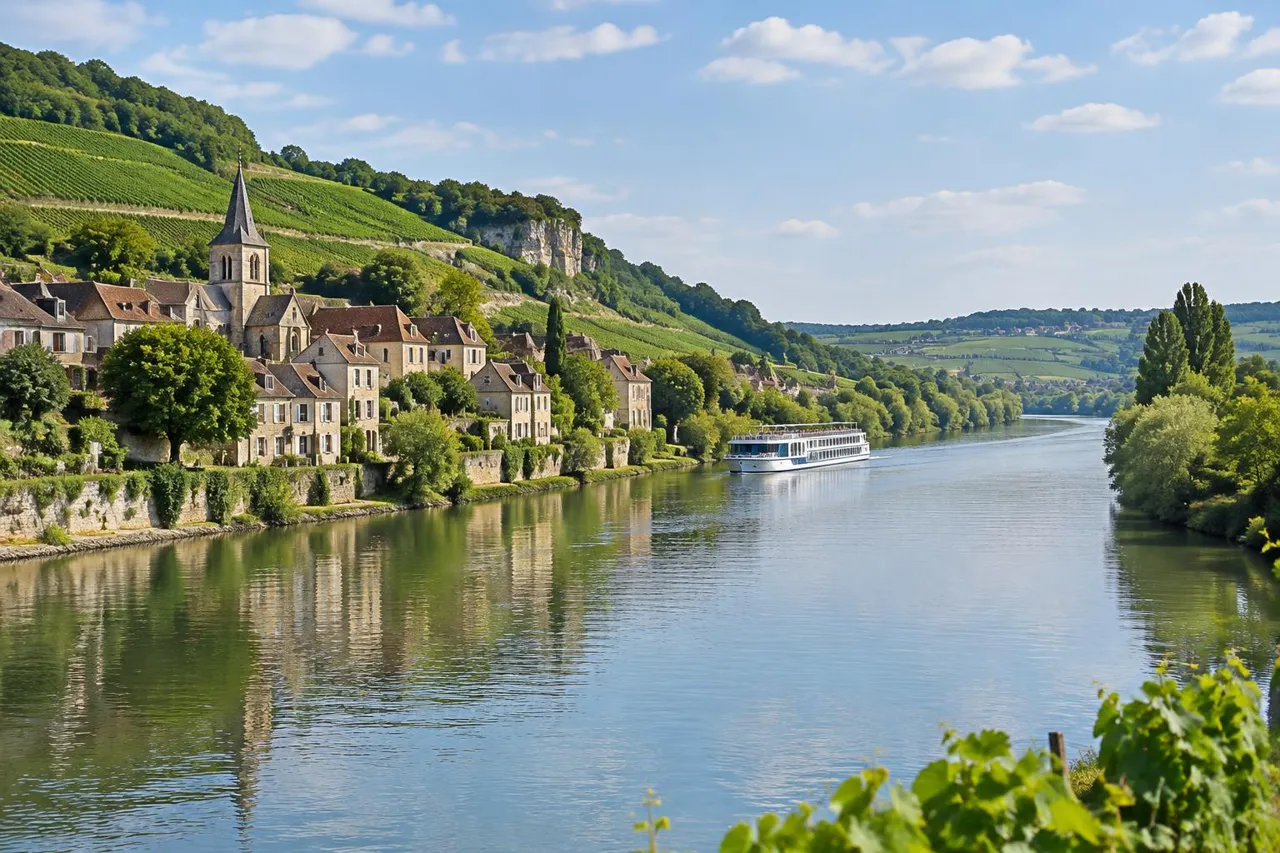
Austria: Donau-Auen floodplains east of Vienna towards Hainburg, on the Vienna–Bratislava reach. This is an optional shore or backwater excursion, not a Passau or Budapest claim. The national park confirms local beavers, bank burrows, winter activity and predominantly dusk/night activity. Feeding traces may be easier to find than animals.
Explore river cruises
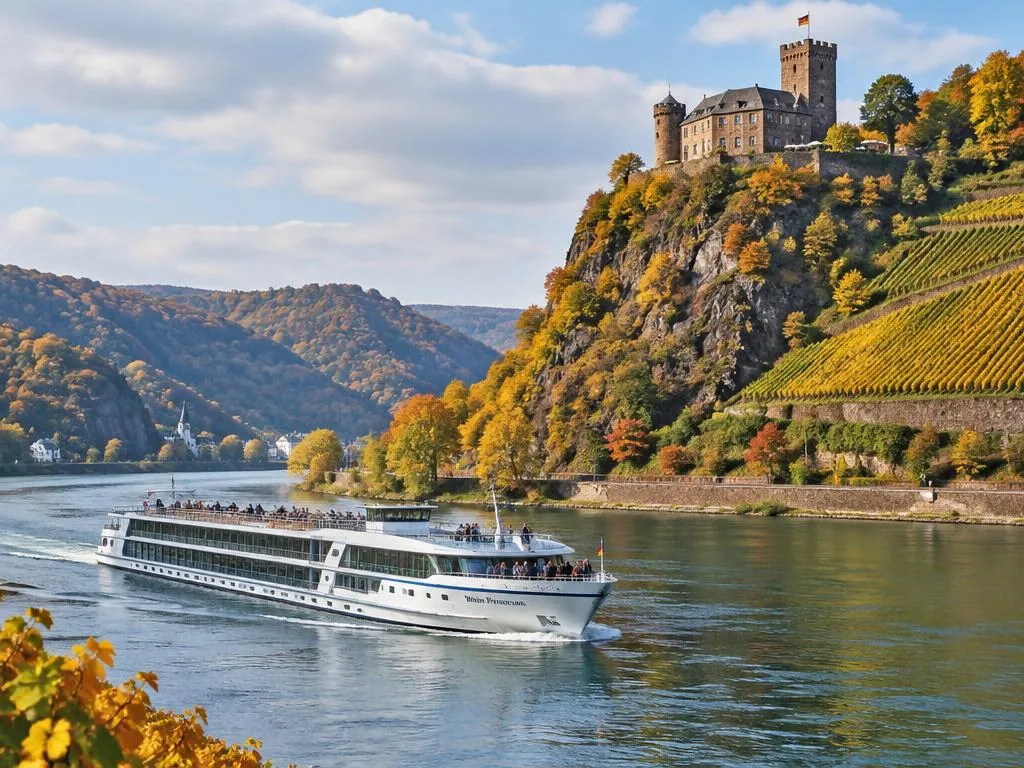
Rhine river landscape — River Cruises wildlife habitat

Rhine

Lower Rhine: Bislicher Insel at Xanten/Wesel, downstream of Cologne; an optional oxbow-wetland excursion. The managing authority confirms beavers and explicitly describes them as nocturnal and visible only with considerable luck. This local record does not establish sightings along the whole Rhine itinerary.

Explore river cruises
Saone river landscape — River Cruises wildlife habitat

Saone

Lower Saône: Grand Lyon Rives de Saône promenade, Rochetaillée-sur-Saône–Fontaines-sur-Saône–Lyon, upstream of the Rhône confluence. The metropolitan biodiversity guide lists European Beaver and discusses beaver-related management at these riverbank sites. This is not a record for every Saône reach or a promise of daytime sightings.

Explore river cruises

Destinations describe the species' habitat, not guaranteed cruise stops. Some animals require an optional inland excursion or are found in restricted reserves.

Fun facts about the Eurasian Beaver

  • It is strictly herbivorous; it does not eat fish.
  • Its hind feet are webbed, while its forefeet can grasp objects.
  • A disturbed swimmer may slap its broad tail on the water.
  • Donau-Auen beavers usually use bank burrows rather than classic lodges.
  • The main Danube current is generally not dammed by local beavers.
  • Rare dams can occur in backwaters farther from the main river.
  • Beavers remain active in winter, including beneath ice.
  • Family groups can include young from both the current and previous years.
  • Felled trees provide structures and hiding places for other wildlife.

Best time to see the Eurasian Beaver

No exact recurring viewing-month window was established for any of the three registered river locations. Donau-Auen confirms that beavers remain active in winter and are mainly active at dusk or night; this supports year-round activity, not equal year-round visibility. Its January–February mating season and subsequent births must remain separate from sightseeing advice. Bislicher Insel’s managing authority likewise stresses nocturnal behaviour and says seeing the animal requires considerable luck. Winter feeding traces in the registry are evidence-search context, not a guaranteed winter animal-viewing season. The Saône biodiversity guide establishes occurrence but does not provide a monthly encounter calendar. Ask a local guide about recent activity and legal access during the actual excursion hours. A normal daytime cruise or promenade walk may reveal signs without revealing a beaver. No seasonal arrival claim is needed for these records, and none is assigned.

Eurasian Beaver: season matrix by destination

Highlighted months reflect the stated local evidence, not guaranteed encounters. Neutral months mean no verified monthly viewing window, not absence. Observation records and recommended viewing windows are distinct.

Danube

Year-round biological activity is supported, but a recurring monthly viewing window is not. January–February mating and births about three months later are reproductive information, not highlighted viewing months.

JanFebMarAprMayJunJulAugSepOctNovDec
Explore river cruises

Rhine

No exact local viewing-month window confirmed. The registry mentions winter feeding traces, but traces and live encounters must be distinguished. No monthly highlights are assigned.

JanFebMarAprMayJunJulAugSepOctNovDec
Explore river cruises

Saone

The local guide establishes occurrence but no exact viewing months. General dusk/night behaviour is species context, not a locally measured encounter calendar.

JanFebMarAprMayJunJulAugSepOctNovDec
Explore river cruises

Where the Eurasian Beaver lives

The relevant habitat is the meeting of water, vegetated banks and accessible plant food. In Donau-Auen, loamy riverbanks can hold burrows with underwater entrances, while backwaters provide a different setting from the strong, fluctuating main Danube current. The park states that dams are uncommon near that main current but can occur in more distant backwaters. A visitor should therefore not use the absence of a dam to rule out beavers. Along the Lower Rhine, the registered setting is the Bislicher Insel oxbow wetland near Xanten and Wesel. Along the Saône, the registry points to the riverbank promenade through Rochetaillée-sur-Saône and Fontaines-sur-Saône towards Lyon. These geographically bounded records support local habitat searches, not a continuous distribution map for cruise passengers. Protecting riparian woodland, bank cover and undisturbed shelter matters more than finding a photogenic structure.

What the Eurasian Beaver eats

Beavers do not eat fish. Donau-Auen’s account explicitly describes a strictly herbivorous diet involving a wide variety of vegetation. Aquatic plants and other riverside plants are important in summer; in autumn and winter, beavers fell trees to obtain tender shoots and thin bark, with willows and poplars preferred in the park account. Tree cutting is therefore part of feeding ecology as well as habitat modification. Fallen wood can create hiding places and raised structures used by fish, turtles and birds, but those ecological effects do not turn the beaver into a predator of these animals. The exact plants being used on a particular bank depend on local availability. Do not place branches, vegetables or other food beside a suspected burrow. Naturally cut stems and feeding traces can be examined from permitted paths without altering the site or attracting animals towards people.

Species at a glance

Common name
Eurasian Beaver
Scientific name
Castor fiber
Animal group
Mammals
Size
75–100 cm (29.5–39.4 in) body length
Weight
13–35 kg (28.7–77.2 lb), according to Donau-Auen National Park
Lifespan
Up to 20 years, according to Donau-Auen National Park; not a typical lifespan estimate
Status
A current formal global category was not independently verified. Donau-Auen National Park documents extinction in Austria by the mid-19th century and restoration beginning in the 1970s, including the Danube wetlands east of Vienna. It identifies protection of riparian forests as essential.
Identification
Donau-Auen describes a heavily built animal with fur ranging from light brown to black, large webbed hind feet and forefeet capable of grasping objects. Its broad, hairless tail is the most useful distinctive feature when actually visible. The park gives body length as 75–100 centimetres and tail length as 30–40 centimetres; those are separate measurements and should not be confused. A swimming animal may expose only the head and part of its back, so an indistinct silhouette should remain an uncertain identification. Gnawed wood supports a search for beavers but cannot substitute for observing diagnostic features of the animal itself. Do not chase a swimmer to obtain a tail photograph. If the animal dives after a loud tail slap, treat that as an alarm response and reduce disturbance. Photographs taken from a stationary, permitted viewpoint can be checked afterwards.

Eurasian Beaver: frequently asked questions

Where can I see the Eurasian Beaver?
Danube, Rhine, Saone. Look first for evidence that can be viewed without approaching shelter: cut stems, gnawed trunks and feeding remains beside accessible banks. Such signs can indicate beaver activity but are not themselves a live sighting or proof that an animal will emerge during the visit. Where permitted opening times allow, a quiet evening viewpoint may fit the species’ activity better than a busy daytime walk. Do not enter closed areas or stay after authorised hours in pursuit of a dusk encounter. Use binoculars to examine a swimming animal and leave its route to the bank open. Avoid lights, playback, bait and attempts to provoke a tail slap. The Lower Rhine authority’s warning about elusive nocturnal animals is particularly important for expectation setting. On the Saône, use the public promenade appropriately; the biodiversity guide’s habitat-management measures are not permission for visitors to feed wildlife.
When is the best time to see the Eurasian Beaver?
No exact recurring viewing-month window was established for any of the three registered river locations. Donau-Auen confirms that beavers remain active in winter and are mainly active at dusk or night; this supports year-round activity, not equal year-round visibility. Its January–February mating season and subsequent births must remain separate from sightseeing advice. Bislicher Insel’s managing authority likewise stresses nocturnal behaviour and says seeing the animal requires considerable luck. Winter feeding traces in the registry are evidence-search context, not a guaranteed winter animal-viewing season. The Saône biodiversity guide establishes occurrence but does not provide a monthly encounter calendar. Ask a local guide about recent activity and legal access during the actual excursion hours. A normal daytime cruise or promenade walk may reveal signs without revealing a beaver. No seasonal arrival claim is needed for these records, and none is assigned.
How big does the Eurasian Beaver get?
75–100 cm (29.5–39.4 in) body length. Adult weight: 13–35 kg (28.7–77.2 lb), according to Donau-Auen National Park. Size varies with age, sex and population.
How should I behave around the Eurasian Beaver?
Look first for evidence that can be viewed without approaching shelter: cut stems, gnawed trunks and feeding remains beside accessible banks. Such signs can indicate beaver activity but are not themselves a live sighting or proof that an animal will emerge during the visit. Where permitted opening times allow, a quiet evening viewpoint may fit the species’ activity better than a busy daytime walk. Do not enter closed areas or stay after authorised hours in pursuit of a dusk encounter. Use binoculars to examine a swimming animal and leave its route to the bank open. Avoid lights, playback, bait and attempts to provoke a tail slap. The Lower Rhine authority’s warning about elusive nocturnal animals is particularly important for expectation setting. On the Saône, use the public promenade appropriately; the biodiversity guide’s habitat-management measures are not permission for visitors to feed wildlife.
What does the Eurasian Beaver eat?
Beavers do not eat fish. Donau-Auen’s account explicitly describes a strictly herbivorous diet involving a wide variety of vegetation. Aquatic plants and other riverside plants are important in summer; in autumn and winter, beavers fell trees to obtain tender shoots and thin bark, with willows and poplars preferred in the park account. Tree cutting is therefore part of feeding ecology as well as habitat modification. Fallen wood can create hiding places and raised structures used by fish, turtles and birds, but those ecological effects do not turn the beaver into a predator of these animals. The exact plants being used on a particular bank depend on local availability. Do not place branches, vegetables or other food beside a suspected burrow. Naturally cut stems and feeding traces can be examined from permitted paths without altering the site or attracting animals towards people.
Are wildlife sightings guaranteed on a river cruise?
No. Animals move freely and routes, weather, access restrictions and local conditions influence every outing. Confirm the actual itinerary and shore program before booking.

Compare wildlife in the same destinations

Explore other mammals recorded in these destinations. Similar surroundings do not mean the animals share the same habits or viewing season.

Species comparison by animal group and destination
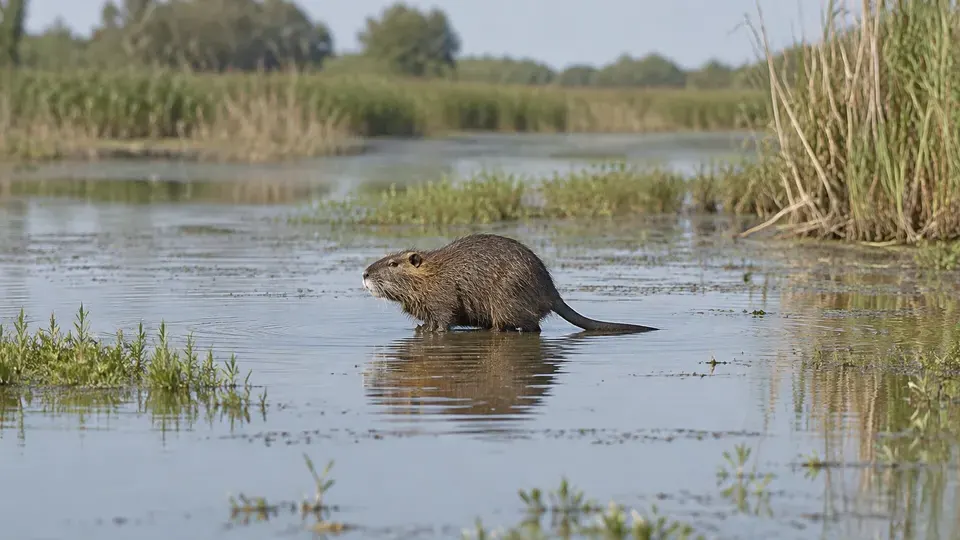
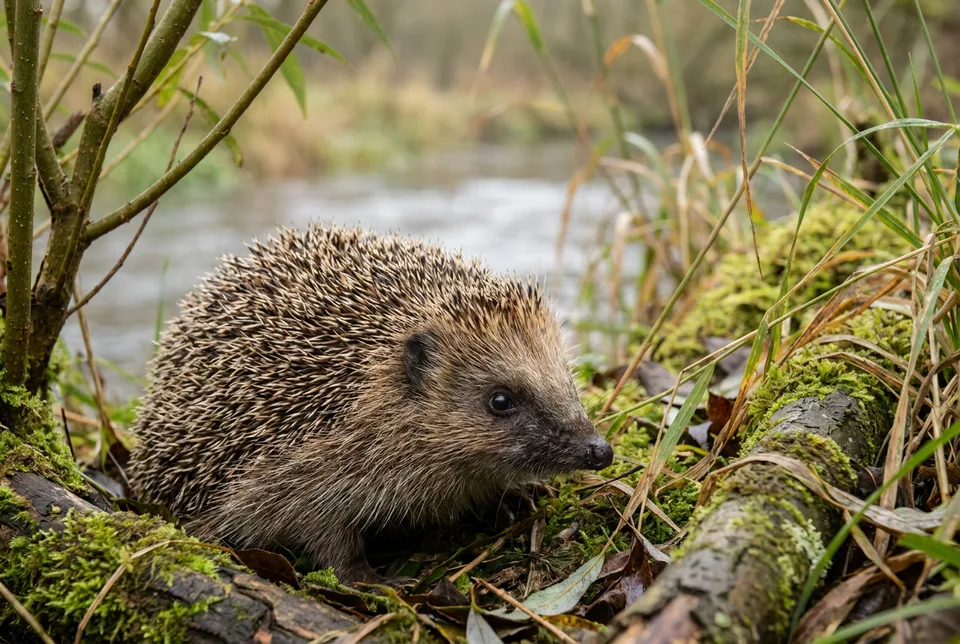
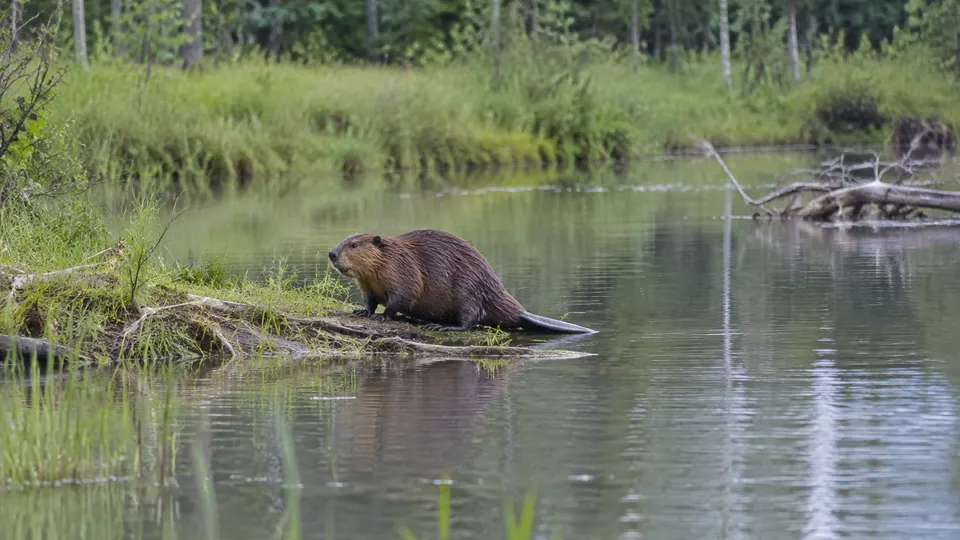
Eurasian beaver in wetland habitat — Danube, Rhine, Saone, River Cruises wildlifeEurasian BeaverCoypu in wetland habitat — Rhine, River Cruises wildlifeCoypuEuropean Hedgehog in wetland habitat — Saone, River Cruises wildlifeEuropean Hedgehog
Animal groupMammalsAnimal groupMammalsAnimal groupMammals
DestinationsDanube, Rhine, SaoneDestinationsRhineDestinationsSaone
Scientific name
Castor fiber
Scientific name
Scientific name
Previous speciesEmperor DragonflyNext speciesEurasian Bittern
All river wildlife
On this page
  • 01About
  • 02Behaviour & reproduction
  • 03Top wildlife locations
  • 04Fun facts
  • 05Best season
  • 06Season matrix by destination
  • 07Habitat
  • 08Diet
  • 09Species at a glance
  • 10Questions & answers
  • 11Compare

Find your river cruise

Plan your trip

Find your next river journey

Compare destinations, shore programs and dates with the animals and habitats you would love to see.

  • Daily shore excursions
  • Responsible wildlife watching
  • Boutique river ships
Explore river cruises