Bluerides – Blue Rides - Book Liveaboards worldwideOCEAN ADVENTURES
River CruisesRiversNature & WildlifeOur Promise
River CruisesRiversNature & WildlifeOur PromiseSign In

River destinations

  • River destinations
  • Amazon
  • Danube
  • Rhine
  • Mekong
  • Nile

Ships & departures

  • River Cruise Search
  • Deals

Nature & Wildlife

  • Nature & Wildlife

Travel support

  • Our Promise
  • Contact

Contact

Get in Touch

Get in touch anytime, we're happy to help you find the right trip or sort out any question.

EmailWrite us, we usually reply within a few hours.
contact@bluerides.com
WhatsAppChat with us on WhatsApp, Mon–Fri 10:00–16:00 (CET).
Start WhatsApp Chat
PhoneCall us, we're happy to help.
Free call, Mon–Fri 10 AM – 8 PM (CET).
Europe+49 800 1144 990USA+1 888 557 7735UK+44 800 707 4152Australia+61 2 8599 6113Canada+1 888 557 7735
Which river journey is yours?Answer 8 quick questions and find the river cruise that fits you.
8 questions, 1 minute·Plus Gift
Secure Payment MethodsYour payments are fully secured with AES-256 encryption.
Powered byStripeWiseAMEXPayGoogle PaySEPABank
Imprint·Terms & Conditions·Privacy Policy·About·Contact·Liability Waiver·Affiliate Program·Cruise·
Visit us here

© 2026 Blue Rides. All rights reserved.·

Bluerides – Blue Rides - Book Liveaboards worldwideOCEAN ADVENTURES
River CruisesRiversNature & WildlifeOur Promise
River CruisesRiversNature & WildlifeOur PromiseSign In
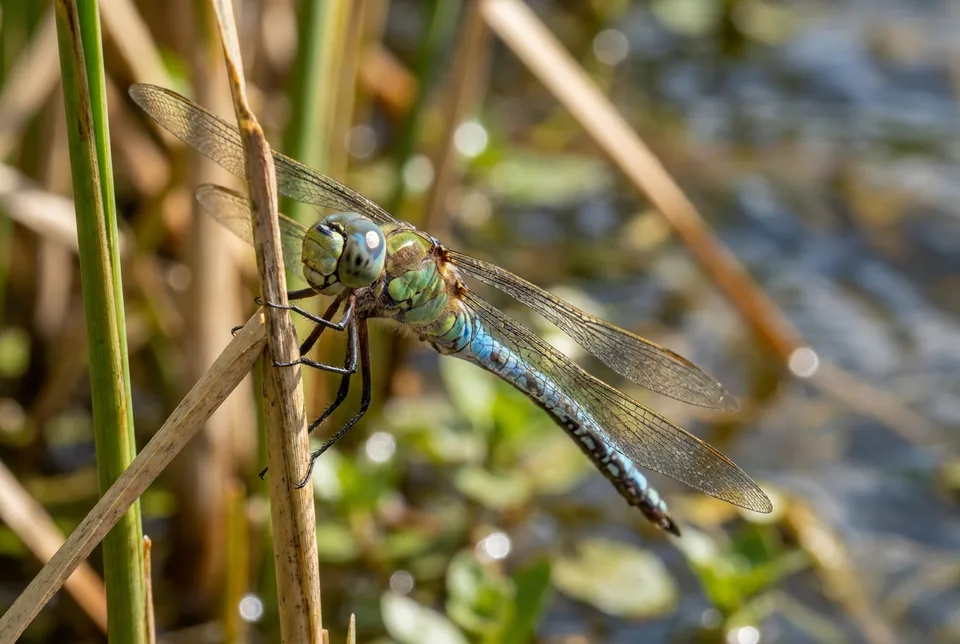
Emperor Dragonfly in wetland habitat — Danube, River Cruises wildlife
Home›River Cruises›River Wildlife›Emperor Dragonfly

Emperor DragonflyAnax imperatorWhere and when to see them

Previous speciesEgyptian GooseNext speciesEurasian Beaver

Emperor Dragonfly at a glance

The Emperor Dragonfly is a large, conspicuous dragonfly whose green thorax and blue male abdomen can make an immediate impression over still water. Its river association is indirect: ponds, lakes and quiet floodplain waters provide a more appropriate setting than a deep navigation channel. The batch registry places it in the Austrian Donau-Auen, including summer adult viewing in the Lobau. The Wildlife Trusts account supports its use of large ponds, canals and flooded gravel pits, and describes aerial hunting. A dragonfly patrolling above a backwater may be visible from a trail even when its aquatic developmental stages remain completely hidden below the surface. Species background source: https://www.wildlifetrusts.org/wildlife-explorer/invertebrates/dragonflies/emperor-dragonfly

Behaviour & reproduction

Size
Body length 7.8 cm (3.1 in) (The Wildlife Trusts).
Weight
not verified
Lifespan
not verified; adult flight season is not an individual lifespan.
Status
The Wildlife Trusts describes it as common in its British account; a current global assessment and Austrian conservation category were not verified.

Adults hunt in flight and may consume prey without landing. The Wildlife Trusts describes them flying high in pursuit of insects, including butterflies and smaller dragonflies. Females insert eggs into floating pondweed, linking adult activity directly with aquatic vegetation. These behaviours can draw attention to different parts of a pond: moving hunters above the water and a more stationary egg-laying female near plants. A short sighting does not establish whether an individual is territorial, feeding or passing through. Watch repeated movements before interpreting them. Do not disturb vegetation to make a resting dragonfly take flight or interrupt an animal that is laying eggs.

Top wildlife locations

Danube river landscape — River Cruises wildlife habitat

Danube

Austria: Donau-Auen floodplains east of Vienna towards Hainburg, on Vienna–Bratislava reach; optional shore/backwater excursion, not Passau or Budapest. Viewing: Warm sunny summer days; flying adults in Lobau.
Explore river cruises

Destinations describe the species' habitat, not guaranteed cruise stops. Some animals require an optional inland excursion or are found in restricted reserves.

Fun facts about the Emperor Dragonfly

  • It is one of Europe’s largest dragonflies.
  • Males have an apple-green thorax.
  • The male abdomen carries a dark longitudinal stripe.
  • Females lay eggs in floating pondweed.
  • Adults can catch smaller dragonflies.
  • Prey may be eaten on the wing.
  • It uses ponds and flooded gravel pits.
  • A British flight calendar is not evidence for Lobau months.

Best time to see the Emperor Dragonfly

The registry associates adult sightings with warm sunny summer days in the Lobau. The retrieved Wildlife Trusts calendar describes British flight dates, not Austrian Danube dates, and cannot substantiate local numerical months. No recurring Lobau month-by-month flight source was verified. Location months therefore remain empty, with the registry's qualitative summer guidance clearly separated from independently sourced local evidence. Weather affects whether adults are flying and easy to see, but warmth alone is not proof of a seasonal range. Ask local guides about current activity at accessible ponds and remember that a dragonfly's aquatic stages and visible adult season are different things.

Emperor Dragonfly: season matrix by destination

Highlighted months reflect the stated local evidence, not guaranteed encounters. Neutral months mean no verified monthly viewing window, not absence. Observation records and recommended viewing windows are distinct.

Danube

Registry suggests sunny summer days in Lobau; an independent recurring local month source was not verified. British flight dates were not transferred.

JanFebMarAprMayJunJulAugSepOctNovDec
Explore river cruises

Where the Emperor Dragonfly lives

Large standing waters and slow artificial waterways feature in the retrieved species account. Ponds, lakes, canals and flooded gravel pits can all be used; the Wildlife Trusts also notes an association with newly created ponds. In the registered Danube setting, this means floodplain waters and Lobau wetland habitats rather than an assumption of adults beside every cruise berth. Aquatic plants matter as egg-laying substrate, while surrounding airspace supports adult hunting. The presence of a flying individual alone does not prove local reproduction. A locally verified survey of breeding waters, abundance or emergence sites in the Vienna–Hainburg reach was not located.

What the Emperor Dragonfly eats

The adult Emperor Dragonfly is an aerial insect predator. The Wildlife Trusts explicitly lists butterflies and smaller dragonflies among prey, describing capture in mid-air and feeding on the wing. Such observations illustrate that dragonflies do not simply take mosquitoes, despite that familiar generalisation. The retrieved source does not provide dietary proportions or a prey inventory for Lobau. Nor does an adult prey list describe the entire diet of the aquatic larval stage. For visitors, a hunting flight is best appreciated as a natural interaction rather than staged with released insects. Keep clear of other observers while tracking a fast-moving insect through binoculars.

Species at a glance

Common name
Emperor Dragonfly
Scientific name
Anax imperator
Animal group
Insects
Size
Body length 7.8 cm (3.1 in) (The Wildlife Trusts).
Weight
not verified
Lifespan
not verified; adult flight season is not an individual lifespan.
Status
The Wildlife Trusts describes it as common in its British account; a current global assessment and Austrian conservation category were not verified.
Identification
The Wildlife Trusts describes males as pale blue with an apple-green thorax and a black stripe extending along the abdomen. Females are similar but duller and greener-blue, and both sexes have greenish-blue eyes. Size and colour together are useful, but a blue dragonfly seen at speed is not automatically an Emperor: other large dragonflies also patrol water. Try to obtain a clear side or upper view showing the unbroken thoracic colour and abdominal pattern. Strong reflections and motion blur can obscure these features. Where the view is insufficient, identify only to the level actually supported by the photograph or observation.

Emperor Dragonfly: frequently asked questions

Where can I see the Emperor Dragonfly?
Danube. Choose a permitted path or viewing point beside a pond with open water and floating plants. Watch for repeated patrols before attempting to follow a single fast-moving individual. A camera with a moderate zoom can record the thorax and abdominal pattern if an adult pauses or passes predictably. Observe egg-laying females from the bank without trampling the plants they use. Do not net adults, collect larvae or enter shallow margins to find emergence remains. In the Lobau, a dedicated wetland shore walk is much more suitable than expecting a diagnostic glimpse from a moving Danube ship.
When is the best time to see the Emperor Dragonfly?
The registry associates adult sightings with warm sunny summer days in the Lobau. The retrieved Wildlife Trusts calendar describes British flight dates, not Austrian Danube dates, and cannot substantiate local numerical months. No recurring Lobau month-by-month flight source was verified. Location months therefore remain empty, with the registry's qualitative summer guidance clearly separated from independently sourced local evidence. Weather affects whether adults are flying and easy to see, but warmth alone is not proof of a seasonal range. Ask local guides about current activity at accessible ponds and remember that a dragonfly's aquatic stages and visible adult season are different things.
How big does the Emperor Dragonfly get?
Body length 7.8 cm (3.1 in) (The Wildlife Trusts).. Adult weight: not verified. Size varies with age, sex and population.
How should I behave around the Emperor Dragonfly?
Choose a permitted path or viewing point beside a pond with open water and floating plants. Watch for repeated patrols before attempting to follow a single fast-moving individual. A camera with a moderate zoom can record the thorax and abdominal pattern if an adult pauses or passes predictably. Observe egg-laying females from the bank without trampling the plants they use. Do not net adults, collect larvae or enter shallow margins to find emergence remains. In the Lobau, a dedicated wetland shore walk is much more suitable than expecting a diagnostic glimpse from a moving Danube ship.
What does the Emperor Dragonfly eat?
The adult Emperor Dragonfly is an aerial insect predator. The Wildlife Trusts explicitly lists butterflies and smaller dragonflies among prey, describing capture in mid-air and feeding on the wing. Such observations illustrate that dragonflies do not simply take mosquitoes, despite that familiar generalisation. The retrieved source does not provide dietary proportions or a prey inventory for Lobau. Nor does an adult prey list describe the entire diet of the aquatic larval stage. For visitors, a hunting flight is best appreciated as a natural interaction rather than staged with released insects. Keep clear of other observers while tracking a fast-moving insect through binoculars.
Are wildlife sightings guaranteed on a river cruise?
No. Animals move freely and routes, weather, access restrictions and local conditions influence every outing. Confirm the actual itinerary and shore program before booking.

Compare wildlife in the same destinations

Explore other insects recorded in these destinations. Similar surroundings do not mean the animals share the same habits or viewing season.

Species comparison by animal group and destination
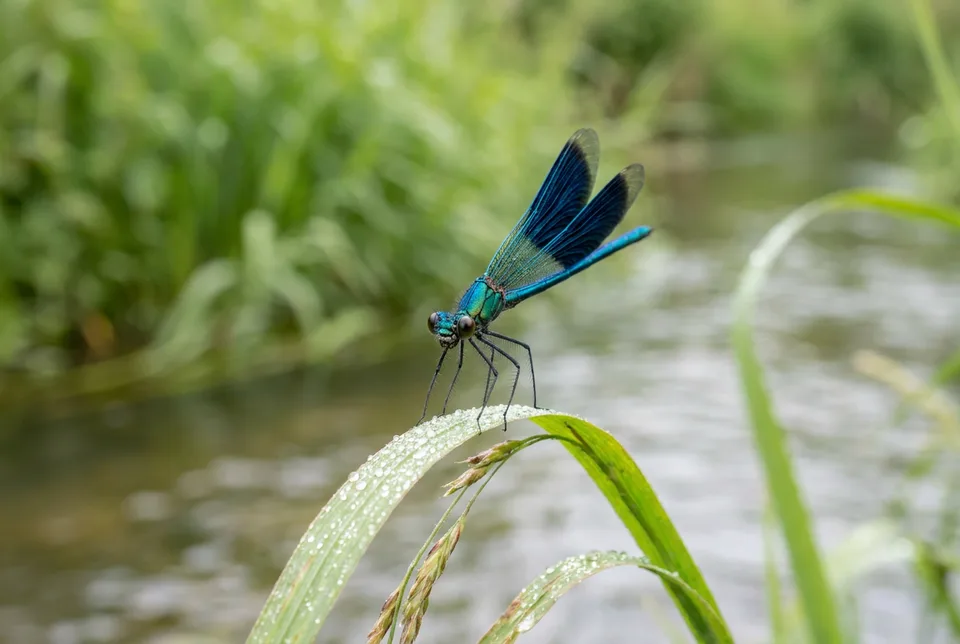
Emperor Dragonfly in wetland habitat — Danube, River Cruises wildlifeEmperor DragonflyBanded Demoiselle in wetland habitat — Danube, River Cruises wildlifeBanded Demoiselle
Animal groupInsectsAnimal groupInsects
DestinationsDanubeDestinationsDanube
Scientific name
Anax imperator
Scientific name
Previous speciesEgyptian GooseNext speciesEurasian Beaver
All river wildlife
On this page
  • 01About
  • 02Behaviour & reproduction
  • 03Top wildlife locations
  • 04Fun facts
  • 05Best season
  • 06Season matrix by destination
  • 07Habitat
  • 08Diet
  • 09Species at a glance
  • 10Questions & answers
  • 11Compare

Find your river cruise

Plan your trip

Find your next river journey

Compare destinations, shore programs and dates with the animals and habitats you would love to see.

  • Daily shore excursions
  • Responsible wildlife watching
  • Boutique river ships
Explore river cruises