Bluerides – Blue Rides - Book Liveaboards worldwideOCEAN ADVENTURES
River CruisesRiversNature & WildlifeOur Promise
River CruisesRiversNature & WildlifeOur PromiseSign In

River destinations

  • River destinations
  • Amazon
  • Danube
  • Rhine
  • Mekong
  • Nile

Ships & departures

  • River Cruise Search
  • Deals

Nature & Wildlife

  • Nature & Wildlife

Travel support

  • Our Promise
  • Contact

Contact

Get in Touch

Get in touch anytime, we're happy to help you find the right trip or sort out any question.

EmailWrite us, we usually reply within a few hours.
contact@bluerides.com
WhatsAppChat with us on WhatsApp, Mon–Fri 10:00–16:00 (CET).
Start WhatsApp Chat
PhoneCall us, we're happy to help.
Free call, Mon–Fri 10 AM – 8 PM (CET).
Europe+49 800 1144 990USA+1 888 557 7735UK+44 800 707 4152Australia+61 2 8599 6113Canada+1 888 557 7735
Which river journey is yours?Answer 8 quick questions and find the river cruise that fits you.
8 questions, 1 minute·Plus Gift
Secure Payment MethodsYour payments are fully secured with AES-256 encryption.
Powered byStripeWiseAMEXPayGoogle PaySEPABank
Imprint·Terms & Conditions·Privacy Policy·About·Contact·Liability Waiver·Affiliate Program·Cruise·Blog·
Visit us here

© 2026 Blue Rides. All rights reserved.

Bluerides – Blue Rides - Book Liveaboards worldwideOCEAN ADVENTURES
River CruisesRiversNature & WildlifeOur Promise
River CruisesRiversNature & WildlifeOur PromiseSign In
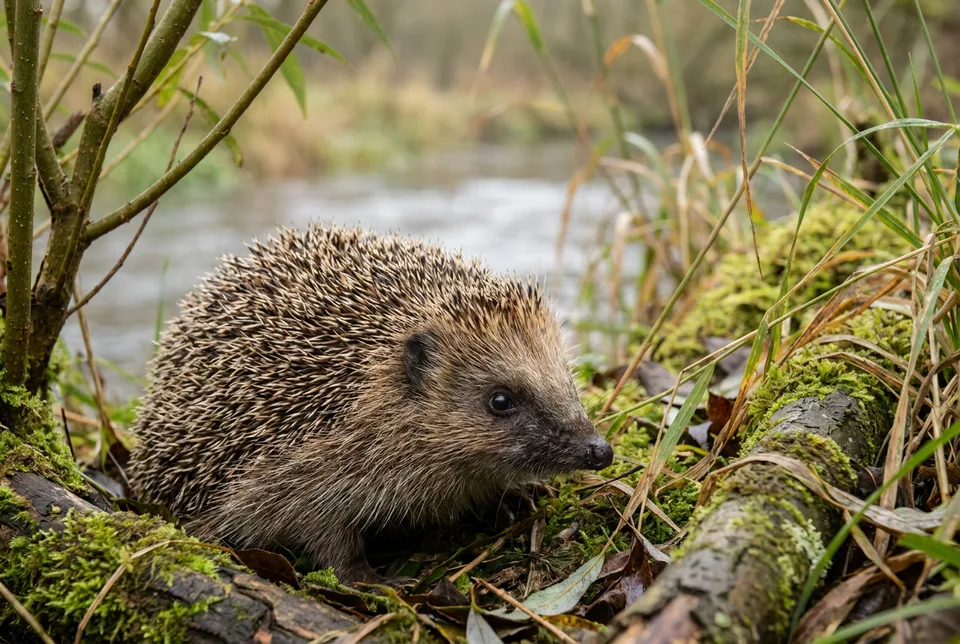
European Hedgehog in wetland habitat — Saone, River Cruises wildlifeAI-modified
Home›River Cruises›River Wildlife›European Hedgehog

European HedgehogErinaceus europaeusWhere and when to see them

Previous speciesEuropean GreenfinchNext speciesEuropean Herring Gull

European Hedgehog at a glance

The European hedgehog is a nocturnal terrestrial mammal whose river association is really an association with connected green space. Hedges, gardens, park edges and leaf-rich cover provide feeding and shelter opportunities, while the river itself is not the feature that makes the landscape suitable. Its protective spines are modified hairs, and rolling into a ball shields the vulnerable underside when escape is difficult. That defence is ineffective against traffic, illustrating why an animal can be well defended biologically yet vulnerable in a fragmented human landscape. The lower-Saône registry reach concerns the promenade between Rochetaillée-sur-Saône, Fontaines-sur-Saône and Lyon. It should not be marketed as a routine daytime deck sighting. A hedgehog encounter is more plausibly a quiet shore-based observation in suitable cover, and absence during a daytime walk says little about whether an area is used after dark.

Behaviour & reproduction

Size
15–30 cm (5.9–11.8 in) head and body
Weight
Up to 2 kg (4.4 lb) (Mammal Society)
Lifespan
Not verified
Status
See sourced assessment

Hedgehogs usually spend daylight in sheltered nests and emerge to forage after dark. They are generally solitary rather than group-living, although animals can meet while feeding or during courtship. ADW describes courtship involving a male circling a female, accompanied by conspicuous sounds. After a gestation of roughly a month, females give birth to dependent young in a nest. The young initially have soft developing spines and require maternal care before beginning to forage independently. Disturbing a breeding nest can therefore have consequences quite different from briefly seeing an adult on a path. Seasonal hibernation involves a protected nest and reduced metabolism, with timing influenced by conditions and body reserves rather than a fixed date. A curled hedgehog is showing a defensive response; provoking repeated rolling for a photograph reveals stress, not a desirable display of natural behaviour.

Top wildlife locations

Saone river landscape — River Cruises wildlife habitatAI-modified

Saone

Lower Saône: Grand Lyon Rives de Saône promenade, Rochetaillée-sur-Saône–Fontaines-sur-Saône–Lyon, upstream of the Rhône confluence.


Explore river cruises

Destinations describe the species' habitat, not guaranteed cruise stops. Some animals require an optional inland excursion or are found in restricted reserves.

Fun facts about the European Hedgehog

  • Spines are modified hairs.
  • Rolling protects the vulnerable underside.
  • Most foraging occurs after dark.
  • Smell and hearing help locate ground-level prey.
  • Beetles, caterpillars and earthworms contribute to the diet.
  • Courtship can include a male circling a female.
  • Dependent young develop in a sheltered nest.
  • Hibernation involves reduced metabolism in a protected nest.
  • Connected hedges and gardens matter more than proximity to open water.

Best time to see the European Hedgehog

Hedgehogs are most relevant to an evening or night walk during periods when they are active, rather than a daytime river watch. Hibernation reduces winter activity, but onset, interruptions and emergence vary with weather, food and individual condition. ADW's general life-history account does not establish a Lyon monthly viewing calendar. The retained lower-Saône source likewise does not supply verified species-specific monthly encounter data, so no numerical month array is introduced. A mild evening in suitable connected habitat may be a sensible search opportunity, but it is not a guaranteed season recommendation. Daylight activity can occur for different reasons and should be interpreted with the animal's condition and behaviour, not used automatically to diagnose illness. A local wildlife professional is better placed to assess an obviously distressed animal than a visitor relying only on time of day or apparent size.

European Hedgehog: season matrix by destination

Highlighted months reflect the stated local evidence, not guaranteed encounters. Neutral months mean no verified monthly viewing window, not absence. Observation records and recommended viewing windows are distinct.

Saone

Exact local species-specific monthly viewing evidence has not been verified; no monthly calendar is inferred.

JanFebMarAprMayJunJulAugSepOctNovDec
Explore river cruises

Where the European Hedgehog lives

Suitable habitat combines food-rich ground with shelter and routes between patches. Hedgerows, scrub margins, woodland edges, gardens and parks can provide leaf litter, dense cover and nesting material. Connectivity is crucial: an isolated attractive lawn may be less useful if walls, roads and fencing prevent movement to other resources. Along the lower Saône, the relevant microhabitats are sheltered terrestrial margins and adjoining green spaces, not the open navigation channel or a hard waterfront without cover. Day nests and hibernation nests are concealed structures, so an apparently untidy accumulation of leaves beneath vegetation should not be dismantled to search for animals. Public paths can allow observation without entering refuge areas. The retained local evidence does not map routes or occupied nests, and suitable-looking habitat is not proof of present use. Record the actual patch and any barriers observed rather than assuming continuous occupancy along the entire promenade.

What the European Hedgehog eats

Hedgehogs are primarily invertebrate feeders. ADW describes a varied diet that includes beetles, caterpillars, earthworms and other small animals, with occasional additional foods taken opportunistically. The familiar image of an animal eating slugs does not represent the whole diet or justify treating it as a specialised slug-control agent. Feeding involves searching through low vegetation and litter, using smell and hearing to locate prey close to the ground. A foraging animal may stop frequently and investigate one small patch before moving on. Snuffling can therefore be a more useful clue than a distant silhouette. Watching natural feeding is preferable to baiting an animal into view, and milk should not be offered. No lower-Saône stomach-content or prey-availability study was retrieved, so the proportions of worms, insects and other foods in this particular urban riverside setting remain unknown rather than inferred from a generic garden diet.

Species at a glance

Common name
European Hedgehog
Scientific name
Erinaceus europaeus
Animal group
Mammals
Size
15–30 cm (5.9–11.8 in) head and body
Weight
Up to 2 kg (4.4 lb) (Mammal Society)
Lifespan
Usually 2–3 years in the wild; up to 10 years in captivity (Mammal Society)
Status
Near Threatened globally according to the Mammal Society species account; GB Vulnerable is a separate regional assessment.
Identification
A low, rounded body covered in spines, a pointed snout and a relatively short visible tail distinguish a hedgehog from most mammals likely to be noticed on a promenade. The face and underside are hairy rather than spiny. A feeding animal moves on short legs that can be difficult to see beneath the body, while a frightened individual may contract into a much smaller-looking ball. Adult sexes are not reliably distinguished during an ordinary distant watch; sexing requires anatomical views that should not be sought by handling a wild animal. Young animals are smaller, but apparent size alone cannot establish age or health. Spines are modified hairs, not detachable quills that are deliberately shot at a threat. In poor light, confirm the pointed face and body covering rather than assuming every small dark shape in leaf litter is a hedgehog. Photographs should preserve the undisturbed posture whenever possible.

European Hedgehog: frequently asked questions

Where can I see the European Hedgehog?
Saone. Use a quiet shore walk along appropriate green margins, not a spotlight search from the vessel. Pause where low vegetation, leaf litter and a hedge meet, and listen for rustling or snuffling before assuming that movement is a bird. If a hedgehog appears, remain still and let it continue its route. A brief low-intensity light directed away from the face may help safe footing, but prolonged bright illumination and flash photography undermine a natural observation. Do not pick up the animal to inspect sex, spines or condition, and do not open leaf nests. Keep dogs away and avoid placing food beside roads or busy paths. Record the precise promenade section, the time and whether the animal was feeding or travelling. A sighting supports use of that terrestrial patch; it does not establish a river-dependent population or continuous occupancy throughout the lower Saône.
When is the best time to see the European Hedgehog?
Hedgehogs are most relevant to an evening or night walk during periods when they are active, rather than a daytime river watch. Hibernation reduces winter activity, but onset, interruptions and emergence vary with weather, food and individual condition. ADW's general life-history account does not establish a Lyon monthly viewing calendar. The retained lower-Saône source likewise does not supply verified species-specific monthly encounter data, so no numerical month array is introduced. A mild evening in suitable connected habitat may be a sensible search opportunity, but it is not a guaranteed season recommendation. Daylight activity can occur for different reasons and should be interpreted with the animal's condition and behaviour, not used automatically to diagnose illness. A local wildlife professional is better placed to assess an obviously distressed animal than a visitor relying only on time of day or apparent size.
How big does the European Hedgehog get?
15–30 cm (5.9–11.8 in) head and body. Adult weight: Up to 2 kg (4.4 lb) (Mammal Society). Size varies with age, sex and population.
How should I behave around the European Hedgehog?
Use a quiet shore walk along appropriate green margins, not a spotlight search from the vessel. Pause where low vegetation, leaf litter and a hedge meet, and listen for rustling or snuffling before assuming that movement is a bird. If a hedgehog appears, remain still and let it continue its route. A brief low-intensity light directed away from the face may help safe footing, but prolonged bright illumination and flash photography undermine a natural observation. Do not pick up the animal to inspect sex, spines or condition, and do not open leaf nests. Keep dogs away and avoid placing food beside roads or busy paths. Record the precise promenade section, the time and whether the animal was feeding or travelling. A sighting supports use of that terrestrial patch; it does not establish a river-dependent population or continuous occupancy throughout the lower Saône.
What does the European Hedgehog eat?
Hedgehogs are primarily invertebrate feeders. ADW describes a varied diet that includes beetles, caterpillars, earthworms and other small animals, with occasional additional foods taken opportunistically. The familiar image of an animal eating slugs does not represent the whole diet or justify treating it as a specialised slug-control agent. Feeding involves searching through low vegetation and litter, using smell and hearing to locate prey close to the ground. A foraging animal may stop frequently and investigate one small patch before moving on. Snuffling can therefore be a more useful clue than a distant silhouette. Watching natural feeding is preferable to baiting an animal into view, and milk should not be offered. No lower-Saône stomach-content or prey-availability study was retrieved, so the proportions of worms, insects and other foods in this particular urban riverside setting remain unknown rather than inferred from a generic garden diet.
Are wildlife sightings guaranteed on a river cruise?
No. Animals move freely and routes, weather, access restrictions and local conditions influence every outing. Confirm the actual itinerary and shore program before booking.

Compare wildlife in the same destinations

Explore other mammals recorded in these destinations. Similar surroundings do not mean the animals share the same habits or viewing season.

Species comparison by animal group and destination
European Hedgehog in wetland habitat — Saone, River Cruises wildlifeAI-modifiedEuropean HedgehogEurasian beaver in wetland habitat — Danube, Rhine, Saone, River Cruises wildlifeAI-modifiedEurasian BeaverRed Squirrel in wetland habitat — Saone, River Cruises wildlifeAI-modifiedRed Squirrel
Animal groupMammalsAnimal groupMammalsAnimal groupMammals
DestinationsSaoneDestinationsDanube, Rhine, SaoneDestinationsSaone
Scientific name
Erinaceus europaeus
Scientific name
Scientific name
Previous speciesEuropean GreenfinchNext speciesEuropean Herring Gull
All river wildlife
On this page
  • 01About
  • 02Behaviour & reproduction
  • 03Top wildlife locations
  • 04Fun facts
  • 05Best season
  • 06Season matrix by destination
  • 07Habitat
  • 08Diet
  • 09Species at a glance
  • 10Questions & answers
  • 11Compare

Find your river cruise

AI-modified
Plan your trip

Find your next river journey

Compare destinations, shore programs and dates with the animals and habitats you would love to see.

  • Daily shore excursions
  • Responsible wildlife watching
  • Boutique river ships
Explore river cruises