Bluerides – Blue Rides - Book Liveaboards worldwideOCEAN ADVENTURES
River CruisesRiversNature & WildlifeOur Promise
River CruisesRiversNature & WildlifeOur PromiseSign In

River destinations

  • River destinations
  • Amazon
  • Danube
  • Rhine
  • Mekong
  • Nile

Ships & departures

  • River Cruise Search
  • Deals

Nature & Wildlife

  • Nature & Wildlife

Travel support

  • Our Promise
  • Contact

Contact

Get in Touch

Get in touch anytime, we're happy to help you find the right trip or sort out any question.

EmailWrite us, we usually reply within a few hours.
contact@bluerides.com
WhatsAppChat with us on WhatsApp, Mon–Fri 10:00–16:00 (CET).
Start WhatsApp Chat
PhoneCall us, we're happy to help.
Free call, Mon–Fri 10 AM – 8 PM (CET).
Europe+49 800 1144 990USA+1 888 557 7735UK+44 800 707 4152Australia+61 2 8599 6113Canada+1 888 557 7735
Which river journey is yours?Answer 8 quick questions and find the river cruise that fits you.
8 questions, 1 minute·Plus Gift
Secure Payment MethodsYour payments are fully secured with AES-256 encryption.
Powered byStripeWiseAMEXPayGoogle PaySEPABank
Imprint·Terms & Conditions·Privacy Policy·About·Contact·Liability Waiver·Affiliate Program·Cruise·
Visit us here

© 2026 Blue Rides. All rights reserved.·

Bluerides – Blue Rides - Book Liveaboards worldwideOCEAN ADVENTURES
River CruisesRiversNature & WildlifeOur Promise
River CruisesRiversNature & WildlifeOur PromiseSign In
Common Potoo in wetland habitat — Amazon, River Cruises wildlife
Home›River Cruises›River Wildlife›Common Potoo

Common PotooNyctibius griseusWhere and when to see them

Previous speciesCommon PochardNext speciesCommon Redshank

Common Potoo at a glance

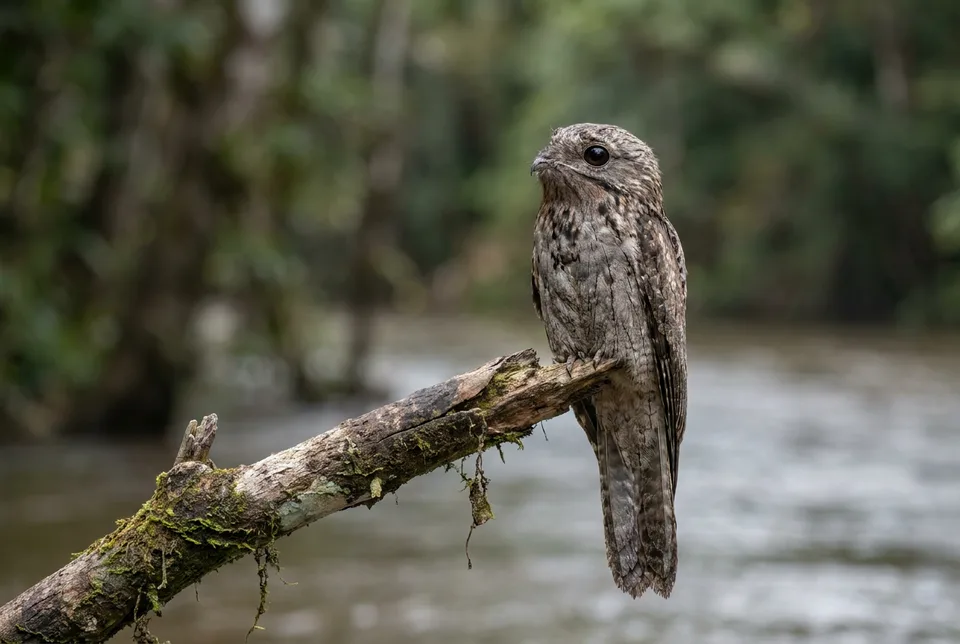
The Common Potoo is a nocturnal bird whose bark-like plumage and upright resting posture make it exceptionally difficult to detect by day. Its registry identity is Nyctibius griseus, not another potoo species with a similar common name. During daylight it commonly roosts on a snag, exposed branch or fencepost, using colour and posture to blend with wood. At night it hunts flying insects from an exposed perch and gives a haunting descending song. The registered Amazon association is specifically Brazil’s Rio Negro and the islands of Anavilhanas National Park. A Field Guides tour report records good views during an evening canoe trip there. That is strong evidence for the named excursion setting, but it is not proof that the bird is routinely visible from a main cruise vessel or throughout the Amazon basin.

Behaviour & reproduction

Size
Not verified
Weight
Not independently verified in the retrieved evidence
Lifespan
Not independently verified in the retrieved evidence
Status
See sourced assessment

Daytime camouflage and nighttime activity are the central contrast in Common Potoo behaviour. A resting bird remains motionless on an exposed support, often stretching upward so that its outline resembles a broken branch. Remaining still can be more effective than fleeing when the plumage matches the background. After dark, the bird uses an exposed perch as a base for short flights to catch insects. Its descending song is frequently the first evidence of its presence. The species does not build a conventional nest: the single egg is placed on top of a stump or broken branch, or in a shallow depression on a larger limb. These exposed breeding sites are particularly vulnerable to intrusive observation. At Anavilhanas, use a guide who can locate birds without playback pressure or repeated close spotlighting. A bird that remains still is not necessarily unaffected by an approaching canoe.

Top wildlife locations

Amazon river landscape — River Cruises wildlife habitat

Amazon

Brazil — Rio Negro, Anavilhanas National Park islands

Explore river cruises

Destinations describe the species' habitat, not guaranteed cruise stops. Some animals require an optional inland excursion or are found in restricted reserves.

Fun facts about the Common Potoo

  • The registry identity is Nyctibius griseus.
  • Common Potoos are nocturnal.
  • Bark-like plumage helps conceal daytime roosts.
  • They often rest upright on exposed supports.
  • The descending song is a major detection clue.
  • They catch flying insects by sallying from perches.
  • The small bill opens into a broad gape.
  • A single egg is laid without a conventional nest.
  • The registered Anavilhanas observation was made during an evening canoe trip.

Best time to see the Common Potoo

The Field Guides report covers a Rio Negro tour dated 3–18 September 2022 and records Common Potoo at Anavilhanas during an evening canoe trip. This establishes a historical September observation in the exact registered area, but it does not establish an annual September peak, a dry-season preference or twelve-month viewing availability. The monthly array therefore remains empty. Time of day is much better supported than an annual calendar: the direct encounter was in the evening, and species accounts explain nocturnal hunting and cryptic daytime roosting. Night conditions and access can affect what a guide can locate safely, but moon phase or water level should not be promoted as a verified local best-season rule without additional evidence. Before booking, ask whether an authorised evening excursion is actually included and whether recent sightings concern Common Potoo specifically rather than another potoo species.

Common Potoo: season matrix by destination

Highlighted months reflect the stated local evidence, not guaranteed encounters. Neutral months mean no verified monthly viewing window, not absence. Observation records and recommended viewing windows are distinct.

Amazon

Evening canoe observation documented on a September 2022 tour; this single trip does not establish an annual monthly season.

JanFebMarAprMayJunJulAugSepOctNovDec
Explore river cruises

Where the Common Potoo lives

Common Potoos occur in lowland forest and forest-edge settings, where exposed branches, snags and openings provide both resting supports and nighttime hunting positions. The relevant habitat is wooded terrestrial or island vegetation, not the open river surface itself. At Anavilhanas, the registered evidence concerns an evening canoe excursion among the Rio Negro national park islands. That setting offers a way to view forest-edge birds from the water, but it does not mean all channels or island banks are equally productive. Do not transfer the record to the Peruvian Amazon, another Brazilian tributary or a separate national park. Local access, water level and guide knowledge determine which edges can be visited safely and legally. Retain dead wood and natural perches rather than treating them as obstacles to clear. Stay within the excursion’s authorised route and avoid landing near a roost or suspected breeding support.

What the Common Potoo eats

The Common Potoo is an aerial insectivore. It waits on an exposed perch and sallies into the air to capture flying prey, returning to a suitable lookout between flights. The retrieved wildlife account names moths, beetles and large flies among its foods. A wide mouth is more relevant to catching insects in flight than the tiny-looking bill might suggest, while large eyes support hunting in low light. The exact prey mixture at Anavilhanas was not measured by the retrieved trip report, so the general diet should not be presented as a local stomach-content study. From a canoe, watch departures and returns rather than trying to illuminate the bird continuously. Do not attract insects with artificial lighting specifically to manipulate feeding for photographs. A natural sequence of waiting, sallying and returning provides a useful view of the species’ ecology without changing where prey or birds are concentrated.

Species at a glance

Common name
Common Potoo
Scientific name
Nyctibius griseus
Animal group
Birds
Size
33–38 cm (13–15 in) body length, according to the retrieved Trinidad and Tobago wildlife account
Weight
Not independently verified in the retrieved evidence
Lifespan
Not independently verified in the retrieved evidence
Status
The retrieved Trinidad and Tobago wildlife account labels the species Least Concern; a current primary global assessment was not independently checked.
Identification
Look for a vertically resting, mottled grey-brown bird whose outline merges with a snag or branch. The plumage contains a complex mixture of grey, brown, black and buff, resembling weathered bark rather than a simple uniform colour. Large yellow eyes and a broad gape become more obvious when the bird is alert, while the small bill can be surprisingly inconspicuous. Its haunting descending song is an important clue, but other potoos occur in Amazonian landscapes, so neither eyeshine nor a branch-like posture alone identifies Common Potoo. A guide should compare size, pattern and voice with the local alternatives. Owls differ in structure and behaviour, while nightjars usually present a different resting outline. Do not attempt to force a resting bird into an alert pose to reveal the eyes. A confident identification should come from naturally visible features and voice, not from disturbing the animal.

Common Potoo: frequently asked questions

Where can I see the Common Potoo?
Amazon. The appropriate viewing context is an authorised guided evening canoe outing at Anavilhanas, not an expectation of spotting a potoo from a brightly lit main vessel. Listen first for the descending song and let the guide identify a suitable viewing position. Where lighting is permitted, use it briefly and avoid repeated close illumination, flash photography or a prolonged beam directed at the eyes. Keep the canoe steady and quiet rather than manoeuvring immediately below a perched bird. Daytime roosts should receive the same restraint: camouflage does not make a bird an inert photographic subject. Never touch a branch, clear foliage or land beside a suspected egg site. The documented tour observation supports this precise Rio Negro island setting only. Record the locality, time and identification features, and distinguish a heard-only record from a clear visual encounter when describing what the excursion produced.
When is the best time to see the Common Potoo?
The Field Guides report covers a Rio Negro tour dated 3–18 September 2022 and records Common Potoo at Anavilhanas during an evening canoe trip. This establishes a historical September observation in the exact registered area, but it does not establish an annual September peak, a dry-season preference or twelve-month viewing availability. The monthly array therefore remains empty. Time of day is much better supported than an annual calendar: the direct encounter was in the evening, and species accounts explain nocturnal hunting and cryptic daytime roosting. Night conditions and access can affect what a guide can locate safely, but moon phase or water level should not be promoted as a verified local best-season rule without additional evidence. Before booking, ask whether an authorised evening excursion is actually included and whether recent sightings concern Common Potoo specifically rather than another potoo species.
How big does the Common Potoo get?
33–38 cm (13–15 in) body length, according to the retrieved Trinidad and Tobago wildlife account. Adult weight: Not independently verified in the retrieved evidence. Size varies with age, sex and population.
How should I behave around the Common Potoo?
The appropriate viewing context is an authorised guided evening canoe outing at Anavilhanas, not an expectation of spotting a potoo from a brightly lit main vessel. Listen first for the descending song and let the guide identify a suitable viewing position. Where lighting is permitted, use it briefly and avoid repeated close illumination, flash photography or a prolonged beam directed at the eyes. Keep the canoe steady and quiet rather than manoeuvring immediately below a perched bird. Daytime roosts should receive the same restraint: camouflage does not make a bird an inert photographic subject. Never touch a branch, clear foliage or land beside a suspected egg site. The documented tour observation supports this precise Rio Negro island setting only. Record the locality, time and identification features, and distinguish a heard-only record from a clear visual encounter when describing what the excursion produced.
What does the Common Potoo eat?
The Common Potoo is an aerial insectivore. It waits on an exposed perch and sallies into the air to capture flying prey, returning to a suitable lookout between flights. The retrieved wildlife account names moths, beetles and large flies among its foods. A wide mouth is more relevant to catching insects in flight than the tiny-looking bill might suggest, while large eyes support hunting in low light. The exact prey mixture at Anavilhanas was not measured by the retrieved trip report, so the general diet should not be presented as a local stomach-content study. From a canoe, watch departures and returns rather than trying to illuminate the bird continuously. Do not attract insects with artificial lighting specifically to manipulate feeding for photographs. A natural sequence of waiting, sallying and returning provides a useful view of the species’ ecology without changing where prey or birds are concentrated.
Are wildlife sightings guaranteed on a river cruise?
No. Animals move freely and routes, weather, access restrictions and local conditions influence every outing. Confirm the actual itinerary and shore program before booking.

Compare wildlife in the same destinations

Explore other birds recorded in these destinations. Similar surroundings do not mean the animals share the same habits or viewing season.

Species comparison by animal group and destination
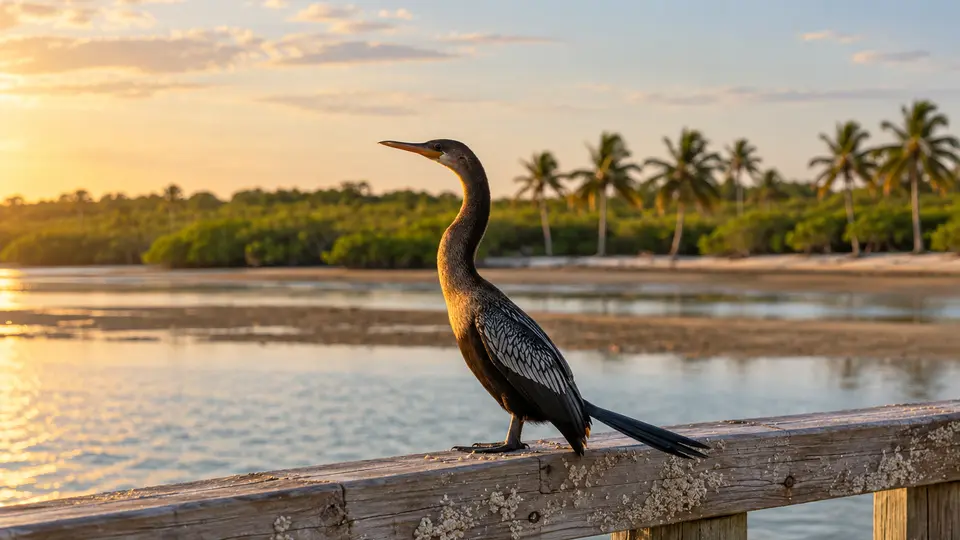
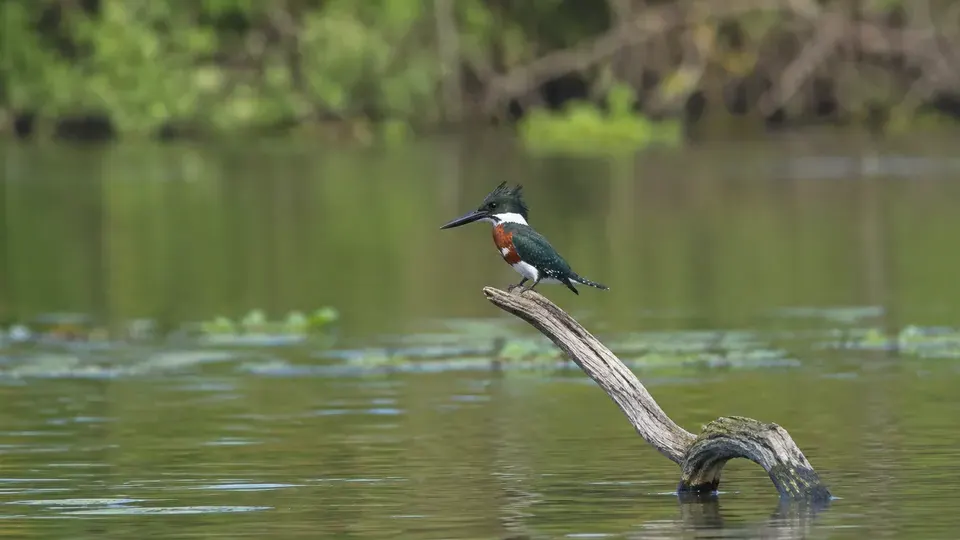
Common Potoo in wetland habitat — Amazon, River Cruises wildlifeCommon PotooAmazon kingfisher in wetland habitat — Amazon, River Cruises wildlifeAmazon KingfisherAnhinga in wetland habitat — Amazon, River Cruises wildlifeAnhinga
Animal groupBirdsAnimal groupBirdsAnimal groupBirds
DestinationsAmazonDestinationsAmazonDestinationsAmazon
Scientific name
Nyctibius griseus
Scientific name
Scientific name
Previous speciesCommon PochardNext speciesCommon Redshank
All river wildlife
On this page
  • 01About
  • 02Behaviour & reproduction
  • 03Top wildlife locations
  • 04Fun facts
  • 05Best season
  • 06Season matrix by destination
  • 07Habitat
  • 08Diet
  • 09Species at a glance
  • 10Questions & answers
  • 11Compare

Find your river cruise

Plan your trip

Find your next river journey

Compare destinations, shore programs and dates with the animals and habitats you would love to see.

  • Daily shore excursions
  • Responsible wildlife watching
  • Boutique river ships
Explore river cruises