Bluerides – Blue Rides - Book Liveaboards worldwideOCEAN ADVENTURES
River CruisesRiversNature & WildlifeOur Promise
River CruisesRiversNature & WildlifeOur PromiseSign In

River destinations

  • River destinations
  • Amazon
  • Danube
  • Rhine
  • Mekong
  • Nile

Ships & departures

  • River Cruise Search
  • Deals

Nature & Wildlife

  • Nature & Wildlife

Travel support

  • Our Promise
  • Contact

Contact

Get in Touch

Get in touch anytime, we're happy to help you find the right trip or sort out any question.

EmailWrite us, we usually reply within a few hours.
contact@bluerides.com
WhatsAppChat with us on WhatsApp, Mon–Fri 10:00–16:00 (CET).
Start WhatsApp Chat
PhoneCall us, we're happy to help.
Free call, Mon–Fri 10 AM – 8 PM (CET).
Europe+49 800 1144 990USA+1 888 557 7735UK+44 800 707 4152Australia+61 2 8599 6113Canada+1 888 557 7735
Which river journey is yours?Answer 8 quick questions and find the river cruise that fits you.
8 questions, 1 minute·Plus Gift
Secure Payment MethodsYour payments are fully secured with AES-256 encryption.
Powered byStripeWiseAMEXPayGoogle PaySEPABank
Imprint·Terms & Conditions·Privacy Policy·About·Contact·Liability Waiver·Affiliate Program·Cruise·
Visit us here

© 2026 Blue Rides. All rights reserved.·

Bluerides – Blue Rides - Book Liveaboards worldwideOCEAN ADVENTURES
River CruisesRiversNature & WildlifeOur Promise
River CruisesRiversNature & WildlifeOur PromiseSign In
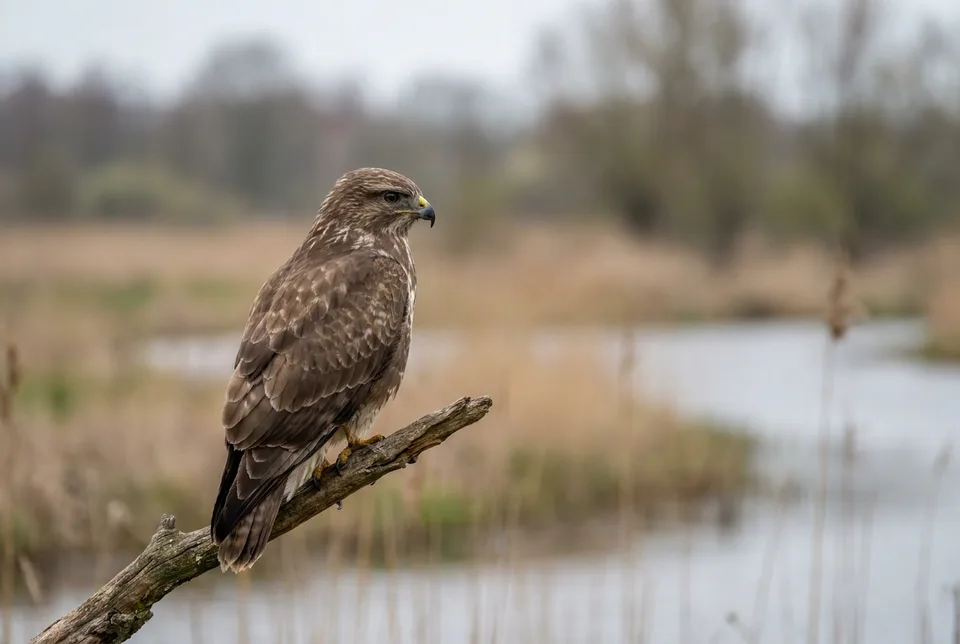
Common Buzzard in wetland habitat — Douro, River Cruises wildlife
Home›River Cruises›River Wildlife›Common Buzzard

Common BuzzardButeo buteoWhere and when to see them

Previous speciesCommon BlackbirdNext speciesCommon Chaffinch

Common Buzzard at a glance

The Common Buzzard is a broad-winged bird of prey whose plumage can vary from dark brown to strikingly pale. Its registry identity is Buteo buteo, called bútio-comum in the Portuguese site account. Broad, rounded wings, a relatively short tail and a compact neck give it a different outline from the more pointed-winged Common Kestrel. The Douro association is not a general claim about the vineyard cruise corridor. It belongs specifically to the Porto and Vila Nova de Gaia estuary reserve area, including Afurada, Cabedelo and São Paio. The original site guide lists the species among large terrestrial birds and also describes its occurrence around the local habitat mosaic. This is useful shore-excursion evidence, not a guarantee that a buzzard will pass the ship. Watch the adjoining open ground and sky as well as the estuary itself.

Behaviour & reproduction

Size
Not independently verified in the retrieved evidence
Weight
Not independently verified in the retrieved evidence
Lifespan
Not independently verified in the retrieved evidence
Status
See sourced assessment

Soaring is one of the most useful Common Buzzard behaviours for an observer to recognise. A bird circles on rising air with its broad wings spread, often holding them in a shallow raised V and fanning its short tail. At other times it may sit for a prolonged period on a post, tree or other lookout, scanning before making a short hunting flight. Its mournful mewing call can sound unexpectedly cat-like and may draw attention to a bird that is still distant. Buzzards also use flapping flight between soaring areas or feeding locations, so a single flight style is not sufficient for identification. Their broad plumage variation means that two birds seen together may look very different. At the Douro estuary, observe from established paths and distinguish a bird crossing the area from one repeatedly using a particular feeding patch or perch.

Top wildlife locations

Douro river landscape — River Cruises wildlife habitat

Douro

Porto / Vila Nova de Gaia: Douro estuary reserve, Afurada–Cabedelo–São Paio; NOT a claim for inland Régua–Pinhão

Explore river cruises

Destinations describe the species' habitat, not guaranteed cruise stops. Some animals require an optional inland excursion or are found in restricted reserves.

Fun facts about the Common Buzzard

  • Common Buzzard plumage varies markedly between individuals.
  • Broad wings are more reliable than colour for initial recognition.
  • The short tail often fans during soaring.
  • Its wings may form a shallow V in flight.
  • Its mewing call can resemble a cat.
  • A stationary lookout is a normal hunting position.
  • The species can take carrion as well as live prey.
  • The Portuguese name in the local guide is bútio-comum.
  • The registered Douro evidence is estuary-specific.

Best time to see the Common Buzzard

The Douro estuary guide directly supports Common Buzzard occurrence in the registered Porto and Gaia area, but the retrieved species passage does not provide a month-by-month buzzard season. Its winter reference concerns Short-eared Owl in the same wider discussion and should not be transferred to the buzzard. The monthly array consequently remains empty. General statements about good winter estuary birding also do not establish that winter is the best season for this terrestrial raptor. Visibility depends on whether birds are perched behind cover, flying across the observer’s field of view or soaring high overhead. Wind, cloud and local air movement can change flight behaviour over the course of a shore visit without defining annual presence. Check recent observations for the actual estuary reserve and allow time to scan both low perches and the wider sky rather than scheduling around an unsupported seasonal peak.

Common Buzzard: season matrix by destination

Highlighted months reflect the stated local evidence, not guaranteed encounters. Neutral months mean no verified monthly viewing window, not absence. Observation records and recommended viewing windows are distinct.

Douro

Local occurrence is supported; no species-specific monthly season was verified. Winter references to other birds are not applied to this species.

JanFebMarAprMayJunJulAugSepOctNovDec
Explore river cruises

Where the Common Buzzard lives

Common Buzzards benefit from a mosaic rather than one uniform habitat: open ground provides hunting opportunities, while trees and other structures provide perches and nesting cover. Farmland, grassland, woodland edges and other partly open landscapes are therefore relevant. At the registered Douro location, the terrestrial margins and nearby green spaces matter more for this raptor than exposed intertidal mud alone. The original estuary guide distinguishes large land birds from its waterbird and wader lists, which is an important ecological distinction when planning where to look. A shore visit around Afurada, Cabedelo or São Paio can include scanning the wider landscape without entering sensitive vegetation. This estuary evidence must not be extended upriver to Régua or Pinhão. Habitat that appears suitable inland is not a substitute for an actual registered observation or locality source for those separate reaches.

What the Common Buzzard eats

Common Buzzards are opportunistic predators and scavengers rather than specialist fish hunters. Small mammals are important prey, but birds, other small vertebrates, large invertebrates and carrion may also be taken according to local availability. A bird can hunt from a perch, search while flying, or investigate prey on the ground. This flexibility helps explain its use of mixed landscapes and why it may occur near an estuary without feeding primarily from the water. Watching the direction of repeated descents can reveal a productive patch, but a distant drop into grass does not identify the prey. Do not label every carried item a vole or assume that a buzzard seen above water has caught a fish. Never place meat or other bait beside a path or road: bait can alter hunting behaviour, attract competing scavengers and expose birds to avoidable danger.

Species at a glance

Common name
Common Buzzard
Scientific name
Buteo buteo
Animal group
Birds
Size
Not independently verified in the retrieved evidence
Weight
Not independently verified in the retrieved evidence
Lifespan
Not independently verified in the retrieved evidence
Status
RSPB UK Birds of Conservation Concern: Green. Global and Portuguese categories were not independently verified.
Identification
Use structure before colour because Common Buzzards are highly variable. Look for broad, rounded wings with fingered tips, a short neck and a relatively short tail that can be spread into a fan. A soaring bird often raises its wings slightly above horizontal. Darker wingtips, barring in the tail and the pattern of the trailing wing edge can provide additional clues when light and distance permit. A Red Kite has a much more distinctive forked tail and different proportions; a Common Kestrel has narrower, more pointed wings and a longer-looking tail. Honey Buzzard is another potential source of confusion, so a pale head or an unusual colour form should not be treated as decisive by itself. The mewing call is helpful supporting evidence. Photograph several flight positions if possible, because a single sharply banked frame can distort the apparent wing and tail shape.

Common Buzzard: frequently asked questions

Where can I see the Common Buzzard?
Douro. For the registered Douro association, use the public shore paths and viewing opportunities around the estuary reserve at Porto and Vila Nova de Gaia. Search posts, isolated trees and other obvious perches before examining the sky for circling birds. Binoculars help with the basic silhouette; a telescope can be useful for a stationary bird far across open ground. Watch without leaving the path or approaching a perched raptor until it flies. If the bird shifts posture, fixes its attention on the observers or repeatedly moves away, increase the distance. A soaring buzzard may be identifiable through its outline even when its colour is difficult to judge against a bright sky. Record the actual locality and behaviour rather than treating the observation as evidence for the entire Douro. This profile specifically excludes an inferred occurrence claim for the inland Régua–Pinhão cruise stretch.
When is the best time to see the Common Buzzard?
The Douro estuary guide directly supports Common Buzzard occurrence in the registered Porto and Gaia area, but the retrieved species passage does not provide a month-by-month buzzard season. Its winter reference concerns Short-eared Owl in the same wider discussion and should not be transferred to the buzzard. The monthly array consequently remains empty. General statements about good winter estuary birding also do not establish that winter is the best season for this terrestrial raptor. Visibility depends on whether birds are perched behind cover, flying across the observer’s field of view or soaring high overhead. Wind, cloud and local air movement can change flight behaviour over the course of a shore visit without defining annual presence. Check recent observations for the actual estuary reserve and allow time to scan both low perches and the wider sky rather than scheduling around an unsupported seasonal peak.
How big does the Common Buzzard get?
Not independently verified in the retrieved evidence. Adult weight: Not independently verified in the retrieved evidence. Size varies with age, sex and population.
How should I behave around the Common Buzzard?
For the registered Douro association, use the public shore paths and viewing opportunities around the estuary reserve at Porto and Vila Nova de Gaia. Search posts, isolated trees and other obvious perches before examining the sky for circling birds. Binoculars help with the basic silhouette; a telescope can be useful for a stationary bird far across open ground. Watch without leaving the path or approaching a perched raptor until it flies. If the bird shifts posture, fixes its attention on the observers or repeatedly moves away, increase the distance. A soaring buzzard may be identifiable through its outline even when its colour is difficult to judge against a bright sky. Record the actual locality and behaviour rather than treating the observation as evidence for the entire Douro. This profile specifically excludes an inferred occurrence claim for the inland Régua–Pinhão cruise stretch.
What does the Common Buzzard eat?
Common Buzzards are opportunistic predators and scavengers rather than specialist fish hunters. Small mammals are important prey, but birds, other small vertebrates, large invertebrates and carrion may also be taken according to local availability. A bird can hunt from a perch, search while flying, or investigate prey on the ground. This flexibility helps explain its use of mixed landscapes and why it may occur near an estuary without feeding primarily from the water. Watching the direction of repeated descents can reveal a productive patch, but a distant drop into grass does not identify the prey. Do not label every carried item a vole or assume that a buzzard seen above water has caught a fish. Never place meat or other bait beside a path or road: bait can alter hunting behaviour, attract competing scavengers and expose birds to avoidable danger.
Are wildlife sightings guaranteed on a river cruise?
No. Animals move freely and routes, weather, access restrictions and local conditions influence every outing. Confirm the actual itinerary and shore program before booking.

Compare wildlife in the same destinations

Explore other birds recorded in these destinations. Similar surroundings do not mean the animals share the same habits or viewing season.

Species comparison by animal group and destination
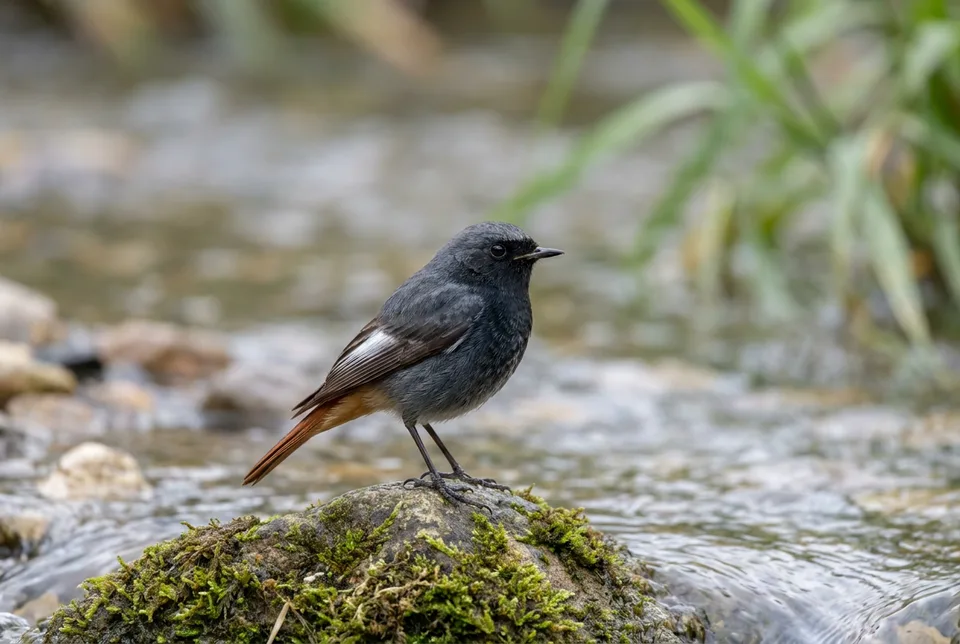
Common Buzzard in wetland habitat — Douro, River Cruises wildlifeCommon BuzzardBar-tailed godwit in wetland habitat — Douro, River Cruises wildlifeBar-tailed godwitBlack Redstart in wetland habitat — Saone, Douro, River Cruises wildlifeBlack Redstart
Animal groupBirdsAnimal groupBirdsAnimal groupBirds
DestinationsDouroDestinationsDouroDestinationsSaone, Douro
Scientific name
Buteo buteo
Scientific name
Scientific name
Previous speciesCommon BlackbirdNext speciesCommon Chaffinch
All river wildlife
On this page
  • 01About
  • 02Behaviour & reproduction
  • 03Top wildlife locations
  • 04Fun facts
  • 05Best season
  • 06Season matrix by destination
  • 07Habitat
  • 08Diet
  • 09Species at a glance
  • 10Questions & answers
  • 11Compare

Find your river cruise

Plan your trip

Find your next river journey

Compare destinations, shore programs and dates with the animals and habitats you would love to see.

  • Daily shore excursions
  • Responsible wildlife watching
  • Boutique river ships
Explore river cruises