Bluerides – Blue Rides - Book Liveaboards worldwideOCEAN ADVENTURES
River CruisesRiversNature & WildlifeOur Promise
River CruisesRiversNature & WildlifeOur PromiseSign In

River destinations

  • River destinations
  • Amazon
  • Danube
  • Rhine
  • Mekong
  • Nile

Ships & departures

  • River Cruise Search
  • Deals

Nature & Wildlife

  • Nature & Wildlife

Travel support

  • Our Promise
  • Contact

Contact

Get in Touch

Get in touch anytime, we're happy to help you find the right trip or sort out any question.

EmailWrite us, we usually reply within a few hours.
contact@bluerides.com
WhatsAppChat with us on WhatsApp, Mon–Fri 10:00–16:00 (CET).
Start WhatsApp Chat
PhoneCall us, we're happy to help.
Free call, Mon–Fri 10 AM – 8 PM (CET).
Europe+49 800 1144 990USA+1 888 557 7735UK+44 800 707 4152Australia+61 2 8599 6113Canada+1 888 557 7735
Which river journey is yours?Answer 8 quick questions and find the river cruise that fits you.
8 questions, 1 minute·Plus Gift
Secure Payment MethodsYour payments are fully secured with AES-256 encryption.
Powered byStripeWiseAMEXPayGoogle PaySEPABank
Imprint·Terms & Conditions·Privacy Policy·About·Contact·Liability Waiver·Affiliate Program·Cruise·
Visit us here

© 2026 Blue Rides. All rights reserved.·

Bluerides – Blue Rides - Book Liveaboards worldwideOCEAN ADVENTURES
River CruisesRiversNature & WildlifeOur Promise
River CruisesRiversNature & WildlifeOur PromiseSign In
Cattle egret in wetland habitat — Nile, River Cruises wildlife
Home›River Cruises›River Wildlife›Cattle Egret

Cattle EgretArdea ibisWhere and when to see them

Previous speciesCanvasbackNext speciesCommon Blackbird

Cattle Egret at a glance

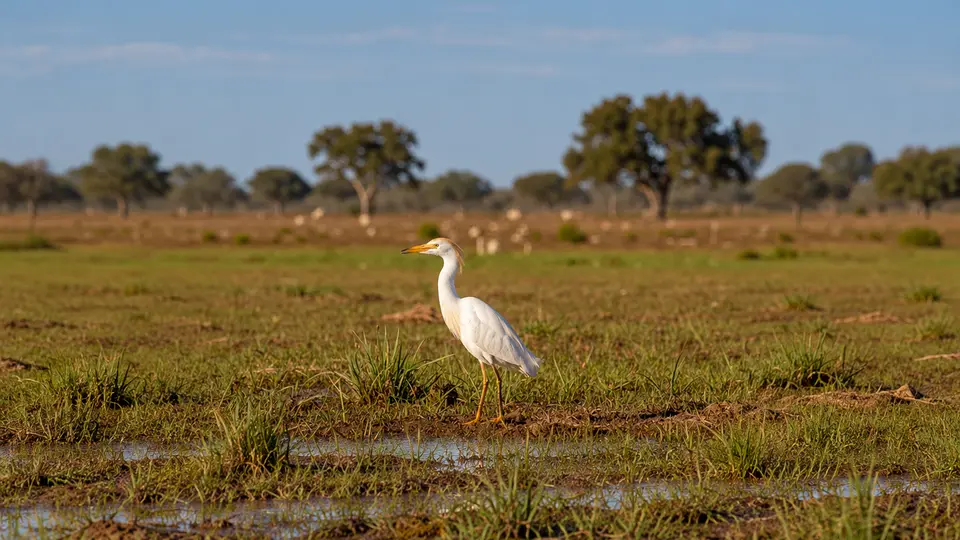
The Western Cattle Egret is a stocky white heron that often makes more sense in a field than beside a fishing pool. Cornell emphasises its association with grazing animals and disturbed ground, where prey becomes accessible as livestock or machinery moves through vegetation. The requested scientific name, Ardea ibis, is retained; the older Nile report uses Bubulcus ibis. That difference in nomenclature must not be confused with a second local species record. The river association is limited to the Luxor–Aswan cruise corridor documented by the dated trip report, not a verified year-round Nile calendar. Species reference: https://www.allaboutbirds.org/guide/Western_Cattle-Egret/lifehistory
Behaviour & reproduction

Size
Species-specific length not verified.
Weight
Species-specific weight not verified.
Lifespan
Species-specific lifespan not verified.
Status
Cornell conservation descriptor: Low Concern; formal global assessment not verified.

Instead of waiting motionless in deep shallows, cattle egrets often walk with livestock and take advantage of prey disturbed by their movement. They may feed singly or in loose groups and sometimes ride on large animals. Cornell describes colonial nesting, frequently among other herons and egrets, with both sexes contributing to nest construction. A field-feeding group and a nesting colony have different disturbance sensitivities. Cruise visitors should enjoy the former from an existing path and avoid approaching a colony simply because the birds appear accustomed to people elsewhere.

Top wildlife locations

Nile river landscape — River Cruises wildlife habitat

Nile

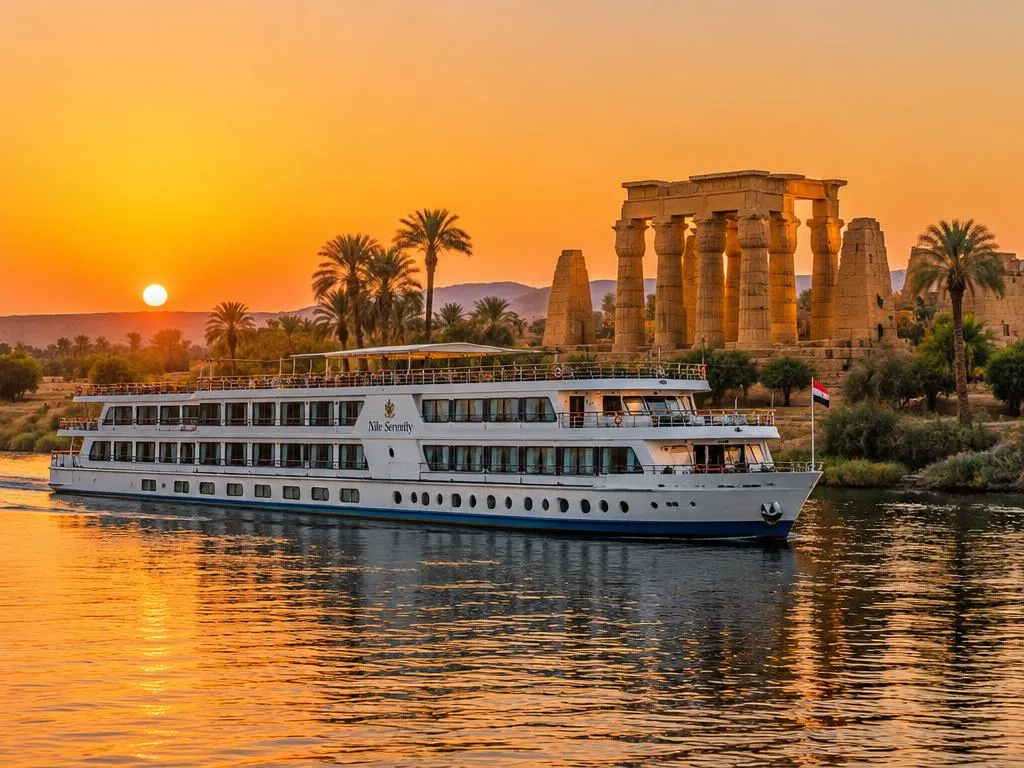
Luxor–Esna–Edfu–Kom Ombo–Aswan; exact observation context in quote Wild birds from cruise deck or normal temple/riverbank visits; dated March 2007 observations, not year-round guarantees. Waterfowl and passage birds seasonal; small reed birds require binoculars.
Explore river cruises

Destinations describe the species' habitat, not guaranteed cruise stops. Some animals require an optional inland excursion or are found in restricted reserves.

Fun facts about the Cattle Egret

  • It often feeds in fields rather than streams.
  • Grazing animals can disturb its insect prey.
  • It sometimes rides on large animals.
  • Insects dominate its adaptable diet.
  • It nests colonially.
  • Both sexes contribute to nest building.
  • Older reports may call it Bubulcus ibis.
  • Western and Eastern Cattle Egrets are now treated separately by Cornell.

Best time to see the Cattle Egret

The Nile evidence comes from a March 2007 trip report. A dated observation cannot establish recurring March presence, still less a twelve-month season. The location months remain empty. Cornell’s American migration discussion is not transferable to Egypt, and breeding plumage alone is not a local calendar. Current guides may identify productive agricultural stretches during an itinerary, but their day-to-day advice should be kept distinct from documented recurring seasonality. This profile does not promise constant abundance between Luxor, Esna, Edfu, Kom Ombo and Aswan.

Cattle Egret: season matrix by destination

Highlighted months reflect the stated local evidence, not guaranteed encounters. Neutral months mean no verified monthly viewing window, not absence. Observation records and recommended viewing windows are distinct.

Nile

A recurring numerical observation calendar for this exact reach was not verified. The cited source supports occurrence only; survey, breeding and individual trip dates are not converted into months.

JanFebMarAprMayJunJulAugSepOctNovDec
Explore river cruises

Where the Cattle Egret lives

Grassland, agricultural land and wetland edges all contribute to this species’ ecology. Cornell lists a wide variety of nesting settings, including marshes, reservoirs, swamps and riverside woodland, while feeding commonly takes place in fields. Along the Nile corridor, an irrigated field can therefore be a more useful place to scan than the middle of the river. The historical report supports regional occurrence but does not map a colony or establish that every temple visit provides suitable viewing. Access to farmland remains subject to permission.

What the Cattle Egret eats

Insects dominate the broad, adaptable diet described by Cornell. Grasshoppers and crickets are important, alongside other invertebrates and occasional fish, frogs, small mammals and birds. Feeding beside cattle is principally an opportunity to capture disturbed prey, not proof that every bird is removing ticks. A Nile-specific prey study was not verified, so the general diet should not be presented as a measured local menu. Observe how the bird responds to natural animal movement rather than creating disturbance to produce a feeding photograph.

Species at a glance

Common name
Cattle Egret
Scientific name
Ardea ibis
Animal group
Birds
Size
Species-specific length not verified.
Weight
Species-specific weight not verified.
Lifespan
Species-specific lifespan not verified.
Status
Cornell conservation descriptor: Low Concern; formal global assessment not verified.
Identification
Look for a compact white heron with a relatively short, thick neck rather than the slender appearance of many waterside egrets. Breeding birds develop warm yellowish or buff plumes on the head and neck. Compare bill colour and body proportions with nearby egrets under the actual light conditions. The request’s Western Cattle Egret corresponds to the western taxon following the split from Eastern Cattle Egret; older records may simply say Cattle Egret. A historical name is useful evidence but should not erase uncertainty in a distant modern sighting.

Cattle Egret: frequently asked questions

Where can I see the Cattle Egret?
Nile. Scan irrigated fields and grazing animals during normal riverbank or temple visits, using binoculars to check the bird’s proportions and bill. A white egret flying across the deck view may not show enough detail to separate it from other species. Stay on permitted routes and never walk into cultivated land for a closer picture. Where birds feed with livestock, do not approach or move the animals. Photographs of naturally feeding birds can show the short neck and compact body without requiring disturbance.
When is the best time to see the Cattle Egret?
The Nile evidence comes from a March 2007 trip report. A dated observation cannot establish recurring March presence, still less a twelve-month season. The location months remain empty. Cornell’s American migration discussion is not transferable to Egypt, and breeding plumage alone is not a local calendar. Current guides may identify productive agricultural stretches during an itinerary, but their day-to-day advice should be kept distinct from documented recurring seasonality. This profile does not promise constant abundance between Luxor, Esna, Edfu, Kom Ombo and Aswan.
How big does the Cattle Egret get?
Species-specific length not verified.. Adult weight: Species-specific weight not verified.. Size varies with age, sex and population.
How should I behave around the Cattle Egret?
Scan irrigated fields and grazing animals during normal riverbank or temple visits, using binoculars to check the bird’s proportions and bill. A white egret flying across the deck view may not show enough detail to separate it from other species. Stay on permitted routes and never walk into cultivated land for a closer picture. Where birds feed with livestock, do not approach or move the animals. Photographs of naturally feeding birds can show the short neck and compact body without requiring disturbance.
What does the Cattle Egret eat?
Insects dominate the broad, adaptable diet described by Cornell. Grasshoppers and crickets are important, alongside other invertebrates and occasional fish, frogs, small mammals and birds. Feeding beside cattle is principally an opportunity to capture disturbed prey, not proof that every bird is removing ticks. A Nile-specific prey study was not verified, so the general diet should not be presented as a measured local menu. Observe how the bird responds to natural animal movement rather than creating disturbance to produce a feeding photograph.
Are wildlife sightings guaranteed on a river cruise?
No. Animals move freely and routes, weather, access restrictions and local conditions influence every outing. Confirm the actual itinerary and shore program before booking.

Compare wildlife in the same destinations

Explore other birds recorded in these destinations. Similar surroundings do not mean the animals share the same habits or viewing season.

Species comparison by animal group and destination
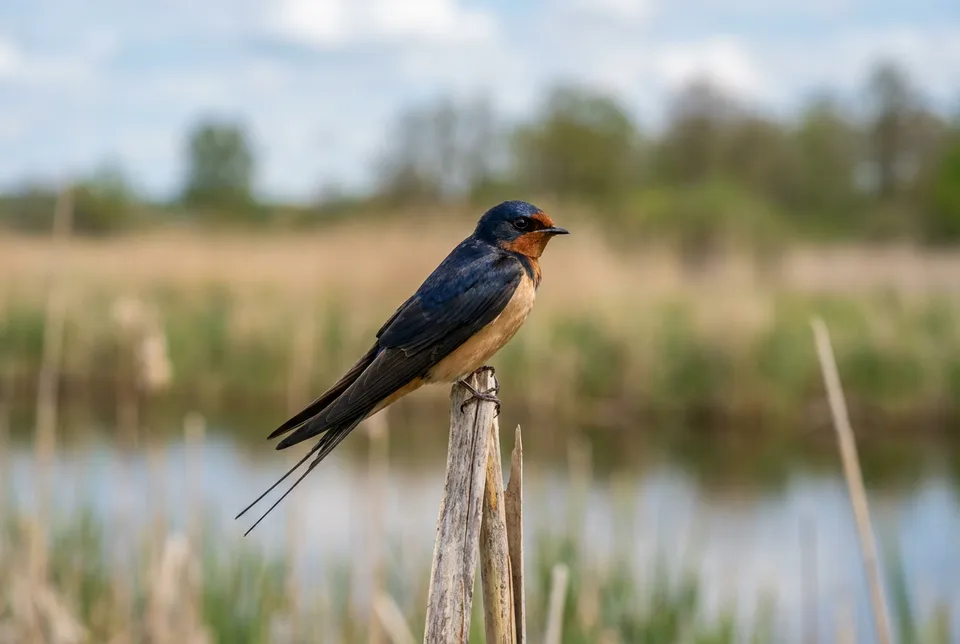
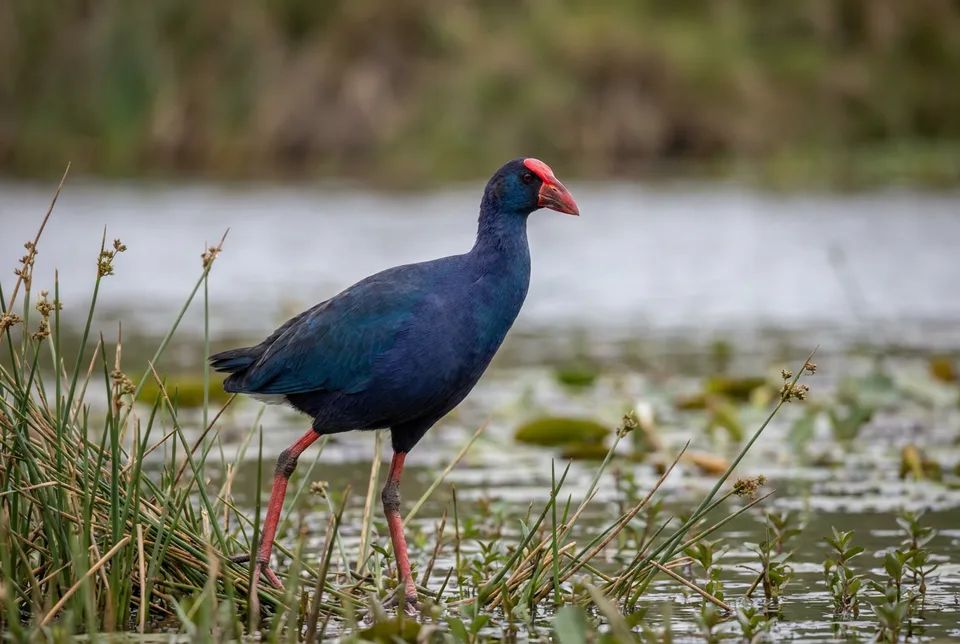
Cattle egret in wetland habitat — Nile, River Cruises wildlifeCattle EgretAfrican Swamphen in wetland habitat — Nile, Egypt, River Cruises wildlifeAfrican SwamphenBarn Swallow in wetland habitat — Mississippi, Nile, River Cruises wildlifeBarn Swallow
Animal groupBirdsAnimal groupBirdsAnimal groupBirds
DestinationsNileDestinationsNileDestinationsMississippi, Nile
Scientific name
Ardea ibis
Scientific name
Scientific name
Previous speciesCanvasbackNext speciesCommon Blackbird
All river wildlife
On this page
  • 01About
  • 02Behaviour & reproduction
  • 03Top wildlife locations
  • 04Fun facts
  • 05Best season
  • 06Season matrix by destination
  • 07Habitat
  • 08Diet
  • 09Species at a glance
  • 10Questions & answers
  • 11Compare

Find your river cruise

Plan your trip

Find your next river journey

Compare destinations, shore programs and dates with the animals and habitats you would love to see.

  • Daily shore excursions
  • Responsible wildlife watching
  • Boutique river ships
Explore river cruises