Bluerides – Blue Rides - Book Liveaboards worldwideOCEAN ADVENTURES
River CruisesRiversNature & WildlifeOur Promise
River CruisesRiversNature & WildlifeOur PromiseSign In

River destinations

  • River destinations
  • Amazon
  • Danube
  • Rhine
  • Mekong
  • Nile

Ships & departures

  • River Cruise Search
  • Deals

Nature & Wildlife

  • Nature & Wildlife

Travel support

  • Our Promise
  • Contact

Contact

Get in Touch

Get in touch anytime, we're happy to help you find the right trip or sort out any question.

EmailWrite us, we usually reply within a few hours.
contact@bluerides.com
WhatsAppChat with us on WhatsApp, Mon–Fri 10:00–16:00 (CET).
Start WhatsApp Chat
PhoneCall us, we're happy to help.
Free call, Mon–Fri 10 AM – 8 PM (CET).
Europe+49 800 1144 990USA+1 888 557 7735UK+44 800 707 4152Australia+61 2 8599 6113Canada+1 888 557 7735
Which river journey is yours?Answer 8 quick questions and find the river cruise that fits you.
8 questions, 1 minute·Plus Gift
Secure Payment MethodsYour payments are fully secured with AES-256 encryption.
Powered byStripeWiseAMEXPayGoogle PaySEPABank
Imprint·Terms & Conditions·Privacy Policy·About·Contact·Liability Waiver·Affiliate Program·Cruise·Blog·
Visit us here

© 2026 Blue Rides. All rights reserved.

Bluerides – Blue Rides - Book Liveaboards worldwideOCEAN ADVENTURES
River CruisesRiversNature & WildlifeOur Promise
River CruisesRiversNature & WildlifeOur PromiseSign In
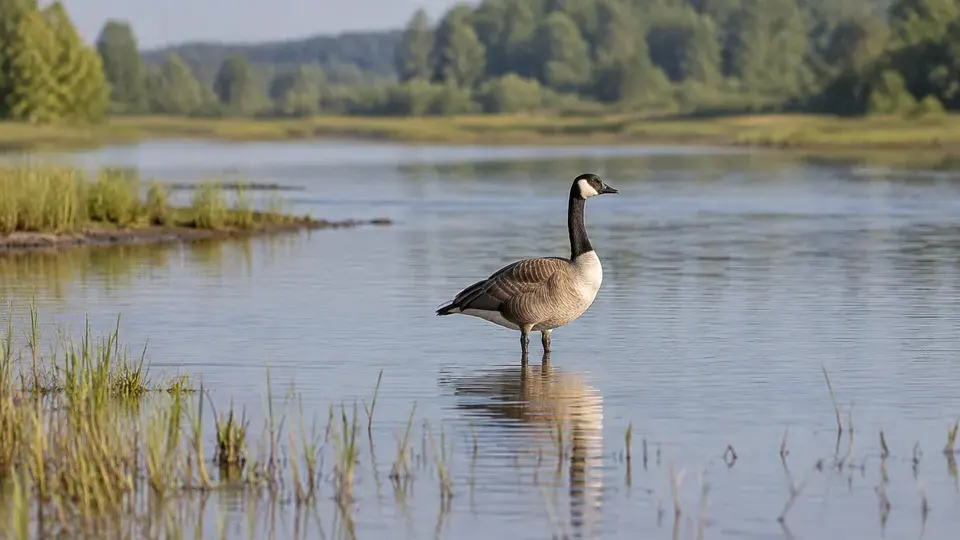
Canada goose in wetland habitat — Columbia, Mississippi, River Cruises wildlifeAI-modified
Home›River Cruises›River Wildlife›Canada Goose

Canada GooseBranta canadensisWhere and when to see them

Previous speciesCalifornia GullNext speciesCanvasback

Canada Goose at a glance

A Canada Goose is often heard before it is seen: carrying honks announce a line of broad-winged birds overhead, while a resting flock can occupy a surprisingly quiet river margin. Its black neck and white chinstrap make it familiar, but familiarity conceals considerable variation in size, body tone and movement. Some populations migrate long distances; others live around parks and suburban waters throughout the year. This is a grazing waterfowl species, not simply a bird of the open channel. The Columbia and Upper Mississippi registry associations should be understood as specific wetland records, with shorelines and nearby grassland offering different opportunities from a passing ship. Watch how a flock connects feeding land with safe water rather than assuming that every bird is following the same migratory itinerary.

Behaviour & reproduction

Size
Not verified
Weight
Not verified
Lifespan
Not verified
Status
Not verified

Canada Geese combine communal flocking with close attention to mates and young. Feeding birds may repeatedly lift their heads to survey the surroundings, especially on open lawns where approaching danger is easier to see. Nesting generally takes place on a slightly elevated site near water. The female builds and lines the nest, incubates the eggs and receives protection from the male. Hatchlings leave the nest soon after hatching and can walk, swim and feed for themselves, though they remain dependent on parental guidance and defence. A pair standing on shore may therefore be guarding a route used by young rather than seeking food from visitors. Honking flight formations and concentrated grazing groups are useful natural behaviours to observe, but neither should be provoked by approaching the flock.

Top wildlife locations

Columbia river landscape — River Cruises wildlife habitatAI-modified

Columbia

Most records cover Umatilla refuge backwaters along the Columbia near Boardman–Irrigon. Seasonal waterfowl may be best in winter rather than the sailing season. Bighorn sheep require a separate Hells Canyon excursion on the Snake River.
Explore river cruises
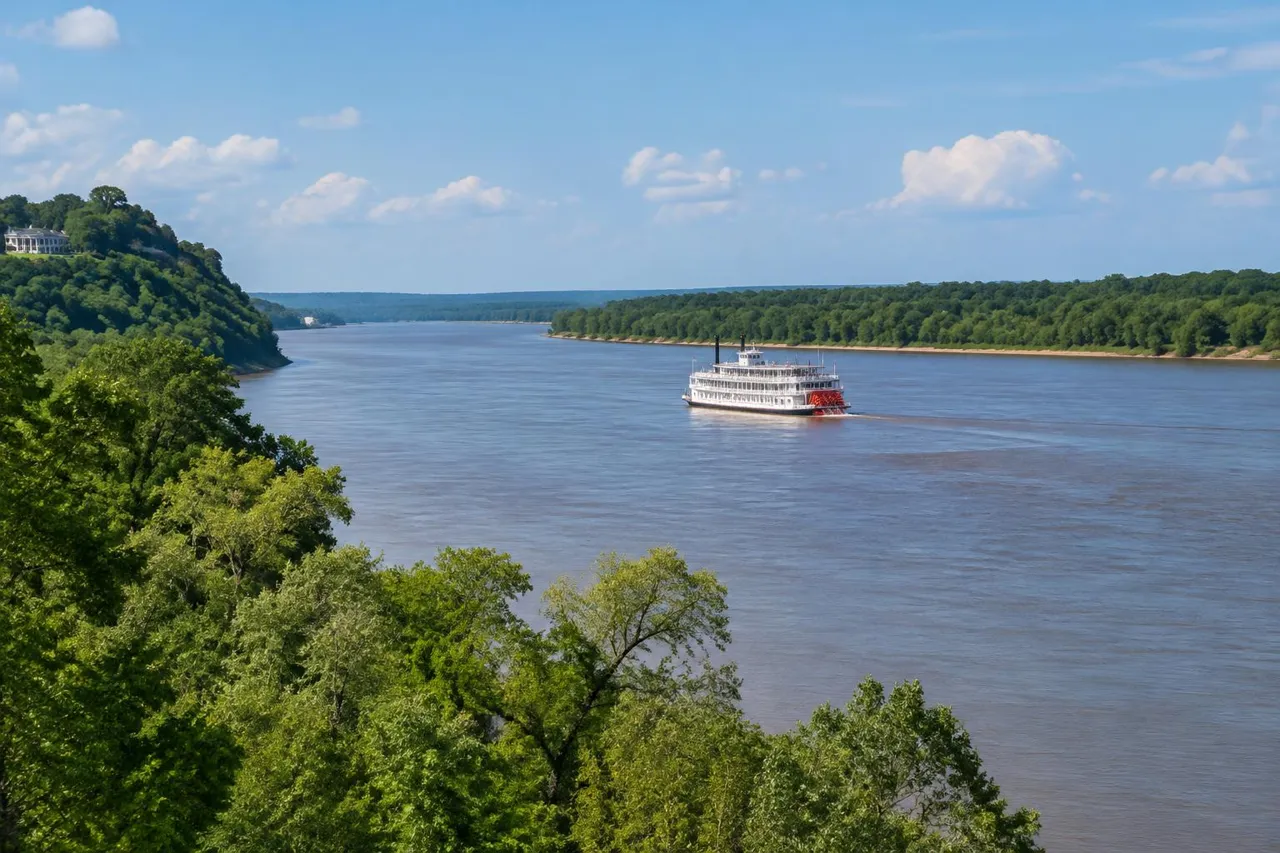
Mississippi river landscape — River Cruises wildlife habitatAI-modified

Mississippi

Upper Mississippi — Upper Mississippi River NWR, Wabasha MN–Rock Island IL

Explore river cruises

Destinations describe the species' habitat, not guaranteed cruise stops. Some animals require an optional inland excursion or are found in restricted reserves.

Fun facts about the Canada Goose

  • The white chinstrap contrasts with a black neck.
  • Some populations remain around urban waters year-round.
  • Grass is a natural food.
  • Agricultural grain also forms part of the diet.
  • The female incubates the eggs.
  • The male guards the nesting female.
  • Nests are lined with down.
  • Young leave the nest soon after hatching.
  • Clear lawns offer an unobstructed view of approaching predators.

Best time to see the Canada Goose

No numerical local viewing calendar is verified for the registered Columbia, Mississippi associations. Some Canada Geese migrate while others remain around urban waters; a flock on a lawn cannot establish which pattern applies to a whole river reach. Family groups and passing V-formations also represent different kinds of observation.

Canada Goose: season matrix by destination

Highlighted months reflect the stated local evidence, not guaranteed encounters. Neutral months mean no verified monthly viewing window, not absence. Observation records and recommended viewing windows are distinct.

Columbia

No river-specific wildlife calendar is confirmed. Check the actual river reach, local conditions and excursion access with your operator.

JanFebMarAprMayJunJulAugSepOctNovDec
Explore river cruises

Mississippi

The official refuge checklist records this species in the listed locally defined seasons, including rare occurrences where coded, providing local guidance rather than a guarantee of sightings.

JanFebMarAprMayJunJulAugSepOctNovDec
Explore river cruises

Where the Canada Goose lives

Water and open feeding ground form the central habitat combination. Cornell lists grassy fields and grain fields alongside many kinds of waterside habitat, explaining why the species thrives around managed lawns as well as less altered wetlands. Short vegetation offers food and a clear view, while nearby water provides a place to retreat. On the Columbia, the registered association concerns Umatilla refuge and the John Day pool around Boardman–Irrigon; on the Mississippi it concerns the Upper Mississippi refuge corridor. Those records do not mean that all adjacent parks, islands or farm fields are publicly accessible. Survey shorelines, wetland pools and visible feeding areas from authorised viewpoints. A flock using a riverside lawn is still expressing the species’ habitat preferences, not necessarily evidence that the wider river is its principal feeding habitat.

What the Canada Goose eats

Canada Geese feed mainly on vegetation, but the plant parts they select change with opportunity. Grasses and sedges are important in spring and summer; seeds, berries and agricultural grain become more prominent in the broader fall and winter diet described by Cornell. They can graze efficiently on managed grass and remove kernels from dry corn cobs. Feeding is therefore often easiest to study on land, where the repeated cropping movements are visible, rather than on distant open water. River-edge vegetation and nearby fields can support different foods without implying separate species or unusual behaviour. These are natural foraging observations, not a reason to offer bread or grain. Hand-feeding encourages close encounters and makes it harder to watch how an undisturbed flock chooses food and responds to its surroundings.

Species at a glance

Common name
Canada Goose
Scientific name
Branta canadensis
Animal group
Birds
Size
Not verified in the accessible source text.
Weight
Not verified in the accessible source text.
Lifespan
Wild lifespan not verified in the accessible source text.
Status
Current global conservation assessment not verified.
Identification
The strongest starting combination is a long black neck, white cheek-and-chin patch and brown body. Black legs, a broad flat bill and pale undertail support the identification, while broad wings and honking formations help locate flying birds. Body tone and size vary substantially, so neither a dark breast nor apparent bulk should be used alone. Cackling Geese require particular care because they share the basic black-and-white head pattern. Compare neck length, bill size and overall proportions in good views rather than assigning every small goose from a distant flock. Young Canada Geese begin as downy goslings and do not resemble miniature patterned adults. Photograph uncertain birds from several angles when possible; a complete side profile usually contributes more than a close crop of the white chinstrap.

Canada Goose: frequently asked questions

Where can I see the Canada Goose?
Columbia, Mississippi. Begin by scanning the boundary between water and grass, then look farther out for resting groups. Binoculars reveal chinstraps and bill proportions; a scope is valuable when smaller black-necked geese are mixed into a distant flock. Take time to compare neighbours in the same plane, because perspective can exaggerate size differences. Listen to the calls of passing birds without treating voice alone as a secure identification. Keep paths clear when adults escort goslings between land and water, and do not walk through a flock to obtain a flight photograph. At Umatilla and Upper Mississippi viewpoints, remain within current access rules and avoid using private field entrances. A relaxed flock continues feeding or resting; repeated head-raising and coordinated movement away are reasons to stop and increase distance.
When is the best time to see the Canada Goose?
No numerical local viewing calendar is verified for the registered Columbia, Mississippi associations. Some Canada Geese migrate while others remain around urban waters; a flock on a lawn cannot establish which pattern applies to a whole river reach. Family groups and passing V-formations also represent different kinds of observation.
How big does the Canada Goose get?
Not verified in the accessible source text.. Adult weight: Not verified in the accessible source text.. Size varies with age, sex and population.
How should I behave around the Canada Goose?
Begin by scanning the boundary between water and grass, then look farther out for resting groups. Binoculars reveal chinstraps and bill proportions; a scope is valuable when smaller black-necked geese are mixed into a distant flock. Take time to compare neighbours in the same plane, because perspective can exaggerate size differences. Listen to the calls of passing birds without treating voice alone as a secure identification. Keep paths clear when adults escort goslings between land and water, and do not walk through a flock to obtain a flight photograph. At Umatilla and Upper Mississippi viewpoints, remain within current access rules and avoid using private field entrances. A relaxed flock continues feeding or resting; repeated head-raising and coordinated movement away are reasons to stop and increase distance.
What does the Canada Goose eat?
Canada Geese feed mainly on vegetation, but the plant parts they select change with opportunity. Grasses and sedges are important in spring and summer; seeds, berries and agricultural grain become more prominent in the broader fall and winter diet described by Cornell. They can graze efficiently on managed grass and remove kernels from dry corn cobs. Feeding is therefore often easiest to study on land, where the repeated cropping movements are visible, rather than on distant open water. River-edge vegetation and nearby fields can support different foods without implying separate species or unusual behaviour. These are natural foraging observations, not a reason to offer bread or grain. Hand-feeding encourages close encounters and makes it harder to watch how an undisturbed flock chooses food and responds to its surroundings.
Are wildlife sightings guaranteed on a river cruise?
No. Animals move freely and routes, weather, access restrictions and local conditions influence every outing. Confirm the actual itinerary and shore program before booking.

Compare wildlife in the same destinations

Explore other birds recorded in these destinations. Similar surroundings do not mean the animals share the same habits or viewing season.

Species comparison by animal group and destination
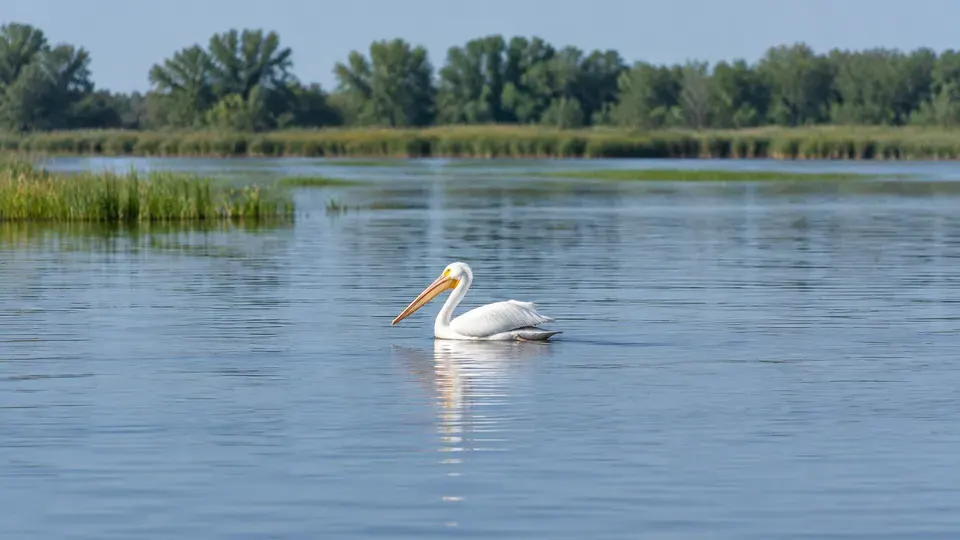
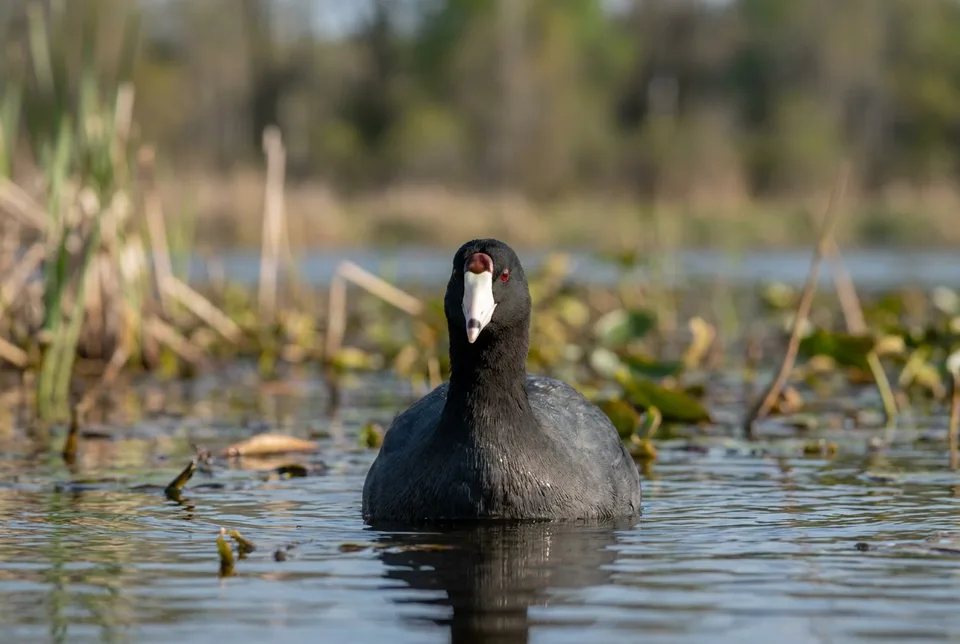
Canada goose in wetland habitat — Columbia, Mississippi, River Cruises wildlifeAI-modifiedCanada GooseAmerican Coot in wetland habitat — Columbia, River Cruises wildlifeAI-modifiedAmerican CootAmerican white pelican in wetland habitat — Columbia, Mississippi, River Cruises wildlifeAI-modifiedAmerican White Pelican
Animal groupBirdsAnimal groupBirdsAnimal groupBirds
DestinationsColumbia, MississippiDestinationsColumbiaDestinationsColumbia, Mississippi
Scientific name
Branta canadensis
Scientific name
Scientific name
Previous speciesCalifornia GullNext speciesCanvasback
All river wildlife
On this page
  • 01About
  • 02Behaviour & reproduction
  • 03Top wildlife locations
  • 04Fun facts
  • 05Best season
  • 06Season matrix by destination
  • 07Habitat
  • 08Diet
  • 09Species at a glance
  • 10Questions & answers
  • 11Compare

Find your river cruise

AI-modified
Plan your trip

Find your next river journey

Compare destinations, shore programs and dates with the animals and habitats you would love to see.

  • Daily shore excursions
  • Responsible wildlife watching
  • Boutique river ships
Explore river cruises