Bluerides – Blue Rides - Book Liveaboards worldwideOCEAN ADVENTURES
River CruisesRiversNature & WildlifeOur Promise
River CruisesRiversNature & WildlifeOur PromiseSign In

River destinations

  • River destinations
  • Amazon
  • Danube
  • Rhine
  • Mekong
  • Nile

Ships & departures

  • River Cruise Search
  • Deals

Nature & Wildlife

  • Nature & Wildlife

Travel support

  • Our Promise
  • Contact

Contact

Get in Touch

Get in touch anytime, we're happy to help you find the right trip or sort out any question.

EmailWrite us, we usually reply within a few hours.
contact@bluerides.com
WhatsAppChat with us on WhatsApp, Mon–Fri 10:00–16:00 (CET).
Start WhatsApp Chat
PhoneCall us, we're happy to help.
Free call, Mon–Fri 10 AM – 8 PM (CET).
Europe+49 800 1144 990USA+1 888 557 7735UK+44 800 707 4152Australia+61 2 8599 6113Canada+1 888 557 7735
Which river journey is yours?Answer 8 quick questions and find the river cruise that fits you.
8 questions, 1 minute·Plus Gift
Secure Payment MethodsYour payments are fully secured with AES-256 encryption.
Powered byStripeWiseAMEXPayGoogle PaySEPABank
Imprint·Terms & Conditions·Privacy Policy·About·Contact·Liability Waiver·Affiliate Program·Cruise·Blog·
Visit us here

© 2026 Blue Rides. All rights reserved.

Bluerides – Blue Rides - Book Liveaboards worldwideOCEAN ADVENTURES
River CruisesRiversNature & WildlifeOur Promise
River CruisesRiversNature & WildlifeOur PromiseSign In
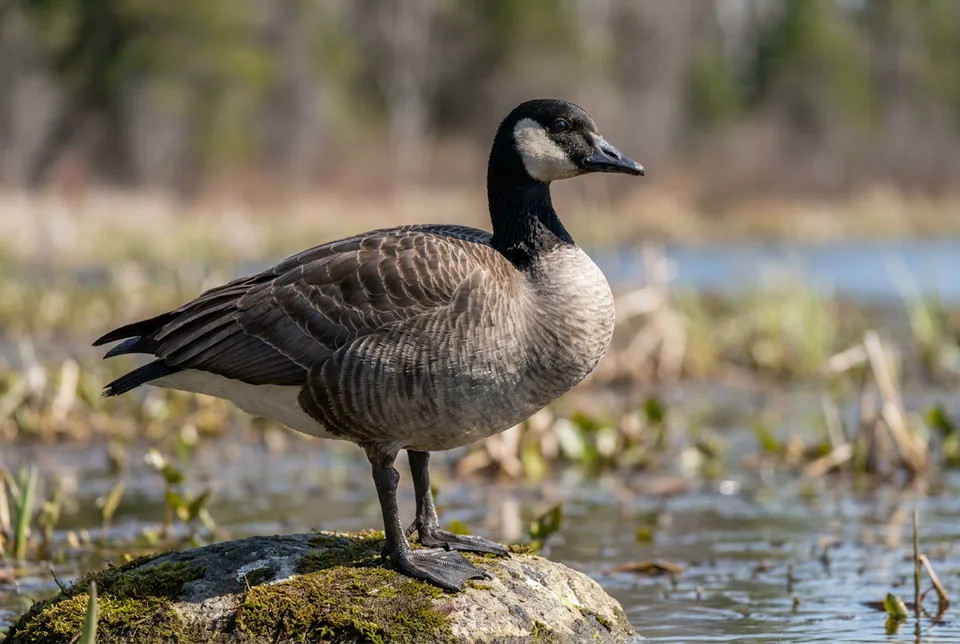
Cackling Goose in wetland habitat — Columbia, River Cruises wildlifeAI-modified
Home›River Cruises›River Wildlife›Cackling Goose

Cackling GooseBranta hutchinsiiWhere and when to see them

Previous speciesBuffleheadNext speciesCalifornia Gull

Cackling Goose at a glance

The Cackling Goose is a small goose closely resembling Canada Goose, making careful identification more important than its familiar black-necked appearance might suggest. Its compact proportions, short bill and head shape are useful, but variation among populations and overlap with small Canada Geese complicate quick decisions. Cornell describes breeding populations in Arctic and subarctic habitats and flocking in open landscapes during migration and winter. The registered river association is Umatilla National Wildlife Refuge and the John Day pool on the Columbia near Boardman–Irrigon. That is narrower than Umatilla County and should not be replaced by county-wide sighting dates. The refuge’s general importance for wintering waterfowl provides context, not a species-specific monthly calendar. This profile therefore treats the registry association as a reason for targeted local checking rather than a promise of Cackling Geese on every Columbia sailing.

Behaviour & reproduction

Size
Not independently verified for this draft
Weight
Not independently verified for this draft
Lifespan
Not independently verified for this draft
Status
See sourced assessment

Cornell describes family groups as important throughout much of a Cackling Goose’s life. Families can migrate together and join other families to form larger flocks, so a feeding assembly may contain meaningful social units rather than an anonymous crowd. During migration and winter, birds use open landscapes and may commute between feeding areas and water used for resting, bathing or roosting. A flock observed over the river is therefore not necessarily feeding at that point. Their distribution can change with agricultural practices, which cautions against assuming that a field used historically will remain reliable. No Umatilla-specific family study, daily commuting route or flock timetable was verified here. Watch feeding and resting groups from a distance, avoid walking toward them across open ground and do not follow departing birds into closed refuge areas. Natural flock movements are more informative than a mass take-off caused by an approaching observer.

Top wildlife locations

Columbia river landscape — River Cruises wildlife habitatAI-modified

Columbia

Umatilla NWR / John Day pool, Boardman–Irrigon; refuge-specific confirmation required, not county-wide evidence.
Explore river cruises

Destinations describe the species' habitat, not guaranteed cruise stops. Some animals require an optional inland excursion or are found in restricted reserves.

Fun facts about the Cackling Goose

  • It is distinct from Canada Goose.
  • A short bill is an important identification clue.
  • Size alone is insufficient for identification.
  • Different populations vary in proportions.
  • Families can migrate together.
  • Its diet is mostly plant material.
  • Flocks use both feeding landscapes and resting water.
  • Agricultural practices can influence nonbreeding distribution.
  • Umatilla County dates are not automatically refuge-specific evidence.

Best time to see the Cackling Goose

A species-specific recurring viewing season for the registered Umatilla refuge reach was not verified. The refuge’s official page mentions wintering waterfowl and associated island protection, but that is a community-level statement rather than direct evidence for Cackling Goose months. Search results also returned Cackling Goose dates for Umatilla County, a broader area containing sites outside the registered refuge corridor. Those dates are not transferred into this profile. Cornell’s descriptions of migration and winter flocking establish general biology, not a local calendar. The location months array remains empty. Before travelling, ask refuge staff or an experienced local observer for recent, species-confirmed records from Umatilla NWR or the John Day pool near Boardman–Irrigon. Confirm the actual viewing location and access rules. A flock can shift between agricultural fields and resting water, so even current presence in the landscape does not guarantee a view from a scheduled river passage.

Cackling Goose: season matrix by destination

Highlighted months reflect the stated local evidence, not guaranteed encounters. Neutral months mean no verified monthly viewing window, not absence. Observation records and recommended viewing windows are distinct.

Columbia

Registry association retained. No species-specific recurring local month range independently verified.

JanFebMarAprMayJunJulAugSepOctNovDec
Explore river cruises

Where the Cackling Goose lives

The species’ breeding habitats are geographically and ecologically distinct from its registered Columbia observation context. Cornell describes Arctic and subarctic nesting settings, while migration and winter habitats include freshwater marshes, mudflats, meadows and agricultural fields, with lakes and reservoirs used for resting and roosting. Umatilla refuge contains Columbia River waters, islands, shores, wetlands and uplands, providing a landscape in which feeding and resting areas can be separated. However, that general habitat match does not locate a current Cackling Goose flock. The registry specifically concerns the refuge and John Day pool around Boardman–Irrigon, not every part of the county or Columbia Basin. Ask refuge staff about legal viewing points and recent species-confirmed observations. Most refuge islands are closed to protect nesting birds and wintering waterfowl, so proximity by boat does not imply permission to land or approach a roost.

What the Cackling Goose eats

Cackling Geese eat mostly plant material, especially grasses and grasslike plants, according to Cornell’s life-history account. Diet varies across their extensive breeding and nonbreeding ranges, and agricultural landscapes can influence where flocks gather. This makes grazing behaviour a useful thing to watch, but it does not justify assigning one crop or food plant to the Umatilla birds without local evidence. A goose feeding in a field may be taking green vegetation, other plant material or resources not identifiable from a distant viewpoint. No refuge-specific diet study or seasonal food percentages were verified for this draft. The profile therefore avoids claiming that harvest dates produce a predictable local peak. Never supply grain, bread or scraps to concentrate geese near a public viewpoint. Feeding changes their behaviour and can encourage conflicts. Observe natural grazing and the relationship between feeding areas and undisturbed water used for resting.

Species at a glance

Common name
Cackling Goose
Scientific name
Branta hutchinsii
Animal group
Birds
Size
Not independently verified for this draft
Weight
Not independently verified for this draft
Lifespan
Not independently verified for this draft
Status
A current formal global conservation assessment was not independently verified for this draft.
Identification
Cackling Goose shares the dark head and neck and pale cheek pattern familiar from Canada Goose, so those features alone do not separate the species. Concentrate on the short bill, compact head and body proportions, neck appearance and the overall combination of characters. Size is helpful only in careful context because populations vary and small Canada Geese can cause confusion. Birds nearer the observer may appear larger than genuinely larger birds farther away, while posture changes apparent neck length. A single distant photograph can therefore be misleading. Compare several birds at similar distances, seek a side view of the bill and allow for different Cackling Goose populations rather than expecting one universal silhouette. No subspecies was verified for the registered Umatilla association in this research. Do not assign one from location alone, and do not turn a general goose flock into a Cackling Goose record without species-level evidence.

Cackling Goose: frequently asked questions

Where can I see the Cackling Goose?
Columbia. Begin with stationary scanning of goose flocks from legal public viewpoints, preferably where birds can be compared at similar distances. Look for compact individuals with short bills, but do not identify solely by selecting the smallest goose in a mixed flock. Photograph several angles when possible without approaching, and include comparative birds in the frame. A local guide familiar with both Cackling and Canada Geese is valuable because small Canada Geese can overlap in apparent size. At Umatilla, obey island closures and keep boats clear of resting groups. Do not flush a flock to hear calls or obtain flight views, and do not enter agricultural land without permission. County-wide reports can help suggest regional interest but should be followed by refuge-specific confirmation. Record uncertainties openly: an unidentified small white-cheeked goose is preferable to a confident species claim unsupported by bill shape, head proportions and a sufficiently clear view.
When is the best time to see the Cackling Goose?
A species-specific recurring viewing season for the registered Umatilla refuge reach was not verified. The refuge’s official page mentions wintering waterfowl and associated island protection, but that is a community-level statement rather than direct evidence for Cackling Goose months. Search results also returned Cackling Goose dates for Umatilla County, a broader area containing sites outside the registered refuge corridor. Those dates are not transferred into this profile. Cornell’s descriptions of migration and winter flocking establish general biology, not a local calendar. The location months array remains empty. Before travelling, ask refuge staff or an experienced local observer for recent, species-confirmed records from Umatilla NWR or the John Day pool near Boardman–Irrigon. Confirm the actual viewing location and access rules. A flock can shift between agricultural fields and resting water, so even current presence in the landscape does not guarantee a view from a scheduled river passage.
How big does the Cackling Goose get?
Not independently verified for this draft. Adult weight: Not independently verified for this draft. Size varies with age, sex and population.
How should I behave around the Cackling Goose?
Begin with stationary scanning of goose flocks from legal public viewpoints, preferably where birds can be compared at similar distances. Look for compact individuals with short bills, but do not identify solely by selecting the smallest goose in a mixed flock. Photograph several angles when possible without approaching, and include comparative birds in the frame. A local guide familiar with both Cackling and Canada Geese is valuable because small Canada Geese can overlap in apparent size. At Umatilla, obey island closures and keep boats clear of resting groups. Do not flush a flock to hear calls or obtain flight views, and do not enter agricultural land without permission. County-wide reports can help suggest regional interest but should be followed by refuge-specific confirmation. Record uncertainties openly: an unidentified small white-cheeked goose is preferable to a confident species claim unsupported by bill shape, head proportions and a sufficiently clear view.
What does the Cackling Goose eat?
Cackling Geese eat mostly plant material, especially grasses and grasslike plants, according to Cornell’s life-history account. Diet varies across their extensive breeding and nonbreeding ranges, and agricultural landscapes can influence where flocks gather. This makes grazing behaviour a useful thing to watch, but it does not justify assigning one crop or food plant to the Umatilla birds without local evidence. A goose feeding in a field may be taking green vegetation, other plant material or resources not identifiable from a distant viewpoint. No refuge-specific diet study or seasonal food percentages were verified for this draft. The profile therefore avoids claiming that harvest dates produce a predictable local peak. Never supply grain, bread or scraps to concentrate geese near a public viewpoint. Feeding changes their behaviour and can encourage conflicts. Observe natural grazing and the relationship between feeding areas and undisturbed water used for resting.
Are wildlife sightings guaranteed on a river cruise?
No. Animals move freely and routes, weather, access restrictions and local conditions influence every outing. Confirm the actual itinerary and shore program before booking.

Compare wildlife in the same destinations

Explore other birds recorded in these destinations. Similar surroundings do not mean the animals share the same habits or viewing season.

Species comparison by animal group and destination
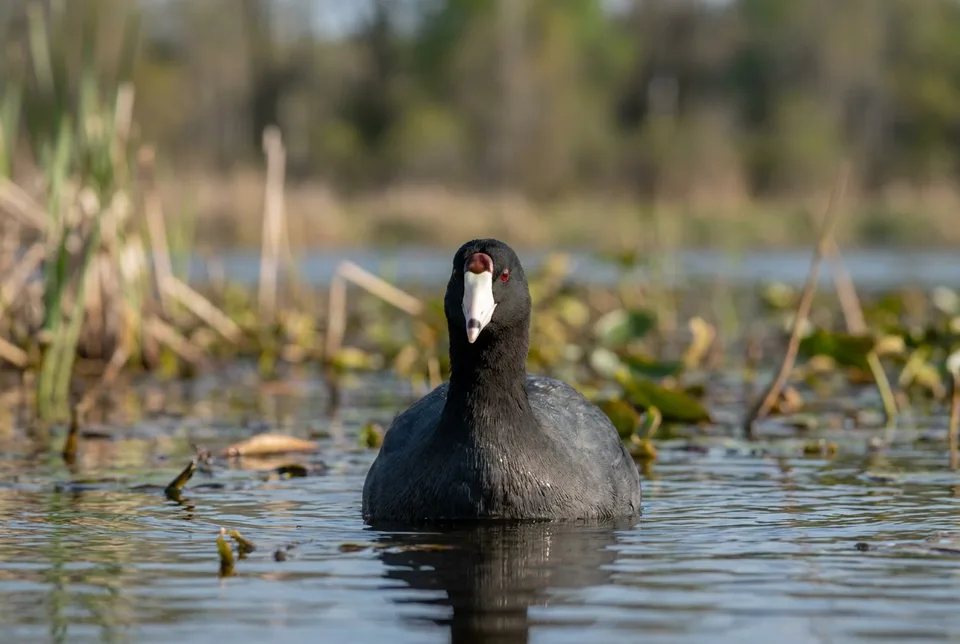
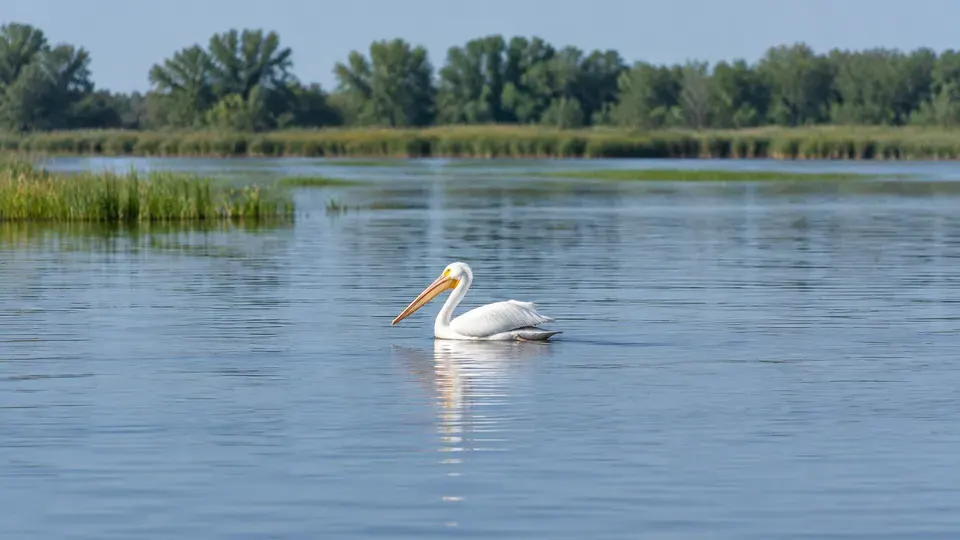
Cackling Goose in wetland habitat — Columbia, River Cruises wildlifeAI-modifiedCackling GooseAmerican Coot in wetland habitat — Columbia, River Cruises wildlifeAI-modifiedAmerican CootAmerican white pelican in wetland habitat — Columbia, Mississippi, River Cruises wildlifeAI-modifiedAmerican White Pelican
Animal groupBirdsAnimal groupBirdsAnimal groupBirds
DestinationsColumbiaDestinationsColumbiaDestinationsColumbia, Mississippi
Scientific name
Branta hutchinsii
Scientific name
Scientific name
Previous speciesBuffleheadNext speciesCalifornia Gull
All river wildlife
On this page
  • 01About
  • 02Behaviour & reproduction
  • 03Top wildlife locations
  • 04Fun facts
  • 05Best season
  • 06Season matrix by destination
  • 07Habitat
  • 08Diet
  • 09Species at a glance
  • 10Questions & answers
  • 11Compare

Find your river cruise

AI-modified
Plan your trip

Find your next river journey

Compare destinations, shore programs and dates with the animals and habitats you would love to see.

  • Daily shore excursions
  • Responsible wildlife watching
  • Boutique river ships
Explore river cruises