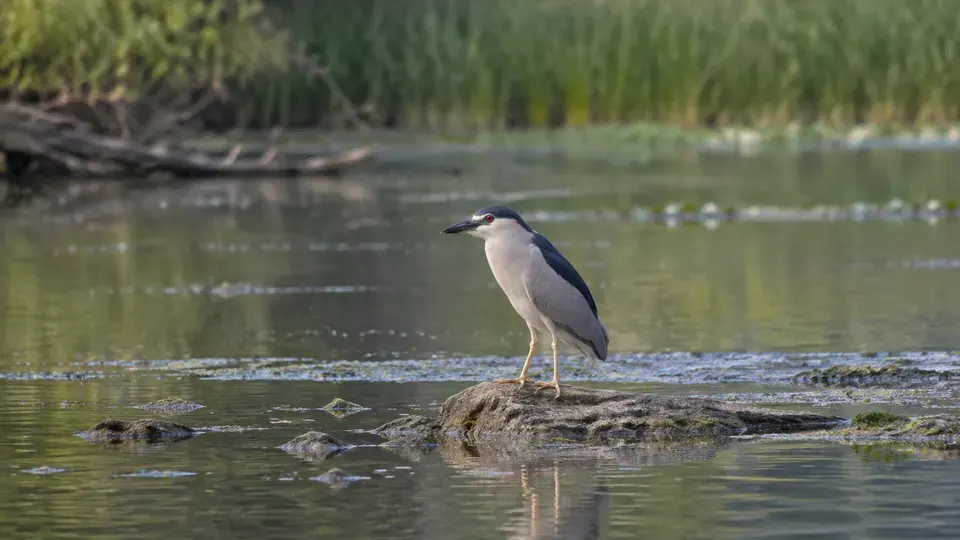
The Black-crowned Night Heron is a stocky wetland heron whose compact shape contrasts with the tall, slender outline of many familiar relatives. Adults have a dark crown and back, grey wings and pale underparts; young birds are brown and spotted instead. Its name reflects a real behavioural distinction: feeding is especially associated with dusk and darkness, while daylight often finds birds concealed in waterside foliage. The registry includes four separate river associations: Umatilla National Wildlife Refuge on the Columbia, the Romanian Danube Delta around Mahmudia, the Luxor–Aswan Nile corridor, and Tra Su flooded forest in Vietnam’s Mekong Delta. These are not interchangeable populations or viewing calendars. Cornell supplies species biology, while local checklists and dated observations establish particular associations. None supports promising a night heron on every sailing, and the Danube record must not be transferred to the central European city-cruise corridor.

Columbia
Umatilla NWR and John Day pool, Boardman–Irrigon; refuge wetlands and sloughs.