Bluerides – Blue Rides - Book Liveaboards worldwideOCEAN ADVENTURES
River CruisesRiversNature & WildlifeOur Promise
River CruisesRiversNature & WildlifeOur PromiseSign In

River destinations

  • River destinations
  • Amazon
  • Danube
  • Rhine
  • Mekong
  • Nile

Ships & departures

  • River Cruise Search
  • Deals

Nature & Wildlife

  • Nature & Wildlife

Travel support

  • Our Promise
  • Contact

Contact

Get in Touch

Get in touch anytime, we're happy to help you find the right trip or sort out any question.

EmailWrite us, we usually reply within a few hours.
contact@bluerides.com
WhatsAppChat with us on WhatsApp, Mon–Fri 10:00–16:00 (CET).
Start WhatsApp Chat
PhoneCall us, we're happy to help.
Free call, Mon–Fri 10 AM – 8 PM (CET).
Europe+49 800 1144 990USA+1 888 557 7735UK+44 800 707 4152Australia+61 2 8599 6113Canada+1 888 557 7735
Which river journey is yours?Answer 8 quick questions and find the river cruise that fits you.
8 questions, 1 minute·Plus Gift
Secure Payment MethodsYour payments are fully secured with AES-256 encryption.
Powered byStripeWiseAMEXPayGoogle PaySEPABank
Imprint·Terms & Conditions·Privacy Policy·About·Contact·Liability Waiver·Affiliate Program·Cruise·Blog·
Visit us here

© 2026 Blue Rides. All rights reserved.

Bluerides – Blue Rides - Book Liveaboards worldwideOCEAN ADVENTURES
River CruisesRiversNature & WildlifeOur Promise
River CruisesRiversNature & WildlifeOur PromiseSign In
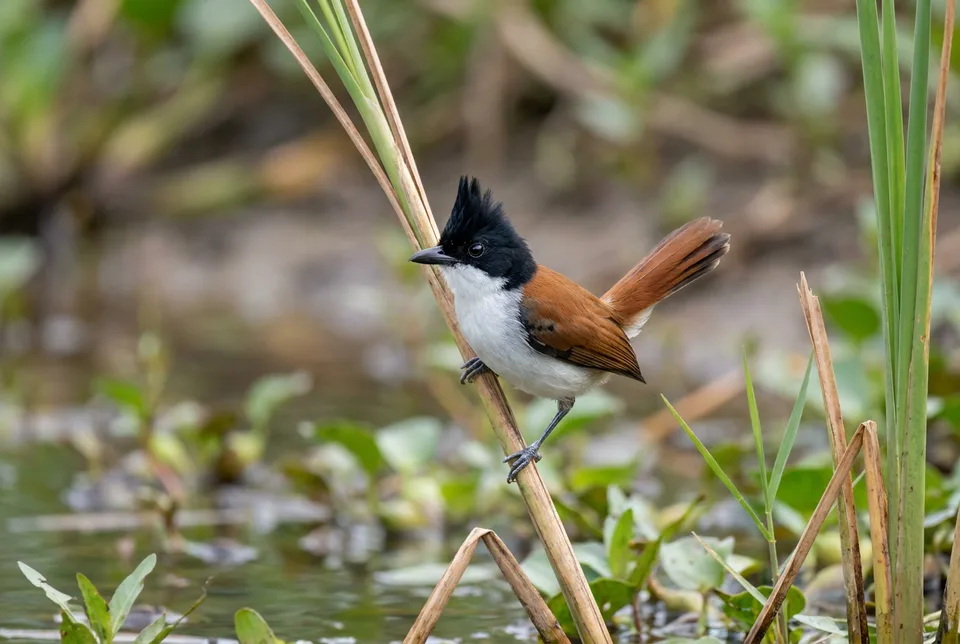
Black-crested Antshrike in wetland habitat — Amazon, River Cruises wildlifeAI-modified
Home›River Cruises›River Wildlife›Black-crested Antshrike

Black-crested AntshrikeSakesphorus canadensisWhere and when to see them

Previous speciesBlack-collared HawkNext speciesBlack-crowned Night Heron

Black-crested Antshrike at a glance

The Black-crested Antshrike is a strongly patterned South American antbird, not a true shrike despite its name and substantial bill. A bushy crest gives both sexes a distinctive silhouette, but their colours differ markedly. Males generally combine dark head markings with contrasting wing spots; females are warmer and buffier, with a reddish crown. Geographic variation matters because birds in northern Brazil can look darker than illustrations based on other populations. The registered river association is specifically the Rio Negro and islands of Anavilhanas National Park in Brazil. A Field Guides tour reported good views there during its September 2022 itinerary. That is historical evidence of occurrence within the registered reach, not proof of a recurring September peak. For river travellers, this is principally a guided island-forest birding opportunity rather than an animal reliably visible from the middle of the navigation channel.
Behaviour & reproduction

Size
Not independently verified for this draft
Weight
Not independently verified for this draft
Lifespan
Not independently verified for this draft
Status
See sourced assessment

Pairs typically move through the lower and middle vegetation layers, making this antshrike a bird to follow through connected branches rather than search for on an exposed sandbar. The Cornell eBird identification account describes it as not particularly skulking, although foliage can still break a view into brief glimpses. Watching the pair together helps explain the striking difference between male and female plumage and reduces the risk of treating them as separate species. Their crests can alter the outline of the head as posture changes. In Anavilhanas, a small observation boat and a patient guide are more useful than a rapid passage past forest edges. The available local report establishes that observers obtained good views, but it does not document a daily activity schedule, local breeding cycle or response to river level. Those details should remain unclaimed rather than reconstructed from general Amazonian seasonality.

Top wildlife locations

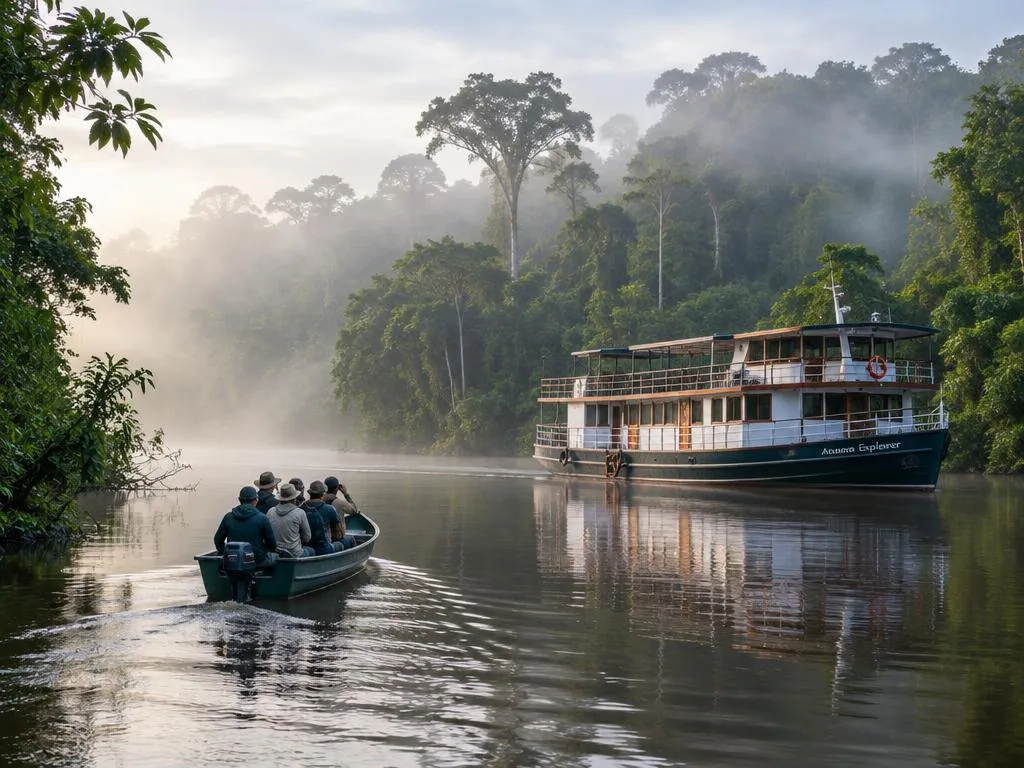
Amazon river landscape — River Cruises wildlife habitatAI-modified

Amazon

Brazil: Rio Negro, Anavilhanas National Park islands; guided island or forest-edge birding, not an Amazon-wide deck-view claim.
Explore river cruises

Destinations describe the species' habitat, not guaranteed cruise stops. Some animals require an optional inland excursion or are found in restricted reserves.

Fun facts about the Black-crested Antshrike

  • It belongs to the antbird family, not the true shrikes.
  • Both sexes have a bushy crest.
  • Male and female plumages differ conspicuously.
  • Females have a rufous crown.
  • White wing spotting is an important male identification feature.
  • Northern Brazilian males can be darker than birds elsewhere.
  • Pairs commonly move through lower and middle vegetation.
  • The name does not imply an exclusively ant-based diet.
  • The registered Anavilhanas record comes from a September 2022 tour.

Best time to see the Black-crested Antshrike

The verified local seasonal evidence is a historical visit, not an annual viewing recommendation. Field Guides’ Rio Negro Paradise itinerary ran from 3 to 18 September 2022 and explicitly recorded Black-crested Antshrike at Anavilhanas National Park. This supports occurrence during that tour window. It does not establish the exact observation day, a September abundance peak, continuous presence through that month or equivalent viewing in other years. The species’ broader distribution and descriptions of its usual habitat cannot supply missing local months. Likewise, Amazon high-water and low-water travel advice should not be converted into an antshrike calendar without species-specific evidence. The location therefore retains an empty months array. Travellers should ask an Anavilhanas guide about recent sightings, the intended island or channel, suitable observation distance and current park access. A flexible forest excursion is more defensible than promising a particular month or a sighting from the cruise deck.

Black-crested Antshrike: season matrix by destination

Highlighted months reflect the stated local evidence, not guaranteed encounters. Neutral months mean no verified monthly viewing window, not absence. Observation records and recommended viewing windows are distinct.

Amazon

Recorded during a 3–18 September 2022 tour. No recurring local viewing calendar verified.

JanFebMarAprMayJunJulAugSepOctNovDec
Explore river cruises

Where the Black-crested Antshrike lives

Open woodland and scrub are recognised habitats across this species’ northern South American range. The actual registered Amazon association, however, comes from the island environment of Anavilhanas National Park on the Rio Negro. These are different levels of evidence: a broad habitat description explains ecological possibilities, while the tour report identifies a particular place where the bird was seen. Neither justifies adding every Amazon tributary or every forest stop to the profile. Within the registered reach, guides should identify accessible vegetation where recent observations have occurred and distinguish island excursions from views obtainable aboard the main vessel. Lower and middle foliage layers deserve attention because that is where pairs commonly move. A dense wall of trees viewed at speed offers much less opportunity for identification than a stationary observation beside suitable vegetation. Water conditions and park access can affect the outing without establishing an annual wildlife calendar.

What the Black-crested Antshrike eats

Black-crested Antshrikes are primarily animal-prey feeders, taking insects and other small arthropods from vegetation. Their substantial bills and deliberate searching distinguish their feeding style from aerial insect-catching birds such as bee-eaters. An observer should look for short movements between branches, pauses to inspect leaves and twigs, and a quick bill movement when prey is taken. The common name does not mean that ants alone constitute the diet, and membership of the antbird family does not establish obligatory attendance at army-ant swarms. No Anavilhanas stomach-content study, prey-frequency dataset or seasonal feeding analysis was verified in this research. Consequently, the profile does not assign a local favourite prey, quantify insect consumption or claim that a flood stage produces better feeding opportunities. Natural foraging is best watched without bait, playback-led pursuit or vegetation disturbance, allowing the pair to continue moving through its chosen feeding area.

Species at a glance

Common name
Black-crested Antshrike
Scientific name
Sakesphorus canadensis
Animal group
Birds
Size
Not independently verified for this draft
Weight
Not independently verified for this draft
Lifespan
Not independently verified for this draft
Status
A current primary conservation assessment was not independently verified for this draft.
Identification
Start with the bushy crest, a feature shared by both sexes, then assess the entire plumage rather than expecting every bird to match a single male illustration. The typical male has a black head, contrasting pale hind collar, brownish back, pale belly and conspicuous white wing spotting. The female is predominantly buffy, with a rufous crown, darker tail and buff wingbars. Cornell’s eBird account specifically notes geographic variation, including darker males in southern Venezuela and northern Brazil. That warning is relevant to the Rio Negro reach and helps prevent a regional bird being rejected because its underparts seem too dark. Behaviour provides supporting evidence: pairs move through lower and middle vegetation rather than behaving like open-country perching shrikes. Poor light can hide the wing pattern, so seek more than one feature. Sex, regional variation and viewing angle should all be considered before assigning an identification.

Black-crested Antshrike: frequently asked questions

Where can I see the Black-crested Antshrike?
Amazon. Arrange observation as a targeted Anavilhanas island or forest-edge excursion with a guide who knows the species’ appearance and calls. Begin by scanning the lower and middle vegetation rather than the canopy skyline. When one bird appears, keep watching nearby branches: the species is commonly encountered in pairs, and the second bird may look very different. A clear view of the crest, wing markings and overall colour is more useful than a hurried photograph of a dark shape. Avoid assuming that the brighter or darker bird is the only individual present. Keep the boat steady, minimise conversation and let the birds choose their distance. Do not cut vegetation, land outside permitted areas or use food to pull birds into view. The September 2022 report shows that good views have been possible at Anavilhanas; it does not identify a permanent stakeout or guarantee that any present-day excursion will relocate the same pair.
When is the best time to see the Black-crested Antshrike?
The verified local seasonal evidence is a historical visit, not an annual viewing recommendation. Field Guides’ Rio Negro Paradise itinerary ran from 3 to 18 September 2022 and explicitly recorded Black-crested Antshrike at Anavilhanas National Park. This supports occurrence during that tour window. It does not establish the exact observation day, a September abundance peak, continuous presence through that month or equivalent viewing in other years. The species’ broader distribution and descriptions of its usual habitat cannot supply missing local months. Likewise, Amazon high-water and low-water travel advice should not be converted into an antshrike calendar without species-specific evidence. The location therefore retains an empty months array. Travellers should ask an Anavilhanas guide about recent sightings, the intended island or channel, suitable observation distance and current park access. A flexible forest excursion is more defensible than promising a particular month or a sighting from the cruise deck.
How big does the Black-crested Antshrike get?
Not independently verified for this draft. Adult weight: Not independently verified for this draft. Size varies with age, sex and population.
How should I behave around the Black-crested Antshrike?
Arrange observation as a targeted Anavilhanas island or forest-edge excursion with a guide who knows the species’ appearance and calls. Begin by scanning the lower and middle vegetation rather than the canopy skyline. When one bird appears, keep watching nearby branches: the species is commonly encountered in pairs, and the second bird may look very different. A clear view of the crest, wing markings and overall colour is more useful than a hurried photograph of a dark shape. Avoid assuming that the brighter or darker bird is the only individual present. Keep the boat steady, minimise conversation and let the birds choose their distance. Do not cut vegetation, land outside permitted areas or use food to pull birds into view. The September 2022 report shows that good views have been possible at Anavilhanas; it does not identify a permanent stakeout or guarantee that any present-day excursion will relocate the same pair.
What does the Black-crested Antshrike eat?
Black-crested Antshrikes are primarily animal-prey feeders, taking insects and other small arthropods from vegetation. Their substantial bills and deliberate searching distinguish their feeding style from aerial insect-catching birds such as bee-eaters. An observer should look for short movements between branches, pauses to inspect leaves and twigs, and a quick bill movement when prey is taken. The common name does not mean that ants alone constitute the diet, and membership of the antbird family does not establish obligatory attendance at army-ant swarms. No Anavilhanas stomach-content study, prey-frequency dataset or seasonal feeding analysis was verified in this research. Consequently, the profile does not assign a local favourite prey, quantify insect consumption or claim that a flood stage produces better feeding opportunities. Natural foraging is best watched without bait, playback-led pursuit or vegetation disturbance, allowing the pair to continue moving through its chosen feeding area.
Are wildlife sightings guaranteed on a river cruise?
No. Animals move freely and routes, weather, access restrictions and local conditions influence every outing. Confirm the actual itinerary and shore program before booking.

Compare wildlife in the same destinations

Explore other birds recorded in these destinations. Similar surroundings do not mean the animals share the same habits or viewing season.

Species comparison by animal group and destination
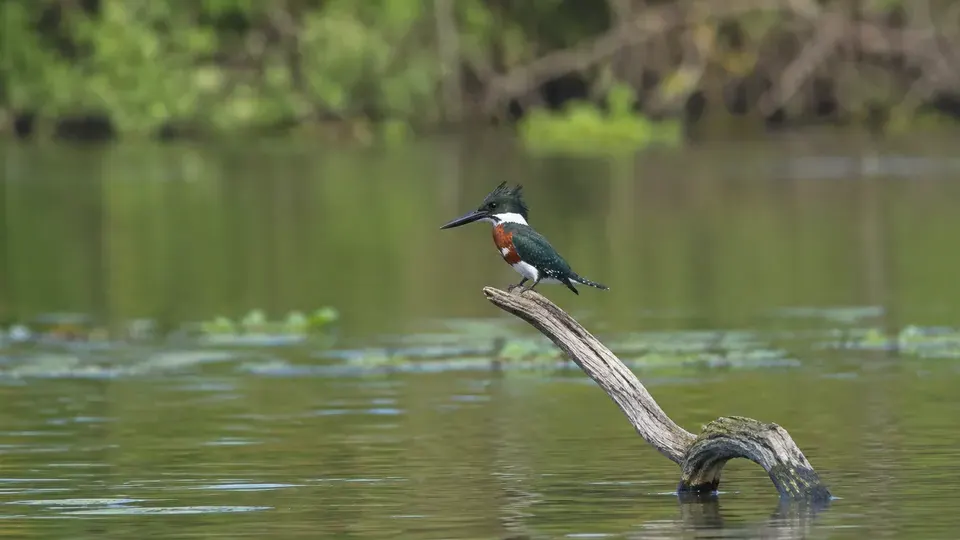
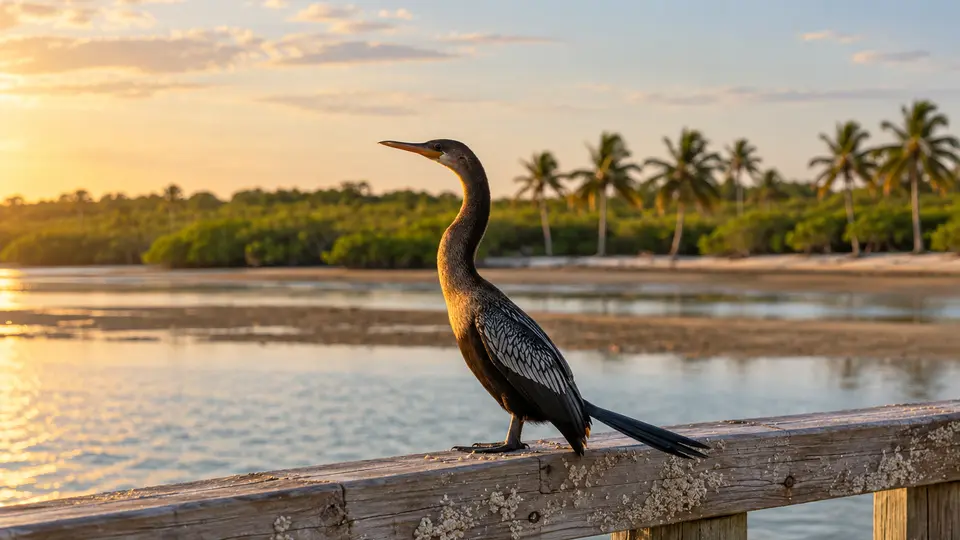
Black-crested Antshrike in wetland habitat — Amazon, River Cruises wildlifeAI-modifiedBlack-crested AntshrikeAmazon kingfisher in wetland habitat — Amazon, River Cruises wildlifeAI-modifiedAmazon KingfisherAnhinga in wetland habitat — Amazon, River Cruises wildlifeAI-modifiedAnhinga
Animal groupBirdsAnimal groupBirdsAnimal groupBirds
DestinationsAmazonDestinationsAmazonDestinationsAmazon
Scientific name
Sakesphorus canadensis
Scientific name
Scientific name
Previous speciesBlack-collared HawkNext speciesBlack-crowned Night Heron
All river wildlife
On this page
  • 01About
  • 02Behaviour & reproduction
  • 03Top wildlife locations
  • 04Fun facts
  • 05Best season
  • 06Season matrix by destination
  • 07Habitat
  • 08Diet
  • 09Species at a glance
  • 10Questions & answers
  • 11Compare

Find your river cruise

AI-modified
Plan your trip

Find your next river journey

Compare destinations, shore programs and dates with the animals and habitats you would love to see.

  • Daily shore excursions
  • Responsible wildlife watching
  • Boutique river ships
Explore river cruises