Bluerides – Blue Rides - Book Liveaboards worldwideOCEAN ADVENTURES
River CruisesRiversNature & WildlifeOur Promise
River CruisesRiversNature & WildlifeOur PromiseSign In

River destinations

  • River destinations
  • Amazon
  • Danube
  • Rhine
  • Mekong
  • Nile

Ships & departures

  • River Cruise Search
  • Deals

Nature & Wildlife

  • Nature & Wildlife

Travel support

  • Our Promise
  • Contact

Contact

Get in Touch

Get in touch anytime, we're happy to help you find the right trip or sort out any question.

EmailWrite us, we usually reply within a few hours.
contact@bluerides.com
WhatsAppChat with us on WhatsApp, Mon–Fri 10:00–16:00 (CET).
Start WhatsApp Chat
PhoneCall us, we're happy to help.
Free call, Mon–Fri 10 AM – 8 PM (CET).
Europe+49 800 1144 990USA+1 888 557 7735UK+44 800 707 4152Australia+61 2 8599 6113Canada+1 888 557 7735
Which river journey is yours?Answer 8 quick questions and find the river cruise that fits you.
8 questions, 1 minute·Plus Gift
Secure Payment MethodsYour payments are fully secured with AES-256 encryption.
Powered byStripeWiseAMEXPayGoogle PaySEPABank
Imprint·Terms & Conditions·Privacy Policy·About·Contact·Liability Waiver·Affiliate Program·Cruise·
Visit us here

© 2026 Blue Rides. All rights reserved.·

Bluerides – Blue Rides - Book Liveaboards worldwideOCEAN ADVENTURES
River CruisesRiversNature & WildlifeOur Promise
River CruisesRiversNature & WildlifeOur PromiseSign In
Black-collared Hawk in wetland habitat — Amazon, River Cruises wildlife
Home›River Cruises›River Wildlife›Black-collared Hawk

Black-collared HawkBusarellus nigricollisWhere and when to see them

Previous speciesBlack-capped KingfisherNext speciesBlack-crested Antshrike

Black-collared Hawk at a glance

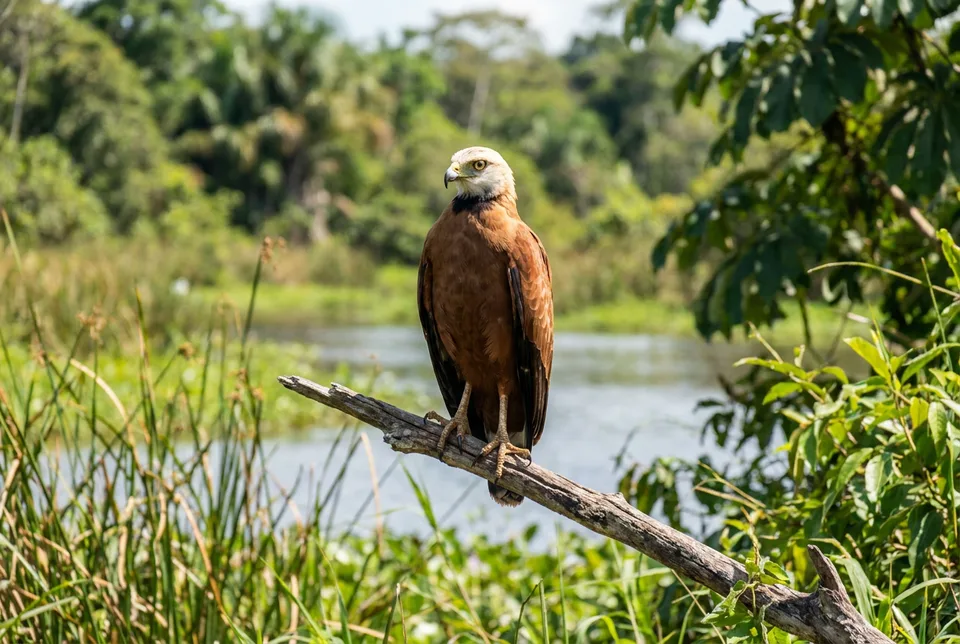
The Black-collared Hawk is a rufous, water-associated raptor of tropical and subtropical America, named for the dark bib below its pale head. Birds of the World describes a broad distribution from Mexico south toward Uruguay, but also notes that it is patchy and local across much of Amazonia. That distinction matters for a river visitor: suitable habitat and a large range do not guarantee an encounter. The River registry places it in the Peruvian Amazon around Iquitos and Nauta, the Ucayali and connected tributaries. The original 2017 cruise species list was read and explicitly reports birds perched along creeks, streams and side channels, sometimes in small family groups. This is good historical evidence for guided small-boat exploration of the registered landscape. It is not a current abundance estimate or a promise of sightings from the main cruise vessel.
Behaviour & reproduction

Size
45.5–58 cm (17.9–22.8 in) body length
Weight
391–1,070 g (13.8–37.7 oz), Peregrine Fund
Lifespan
Not verified in the sources read
Status
See sourced assessment

Black-collared Hawks commonly hunt from perches above shallow water, dropping toward prey rather than continuously patrolling in flight. Birds of the World identifies fish as the most frequent prey and describes specialised spines beneath the toes that assist capture. The Peregrine Fund similarly emphasises this fishing adaptation while noting that the bird does not have waterproof plumage like an Osprey. A perched individual can remain still long enough for careful observation, but it should not be approached until it flies. The Peruvian cruise report describes birds along creeks, streams and side channels, sometimes in small family groups. That observation supports a quiet skiff-searching context rather than a claim that the species always occurs in groups. Keep the boat at a distance where a bird continues its normal watchful posture or feeding. Do not use fish bait or repeatedly reposition beneath a preferred perch for photographs.

Top wildlife locations

Amazon river landscape — River Cruises wildlife habitat

Amazon

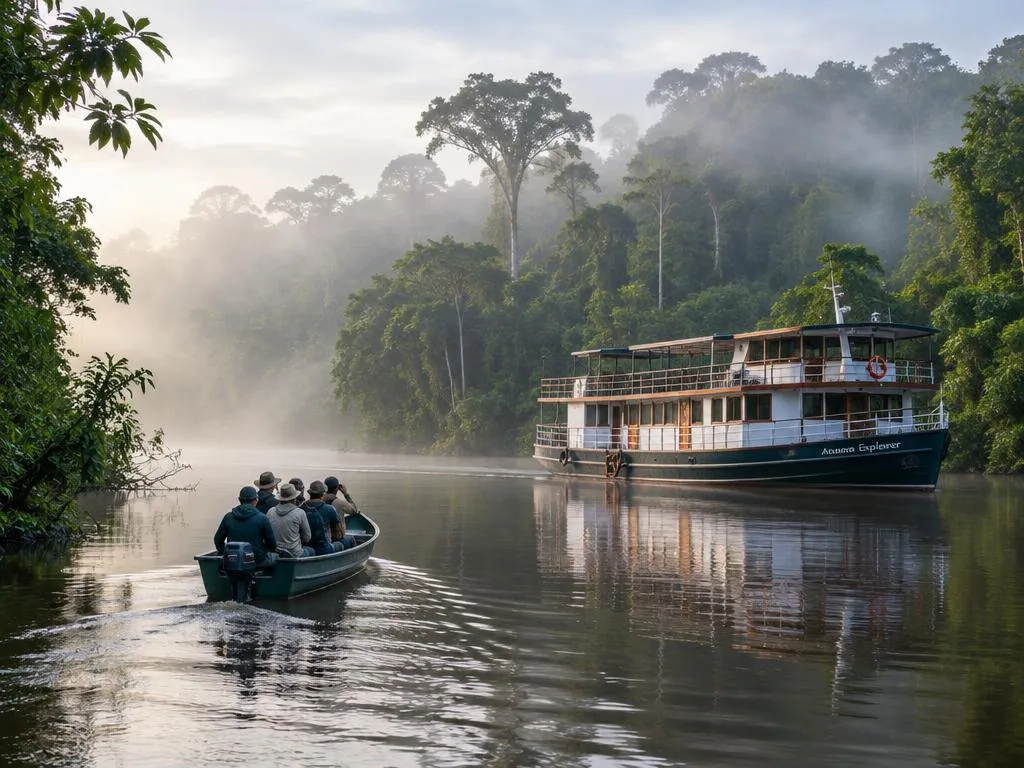
Peru — Iquitos/Nauta, Ucayali and connected tributaries, 2017 cruise. The original report describes perched birds along creeks, streams and side channels; guided skiff viewing rather than a main-ship guarantee.
Explore river cruises

Destinations describe the species' habitat, not guaranteed cruise stops. Some animals require an optional inland excursion or are found in restricted reserves.

Fun facts about the Black-collared Hawk

  • Its scientific name is Busarellus nigricollis.
  • The common name refers to its black bib.
  • Much of the body plumage is rufous.
  • Its tail is relatively short.
  • Fish are its principal prey.
  • It often hunts from a perch.
  • Spines beneath the toes help grip fish.
  • The Peregrine Fund notes that its plumage is not waterproof like an Osprey's.
  • The original Peruvian report mentions occasional small family groups.

Best time to see the Black-collared Hawk

The Amazon entry retains an empty month array. The original cruise species list dates from 2017 and reports repeated observations during that journey, with the file identifying a March trip context. This supports historical occurrence during one itinerary, not an annually recurring March viewing season. The species' broad tropical distribution and association with persistent wetlands also do not establish year-round visibility at a particular tributary or perch. Seasonal water changes may alter where boats can travel and where habitat is accessible, but those general processes are not exact species-specific month evidence. Ask the operator which tributaries and side channels are included now, whether recent dated records exist and whether wildlife outings use quiet small boats. Keep current access information separate from an animal forecast. A productive historical trip is a reason to search suitable habitat, not a guarantee that every departure or main-ship sailing will provide the same views.

Black-collared Hawk: season matrix by destination

Highlighted months reflect the stated local evidence, not guaranteed encounters. Neutral months mean no verified monthly viewing window, not absence. Observation records and recommended viewing windows are distinct.

Amazon

A dated historical cruise supports occurrence, not a recurring exact monthly viewing season.

JanFebMarAprMayJunJulAugSepOctNovDec
Explore river cruises

Where the Black-collared Hawk lives

Still or slow-moving fresh and brackish waters are central to the Black-collared Hawk's habitat. The Peregrine Fund includes marshes, lagoons, oxbows, riverine forest, swamp forest, flooded fields and ponds. Birds of the World likewise places it around shallow pools and marshes and stresses its uneven distribution within Amazonia. In the River registry, the relevant setting is Peru's Iquitos–Nauta region, the Ucayali and connected tributaries visited on a 2017 cruise. The original species list specifically mentions creeks, streams and side channels, indicating the value of guided skiff exploration. A large main channel may provide fewer useful viewing angles than sheltered margins, and a broad Amazon itinerary may not visit the same tributaries. Confirm the actual small-boat programme and current permissions. Stay within the guide's route, avoid disturbing bankside perches and do not assume that apparently suitable flooded forest is occupied merely because it lies inside the species' range.

What the Black-collared Hawk eats

Fish are the main prey highlighted by Birds of the World and the Peregrine Fund. The hawk's toe surfaces bear specialised spines or conical projections that help it grip slippery prey, an adaptation comparable in function to that of an Osprey. Other recorded food includes animals such as lizards and rodents, so even this fishing specialist is not restricted absolutely to fish. A typical hunting sequence begins from a perch above shallow water and ends with a drop toward prey. The sources read do not quantify diet for the specific Peruvian cruise reach. A local bird carrying prey should therefore be described from what is visible rather than assigned a presumed fish species. Never offer fish from a skiff or ask a guide to bait a perch. Artificial feeding changes the encounter and can create dependence on visitor activity. Undisturbed hunting is both more informative and more responsible to observe.

Species at a glance

Common name
Black-collared Hawk
Scientific name
Busarellus nigricollis
Animal group
Birds
Size
45.5–58 cm (17.9–22.8 in) body length
Weight
391–1,070 g (13.8–37.7 oz), Peregrine Fund
Lifespan
Not verified in the sources read
Status
Least Concern, as reported by the Peregrine Fund and Birds of the World
Identification
The Black-collared Hawk is most readily recognised by its rufous body, pale head, black throat bib and relatively short tail. Birds of the World specifically highlights the rufous plumage and very short tail as useful features. The Peregrine Fund gives a body-length range of 45.5–58 cm (17.9–22.8 in) and a wingspan of 115–143 cm (45.3–56.3 in), but apparent size is difficult to judge without a reference. Its association with water and perch-hunting behaviour support the identification without proving it. Other raptors can use the same bankside trees, and shade may conceal the bib or alter the apparent body colour. Wait for natural head or body movement rather than approaching to force a clearer view. The scientific name Busarellus nigricollis is the taxon named in both the biological accounts and the original Peruvian cruise list. A poor view should remain uncertain even where a guide expects the species.

Black-collared Hawk: frequently asked questions

Where can I see the Black-collared Hawk?
Amazon. During a guided skiff outing, scan trees and branches overlooking sheltered water, especially along creeks and side channels of the kind described in the original Peruvian report. The pale head and rufous body can stand out against dark forest, while the black bib may require a better angle. Begin with binoculars and let the guide hold an appropriate distance before using a camera. Do not request a close approach that makes the bird leave its perch. A naturally flying individual can reveal the broad-winged raptor shape and short tail, but flushing is unnecessary for identification. The registry covers the Iquitos–Nauta, Ucayali and connected-tributary context, not guaranteed observation from the main vessel. Keep group noise low, follow boat safety instructions and avoid baiting. Record the actual waterway and date if possible, while recognising that a single perched bird provides no reliable estimate of regional abundance.
When is the best time to see the Black-collared Hawk?
The Amazon entry retains an empty month array. The original cruise species list dates from 2017 and reports repeated observations during that journey, with the file identifying a March trip context. This supports historical occurrence during one itinerary, not an annually recurring March viewing season. The species' broad tropical distribution and association with persistent wetlands also do not establish year-round visibility at a particular tributary or perch. Seasonal water changes may alter where boats can travel and where habitat is accessible, but those general processes are not exact species-specific month evidence. Ask the operator which tributaries and side channels are included now, whether recent dated records exist and whether wildlife outings use quiet small boats. Keep current access information separate from an animal forecast. A productive historical trip is a reason to search suitable habitat, not a guarantee that every departure or main-ship sailing will provide the same views.
How big does the Black-collared Hawk get?
45.5–58 cm (17.9–22.8 in) body length. Adult weight: 391–1,070 g (13.8–37.7 oz), Peregrine Fund. Size varies with age, sex and population.
How should I behave around the Black-collared Hawk?
During a guided skiff outing, scan trees and branches overlooking sheltered water, especially along creeks and side channels of the kind described in the original Peruvian report. The pale head and rufous body can stand out against dark forest, while the black bib may require a better angle. Begin with binoculars and let the guide hold an appropriate distance before using a camera. Do not request a close approach that makes the bird leave its perch. A naturally flying individual can reveal the broad-winged raptor shape and short tail, but flushing is unnecessary for identification. The registry covers the Iquitos–Nauta, Ucayali and connected-tributary context, not guaranteed observation from the main vessel. Keep group noise low, follow boat safety instructions and avoid baiting. Record the actual waterway and date if possible, while recognising that a single perched bird provides no reliable estimate of regional abundance.
What does the Black-collared Hawk eat?
Fish are the main prey highlighted by Birds of the World and the Peregrine Fund. The hawk's toe surfaces bear specialised spines or conical projections that help it grip slippery prey, an adaptation comparable in function to that of an Osprey. Other recorded food includes animals such as lizards and rodents, so even this fishing specialist is not restricted absolutely to fish. A typical hunting sequence begins from a perch above shallow water and ends with a drop toward prey. The sources read do not quantify diet for the specific Peruvian cruise reach. A local bird carrying prey should therefore be described from what is visible rather than assigned a presumed fish species. Never offer fish from a skiff or ask a guide to bait a perch. Artificial feeding changes the encounter and can create dependence on visitor activity. Undisturbed hunting is both more informative and more responsible to observe.
Are wildlife sightings guaranteed on a river cruise?
No. Animals move freely and routes, weather, access restrictions and local conditions influence every outing. Confirm the actual itinerary and shore program before booking.

Compare wildlife in the same destinations

Explore other birds recorded in these destinations. Similar surroundings do not mean the animals share the same habits or viewing season.

Species comparison by animal group and destination
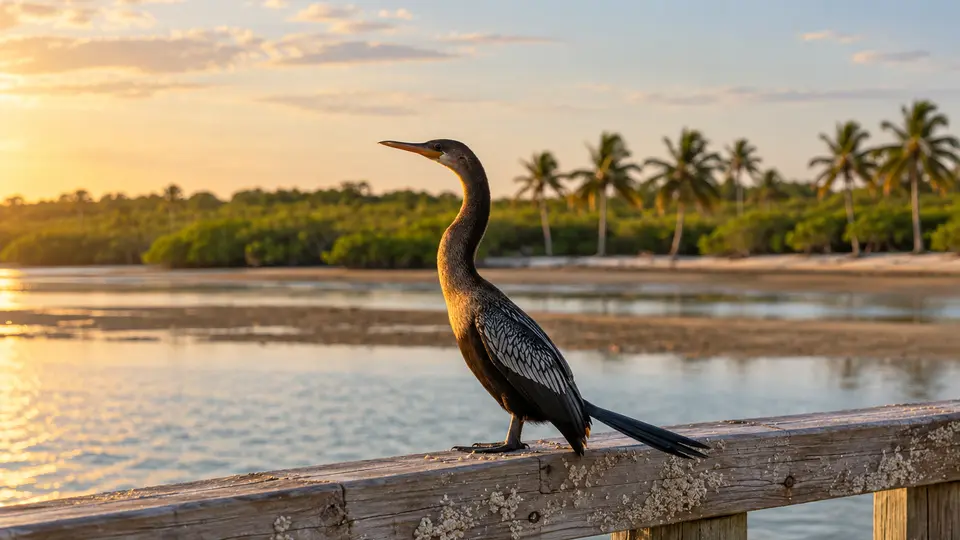
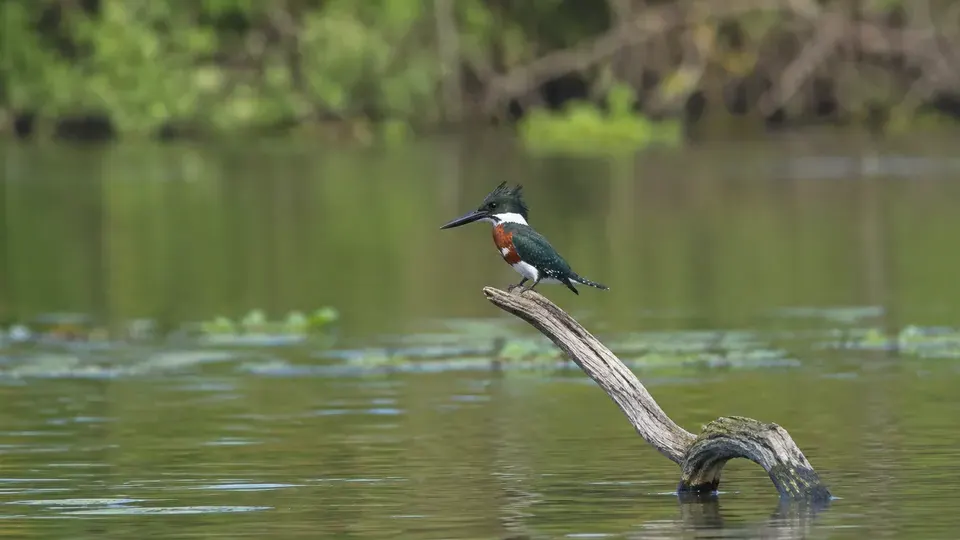
Black-collared Hawk in wetland habitat — Amazon, River Cruises wildlifeBlack-collared HawkAmazon kingfisher in wetland habitat — Amazon, River Cruises wildlifeAmazon KingfisherAnhinga in wetland habitat — Amazon, River Cruises wildlifeAnhinga
Animal groupBirdsAnimal groupBirdsAnimal groupBirds
DestinationsAmazonDestinationsAmazonDestinationsAmazon
Scientific name
Busarellus nigricollis
Scientific name
Scientific name
Previous speciesBlack-capped KingfisherNext speciesBlack-crested Antshrike
All river wildlife
On this page
  • 01About
  • 02Behaviour & reproduction
  • 03Top wildlife locations
  • 04Fun facts
  • 05Best season
  • 06Season matrix by destination
  • 07Habitat
  • 08Diet
  • 09Species at a glance
  • 10Questions & answers
  • 11Compare

Find your river cruise

Plan your trip

Find your next river journey

Compare destinations, shore programs and dates with the animals and habitats you would love to see.

  • Daily shore excursions
  • Responsible wildlife watching
  • Boutique river ships
Explore river cruises