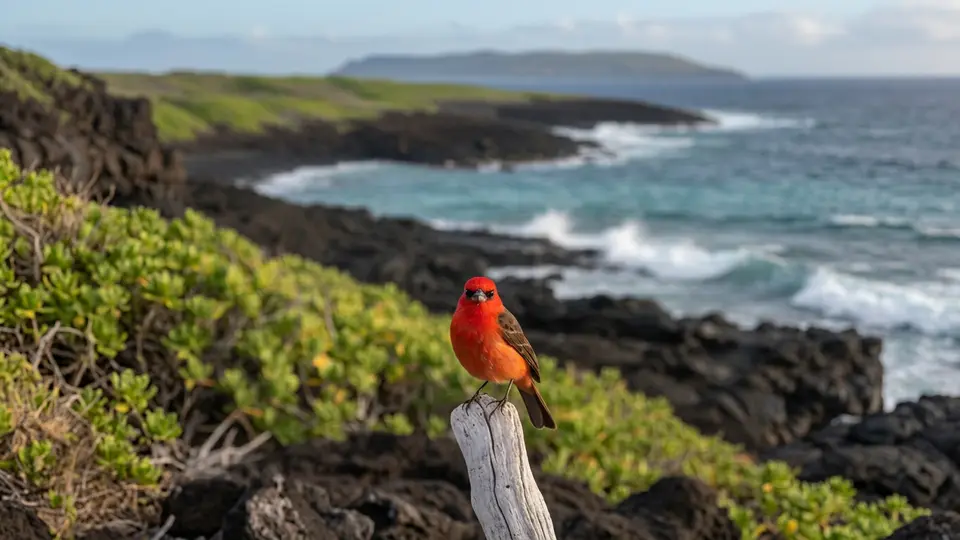
Vermilion Flycatcher in its natural habitat, AI illustration
SizeApproximately 13–14 cm length for the Galápagos formLifespanNot reliably establishedStatusAssessment varies / Check current assessment

Vermilion Flycatcher: where and when to see them

Birds

Vermilion Flycatcher at a glance

The name vermilion flycatcher covers birds treated differently under changing taxonomies. In the Galápagos, the relevant surviving endemic is generally recognized as the little vermilion flycatcher, Pyrocephalus nanus, rather than automatically assigned to the widespread mainland species. Males are vivid red with dark upperparts, while females are much more subdued. Island populations have suffered serious declines, and introduced parasites and habitat changes are important concerns. Identification and conservation claims should specify the Galápagos taxon.

Behaviour & reproduction

Size
Approximately 13–14 cm length for the Galápagos form
Weight
Not reliably established
Lifespan
Not reliably established
Status
Assessment varies / Check current assessment

Galápagos birds typically hunt from an exposed twig, making short flights to catch insects before returning to a perch. Males advertise territories with calls and conspicuous aerial displays. Pairs build small cup nests in woody vegetation, and adults feed insect prey to their young. Activity and breeding respond to local food conditions. Introduced parasitic flies can infest nests, reducing chick survival even where adult birds still appear to occupy suitable habitat. Courtship displays often involve the male performing a 'butterfly flight' where he flutters high into the air with exaggerated wing beats before descending. They are generally territorial and may actively chase away other small birds from their foraging and nesting areas.

Top wildlife locations

Galapagos wildlife habitat

Galapagos

Authorized highland trails on islands retaining populations offer more plausible habitat than beaches. An inland excursion and current local advice are required; the bird is rare or absent at many formerly occupied sites.

Adventure cruises in Galapagos
Destinations describe the species' habitat, not guaranteed cruise stops. Some animals require an optional inland excursion or are found in restricted reserves.

Fun facts about the Vermilion Flycatcher

  • The surviving Galápagos form is widely treated as Pyrocephalus nanus.
  • The distinct San Cristóbal flycatcher, Pyrocephalus dubius, is extinct.
  • Males and females differ markedly in plumage.
  • Introduced Philornis downsi flies are a serious threat to nestlings.

Best time to see the Vermilion Flycatcher

There is no dependable archipelago-wide viewing season because occurrence is highly island-specific and some populations are depleted. Warmer, wetter conditions can stimulate insects and breeding activity, but current guide knowledge and permitted upland access are more useful than general Galápagos travel-season advice. Breeding activity and thus peak visibility of active nests or fledglings often align with the Garúa season or the onset of the warm, wet season, when insect abundance is highest. For general viewing, the dry season might offer easier access to upland sites, although activity levels could be lower.

Vermilion Flycatcher: season matrix by destination

Travel and observation windows vary by region. Highlighted months are an orientation for planning, not confirmed sightings or a guarantee of access.

Galapagos

The generic catalog name and strongly localized surviving populations do not support a single reliable observation window; confirm the intended island, taxon and current access first.

JanFebMarAprMayJunJulAugSepOctNovDec
Cruise ships in Galapagos

Where the Vermilion Flycatcher lives

The surviving Galápagos taxon uses open woodland, scrub and forest edges, with important populations in upland habitats. Suitable structure includes scattered hunting perches and insect-rich openings. It should not be expected on every island or along ordinary coastal landing trails. The Galápagos Vermilion Flycatcher typically avoids dense forests and arid coastal zones, preferring areas with a mix of shrubbery and open spaces. Its preferred habitat often includes Opuntia cactus stands and other native shrubland, providing both foraging opportunities and nesting sites.

What the Vermilion Flycatcher eats

Flying and foliage-associated insects are the principal foods. Birds take prey in short aerial sallies and sometimes collect it from vegetation or the ground. Local insect availability influences territory quality and breeding success, particularly when adults must provision rapidly growing nestlings. In addition to flying and foliage-associated insects, small spiders and other arthropods also form part of their diet, especially when specific insect prey is scarce. Prey capture frequently involves a 'sally-glean' technique, where birds fly out to snatch an insect from vegetation or the ground before returning to a perch.

Species at a glance

Common name
Vermilion Flycatcher
Scientific name
Name covers more than one taxon
Animal group
Birds
Size
Approximately 13–14 cm length for the Galápagos form
Weight
Not reliably established
Lifespan
Not reliably established
Status
Assessment varies / Check current assessment
Identification
Male Galápagos birds show a scarlet crown and underparts with a dark facial mask, but separation from mainland vermilion flycatcher taxa depends on locality and taxonomic treatment. Females and juveniles of the Galápagos subspecies are distinct, displaying duller plumage with yellowish-orange underparts and a streaked breast, lacking the male's bright scarlet. The relatively smaller size and more robust bill compared to some mainland forms can also aid in identification for experienced observers.

Vermilion Flycatcher: frequently asked questions

Where can I see the Vermilion Flycatcher?
Galapagos. Use authorized upland trails with a knowledgeable guide, keeping well away from nests. Avoid playback and do not trim vegetation for photographs. Clean footwear between sites to reduce the movement of seeds and other organisms. Be prepared for a walk on uneven terrain, as many key viewing areas are not easily accessible. Use binoculars to scan for their vibrant plumage, especially the males, perched on exposed branches against the backdrop of the Galápagos landscape.
When is the best time to see the Vermilion Flycatcher?
There is no dependable archipelago-wide viewing season because occurrence is highly island-specific and some populations are depleted. Warmer, wetter conditions can stimulate insects and breeding activity, but current guide knowledge and permitted upland access are more useful than general Galápagos travel-season advice. Breeding activity and thus peak visibility of active nests or fledglings often align with the Garúa season or the onset of the warm, wet season, when insect abundance is highest. For general viewing, the dry season might offer easier access to upland sites, although activity levels could be lower.
How big does the Vermilion Flycatcher get?
Approximately 13–14 cm length for the Galápagos form. Adult weight: Not reliably established. Size varies with age, sex and population.
How should I behave around the Vermilion Flycatcher?
Use authorized upland trails with a knowledgeable guide, keeping well away from nests. Avoid playback and do not trim vegetation for photographs. Clean footwear between sites to reduce the movement of seeds and other organisms. Be prepared for a walk on uneven terrain, as many key viewing areas are not easily accessible. Use binoculars to scan for their vibrant plumage, especially the males, perched on exposed branches against the backdrop of the Galápagos landscape.
What does the Vermilion Flycatcher eat?
Flying and foliage-associated insects are the principal foods. Birds take prey in short aerial sallies and sometimes collect it from vegetation or the ground. Local insect availability influences territory quality and breeding success, particularly when adults must provision rapidly growing nestlings. In addition to flying and foliage-associated insects, small spiders and other arthropods also form part of their diet, especially when specific insect prey is scarce. Prey capture frequently involves a 'sally-glean' technique, where birds fly out to snatch an insect from vegetation or the ground before returning to a perch.
Are wildlife sightings guaranteed on an adventure cruise?
No. Animals move freely and routes, weather, access restrictions and local conditions influence every outing. Confirm the actual itinerary and shore programme before booking.

Compare wildlife in the same destinations

Explore other birds recorded in these destinations. Similar surroundings do not mean the animals share the same habits or viewing season.

Species comparison by animal group and destination
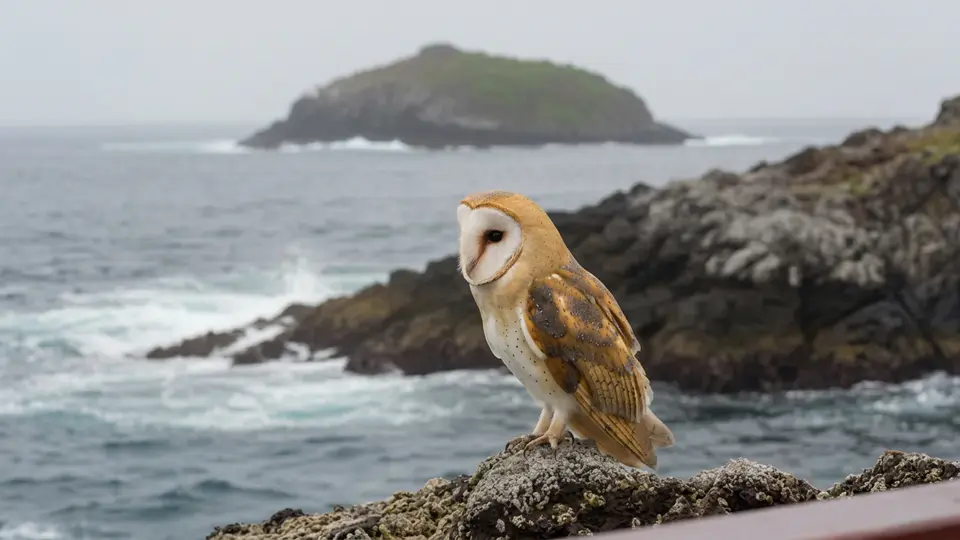
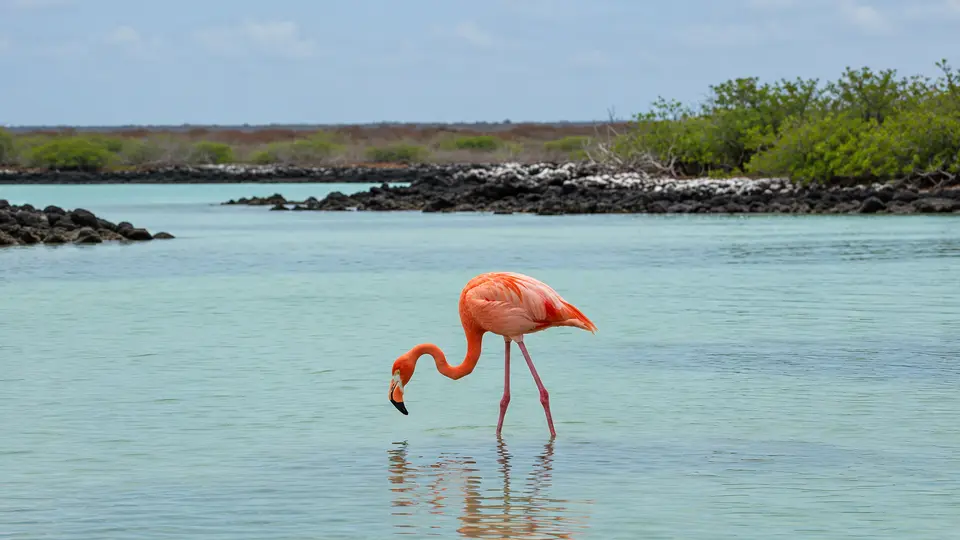
Vermilion FlycatcherVermilion FlycatcherAmerican FlamingoAmerican FlamingoBarn OwlBarn Owl
Animal groupBirdsAnimal groupBirdsAnimal groupBirds
DestinationsGalapagosDestinationsGalapagos, MexicoDestinationsGalapagos
All wildlife destinations
Plan your trip

Find your next wildlife adventure

Compare destinations, shore programmes and dates with the animals and habitats you would love to see.

  • Naturalist-led shore excursions
  • Responsible wildlife watching
  • Small expedition ships

Newsletter

Take Blue Rides with you

Adventure cruise offers, last-minute deals and trip inspiration.

Free, unsubscribe anytime. Details: Privacy Policy

Partner with Blue Rides

Affiliate Program

Recommend adventure cruises and earn commission on every confirmed booking.

Share. Track. Earn.